
Identity politics has never seen such a minefield for callout and cancel culture as it has with conversations related to transgenderism. At the time of writing Kids These Days, we knew we had to address the topic because we knew the harms, even though it was a ‘hot button’ topic and one few wanted to speak about regarding youth mental health.
DISCLAIMER: This piece is not about sexual orientation but rather the ideology and practice of transitioning kids. I support adults doing what they want, but this is about children and youth specifically, and the systems of influence and interventions that shape them as they grow up, which many believe are helpful but can, in fact, be harmful. The focus here is primarily on puberty blocker medication (chemical intervention) and health risks. Controversial, yes. Bans on puberty blockers rages on at provincial and federal levels in many nations. What is often missing in the narrative is the health effects of these chemicals. We need more open dialog on the topic. Further, I am not trained in pharmacology or toxicology. I am simply a youth mental health advocate who reads the literature and talks to those who know!
I have written earlier on the possible links between environmental toxins and gender dysphoria and have spoken to toxicity experts who explained how our endocrine and reproductive systems are disrupted by Atrazine, Glyphosate, and other chemicals. Another conversation few want to engage in but will become more open to dialog as more research shows the connections. While I post about these topics, I am not experiencing blowback. Maybe our next challenge is to increase dialog as I hear mostly crickets!
Gender identity and transitioning
Gender identity disorder, more commonly known as gender dysphoria, refers to the discrepancy between how a person sees themselves regarding gender and their sex (DSM, WHO, 2020). The distress or discomfort arising from perceived or felt incongruity is the basis for diagnosis.
I believe parents and adults who work with, teach, lead, or otherwise support kids need to know more about the issues associated with transitioning beyond the value judgment that you are doing “the right thing” or that you are a “good person” if you support trans kids. The reverse is also worth mentioning, that many fear being called “transphobic” or “bigoted” for questioning the ideology.
A very recent study out of Germany helps provide the strength of this argument (which we didn’t have when we stuck our necks out writing on this topic in our book) in that over 60% of youth diagnosed with gender dysphoria are found to no longer have the disorder within a 5-year window. And, over 70% of those youth had another co-occurring psychiatric disorder.
Let’s pause and digest those stats for a minute.
Over 2/3 of the youth had other mental health distress, potentially exacerbating their search for identity. And, within 5 years, male gender dysphoria persisted in only half of the youth and less than 30% of females 15-19 years of age.

Beyond our experience in supporting youth with identity crises in our clinical work, we leaned heavily on Helen Joyce’s book TRANS and our review of related research literature. The following three paragraphs are direct passages from our book that I wouldn’t be able to re-craft without losing its meaning, and a few nights’ sleep worrying about saying something that would put a target on my back as a ‘bigoted transphobe.’
“Helen Joyce, the British Editor for The Economist magazine, provided an in-depth analysis and overview of the topic of transgender, covering everything from historical events to the details of transition surgeries. Helen has taken some abuse from the transactivist community but has also received praise for her work. The Telegraph review stated, “A superlative critical analysis…With this fact-filled, humane, and brave book, a grown-up has entered the room.” Joyce’s writing included a review of the relevant research literature and the voices of proponents and critics of transgender activism and practices. Her writing was inspired by her listening to the unheard (or silenced) parents of children caught up in the transgender social contagion, the ignored and cancelled detransitioners, whose voices have been drowned out and scared off by the transactivists, and her overall concern for kids.
Joyce’s review of the research suggests that young people experiencing cross-sex feelings, now referred to as gender dysphoria, if left to feel those feelings, and be compassionately supported, will grow out of the dysphoria, or enter adulthood as gay men and women. No social transition to another gender, no puberty blockers, no cross-hormone treatments, no surgical interventions. A long-term follow-up study of 139 boys born between 1975 and 2009 who attended a gender clinic in Toronto, Canada, found that just shy of 90% desisted, that is, were not having cross-sex identification and free of the dysphoria. Turns out their disconnect with their sex was because they were same-sex attracted but unlikely to understand that at an early age. When sexual attraction and the hormones of the teen years kicked in, most realized it was about same-sex attraction.
What stands now as a primary concern is that gender ideology, suggesting gender (conflated with sex) are socially constructed and having fluid properties, is being taught in schools and communities to young children and likely to influence, if not encourage, earlier transitions. A 2022 study from Olson and colleagues showed an almost mirror image in their results although under slightly different circumstances. This recent study tracked 317 (208 transgender girls, 109 transgender boys) young people’s gender identity 5 years after contact with the researchers. So, these youth had already socially transitioned (identifying as binary opposite of sex at birth, pronoun and name changed, often clothing and hairstyle changed…) yet the average age at the start of the study was just over 8 years old. This suggests earlier social transition and actions had been taken, primarily the use of pharmaceuticals. By the end of the study 32.3 % of youth had begun gender-affirming hormones and had moved through and beyond social transition and into medical transition.”
Social Affirmation and Puberty Blockers—both poor ideas
Social affirmation appears to manifest as a gateway to puberty blockers and hormone treatment, and that is a pathway to full surgical transitioning. Social affirmation, Joyce says, has been matched with puberty blockers as if this “pause” button on child and youth development can be suspended until a decision can be made to proceed with transition or not. Joyce’s research suggests the step to halt puberty opens the gates, and few turn back after this begins.
Social affirmation has been pushed rapidly into education at all levels. The idea that everyone is to accept one’s struggle with identity and be supportive and ‘affirm’ one’s gender sounds caring. It sounds compassionate. It sounds progressive.
Teachers in British Columbia are provided a curricular doctrine on sexual orientation and gender identity, known as SOGI, which has recently been rebranded by the government of BC as simply Diversity and inclusion Regardless of its name, this curriculum was introduced to the schools in 2016, about the same time gender dysphoria diagnoses started rising across North America. The likelihood of gender confusion when hormones start pumping through teenage bodies may be increased if, as children, they were introduced to gender fluidity as a concept.
“Gender Identity is the internal and psychological sense of oneself as a woman, a man, both, in between, or neither. Gender identity is unique to each individual and is not determined by sex or defined by sexual orientation. For many people, their gender identity matches the sex they were assigned at birth. This is referred to as cisgender. For others, their gender identity does not match the sex they were assigned at birth.” ~Government of BC
Internal and psychological. It’s how one thinks or feels about themselves. Cognitive and affective. Thoughts and feelings. We have said gender is socially constructed for decades. Fair enough. We were talking about how you show up socially. Boys can become nurses and kindergarten teachers, and girls can grow up and be CEOs, carpenters, and crane operators. Why not? I thought we were progressing towards a post-gender society.
But now, you can be a man, a woman, neither, or both! This is hard for me to understand as an adult, let alone in the developing mind of a child—especially one without the hormonal signals of the teen years. You see the conflation between sex and gender here. But these, remember, are thoughts and feelings, yet trans ‘affirming’ care leads these ideas to pharmacological and surgical interventions. No longer just ideas. Chemicals and scalpels are material reality.
It’s like treating a social construct as natural law. To me, that was quite a leap.
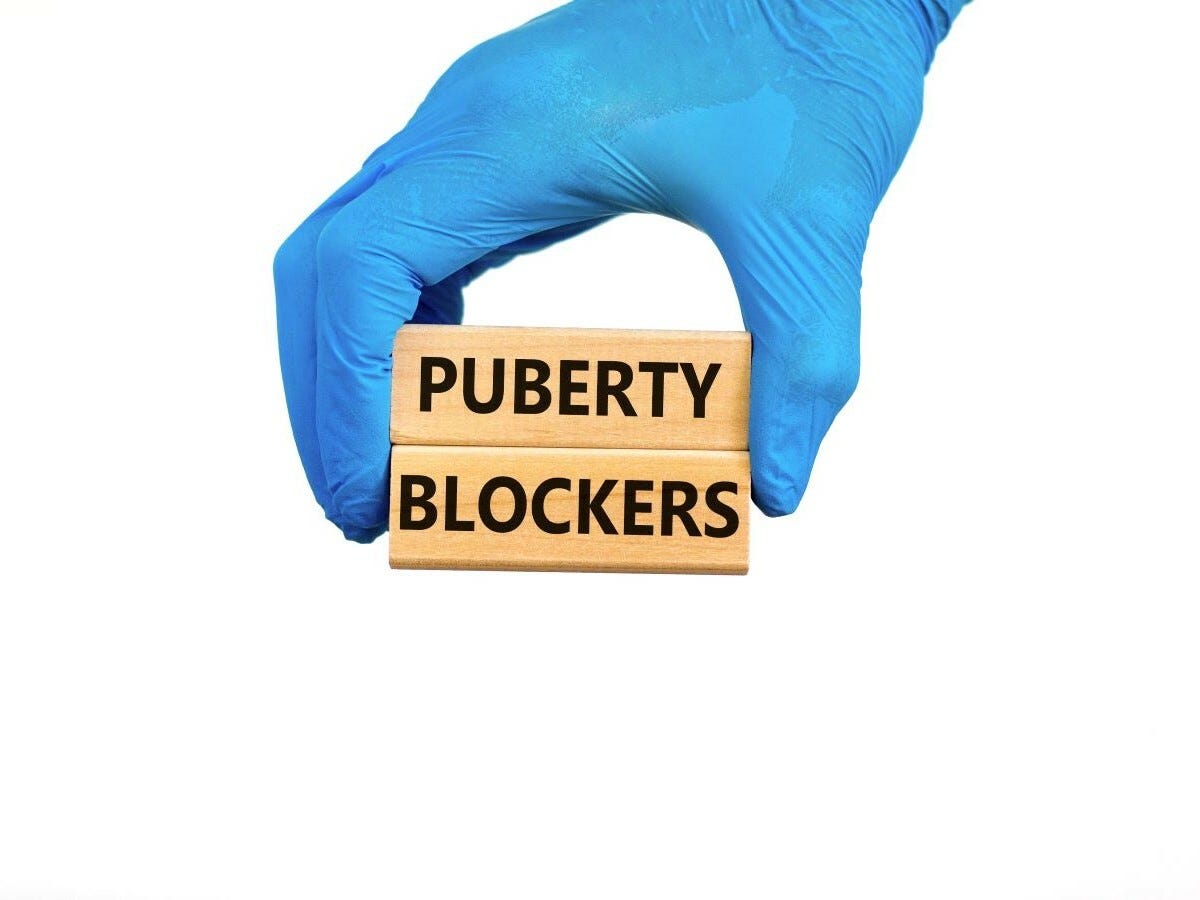
When anyone says “puberty blockers” they are talking about GnRH. Most probably know little about what they are, how they work, or the harms they come with. Gonadotropin-releasing hormone (GnRH) was never designed for the purpose of ‘pausing puberty,’ yet this is often what parents are told when discussing puberty blockers with healthcare professionals. This precedes cross-sex hormone treatment, again, to pause puberty.
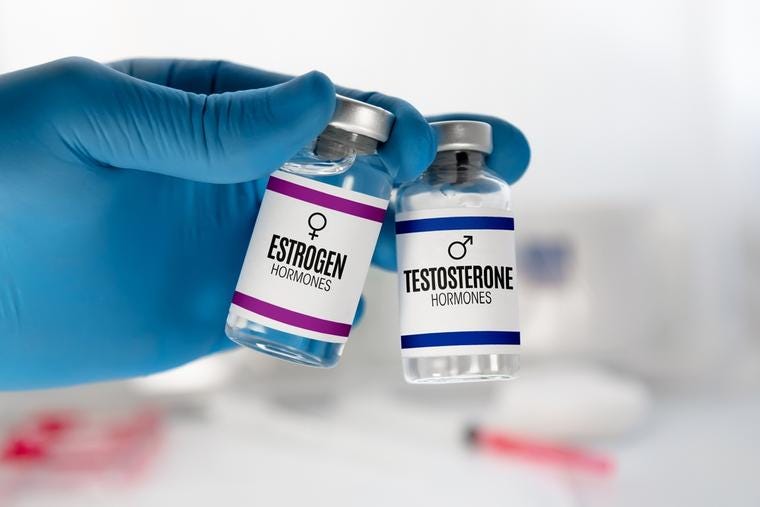
GnRH was designed as an adult medication for prostate cancer and was then found to effectively chemically castrate sex offenders. Yes, troubling to hear. There are occasional uses of these chemicals to slow development in extreme cases of early puberty, but how these substances may interfere with natural child development is not well known. Beyond the possibility of sterility, Joyce’s research also indicated that these drugs may reduce calcium uptake, leading to brittle bones, and studies have shown correlations with lower IQ.
Mainstream media in Canada has not been as forthcoming and instead talks about the ‘pause on puberty’ as an option and that GnRH and then gender-affirming hormone treatments are necessary for mental health reasons (i.e., as in youth will self-harm if they don’t get to transition). I have not heard a discussion of actual known health risks, nor questioning or suggestion that gender dysphoria should be ‘treated’ psychologically. This is incongruous since the term is a DSM diagnosis, which again is being treated materially with chemicals and surgery. One physician in the CBC article linked above stated: “When puberty blockers are given too late in the process of puberty, some changes to the body become permanent and might need surgery to reverse.”
Again, let that sink in. When teen hormones kick in, the adventures of adolescent identity formation begin. And it needs to be paused, or else surgery is needed!? What about the 5-year window where the ‘psychological’ diagnosis disappears for 60% or more?
Long-term research at Toronto’s gender clinic suggested that without any form of affirmation, kids tend to move through gender dysphoria and, as a result, end up in a hetero or homosexual relationship, suggesting their struggle may have been one of sexual orientation/preference versus being about being in the wrong body. As a therapist, this makes a lot of sense and really makes me question how we have come to a point where teachers are quick to “affirm” kids’ gender and where we as counselors are required to provide “gender affirming” care.
The recent German study (direct quotes and highlights below) also supports the notion of an identity struggle, which is A NORMAL and challenging part of adolescence. Seems we have made it more complex and intrusive since introducing gender affirmation concepts into education and therapy about 10 years ago.
Am I suggesting here that social affirmation—which is about clothing, pronouns, maybe a name change, and social acceptance as non-binary or the gender opposite your sex—is dangerous in terms of child and youth development?
Yes, 100%.
We have to keep front of mind that GnRH is a harmful chemical that may compromise one’s health. While there is the belief that GnRH will provide time to discuss and decide… what? Whether or not to proceed to more invasive and irreversible medical and surgical interventions? If you couple that thinking with the 5-year drop in gender dysphoria diagnoses, you should be asking, why would anyone recommend chemically and surgically altering a child or youth who may just be struggling with their identify formation, and quite possibly while experiencing co-occurring mental health issues. There is also a growing body of research suggesting that people with Autism are more likely to be trans than non-autistic people. That is worth another post.
The Olsen et al. (2022) study suggests that social affirmation leads to the use of puberty blockers and that few go back once they begin use. Cross-sex hormones to follow, then maybe surgery, although the rates of surgical transition are not clear to me at home in Canada or abroad. I do know the Tavistock Institute in the UK was closed following a spate of lawsuits against it and its physicians by young adults who were transitioned as youth with radical and permanent transition surgery at a young age.
This, in my opinion, is a dangerous trend, and it is not hard to find corporate interests in the shadows. Abigail Schrier was blunt in titling her 2021 book, Irreversible Harm, while pointing out the players involved.
If teachers feel threatened for not supporting or engaging the SOGI curriculum, they need to know that there is growing evidence that the gender affirming approach is not just in question, but that it is, in fact, harmful to kids. Stop it. Talking with your colleagues and administrators about the research is a great place to start. You may work with or support same-sex attracted kids (searching for sexual orientation during adolescence). Avoid scripting the conversation with the “not in the right body” narrative.
First step: Stop conflating sex and gender. The first is biology, the second is ‘socially constructed.’ The more confused a child is heading into puberty the more likely they are to experience gender dysphoria.
Second step: Ask questions. Consider your first reactions to ideas and be curious and critical.
As we wrote in Kids These Days, maybe we need to reconsider the Drag Queen Story Hour (DQSH) approach to teaching tolerance and inclusion to children? While most people can express an opinion about DQSH, indifferent, supportive, or not. A deeper read into DQSH ideology brings to the surface pedagogy and intent. The following is from a 2020 peer-reviewed paper in the journal Curriculum Inquiry:
“We believe that DQSH offers an invitation towards deeper public engagement with queer cultural production, particularly for young children and their families. It may be that DQSH is “family friendly,” in the sense that it is accessible and inviting to families with children, but it is less a sanitizing force than it is a preparatory introduction to alternate modes of kinship.”
I am still puzzled by what “alternate modes of kinship” means?
More details from the GERMAN study cited above: https://segm.org/gender-dysphoria-diagnosis-desistance-germany
A formidable challenge to the presumption of permanence of gender dysphoria in adolescents and young adults. German insurance data, containing medical claims for about 14 million insured persons aged 5–24, indicate that over 60% of young people (70% of females) diagnosed with “Gender Identity Disorder” (F64) no longer have the diagnosis 5 years later, indicating low diagnostic stability.
The study’s notable findings are highlighted below:
· There has been an overall 8-fold increase in the prevalence of gender-identity-related diagnoses (F64), overrepresented among adolescent females over the last decade. Like other international data, the German data reveal a marked increase in gender-identity-related diagnoses (F64) in youth in the past decade. Adolescent females had the highest prevalence (452.2/100,000) and have experienced the sharpest increase (12-fold, from 37.9/100,000 in 2013).
· Youth diagnosed with gender dysphoria suffer from a high rate of mental health comorbidities. Over 70% of young people diagnosed with gender dysphoria had at least one other psychiatric diagnosis (67% of males and 76% of females). In order of decreasing frequency, comorbid diagnoses were depressive disorders, anxiety disorders, borderline personality disorders, attention deficit/hyperactivity disorder, and post-traumatic stress disorders.
Researchers conclusions: “The authors conclude that the sharp increases in prevalence of gender-related diagnoses, high rates of co-occurring mental health conditions, and low diagnostic stability of the diagnosis merit serious consideration before the initiation of gender transition interventions in young people. “
A diagnosis is not material reality. So, material interventions (chemical and surgical) should not be considered for kids, full stop.
adults in the room. is a reader-supported publication. To receive new posts and support my work, consider becoming a free or paid subscriber.
Thanks for reading adults in the room.! This post is public so feel free to share it.
Comments
Nothing yet. Say the first thing.
Sign in to join the conversation.