
Bruce D. Perry is a child psychiatrist and brain researcher who has spent his career trying to understand how early life experiences such as stress and trauma shape the developing brain. He was kind enough to endorse our book, as well as share some of his time to talk about it. I loved this chinwag as I sense much alignment in our work with his. Please join the conversation.
After our conversation I think I’d describe Dr. Perry as someone who helps adults better understand kids’ behavior by looking “under the hood” at how their brains are wired. Instead of asking “What’s wrong with this child?”, he is known for shifting the question to “What has this child experienced?” That subtle shift has had a big impact in education, parenting, and mental health. It is a shift we agree with wholeheartedly, like shifting away from the medical model and toward the complexity of context.
He’s especially known for:
Explaining how trauma affects brain development and behavior
Promoting relationship-based healing (safe, stable, caring adults matter most)
Developing the Neurosequential Model, a framework that helps match support to how the brain develops over time
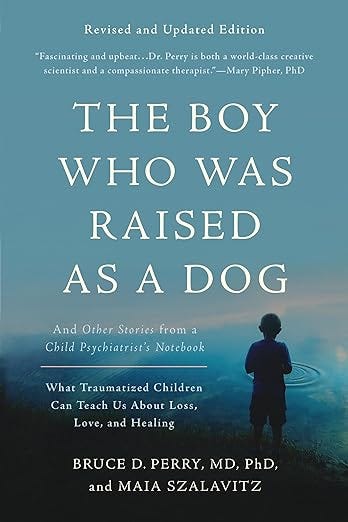
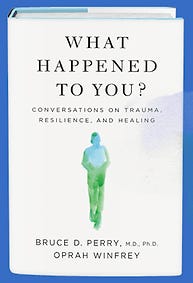
He’s also co-authored accessible books like The Boy Who Was Raised as a Dog (with Maia Szalavitz) and What Happened to You? (with Oprah Winfrey), which bring neuroscience to life with real stories from practice and their own lives.
Overall, Bruce’s work is about compassion grounded in science. His approach helps people see that behavior often makes sense once you understand someone’s history. Context is key, not the presenting behaviors.
Here’s the gist:
The model is based on how the brain develops sequentially, from lower (brainstem) to higher (cortex) regions
Trauma, especially early in life, can disrupt this developmental sequence
So interventions should also be sequential, targeting the parts of the brain that were affected at the time of disruption.
In practice:
Start with regulation (body, rhythm, safety)
Then move to relational connection
Then to cognitive work (insight, reasoning, therapy)
His approach is widely used in trauma-informed care, education, and child welfare. And if you are a therapy nerd, you may notice that our conversation tracks the model as well. We slowly settled into the chinwag, got to know each other, then eventually dialoged on harder ideas.
You can learn more about Dr. Perry and the Neurosesquential Network here:
https://www.neurosequential.com/
And check out his books wherever you get yer books!
Thanks for reading (and listening to) adults in the room.! This post is public so feel free to share it.
Comments
Nothing yet. Say the first thing.
Sign in to join the conversation.