
Provocative title. Not to get clicks. Just the topic of concern I am writing about today. Read first and then let me know what you think.
If you have never hear of Atrazine and want to first know what it is, read here.
Every spring, across vast stretches of farmland, tractors hum to life and spray a fine mist over rows of corn. It’s a ritual of modern agriculture. It’s efficient, economical, and almost invisible to those who don’t live beside it. Among the most widely used of these herbicides has been Atrazine.
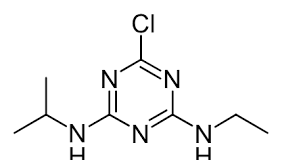
It’s designed to kill weeds. It does that job well. Unfortunately, it does more.
I have learned much about toxins and human health over the past few years, and am repeatedly thinking: What happens when a chemical engineered to alter plant biology begins interacting with human biology?
In interviewing Dr. Bruce Lanphear a couple of years ago, this became an especially critical question about the biology of developing children? How are we affected? And, what can we adults do about it? Listen to a previous chinwag with Bruce here.
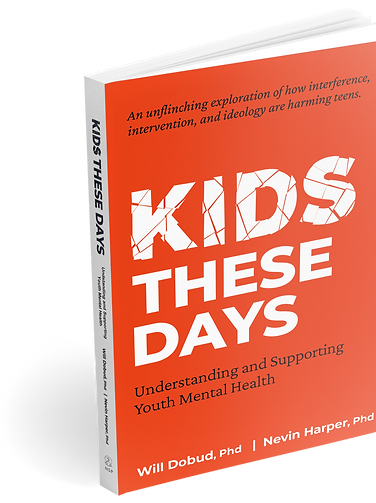
This second question sits at the heart of a broader cultural thesis explored in our book Kids These Days. We believe that children today are not fragile by nature. They are however exposed to and navigating increasingly harmful environments, harmful systems, and harmful ideas. We often point to single causes and demonize them.
When we talk about protecting kids, we often focus on screens, social media, or misleading ideologies.
We rarely talk about what’s in their water. Maybe it’s time we did. Well, I did, and I’m going to share here a bit of what I found out.
While researching the book, we came across a troubling account of chemical exposure. In the late 1990s, biologist Tyrone Hayes began studying frogs exposed to small amounts of Atrazine. These amounts were comparable to those found in agricultural runoff.
What he observed was startling. More startling was who was funding his research and eventually went after him to suppress his findings: Syngenta, the manufacturer of the chemical at the time.
What did Dr. Hayes find that upset Syngenta so much? Male frogs developed female characteristics. Some even produced eggs. Others showed both male and female reproductive tissue. In male frogs testosterone levels dropped. Estrogen levels rose.
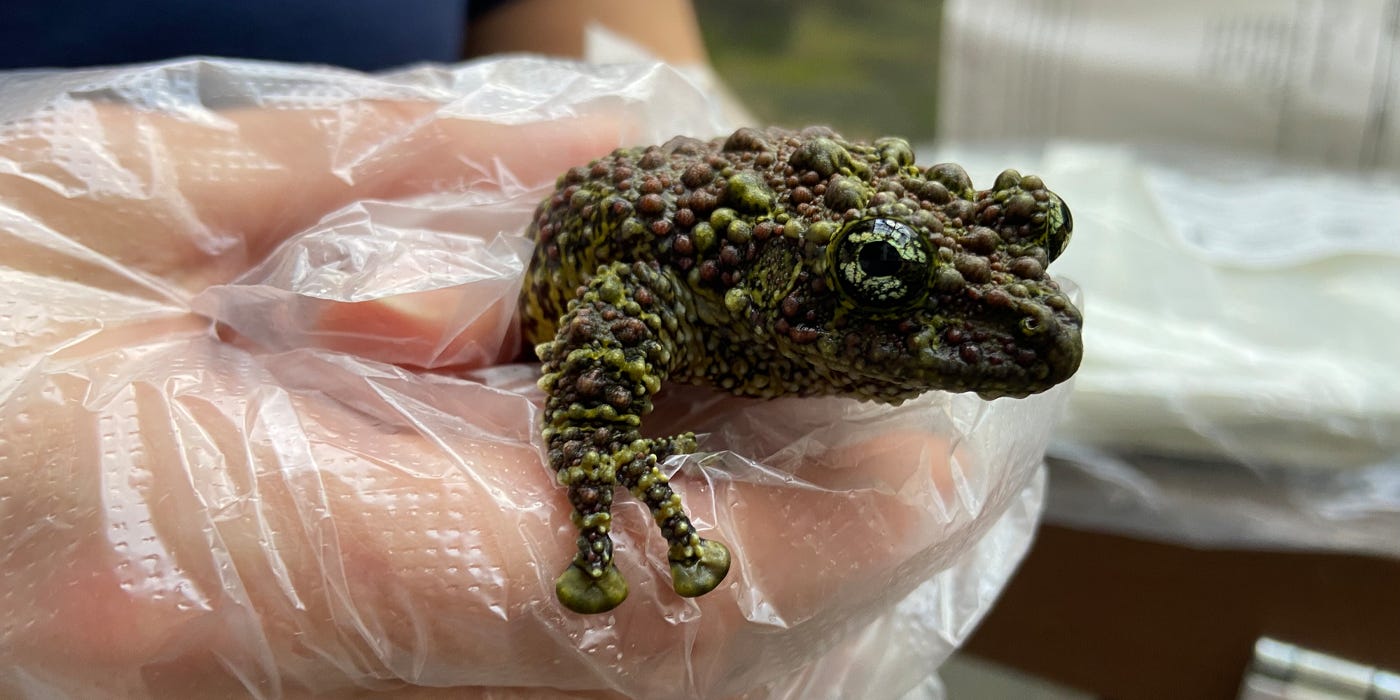
Lab Frog (missing photo credit—sorry)
And these were not massive toxic doses. They were low-level exposures. Subtle. Environmental. I know Dr. Lanphear would say low-level does not mean safe!
Frogs are sensitive creatures, yes. But they share something fundamental with us: a sensitive hormone system that runs on chemical signals.
Hayes’ findings suggested atrazine wasn’t simply toxic in the conventional sense. It behaved like an endocrine disruptor. It presented as a compound capable of interfering with the hormonal signals that guide development, reproduction, and long-term hormonal health. He then found similar results in other species.
The frogs were not just a laboratory curiosity. They were a warning sign, a signal to alert the public that Dr. Hayes tried to share in his publications. His personal story is frightening. He explains in the video that he was pursued and intimidated by Syngenta and associated bad actors for years, trying to scare him and ruin his career. All to keep his research from the public’s knowledge.
That was until finally the courts held the manufacturer responsible for their actions. Dr. Hayes’ research findings are still not common knowledge, yet they should be.
This makes me suspect that further suppression of knowledge has probably continued.

Biologist Dr. Tyrone Hayes (2018) Photo Credit
Hormones don’t just regulate mood swings and puberty. They are our developmental architects.
In boys, testosterone helps shape reproductive organs, muscle mass, voice changes, and brain development. For those who read Adults in the room regularly, you will recognize this is basically the third instalment in a series on boys and testosterone. In girls, estrogen coordinates its own complex choreography. Both hormones are part of an intricate balance.
Atrazine has been shown in animal and cellular studies to increase the activity of aromatase, the enzyme that converts testosterone into estrogen. In simple terms, it may tip the hormonal balance.
Now imagine that shift happening not in a fully developed adult, but a fetus. Or in a 12-year-old entering puberty.
During those windows, small hormonal changes can alter lifelong developmental trajectories.
When we talk about harmful environments, this is what we mean. We share in Kids These Days a number of different conditions that interfere with children’s ability to develop according to their biological blueprint.
Toxins are but one, but maybe more influential than most realize.
Over the past several decades, researchers have documented concerning trends: declining sperm counts, lower average testosterone levels in young men compared to prior generations, and rising rates of male infertility in parts of the world. See here for a previous Substack on these topics.
No single cause explains this. Nutrition, obesity, stress, sedentary lifestyles, plastics, and multiple chemical exposures likely interact in complex ways. But endocrine-disrupting chemicals need to be closer to the centre of the conversation.
Animal research shows atrazine exposure can reduce testosterone and impair sperm development. Some human studies have found associations between atrazine exposure and reduced semen quality in certain populations. Causation is notoriously difficult to prove in environmental health, but the biological mechanism remains plausible and worthy of public interest.
If even small hormonal shifts during fetal life or adolescence affect testicular development or long-term endocrine balance, the consequences could echo across decades.
This isn’t about panic. It’s about pattern recognition. Biological changes are happening concurrently at a time of increased conversations about gender ideology which includes identifying with a gender opposite to one’s biological sex, or as not male or female (non-binary).
We also talked about increased diagnoses of gender dysphoria and what may be contributing to it. We cautiously suggested that environmental toxins that continually alter our human biology may be a contributing factor. Endocrine disruption coupled together with the more frequent conversation of gender fluidity may be contributing to complex feelings and confusion in kids.
There, I’ve put it in print. I hope you can see the need for further research and to not shy away from this conversation. This is not about how we treat people. This is not about individuals who ‘transition.’ This is about being curious if there are underlying causes changing human and human behaviour that may be attributable to toxins in our environment.
This is about identifying harm.
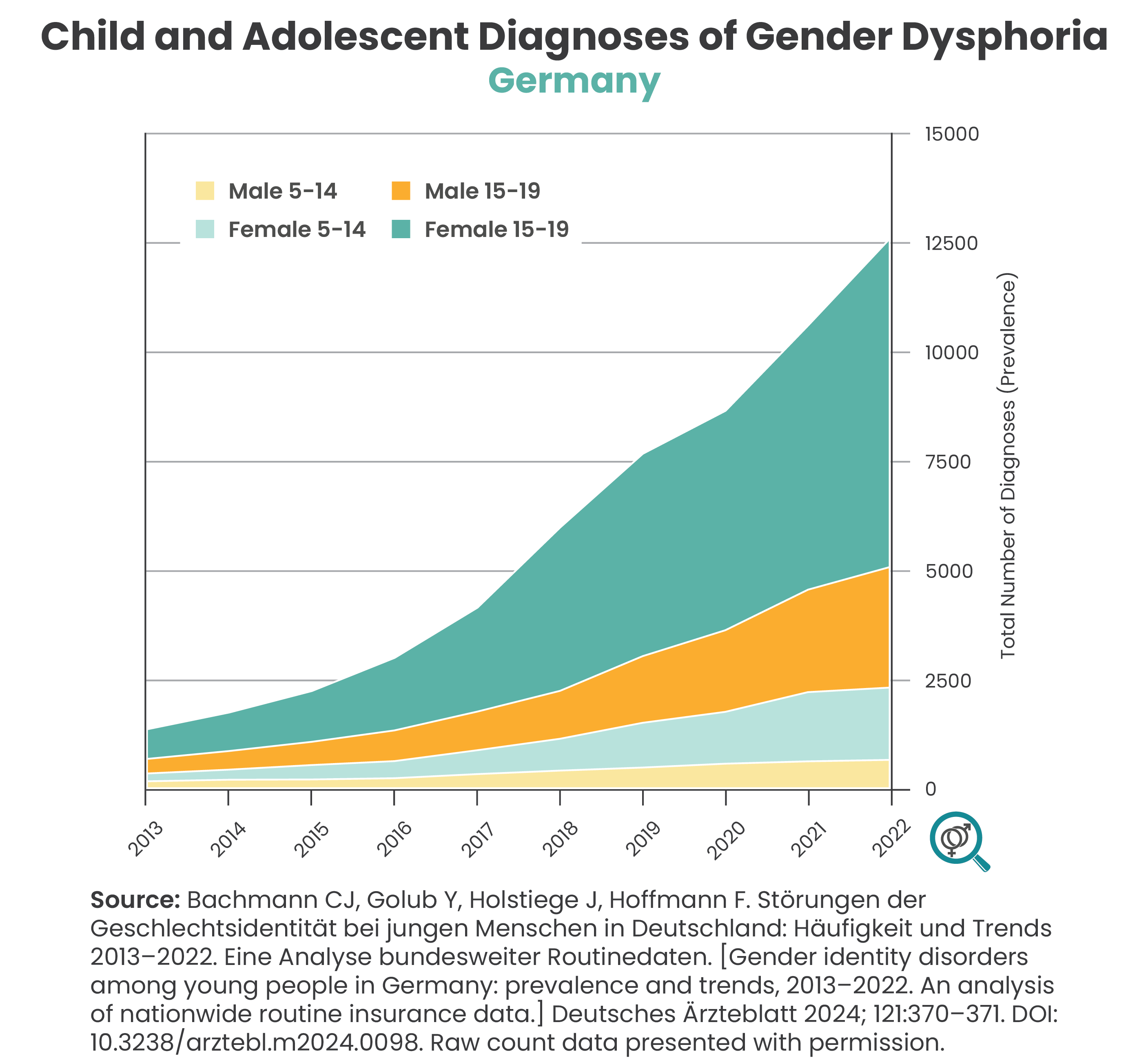
The chart above, showing increased rates of gender dysphoria diagnosis in Germany since 2013 was published by The Society for Evidence-based Gender Medicine. Questioning what conditions may lead to gender dysphoria, they published on their website the following statement with no reference to toxins, but rather the reality that gender dysphoria often is present with concurrent mental health issues—which can be symptoms of toxicity in the body:
“Historically, the small numbers of children presenting with gender dysphoria were primarily prepubescent males. In recent years, there has been a sharp increase in referrals of adolescents, and particularly adolescent females, to gender clinics. Many do not have a significant history of childhood gender dysphoria and a number suffer from comorbid mental health issues and neurodevelopmental conditions such as autism (ASD) and Attention-Deficit/Hyperactivity Disorder (ADHD). The reasons for these changes are understudied and remain poorly understood.”
Put more bluntly here by Dr. Hayes and his colleagues in 2006from a paper published in the journal Environmental Health Perspectives:
“Atrazine is a potent endocrine disruptor that both chemically castrates and feminizes male amphibians. It depletes androgens in adult frogs and reduces androgen-dependent growth of the larynx in developing male larvae. It also disrupts normal gonadal development and feminizes the gonads of developing males.”
The language in this last passage is cutting. Chemically castrates and feminizes male amphibians. We will not have controlled trials of Atrazine on humans. The harm is known and it would be unethical to knowingly give the chemical to humans to study health outcomes. Why then do we let it trickle into our lives in any amount?
When multiple influences lean in the same direction, responsible adults should pay attention. Understudied and poorly understood translates to a need for more questions. More research. More open dialog. We really don’t know the full harm to human health of Atrazine, but hormonal function and sexual reproduction are well established in animal models.
Atrazine doesn’t just stay on the crops. It travels with rainwater into streams and groundwater. In agricultural regions, it has been among the most frequently detected herbicide in drinking water. We shared the numbers in our book, so I will not revisit them here. Just to say, many of us are exposed.
For infants whose bodies are developing at extraordinary speed, the impact is magnified. For pregnant women, that matters more. Children don’t choose their water supply. They inherit it.
We have the right to body autonomy, to knowingly choose what goes in and what we are exposed to. This is informed consent.
This is where the Kids These Days thesis becomes urgent. If young people are struggling, whether physically, emotionally, or developmentally, we must examine the systems surrounding them. Not just the apps on their phones, but the chemicals in their ecosystems, and the social influences and changing ideologies of modern times.
Protection is stewardship.
And in this case, stewardship of our future generations. While I have argued against overprotection, this is not one of those cases. Environmental toxins are the invisible predators that we must find and shield our kids from.
It’s easy to feel overwhelmed by discussions of environmental exposure. I can even feel stress when Dr. Lanphear’s Substack delivers a new article to my email inbox! I trust his research, am often disturbed by the truths, and yet I can’t not read them.
Industrial agriculture chemical uses are vast. Regulatory frameworks are complex and often corrupted by corporate actors. Scientific debates go on.
But history shows that adults can step up. And should step up as we cannot wait for governments to intervene.
We removed lead from gasoline, eventually, mostly, even though we long-understood its neurological harm. We reduced second hand smoke exposure, eventually, mostly, even though we had long-recognized its dangers to human health. We improved water safety standards in response to contamination crises. Well, we still have water problems in many communities across the globe!
Progress happens when evidence meets moral clarity.
The conversation about atrazine is not finished. It is just beginning. Scientific debate continues. Regulatory agencies weigh risks differently. But waiting for perfect certainty is not the same as exercising wisdom.
I believe a hopeful tone is not naive. It is practical. And, to be honest, I believe many are afraid of looking at the relationships between chemicals like atrazine and its possible links to increased occurrence of gender dysphoria in our children and youth.
We need to step past fears and take action.
The real issue is not just one herbicide alone.
It’s whether we are willing to examine the systems we’ve built and ask: Are they aligned with human flourishing? If not, what can I do? A simple answer is to ask questions. Be vocal. Be the adult in the room. Start the conversations that lead to change.
If frogs can serve as early indicators of endocrine disruption, perhaps they are also reminding us that ecosystems are interconnected. What touches soil and water eventually touches us.
Children today face pressures from every direction. Some are social. Some are economic. Some are digital. And some are chemical.
The encouraging truth is that adults still have agency. We can demand better science. Better regulation. Better transparency. Better precaution where children are concerned. Better conversations. Better responses…
Protecting kids from harmful environments isn’t alarmism. It’s civilization.
Let’s choose to act. Act, but not out of fear, but rather out of responsibility and care for the next generation.
Let me know how this lands for you? Join the conversation. And if you have suggestions for topics to explore, let me know.
Thanks for reading adults in the room.! This post is public so feel free to share it.
And if you haven’t yet picked up your copy of Kids These Days, please support our efforts to address youth mental health and buy yourself a copy. Hell, buy your friends a copy or two as well!
And please give a review wherever you buy your books. Reviews are one of the easiest and impactful ways to help authors get their work seen, read, and hopefully to make an impact in the world.
Be well,
nevin
No posts
Comments
Nothing yet. Say the first thing.
Sign in to join the conversation.