
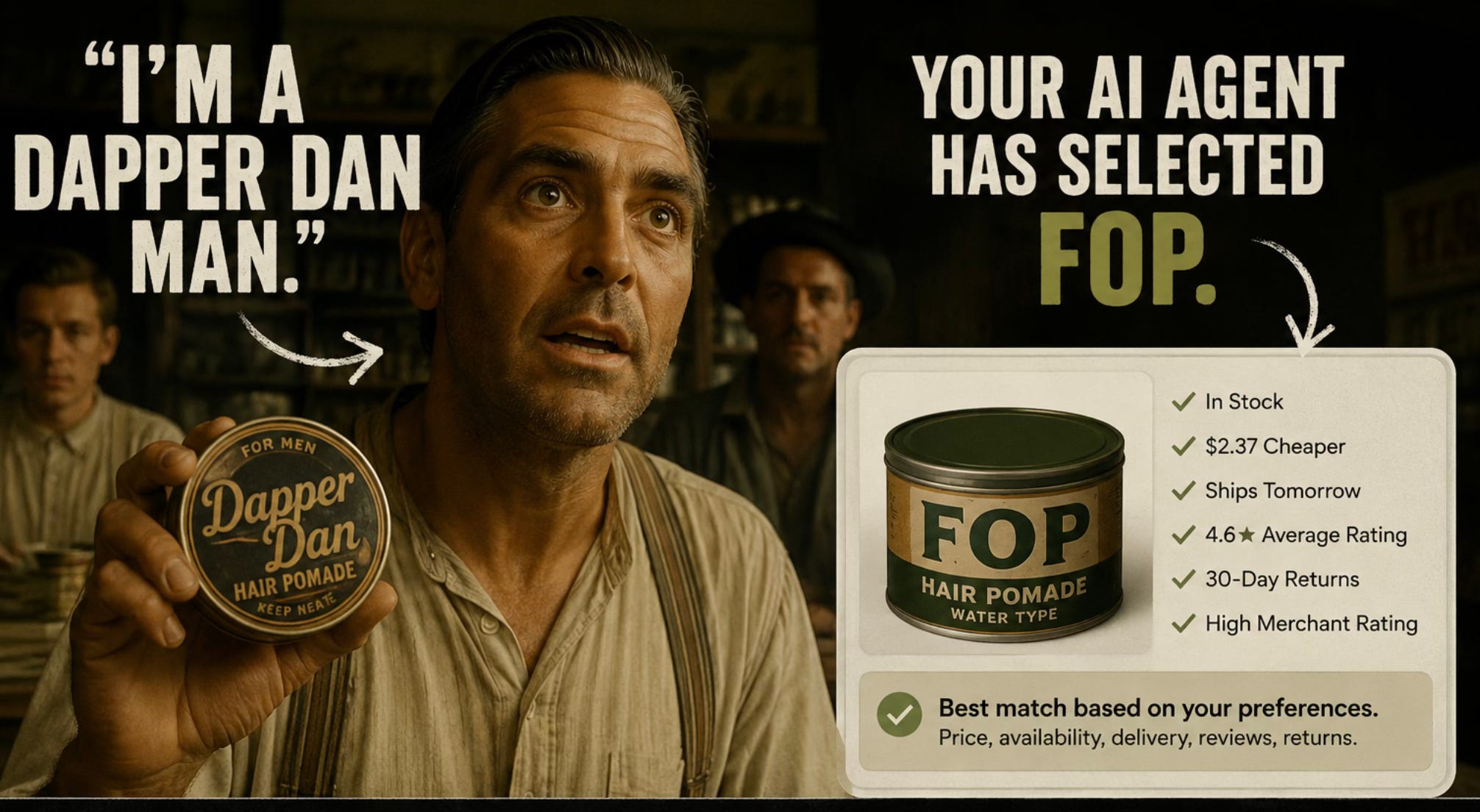
We learned how to interrupt them, follow them, retarget them, make them laugh, make them nervous, convince them that the shoes they looked at three days ago are now somehow urgent. But all of that is lost on someone… not human.
Your audience now includes AI agents browsing products and comparing offers. They’re even evaluating and completing a transaction with no human even looking at the ad. That changes more than targeting.
Most marketing strategies assumes that a human is on the other side of the impression, reads the headline, “feels” something, clicks, comes back later and makes a purchase but an agent does not experience an ad that way.
It does not care that the lighting is beautiful or does not feel FOMO because the countdown clock turned red. It is highly unlikely it will be moved by a lifestyle photograph of an attractive person holding the product near a suspiciously clean kitchen.
It evaluates price, availability, delivery, reviews, return policy, warranty, specs. The rules it was given by the user. Great creative may still influence the human who set those preferences. But by the time the purchase decision is made the creative may never be seen.
Great creative. Shame the buyer was a bot.
Advertisers have traditionally treated product feeds, structured data and metadata as operational inputs. Necessary, yes. Strategic, hmmmm? Not particularly. And this distinction is fading. When AI agents are evaluating products and offers the quality and structure of the information surrounding the product may matter as much, if not more, that the campaign promoting it.
A beautifully marketed product with incomplete specs or poor machine “readable” data may lose to a less exciting competitor whose information is easier for an agent to understand. The landing page was built to persuade a person and the feed may be what persuades the agent. So this means the people managing product data, inventory, pricing, etc. are no longer supporting the media strategy from the sidelines. They’re sitting directly inside it.
Naturally adtech will rename this transformation, add a dashboard and then charge separately for it.
Advertisers spend a ton of time and money trying to identify high-intent users or what they look like in the wild, but an agent acting on a specific request may be the purest expression of intent the industry has ever seen. It will have a budget, a need, a deadline and permission to swipe that card (figuratively). I don’t know about you but this sounds like the perfect customer. But, at this same time a customer that is immune to the persuasion techniques the industry has spent years perfecting.
The valuable signal may no longer be that a person visited a product page three times. It may be that an agent has been instructed to find a specific product, within a particular price range, from a merchant that meets a defined set of conditions.
This creates an obvious commercial opportunity.
But is also creates a new targeting problem: how do platforms identify agent-driven demand, and how quickly will they find a way to auction access to it?
Advertising has always had a disclosure problem. A sponsored search result is clearly labeled but most users do not spend much time examining exactly why one result appeared above another. Agentic interfaces make this more complicated because when an agent recommends a product, the user may not know whether it selected the option because it was objectively the best match or because the platform favored its own inventory or because the agent was operating under commercial rules the user never saw.
The ad may no longer look like an ad.
It may look like an answer.
That makes transparency more important, not less.
Advertisers want to know what they paid for. Users want to know why the agent made the recommendation. All the while regulators will want to know whether commercial influence was disclosed. And the platforms will almost certainly explain all of this in language no normal person will ever read.
The simple conclusion is that brand advertising becomes less important when machines make more decisions. But I don’t think that’s right. The brand may matter more because people will still determine the preferences and constraints their agents use.
A person may instruct an agent to choose a trusted brand, avoid unfamiliar sellers, prioritize green products or reject the cheapest option. That preference was built somewhere and you bet that advertising, experience, reputation and word of mouth all contributed to it.
But brands are going to have to pass two different tests. First, they need to earn the human’s trust. Then, they will satisfy the machine’s evaluation. Simply put, a brand that creates desire but provides weak product data may fail the second test. A brand that is perfectly structured for machine evaluation but has no human trust may fail the first. If you want to succeed, you’ll need both.
Advertising measurement already struggles to explain what caused a conversion. Now add an intermediary that may conduct the research, compare the options, interact with multiple platforms and complete the transaction on the user’s behalf. Sounds fun!
But here’s another problem we haven’t really talked about yet. For years we’ve treated bots as something to detect, filter and exclude. If you saw bot traffic in Google Analytics something was usually wrong and it meant bad data and wasted ad spend.
What happens when some of those bots are legitimate buyers?
Suddenly “bot traffic” isn’t one bucket anymore. We have bad bots scraping your site, search engine crawlers indexing your content and now we’ve got AI agents researching products for real people and event completing purchases.
The analyst’s job just got a lot harder becuase won’t just be separating humans from bots anymore but separating the bots and figuring out which ones actually represent customer intent.
That’s a very different measurement problem than the one GA4 was built to solve.
The industry has spent years arguing over who gets credit and now Agentic comes alone and removes the “touchpoints” while leaving the argument completely intact. We celebrated filtering bots out of our reports. Tomorrow will be arguing over which bots deserve credit for the conversion.
It’s poetic.
Advertisers are used to optimizing bids, audiences, creative and placements but what happens agents participate in the buying process? Optimization is going to include a lot more. Product specs must be accurate and pricing must be consistent. Inventory has to be visible. Policies must be machine-readable.
Brand preferences must be established before the agent begins comparing options.
This is not simply another media channel but it is a new decision layer sitting between the advertiser and the customer and that layer will create new intermediaries, new fees, new forms of influence and new opportunities for platforms to make the decision process less transparent while calling it more efficient.
Advertising will still need ideas and creativity.
It will still need brands that people recognize and trust.
But it will also need to communicate with systems that do not laugh, feel urgency or care how expensive the commercial looked.
We spent twenty years teaching machines how to buy media. Now we’re teaching media how to sell to machines.
The brands that win won’t just have the best creative .. they’ll be the ones an AI can understand, trust and recommend.
That’s not the end of advertising. It’s the beginning of a very different one.
Comments
Nothing yet. Say the first thing.
Sign in to join the conversation.