
My honest answer is almost always the same: that’s not quite the right question. Judging a product in the abstract is harder than it sounds, and ultimately less useful than it seems. What actually matters is whether it’s right for you.
Most products on the market exist because someone formulated them with a specific purpose in mind. A lightweight gel moisturiser was designed to hydrate without adding weight or shine. A rich, occlusive cream was designed for dry, compromised skin that needs a barrier. A niacinamide serum was developed to address uneven tone and congestion. A dewy foundation was built to give a skin-like, luminous finish.
If they do what they were made to do, they are — by definition — good products.
The question was never really about the product, the question is always about the fit.
Skin is not a category. It’s a specific, individual condition that shifts with age, season, climate, stress levels, hormones, and the products you’re already using. What works beautifully for someone with dry, calm skin can trigger breakouts in someone with combination skin. A “universally loved” tinted moisturiser can look patchy on textured skin and flawless on smooth skin. The bestseller everyone seems to swear by might simply not be right for you. Not because it’s bad, but because it wasn’t made for your particular skin.
There is no universal answer to “is it good?” There is only: does it do what I need it to do, for my skin, in my life?
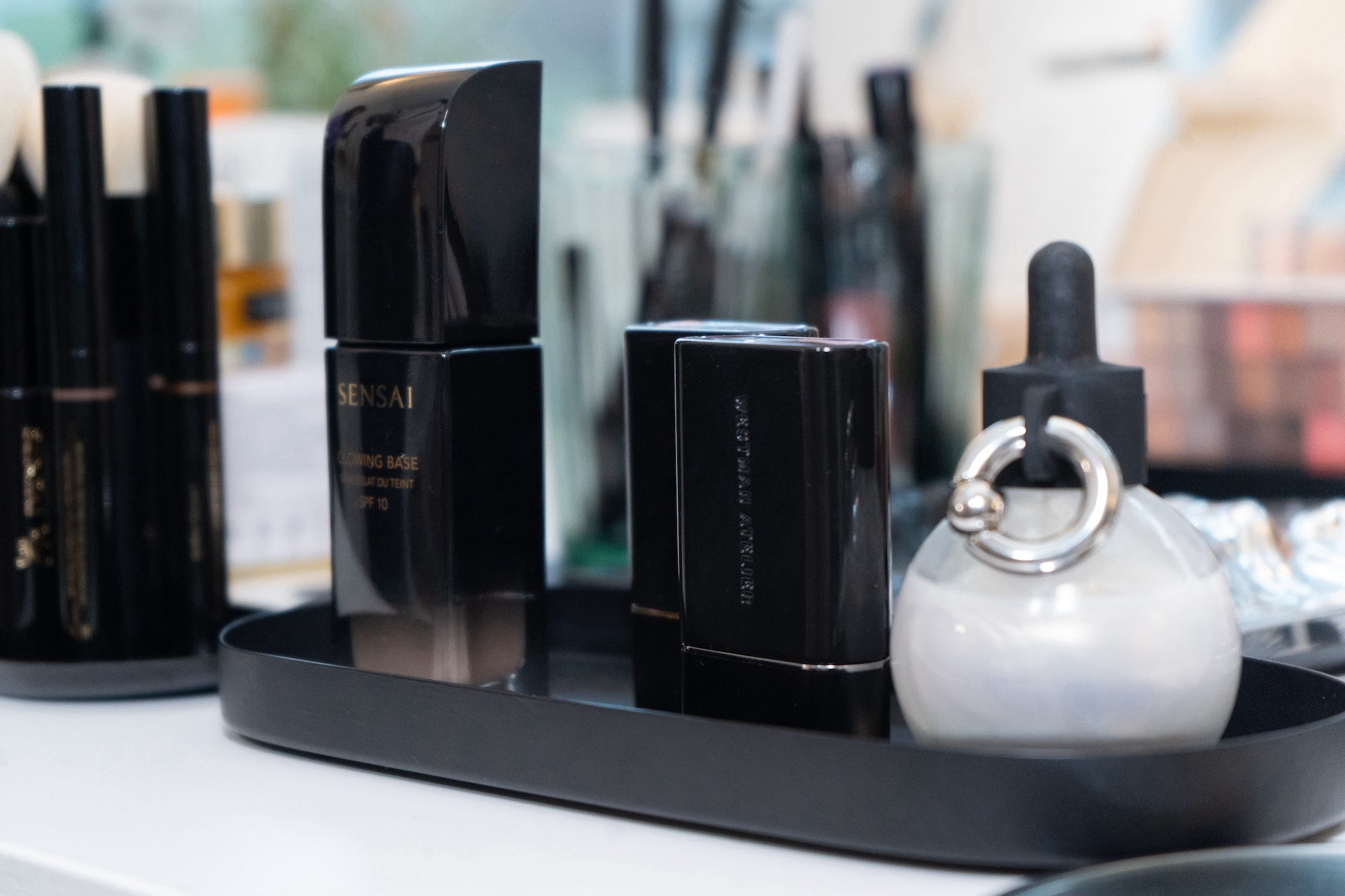
photo by Chantal Teixeira
Start with what you actually know about your skin. Not the labels you’ve collected over the years (”I think I’m combination?”), but real observations. How does your skin feel in the morning before you’ve applied anything? Where does it get oily and when? What happens after you cleanse? Does it feel tight and uncomfortable, or balanced? Do you flush easily? Does your skin react to fragrance, or have you never noticed a problem?
Knowing your skin type is the foundation, but it’s only the beginning. You also need to understand what you’re asking products to do for you: are you managing congestion? Supporting hydration? Working on tone evenness? Dealing with sensitivity? The answers shape everything: which ingredients to look for, which textures make sense, what to layer and in what order.
And then there’s a third layer that often gets dismissed as shallow, but genuinely matters: personal preference.
Budget is real. Not everyone wants to spend on a full clinical skincare routine, and they shouldn’t have to. There are excellent products at every price point. Your willingness to spend and on what is a legitimate criterion, not a compromise.
So is how a product feels to use. If you dislike a thick, heavy texture, you won’t use it consistently, regardless of how well it performs on paper. If you need your skincare to be minimal and fast, a seven-step routine won’t serve you, even if it’s objectively effective. If you love the ritual of a brand whose philosophy genuinely resonates with you, that connection has value too.
These aren’t soft considerations. They’re part of the fit.
I think we’ve absorbed a certain beauty-industry habit of asking “is it good?” because that’s the question most content is structured around. Reviews, rankings, “holy grail” lists, dermatologist-approved roundups, they all answer a question that is ultimately incomplete, because they can’t answer it for you.
The shift I encourage my clients to make is from evaluating products in the abstract to evaluating them in context: your skin, your goals, your preferences, your life. Once you have that framework, the product landscape becomes much easier to navigate. You stop being distracted by what’s trending and start recognising what’s actually useful.
This is exactly what I work through with clients in my Skincare Consultations. Not a product shopping list, but a proper conversation about skin, habits, and goals that leads to recommendations that actually make sense for you as an individual. And in my Makeup Workshops, we take the same approach: rather than teaching a generic technique or recommending a universal kit, we work with your features, your skin, your comfort level, and what you want to be able to do day-to-day.
There are no boxed solutions here. There’s just careful attention to the person in front of me. Because the right product is the one that’s right for you and that’s always worth figuring out properly.
Blotting papers are one of those tools that tend to get overlooked, which I find surprising given how useful they are. The Sensai Face Fresh Paper is made from Tosawashi, a traditional Japanese handmade linen paper, and it shows in how it performs: exceptionally thin, non-powdered, absorbs excess sebum without lifting or disturbing the makeup already on the skin. No white cast, no product drag. On set, that precision matters.
I tuck a few into every client’s touch-up bag. Whether it’s a long shoot day or an evening event, having something that refreshes the finish without requiring re-application is quietly invaluable. 100 sheets per pack, and they last. If you’ve only ever reached for a tissue or a pressed powder in a rush, this is worth knowing about.
I was on set recently for a branding shoot, the kind of work I find myself returning to with real appreciation. There’s something different about it. The makeup isn’t just seen; it’s recorded with intention, in service of how someone wants to be perceived professionally. That sense of purpose changes the work.
What stays with me about these shoots is what happens in the chair before we ever get to set. The women who book this kind of job are usually accomplished, clear about who they are, and still — understandably — a little exposed in the moment. Sitting for a portrait that will represent you professionally is not a small thing. My job isn’t only to make the makeup right. It’s to make sure that when they stand up and walk onto set, they feel like themselves only more so. Grounded. Ready. Confident in the way they already are in their work.
That’s what I’m there for.
If you’re planning a branding shoot and looking for a makeup artist who understands what that kind of image needs to do, I’d be glad to be part of your team. You can reach me via adriennbodor.com.
No posts
Comments
Nothing yet. Say the first thing.
Sign in to join the conversation.