
A client asked me recently, with genuine curiosity rather than dismissal: "Is K-Beauty still a thing?" She had noticed the quiet. Fewer breathless articles, less Instagram pressure around 10-step routines, certain glass skin aesthetics retreating from everyday beauty conversation. Her question was fair. And my answer was: it depends on what you mean by K-Beauty.
Because there were always two things running in parallel under that label. One was a marketing and lifestyle phenomenon: elaborate multi-step routines, viral single ingredients, aesthetic ideals built around very specific (and very filtered) skin outcomes. The other was something quieter and more durable: a formulation culture with genuine technical depth, built on decades of skin barrier research, lightweight texture development, and sun protection science that the Western beauty industry had largely ignored.
The first one has shifted. The second one never stopped.
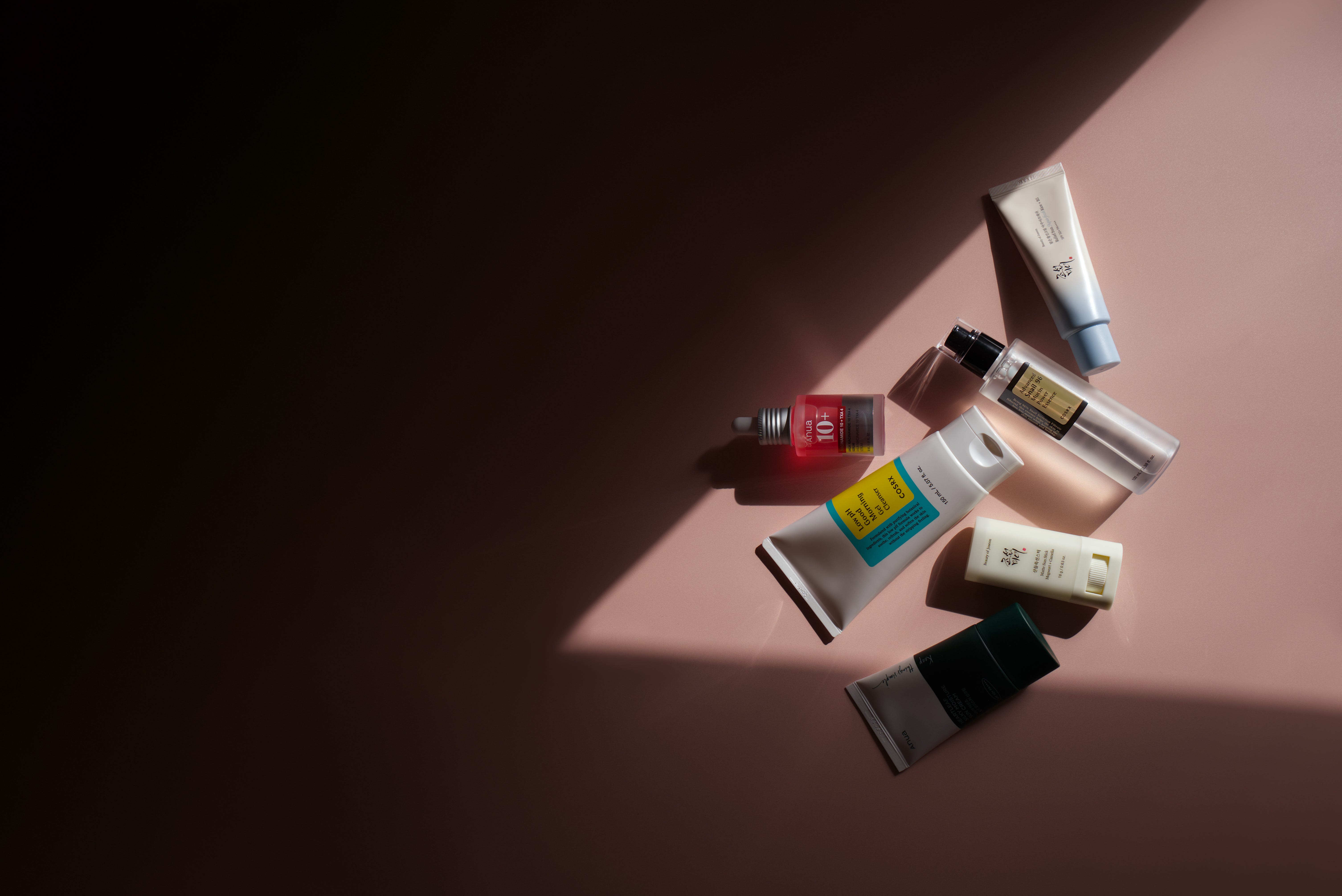
photo by Chantal Teixeira for Disruptif Beauty
When K-Beauty hit mainstream Western consciousness roughly a decade ago, it arrived with a compelling pitch: your skin problems aren't the result of bad luck, they're the result of insufficient care. The 10-step routine was both a product system and a philosophy, an argument that skin deserved more attention, more gentleness, more layers of considered treatment.
Some of that was genuinely useful. The emphasis on hydration over stripping, on barrier support rather than aggressive exfoliation, on SPF as a non-negotiable daily step: these were ideas that shifted how a lot of people thought about skincare, and for the better. Korean beauty introduced a significant portion of Western consumers to ingredients like centella asiatica, snail mucin, and later well-formulated niacinamide and retinal products, long before these became standard vocabulary in European and American formulations.
But the hype created its own problems. Routine complexity became a performance. More steps meant more products, which meant more spending, which meant more content. The skin itself became secondary to the ritual.
And then there was glass skin. Worth addressing directly, because the conversation around it is more nuanced than "it's over." As a runway and editorial finish, glass skin is very much still present. Several recent collections have leaned into that high-luminosity, almost lacquered complexion as an intentional aesthetic statement. What has faded, and what I'd argue deserved to fade, is the mass-market version: the idea that this finish was attainable daily, for everyone, through the right 12-product routine. Sold through heavily filtered images and aspirational content, it turned a specific creative choice into a standard that most real skin was never going to meet. The editorial version is valid. The pressure it created for everyday consumers was not.
Here is what gets missed in the "is K-Beauty over?" conversation: Korean laboratories are still among the most sophisticated cosmetic research environments in the world. The UV filter technology developed and approved in South Korea remains significantly more advanced than what is currently approved for use in the United States. European formulations benefit from broader filter approvals, but Korean brands have been developing and refining lightweight, skin-compatible sun protection for longer and with more consistent consumer demand than almost anywhere else.
The same applies to texture innovation. The aqueous, fast-absorbing, non-greasy skin feel that many consumers now expect from serums, moisturisers, and sunscreens largely came from Korean formulation. The emphasis on layering products that don't pill, don't interfere with each other, and sit quietly under makeup without disrupting it is a Korean skincare priority that has reshaped how the global market thinks about product feel.
As a makeup artist, this matters to me directly. What sits beneath makeup affects everything: finish, longevity, how foundation moves, whether SPF creates a greasy slip that causes colour to migrate. Korean sunscreens in particular have been a professional staple for me for years, precisely because they understand the makeup-skin interface in a way that many Western SPF formulations still don't.
One development worth naming alongside the skincare conversation is the growing quality and accessibility of non-invasive professional treatments, and Korea is worth crediting here too. Treatments like Carbon Laser Peels, Salmon DNA (PDRN) therapy, Lifting Thread treatments using PDO threads, and the now widely adopted Skin Booster injections with hyaluronic acid micro-doses all have strong roots in Korean dermatology and aesthetic medicine. These aren't shortcuts or alternatives to a good routine. They work with the skin's own processes, stimulating collagen production, improving texture, and supporting long-term skin health in ways that topical products alone cannot replicate. Unlike traditional injectables, which temporarily alter the appearance of the skin from the outside, these treatments ask the skin to do something and over time, it responds. A well-maintained skincare routine and periodic professional treatment are a more coherent long-term strategy than either alone. The Korean influence on how we think about skin doesn't stop at the product shelf.
The useful reframe is this: K-Beauty was never a routine to be followed as prescribed. It was always a source of well-developed products to be selected from deliberately. The 10-step system was a marketing framework, not a dermatological requirement. What remains is a deep and still-evolving catalogue of genuinely well-formulated products, often at prices that make no concessions to European or American brand premiums.
The question is no longer “should I be doing K-Beauty?” It’s the same question it should always have been: does this specific product work for my skin, in my routine, under my conditions?
If you're in Switzerland and want to explore this thoughtfully rather than randomly, two online retailers worth knowing are Disruptif Beauty and Sinless Skincare. Both are careful, considered curations rather than warehouse catalogues. Neither is trying to sell you a system. They're selling you products, with enough context to make an informed choice.
The Aqua Fresh version of the Relief Sun line was developed for those who found the original too rich. It’s built for combination to oily skin, and it shows. Lightweight, no white cast, no slip under makeup. The 30% rice seed water keeps it hydrating without heaviness; panthenol supports the barrier and calms reactive skin. Fragrance-free, which I always appreciate when working close to a client’s face.
One insider detail worth adding: I’ve been testing this on myself through a drier, more dehydrated patch, and it holds up better than I expected. The formula is noticeably more comfortable than the original, more of a skin-drink than a skin-seal, if that makes sense. It sits well even when the skin is asking for more. So while it’s officially positioned for combination to oily, I wouldn’t rule it out if your skin is dehydrated rather than genuinely dry.
From a professional standpoint it layers cleanly, doesn’t interfere with foundation, and holds up over a long day. One of the more reliable everyday SPFs I’ve come across at this price point.
On slow seasons and the things worth doing with them
Quieter periods in freelance work have a particular quality. They can feel like gaps: in momentum, in income, in the sense of forward motion that a full calendar provides. I’ve had a slower stretch of bookings recently, and I’ve been sitting with that honestly rather than filling it with noise.
What I’ve chosen to do is with some of that space is work through the Life Designer Journal by Intelligent Change, guided by coach Monia Pyraki. It’s structured around five pillars: identity, mindset, values, an ideal day, and a ten-year life vision. A thinking tool, not a planner. Good frameworks don’t tell you what you don’t already know. They ask the right questions in the right order and give the answers somewhere to land. I’m enjoying the ride.
There’s something fitting about doing this kind of work during a slow period in the business. When the diary is full, the tendency is to keep moving. Slower seasons create space to ask whether you’re moving in the right direction. I’d rather use that space deliberately than wait for the bookings to pick up and carry on as before.
No posts
Comments
Nothing yet. Say the first thing.
Sign in to join the conversation.