
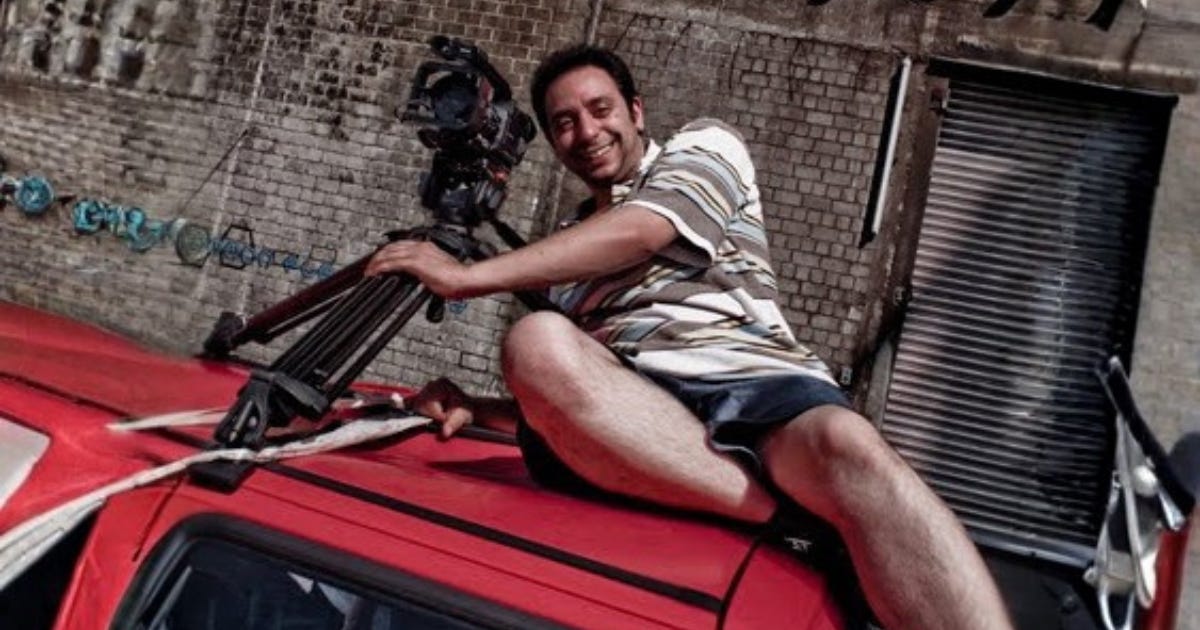
At twenty-four, I knew exactly what kind of filmmaker I was going to be. I had the directors I’d quote when people asked who influenced me. I had the kind of films I’d never make, the ones I considered beneath the work. I had a career shape already drawn in my head, complete with the festivals I’d premiere at and the reputation I’d build along the way. Twenty years later, almost none of that picture survived contact with the work itself. Not because I failed at it. Because the work kept rewriting the question of who I was.
I don’t say that with bitterness. I say it because I think it’s the part of this career nobody prepares you for, and the part we rarely talk about honestly in this industry. We talk about failure. We talk about rejection, about films that didn’t get made, about financing that fell through three days before the shoot. Those are real, and I’ll write about plenty of them. But underneath all of that sits something quieter and harder to name: the slow, unannounced replacement of the person you thought you were becoming with the person the years actually required you to be.
The picture I started with
The filmmaker I imagined at twenty-four had a clear aesthetic. I knew what my films would look like before I’d made one worth mentioning. I knew the kind of stories I’d tell, serious ones, the kind that got discussed rather than watched. I had opinions about commercial work that I’d now find embarrassing, mostly because I hadn’t done any and didn’t understand what it required.
That version of me also assumed a fairly straight line. Make a strong short. Get noticed. Make a feature. Build from there. I don’t think I was naive exactly, just untested. The line existed because I hadn’t yet met the things that would bend it.
What actually bent it
The first real bend came early, with a film that almost happened. I’d spent over a year developing it, the kind of project you build an identity around before it’s even shot. When the financing fell apart, what I lost wasn’t just the film. It was the version of myself who had a film like that to point to. I had to sit with the fact that the story I told people about who I was as a filmmaker had been resting on something that no longer existed.
The second bend was less dramatic and more corrosive, the kind that reshapes you slowly enough that you don’t notice until you look back. For a stretch of years, the work that paid wasn’t the work I’d imagined doing. Commercials. Corporate projects. A documentary I took for the money and ended up caring about more than I expected to. None of it matched the picture from my twenties. All of it taught me things that picture never accounted for, about pacing, about audiences who aren’t there for art, about the discipline of finishing something on a deadline regardless of how you feel about it that day.
The third bend came from people, not projects. Collaborators whose taste pulled mine in directions I hadn’t chosen for myself. A cinematographer who showed me that restraint could be more powerful than the ambitious camera moves I used to favor. An editor who cut something I’d shot and revealed a rhythm I didn’t know I’d been working toward. You don’t choose most of your influences. They arrive through the people you end up working with, and they change you whether you agreed to it or not.
The part I’m not going to resolve
I could end this by telling you it all worked out, that the filmmaker I became is better than the one I planned to be, lesson learned. That would be tidy, and it would also be a little dishonest. Some days I believe it completely. Other days I miss the certainty of the twenty-four-year-old who hadn’t yet been told no by enough financiers to develop a permanent skepticism about his own optimism.
What I can say honestly is this: the person who sat down with that first script and the person writing this newsletter are not the same filmmaker. Not in temperament, not in taste, not in what we’d consider a good outcome for a project. The gap between them isn’t a story of decline or of triumph. It’s just what twenty years of real work does to a person who started with a fixed idea of who they’d become.
I used to think that gap was something to fix, like I’d taken a wrong turn somewhere and could find my way back to the original plan if I tried hard enough. I don’t think that anymore. But I also haven’t fully made peace with what replaced it.
So here’s the question I’m sitting with, and the one I’ll try to answer next week: if the filmmaker I planned to become never showed up, who exactly did?
About Adolf El Assal
Adolf El Assal is an award-winning filmmaker, writer, producer, and international consultant. His films have screened at leading festivals and reached audiences worldwide through Netflix, Amazon Prime, and international theatrical releases.
Explore his work, book consulting sessions, or get in touch at www.adolfelassal.com.
No posts
Comments
Nothing yet. Say the first thing.
Sign in to join the conversation.