
Somewhere in a drawer, or more likely in a folder I haven’t opened in years, there’s a stack of deferral agreements. Each one says the same thing in slightly different language: my director’s fee, or my writer’s fee, or my producer’s fee, is owed to me, and will be paid once the film recoups its costs. I signed the first one without fully understanding what I was agreeing to. I’ve signed a version of it on every project since. None of them have ever paid out. Not one.
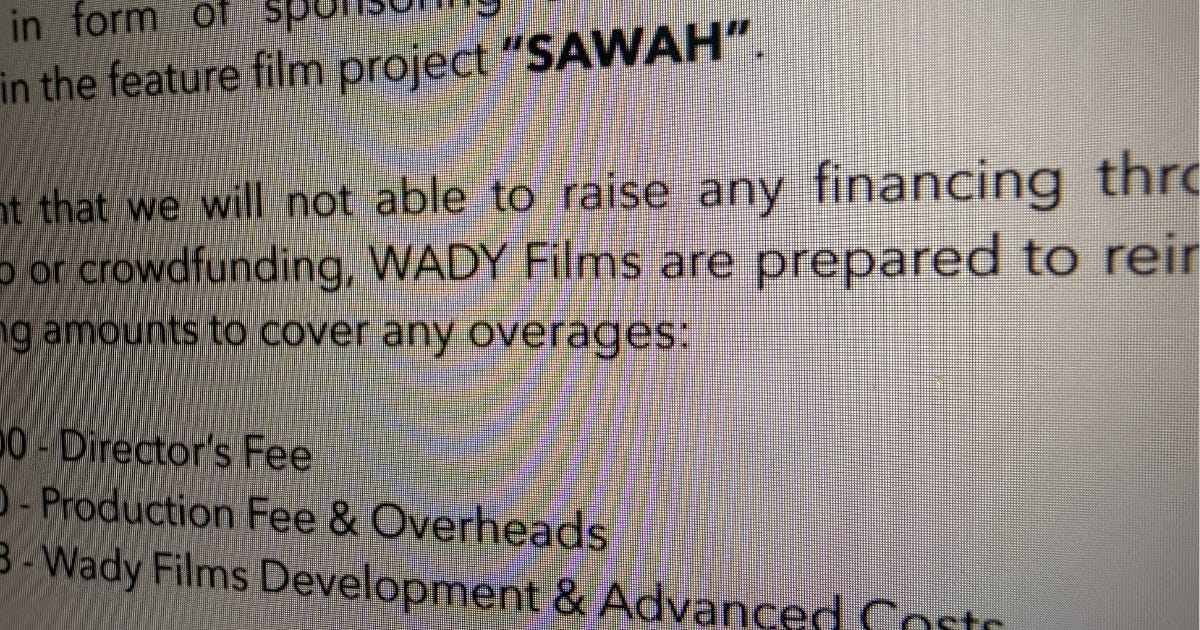
For anyone who hasn’t run into the term, a deferral is a straightforward idea. Instead of being paid your fee during production, you agree to be paid later, out of the film’s revenue, once it earns enough to cover its costs. It’s not charity and it’s not a gift. It’s a debt the film owes you, on paper, with your name on it. In theory, you get paid eventually. In practice, on every project I’ve made across twenty years, eventually never arrived.
I want to be precise about what that means, because “I worked for free” and “I deferred my fee” sound similar but aren’t. A deferral is a claim. It assumes the film will eventually make money, and that when it does, certain people get paid before others. Cast and crew minimums first, usually. Then financiers. Then, somewhere further down that list, the people who deferred their fees to get the film made in the first place. I was almost always one of those people, sometimes in two or three roles on the same project. Director’s fee deferred. Writer’s fee deferred. Producer’s fee deferred. All stacked on top of each other, all waiting on the same unlikely chain of recoupment.
At the time, deferring never felt like a sacrifice. It felt like the responsible move. The budget had a gap, the gap needed to close, and a deferral closed it without anyone else losing money they were counting on. I could absorb the risk because the fee wasn’t real to me yet anyway. It existed on paper, contingent on a future that might or might not happen. Giving up something contingent felt different from giving up something certain. That’s the logic that got me through one deferral. It’s also the logic that got me through twenty years of them, without ever stopping to ask what happens if none of them resolve.
None of them have resolved. That’s the part I don’t talk about often, because it’s not a dramatic confession, just a flat fact that sits there. Every film I’ve made is technically still in debt to me. Every one of those agreements is still, in theory, valid. And every one of them is functionally meaningless, because the films that would need to generate the revenue to trigger payment never reached that point. The deferral isn’t broken. It’s just permanently waiting.
What that does, over twenty years, is create a strange kind of paper wealth that never becomes real wealth. If you added up every deferred fee across every project, the number would look substantial. It would also be entirely theoretical, money that exists in contracts and nowhere else. I’ve built a career, partly, on being the person willing to carry that theoretical number instead of asking for cash up front. I don’t know many other professions where that’s considered a strength.
So here’s where I land, which is not really a landing at all. A deferral that never pays out starts to resemble the thing it was specifically designed not to be: a fee you gave away, just with better paperwork attached. I’m not sure if that makes every one of those agreements a quiet failure of the business model, or just the honest cost of making films that wouldn’t exist otherwise. Twenty years in, I still have both of those thoughts in the same week, sometimes the same day.
If you’re a filmmaker with your own stack of deferral agreements sitting unresolved somewhere, I’d guess you know exactly what I mean. I don’t have a tidy answer for either of us yet.
About Adolf El Assal
Adolf El Assal is an award-winning filmmaker, writer, producer, and international consultant. His films have screened at leading festivals and reached audiences worldwide through Netflix, Amazon Prime, and international theatrical releases.
Explore his work, book consulting sessions, or get in touch at www.adolfelassal.com.
No posts
Comments
Nothing yet. Say the first thing.
Sign in to join the conversation.