
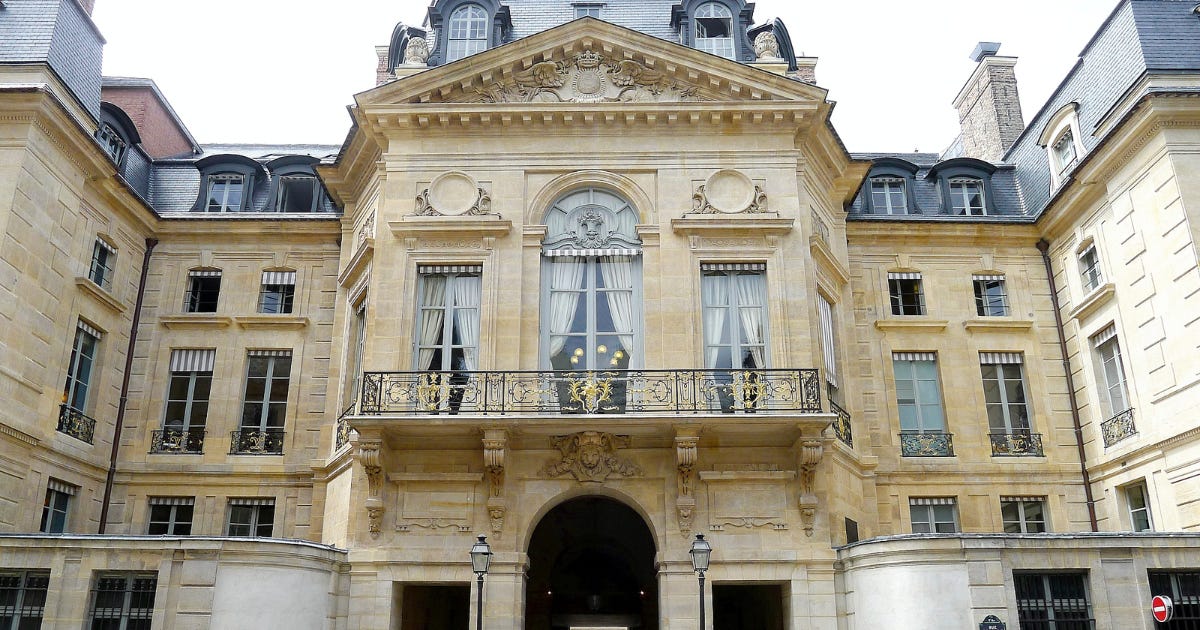
Nobody at the French Ministry of Culture called ahead to explain why I was being invited. The email just arrived. A roundtable in Paris, on the future of local film distribution, with people from Netflix, Amazon, Apple, and Google in the room. I read it twice to make sure I understood who else was attending. Then I said yes, because saying no to a room like that isn’t really a decision you make twice.
A year earlier, sixty French distributors had rejected Les Fameux Gars. I’d responded by releasing the film in theaters, on DVD, and on VOD all on the same day, after giving it away free for twenty-four hours first, in direct defiance of a release calendar the entire industry treated as fixed. The press had covered it as a stunt. Some of it as a controversy. Almost none of it as a strategy worth taking seriously, at the time.
And yet there I was, in a room built to discuss exactly the kind of distribution problem I’d just solved my own way, out of necessity, with no budget and no permission from anyone. I still don’t have a clean explanation for why I was invited. The honest version is that someone inside the Ministry had clearly been paying closer attention to the release than the press coverage suggested, and decided the person who’d broken the system from the outside might have something useful to say about why the system needed breaking in the first place.
The roundtable wasn’t a celebration of what I’d done. It was a policy conversation, with the people who run the platforms that were already reshaping how French audiences watched film, about whether the rigid windowing system, theaters first, then DVD, then television, then VOD, in a fixed and protected order, still made sense in a market where Netflix, Amazon, Apple, and Google didn’t need to wait their turn for anything.
I sat in that room as the example of what happens when someone with none of those platforms’ resources simply ignores the windows anyway. I’m fairly confident that’s exactly why I was there. Not because anyone thought my approach was the future of French cinema, but because it was proof the existing order wasn’t as fixed as everyone in the industry kept insisting it was. France did eventually loosen those windowing rules. I’m not going to claim credit for that on my own. What I will say is that being in that room, watching policy people ask platform executives direct questions about timelines that had been treated as untouchable a year earlier, made it clear the conversation had already shifted further than the public discourse around it suggested.
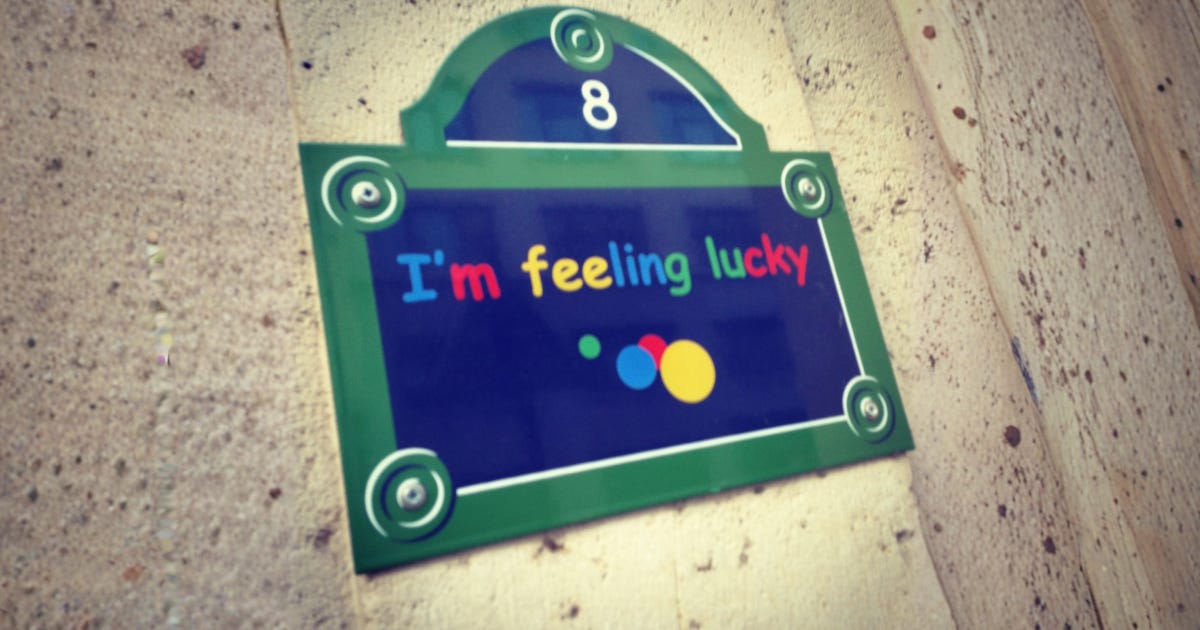
Same trip, different room. Google invited me to Paris separately, to talk about my experience releasing a film the way I had. Different audience, less policy, more practical curiosity about how someone with no marketing budget and no distributor had built enough momentum to end up discussed at a ministry roundtable in the first place.
I told them roughly what I’ve told you across these two pieces. No money for advertising agencies, so I went straight to platforms with real audiences instead. No festival willing to premiere the film, so I picked their opening night and built around it. No distributor willing to respect, or even negotiate, a release calendar, so I removed the calendar entirely and let the film exist everywhere at once. None of it had been a grand strategic vision. It had been a series of specific problems, solved one at a time, by someone with nothing left to lose by trying the obvious thing nobody inside the system was allowed to try.
What struck me in that room wasn’t the questions about distribution mechanics. It was how many of the people asking them had never spoken with a filmmaker who’d built an entire release without their platforms’ official marketing tools, partnerships, or ad spend. I’d used YouTube and Dailymotion the way I’d used billboards and newspapers two years earlier: as channels to reach an audience, not as products I understood from the inside. That gap, between how a platform imagines its own use case and how someone with no other options actually uses it, seemed to interest them more than anything I’d planned to say.
It’s worth being honest about something here. The tactics that worked in Luxembourg, a viral trailer, donated billboards, a media partner who’d once watched me deliver their own newspaper at five in the morning, were built on relationships in a market small enough that persistence could compensate for having no money. France is not that market. Sixty distributors rejecting the film wasn’t sixty individual no’s I could work around one relationship at a time. It was a structural rejection, the kind that happens when an entire system looks at a project and decides it doesn’t fit any category that system knows how to sell.
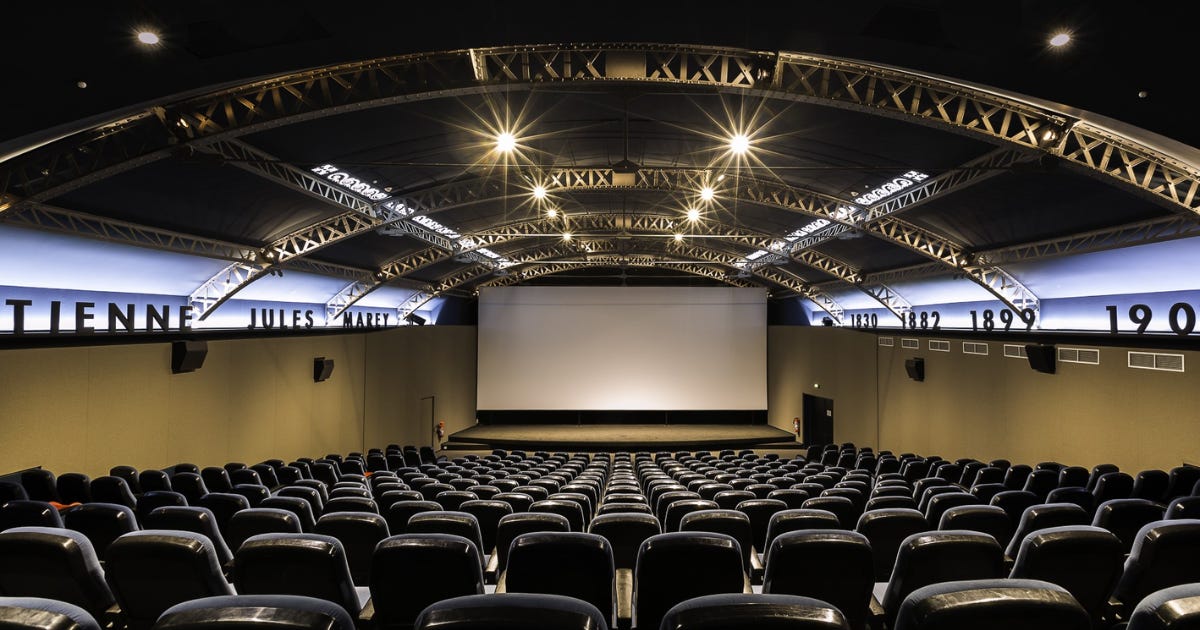
Breaking that system anyway worked, but it worked through brute mechanical defiance, removing the release windows entirely, rather than through the kind of grassroots relationship-building that had worked in Luxembourg. Different country, different scale of problem, and a different kind of solution that happened to land in front of exactly the people who could turn one rule-breaking release into a policy conversation.
A few days after that conversation in Paris, YouTube blocked my channel.
I never got a clear explanation. No specific copyright claim I could point to, no detailed notice describing what had triggered it. Just a block, on the same channel that had carried the trailer that started the entire chain of events two years earlier, the trailer that went viral in a country where that had never happened for a local film, the trailer that got me free billboards and media partnerships when nobody with money would talk to me.
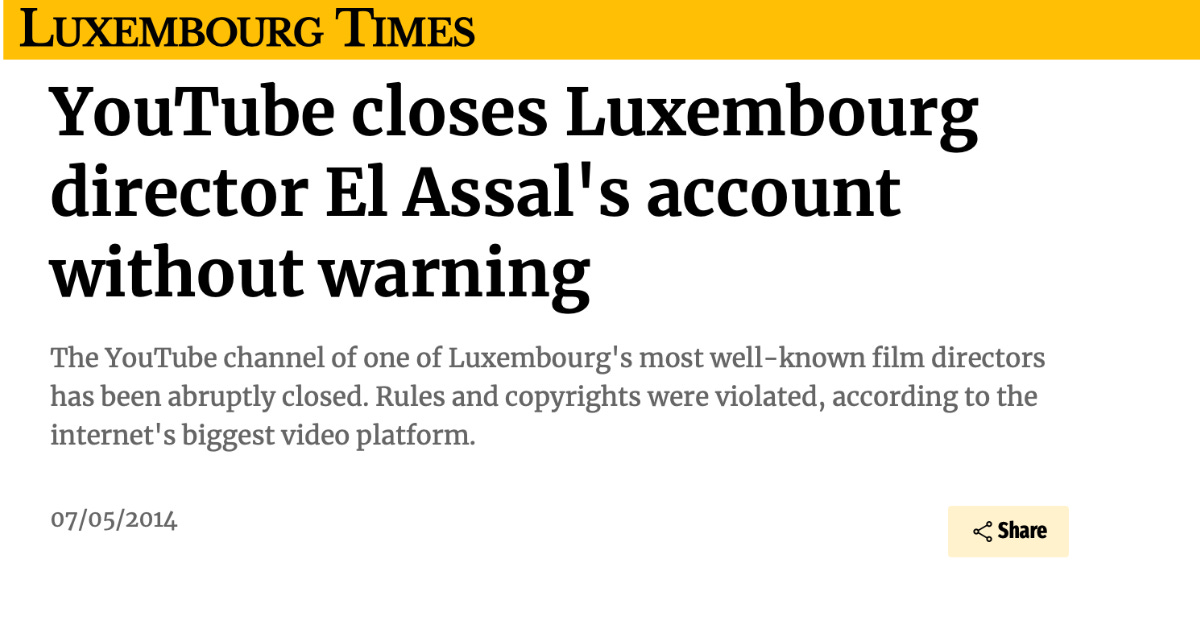
French media picked the story up immediately, and not gently. The Luxembourger who’d just been sitting in a Ministry of Culture roundtable with Google, blocked by YouTube days later. Nobody needed to manufacture the irony. It was already sitting right there. A week later, the channel was unblocked. Someone at YouTube had presumably looked into who I was and decided the block had been a mistake. I never got a detailed explanation for that either.
I’m not going to pretend this story has a clean lesson wrapped around it, because it doesn’t. What it does show is something every independent filmmaker should sit with for a moment: the platforms that can hand you a stage one week can erase you the next, without explanation, and the size of the platform has nothing to do with how careful or considered that decision was.
Being in a room with Netflix, Amazon, Apple, and Google didn’t protect my channel from an automated system, or a mistaken flag, or whatever triggered that block. The relationship I’d built with one part of a massive company meant nothing to a completely different part of the same company a few days later. That’s not a reason to avoid these platforms. You don’t have a real distribution strategy in this industry without them. It’s a reason to never mistake proximity to power for protection from it.
The film that sixty distributors wouldn’t touch ended up shaping a policy conversation at the highest level of French cultural institutions. The same week, a piece of that exact success very nearly got erased by an algorithm with no explanation attached. Both things are true. Independent filmmaking right now means living with that contradiction, not resolving it.
About Adolf El Assal
Adolf El Assal is an award-winning filmmaker, writer, producer, and international consultant. His films have screened at leading festivals and reached audiences worldwide through Netflix, Amazon Prime, and international theatrical releases.
Explore his work, book consulting sessions, or get in touch at www.adolfelassal.com.
No posts
Comments
Nothing yet. Say the first thing.
Sign in to join the conversation.