
There is a specific kind of heartbreak unique to the gluten-free baker: the “Day Two disappointment.” You bake a beautiful loaf, it’s soft and yielding for exactly three hours, and by the next morning, it has the structural integrity of a breeze block.
But life is too short for crumbly breakfast sandwiches. This week’s recipe is my answer to this problem. It is a Sourdough Sandwich Loaf that actually stays soft. I’m talking 4, maybe 5 days of genuine, bendable slices that don’t shatter the moment they touch a knife.
The secret isn’t a chemical stabilizer or a laboratory gum. It’s just a good amount of sourdough starter. By using a high percentage of active sourdough starter, we aren’t just getting flavor; we are building a crumb that retains moisture with a level of stubbornness I truly admire.
You can slice it for a quick jam toast on Tuesday, pack it for a turkey sandwich on Thursday, and it will still be soft enough to enjoy without an emergency session in the toaster by Friday morning.
It’s simple, it’s reliable, and it’s the loaf I keep on my counter every single week.
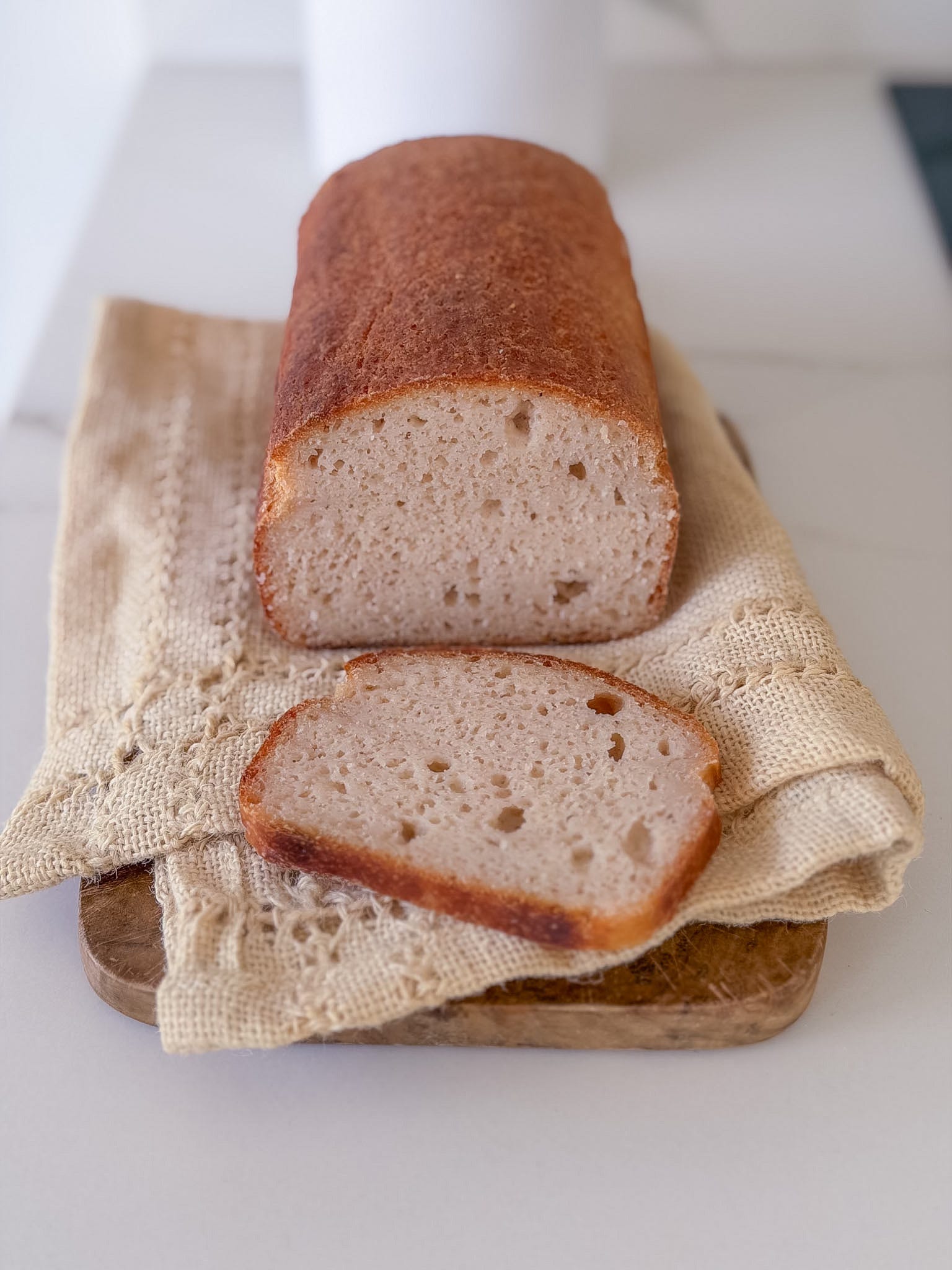
A quick note on the flours: the flour blend (roughly ⅓, ⅓, ⅓) for this loaf follows a very specific rhythm. I always keep the white rice flour and potato starch as my structural anchors. They provide that light, neutral base that allows the sourdough to be soft. For the third part, you can experiment. A mix of quinoa and buckwheat is my personal sweet spot: it gives the bread a nutty complexity without being overwhelming. If you go 100% buckwheat for that final third, the crumb will turn a beautiful, moody dark grey, and the flavor becomes much more intense and earthy.
I’ve also tested this recipe with sorghum, teff, and even fine corn flour. They all work beautifully in their own way. Consider the third flour your chance to play with the personality of the loaf.
A quick note on the Psyllium: If you are using the very fine powder instead of the rough flakes, you might want to scale back by about 15%: the powder is much more absorbent and can make the bread a bit too dense if you aren't careful.
Comments
Nothing yet. Say the first thing.
Sign in to join the conversation.