
“Is that vodka?" Margarita asked weakly.
The cat jumped up in his seat with indignation.
"I beg pardon, my queen," he rasped, "Would I ever allow myself to offer vodka to a lady? This is pure alcohol!”
– Mikhail Bulgakov, The Master and Margarita
Alcohol is the most beloved poison of the human species. We toast births with it and mourn deaths with it. Across cultures and centuries, people have turned to it for courage and solace, connection and escape, celebration and grief, seduction and sedation and so much more. Few substances occupy such a contradictory place in human life: capable of causing immense suffering and yet so deeply embedded in the rituals of living.
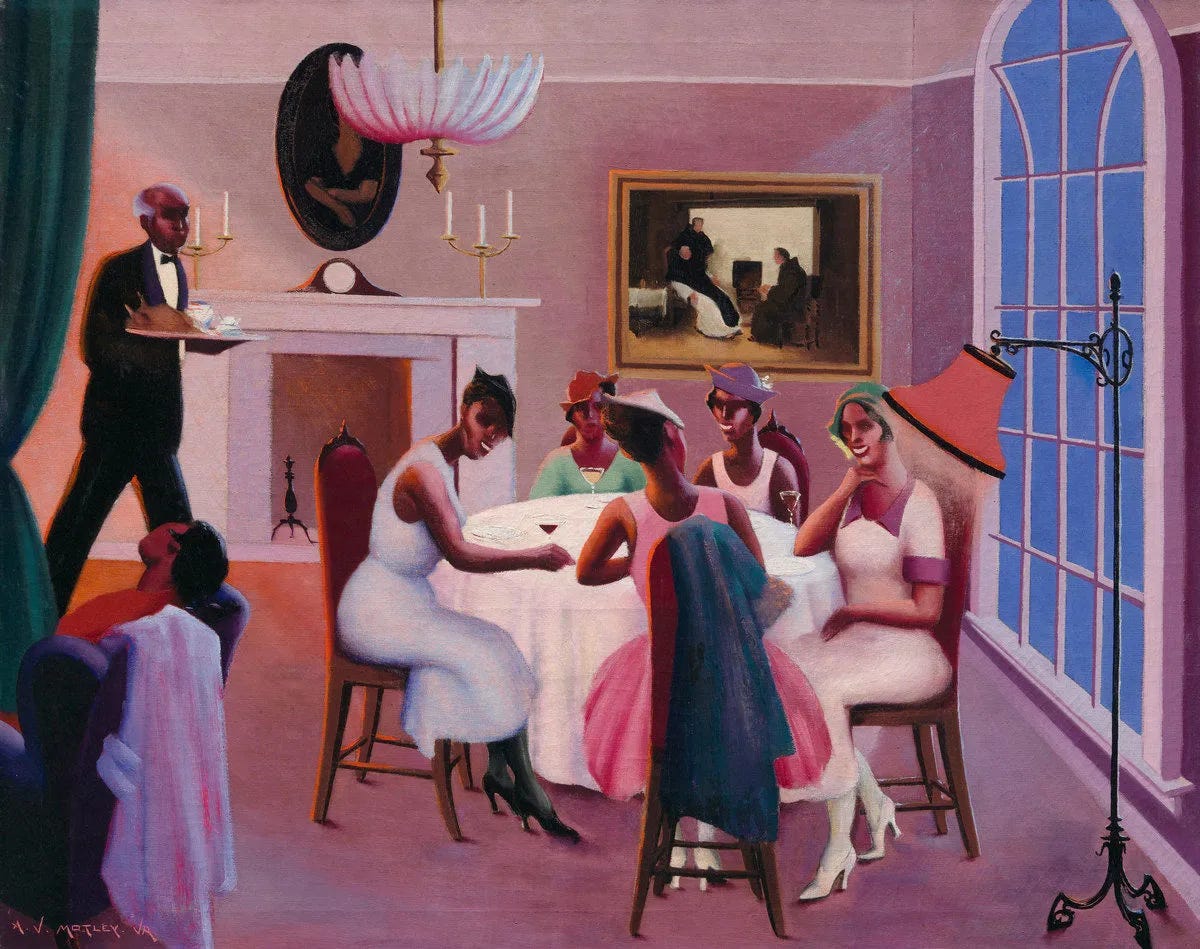
Its position in society is truly fascinating. In her book about the relationship between creativity and alcohol, The Trip to Echo Spring, Olivia Laing writes: “People don’t like to talk about alcohol. They don’t like to think about it, except in the most superficial of ways. They don’t like to examine the damage it does and I don’t blame them. I don’t like it either. I know that desire for denial with every bone in my body: clavicle, sternum, femur and phalanx.”
And they really don’t, especially older generations. It’s as though many entered into an unspoken pact sometime early in adulthood: we will drink it, joke about it, occasionally complain about it, but we will never look at it too closely. New generations (including mine) do talk about it, which often makes the elders in the room twitch. A friend of mine rarely drinks these days and says few things puzzle his older family members more than watching him decline a glass of wine at a family gathering. It’s astonishing how alcohol is the only drug for which abstinence requires justification.
But amidst all the Twitter conversations about how alcohol is the silent poison of our century, how it increases the risk of cancer, how it damages our brains and ages us, there’s an undercurrent we haven’t fully acknowledged or examined. Alcohol is, in many ways, quite an equalitarian killer. It has little interest in your income, education, politics, or profession. Given enough time, it comes to collect. Yet there is one notable discrepancy. The experience of drinking, and the price paid for it, differs dramatically between men and women.
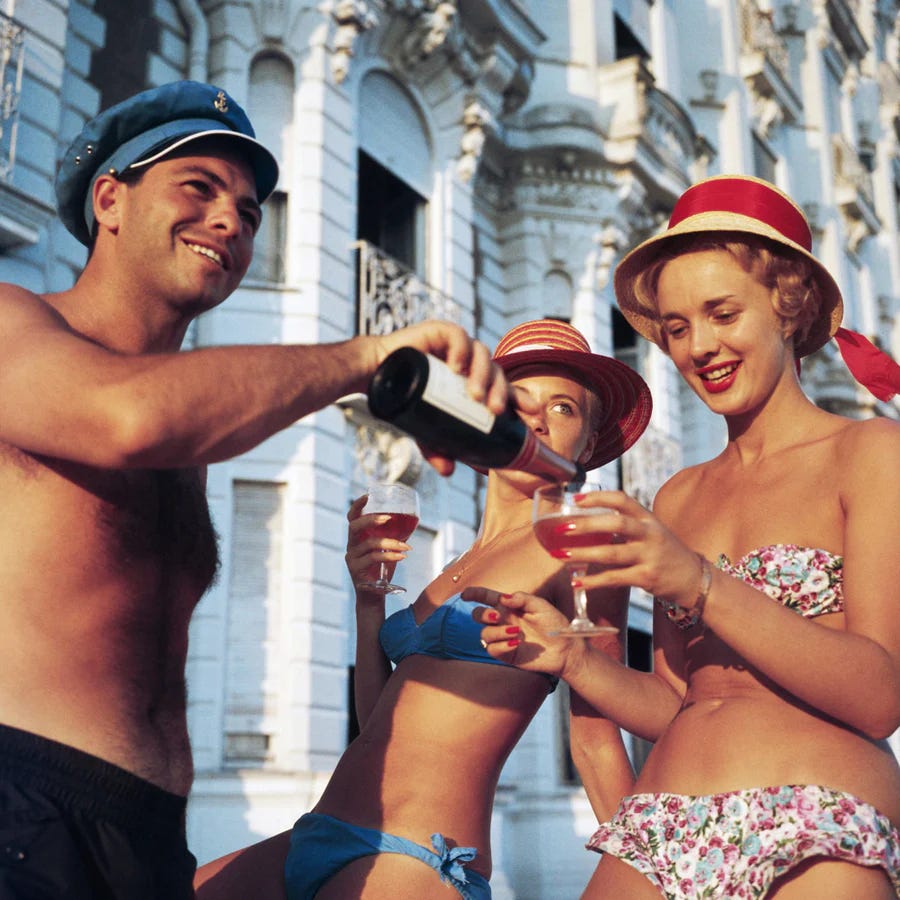
Not necessarily in the biological sense, although even there the odds skew heavily in favour of men. Women tend to suffer alcohol’s consequences faster and at lower levels of consumption. They develop alcohol-related diseases more readily, experience greater disruption to hormonal and reproductive health, and progress from casual drinking to dependency on a compressed timeline – a phenomenon researchers refer to as “telescoping.” The relationship between alcohol and depression also appears to be more tightly intertwined in women than in men. None of this is particularly uplifting, but it is just one part of the story. The deeper and perhaps more interesting differences emerge long before the first sip is ever taken.
There is a silent societal consensus about what each gender’s drinking ultimately reveals. When a man drinks, he becomes more himself. He says the truth, confesses love or reveals an emotion that had been carefully stowed away for years. The substance moves him closer to the core of his being and ultimately closer to those around him.
For women, the story is often the opposite. If the male drunk drinks because he cannot say what he feels, the female drunk does because she feels too much already. A woman who drinks too much is rarely perceived as becoming more herself though. On the contrary, she is perceived as becoming less. She loses control, composure, judgment and ultimately desirability, which moves her further from connection, further from others, further into alienation.
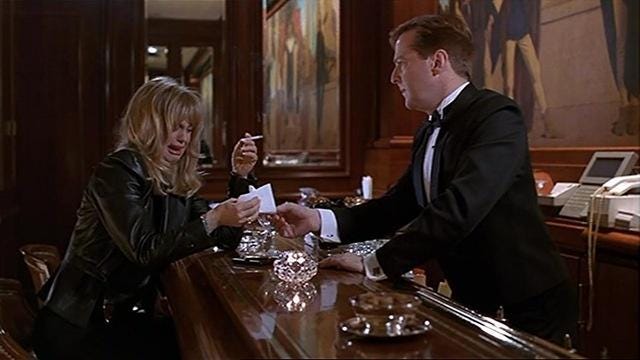
A man can go sit at a bar and order a drink and be just that, a man sitting at a bar with a glass in his hand. No one will stop to question it, including himself. A woman at a bar is a story. She’s either waiting for someone, getting over someone or signalling something. The exact narrative matters less than the fact that one is immediately assigned to her. Few people have articulated this phenomenon more precisely than John Berger when he wrote:
One might simplify this by saying: men act and women appear. Men look at women. Women watch themselves being looked at. This determines not only most relations between men and women but also the relation of women to themselves. The surveyor of woman in herself is male: the surveyed female. Thus she turns herself into an object – and most particularly an object of vision: a sight.”
– John Berger, Ways of Seeing
Self-control plays very different roles in male and female identity. For men, self-control is often presented as a restraint of the self. For women, it is more often presented as part of the self itself. Sit properly, read the room, mind your manners, watch your tone, maintain your composure. A great deal of femininity is built upon management, which gives alcohol’s inhibition removing properties a different kind of power. A man who drinks too much is said to have gone too far. A woman who drinks too much is often said to have lost sight of herself. The choice of wording is not accidental.
Female intoxication also threatens beauty in a way that male intoxication rarely does. More than that, alcohol has become part of the mythology of masculine attractiveness itself: the tortured artist with a whiskey glass, the charming actor at the bar, the older man in a perfectly tailored suit ordering one more round. Hemingway. Bukowski. Fitzgerald. There is no equally celebrated female archetype. Perhaps because female beauty is so often associated with composure and control, intoxication is perceived as undermining the foundations upon which it rests. Where drinking lends men a certain mystique, it tends to strip women of theirs.
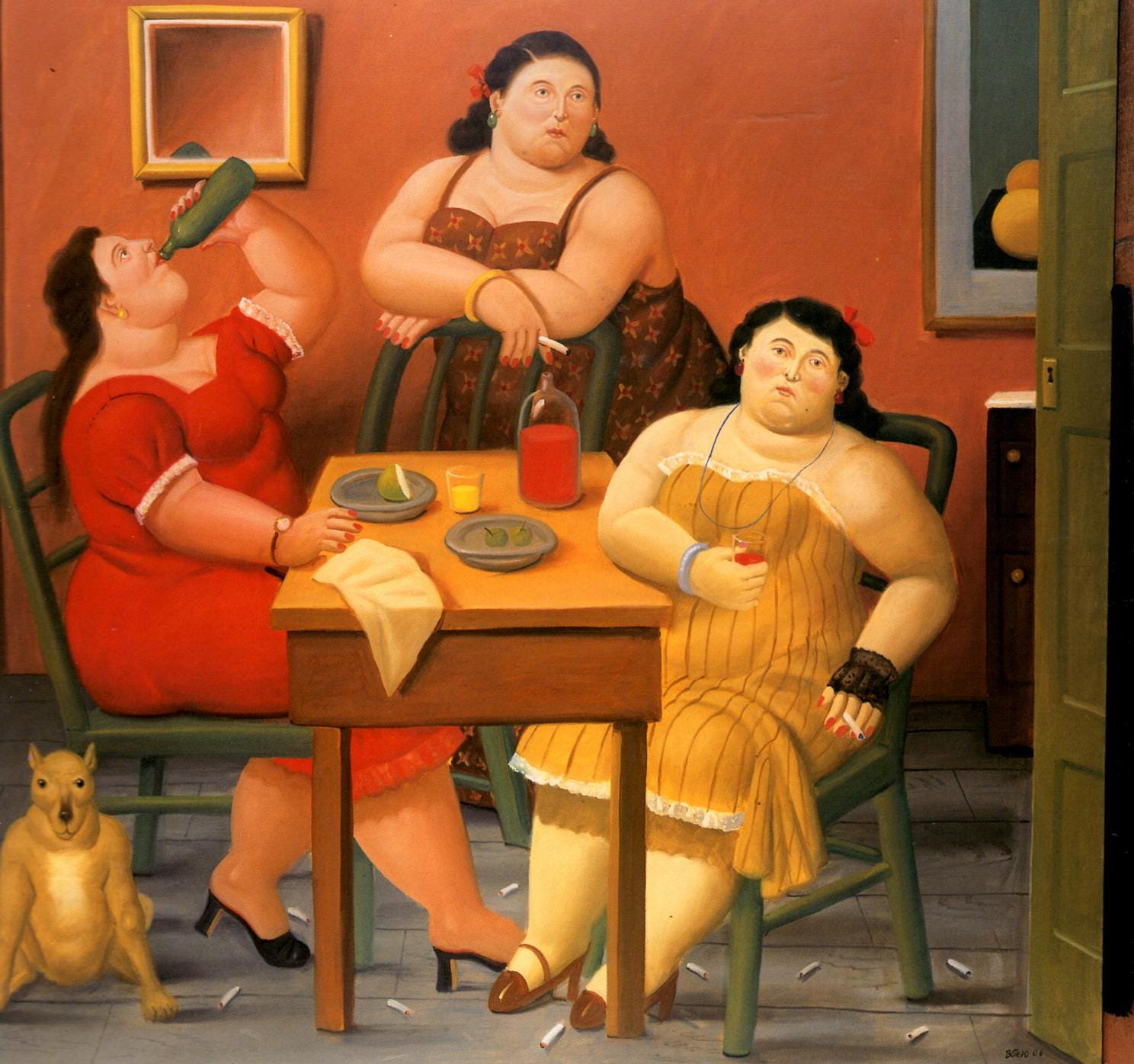
Alcohol requires women to perform its absence even while consuming it. A woman holding a glass must simultaneously signal that she is in control of the glass – that she accepted it out of politeness, not out of desire or god forbid, a craving. A man with a drink is a man with a drink. A woman with a drink is in a negotiation. She has to appear to be enjoying it without enjoying it too much, holding it without gripping it, drinking it without being drunk. She takes a substance designed to loosen her grip on herself and immediately begins proving she hasn’t. A woman will go to great lengths to ensure she’s enunciating syllables as clearly as she would while sober. She’ll seek out mirrors to ensure her face still reflects the absence and gulp an extra glass of water to protect the mirage.
Women’s relationship with intoxication is inherently more complicated also because of the math that accompanies it. A woman counts and keeps tallies in ways a man never has to. Who’s in the room? How many people are watching? How many have touched my glass? As a woman, you often end up with two forces locked in a silent struggle, each trying to choke the other into submission. One is the surveyor permanently stationed in your mind. The other is a substance whose entire purpose is to soften edges and mute the senses.
It may be part of the reason why female drinking happens behind closed doors more than male drinking does. Men drink in offices, hotel bars, in the open theatre of the world. When women drink inside their homes there is a kind of safety there that cannot be found anywhere else: the privacy of drawn blinds, familiar walls, and a surveyor finally off duty.
Which brings me to Bree Van de Kamp’s drinking in Desperate Housewives. The writers could have given the storyline to anyone else, yet they chose the character whose entire identity revolves around presentation and control. Night after night, Bree drinks Chardonnay alone in the privacy of her home until the boundaries she has spent years maintaining begin to give way. She loses control, is found passed out on her lawn by her friends, and finds herself in a series of questionable situations. In doing so, she illuminates another difference in the way we interpret intoxication. Male drunkenness is often imagined as an opening of a door from the inside. Female drunkenness is more often perceived as an opening of one from the outside.


Even in its most excessive form, addiction appears to follow different paths through male and female lives. There have been a few alcoholics in my family, both men and women. Female addiction, even in its ugliest forms, often carries within it an element of not wanting to bother anyone else, an element of “I’ll carry this on my own.” Not because it inflicts less pain. It can inflict just as much, sometimes more, precisely because of that determination to carry it alone.
I come from a culture where the closest thing to religion is beer. One that upholds alcohol and thinks it a great companion for most events – or simply most days – of life. I still find it a strange relationship to navigate, especially as a woman. Because although alcohol mingles with the same gastric juices inside of us, it passes through two very different architectures of selfhood.
For men, drinking has often been framed as a journey toward the self. For women, it has more often been framed as a journey away from the self. Male drunkenness opens a door from the inside. Female drunkenness opens one from the outside. Where drinking magnifies masculinity, it tends to erode femininity. If alcohol is the world’s favourite escape from consciousness, women have always paid more dearly for the ticket. The consolation is that poison-induced sedation was never a particularly desirable destination to begin with.

subscribe to in plain sight to see your own life more clearly and live it more deliberately. free subscribers get the essays. paid subscribers get the deeper layer: reflections, prompts, and ways to turn insight into action.
enjoy 20% off forever with this special offer. 💌
Comments
Nothing yet. Say the first thing.
Sign in to join the conversation.