
Last weekend, I overheard a conversation between two American students in an art gallery cafe in Prague. The overhearing of American conversations by Europeans in Europe is a phenomenon of its own: a shared experience across the continent, one that is forced on its natives and tends to be either quite amusing or mildly irritating. The two boys had clearly been spending a lot of time in each other’s company and had run out of topics to discuss. One of them pulled out his phone and disappeared into it for a few minutes. “Thank you for letting me have that scrolling experience,” he said when he emerged back into the real world. “I really needed that grounding.” Grounded by scrolling, you can imagine how far into my skull my eyes retreated when the words left his mouth.
But no matter how scornful I wanted to feel, I did understand what he meant. It’s that moment when you’ve just finished an intense stretch of work, solved a difficult problem, survived a grueling workout or, as was likely his case, wandered through an exhibition, and suddenly find yourself needing somewhere to go. A place between places. Somewhere between what you’ve just finished and whatever comes next. A brief retreat from the world before returning to it. Something familiar enough to be comforting yet novel enough to hold your attention.
Our phones are like castles full of rooms that offer exactly that temperature. I remember one of my teachers noticing something almost eerie about the way we interacted with our phones when I was around fourteen. Having spent the first forty years of her life in a largely offline world, she was fascinated by the intimate treatment we bestowed upon these black screens. We’d always keep them within sight and treat them with unusual tenderness, absent-mindedly running our thumbs across the screen and reaching for them the moment a conversation lulled or a moment of distress appeared. A portal of comfort made of glass and metal she called it.
The two Americans and my teacher got me thinking about the different places you can go when you need somewhere to go. A book is a portable place you can go the same way a phone is. You can go for a walk with headphones on – to me that’s definitely a place I walk into, a different dimension almost. You can call a friend and retreat into the room of your friendship, where all the inside jokes provide the comfort of well-loved furniture.
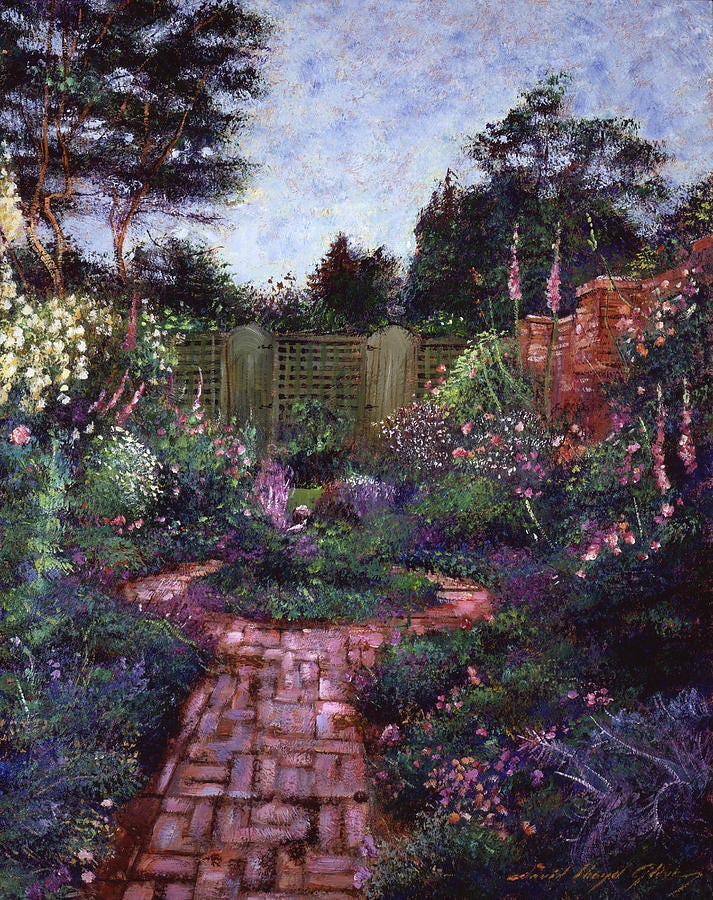
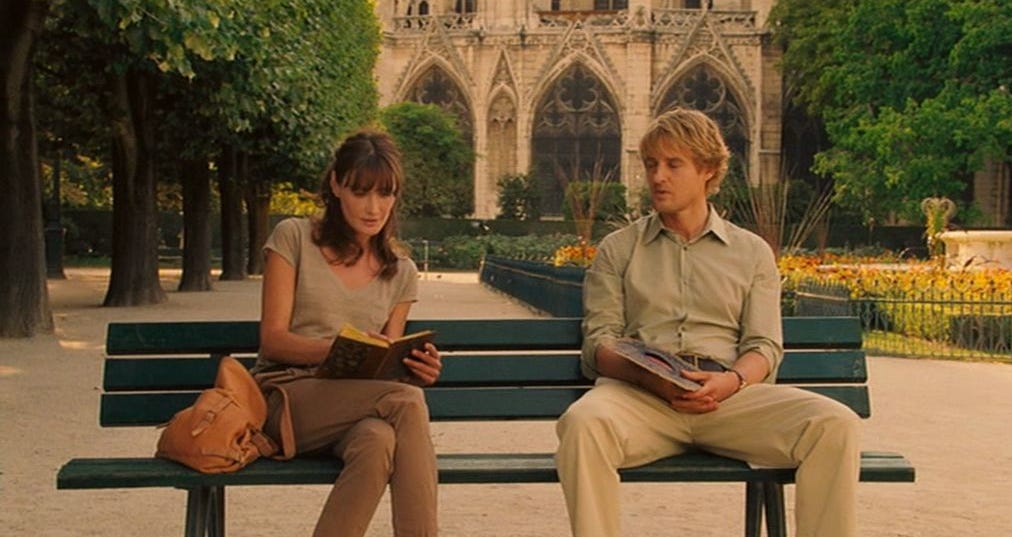
So the places we go can be abstract, digital, and largely imagined. But what about actual places? The kind made of stone and wood, the kind you can step into. In his book The Poetics of Space, philosopher Gaston Bachelard writes that “all really inhabited space bears the essence of the notion of home.” He was fascinated by attics, corners, wardrobes, nests and secret rooms – the small, easily overlooked spaces that somehow become larger on the inside. A favourite bench, a hidden courtyard, a seemingly inaccessible rooftop, a table in the corner of a café. Places that start out as locations and eventually turn into companions.
Every meaningful relationship seems to accumulate its own map pins over time. There are cafés, parks, benches and corners that become inseparable from a person. ”Our spot” is one of the most recognisable concepts in human relationships. Lovers have them and so do families and friend groups. There are streets I can’t walk past without thinking of a past love, restaurants that belong to conversations from years ago and many such portals formed by geographic coordinates.
But there is another category of place that receives far less attention: the places that belong to nobody but ourselves. Once you start looking for them, they appear everywhere in fiction. Jo March has a writing attic in Little Women. Amélie has the hidden corners of Montmartre. Rory has her tree in Gilmore Girls. Mary Lennox has an entire hidden garden. Even Blair Waldorf has the ponds in Central Park where she feeds the ducks. Alice of course trumps them all and has Wonderland.
Those are the hiding spots we used to go before the homescreen became the easiest place to disappear into. Now there are the apps. The pink ones, the black ones, the green messaging ones, the ones marked with an X or a T. An entire color rainbow of digital rooms. A place for boredom, a place for news and another for aspiration.
Given the return of book clubs, the rise of snail mail, the popularisation of the analog, a hiding spot is probably an antidote to the same force we’ve all started campaigning against lately. A deliberate introduction of friction to a modern life that became a bit too frictionless.
For years, we as a society operated under the assumption that “more” and “convenient” were what made life richer. But it seems that without friction, effort and repetition, meaning somehow evaporates. The same way a handwritten letter takes a few more steps, a hiding spot cannot be accessed with a swipe.

The age of content has made finding hiding spots a more difficult task. Any great place risks appearing on a hidden gem list if you make the mistake of sharing it with the wrong person. But there are endless stunning corners of the world to discover if you just wander long enough and perhaps more importantly, keep your secret.
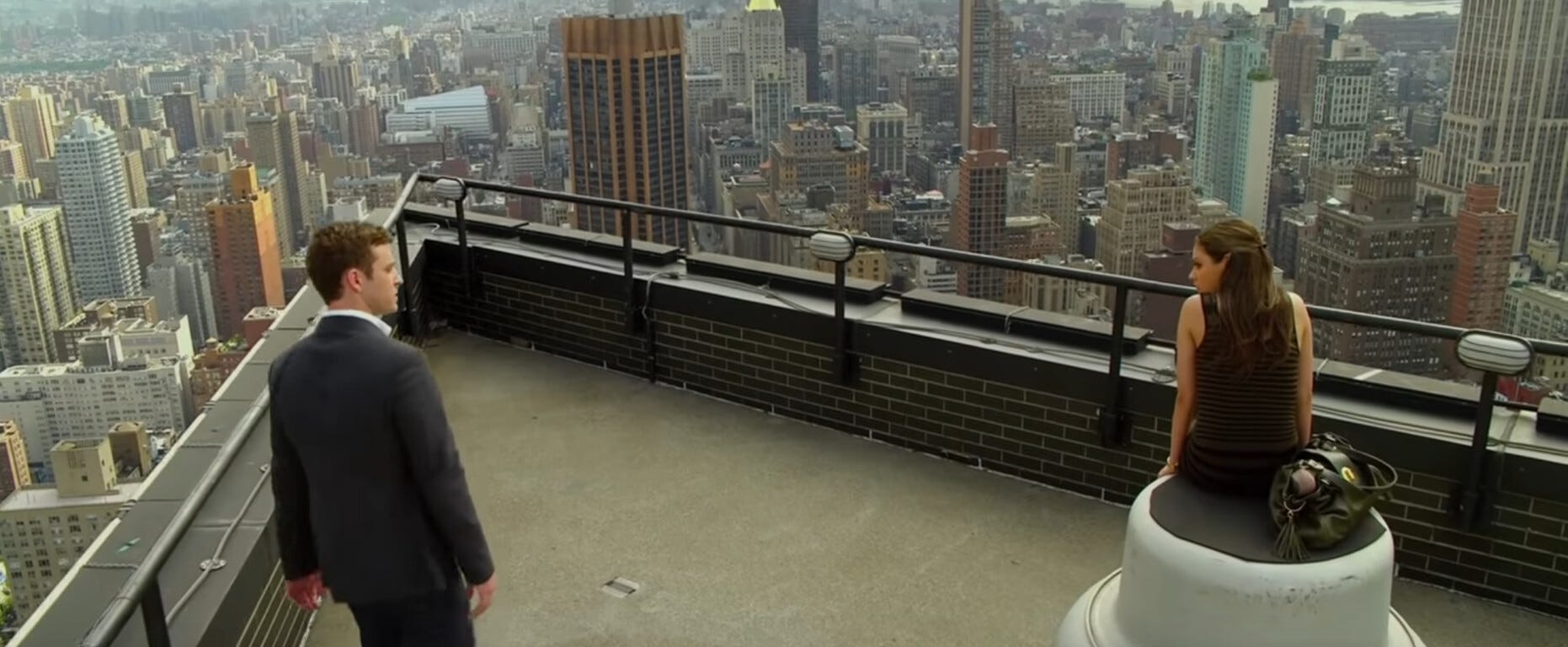
A place where the world pauses, a place where no one will find you but that is very much your own, a place to maybe one day show someone with the words “I’ve never taken anyone here”, It can be a cafe, a garden, a rooftop and it can even be a city.
Hiding spots cannot be inherited, they can only really be earned. To me, spots like that are one of the most important acquired treasures of living in any place long enough. You discover them through repetition, wrong turns and only over time. Your own personal white rabbit eventually leads the way.
In an age where most of our hiding spots fit inside a pocket, there is something magical about having a corner of the world that, in some small way, belongs to you. You may not visit it each time you need a place between places, but you’ll always know it’s there when you do. Somewhere in your city, there is a place to go when you need somewhere to go. Do you know where it is?

No posts
Comments
Nothing yet. Say the first thing.
Sign in to join the conversation.