
The Houthi movement, formally known as Ansar Allah ("Supporters of God"), has undergone one of the most remarkable transformations in the modern Middle East. What began as a localized religious revival movement in Yemen's remote northern mountains has evolved into one of the region's most capable non-state military forces, possessing an arsenal of ballistic missiles, cruise missiles, drones and anti-ship weapons that have repeatedly challenged regional powers and disrupted global trade.
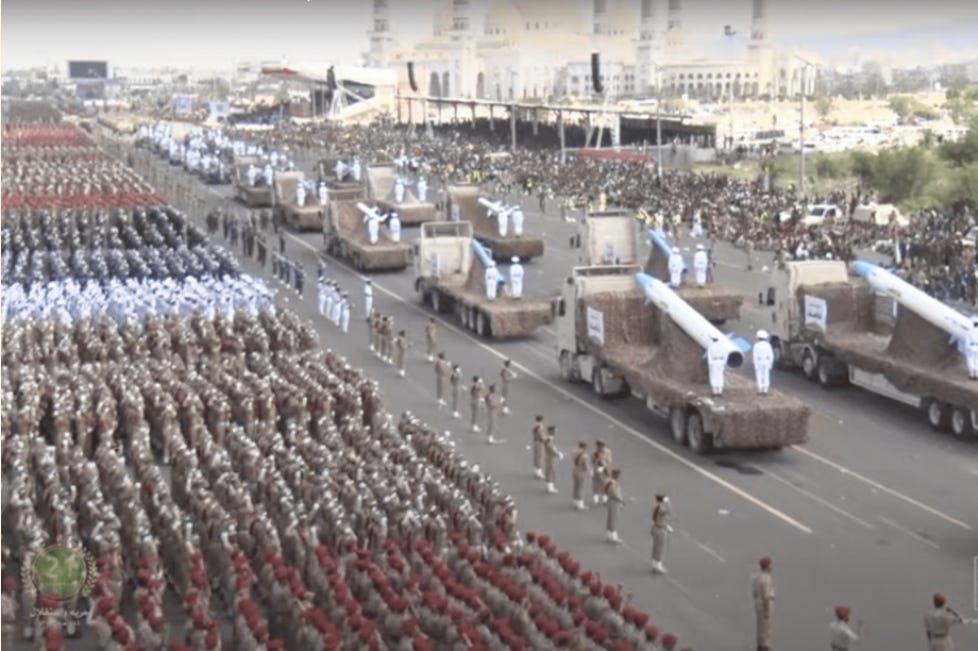
The group's latest warnings that Saudi Aramco oil facilities could become future targets, coupled with threats to expand attacks on commercial shipping beyond the Bab el-Mandeb Strait and into routes linked to the Suez Canal, illustrate the extent of its growing confidence. In recent days, the Houthis claimed responsibility for attacks on commercial vessels in the Red Sea, describing their campaign as "a blockade for a blockade" and warning that Saudi oil exports and merchant shipping would remain vulnerable unless the blockade on Yemen is lifted. Whether or not every claim is independently verified, the movement has demonstrated that it possesses both the intent and the capability to shape events far beyond Yemen's borders.
To understand how the Houthis reached this point, it is necessary to look back more than three decades. The movement emerged in the early 1990s in Yemen's Saada Province under the leadership of Hussein Badreddin al-Houthi, a respected religious scholar and former member of parliament. At its inception, the organization was neither a conventional militia nor a political party seeking national power. Instead, it was primarily a religious and educational movement dedicated to preserving the traditions and identity of Yemen's Zaydi community, a branch of Shia Islam that had governed large parts of the country for almost a thousand years before the republican revolution of 1962 ended centuries of Zaydi rule.
During the following decades, many in northern Yemen believed their region had become increasingly marginalized politically and economically. They also viewed the spread of foreign religious influence, particularly from neighboring Saudi Arabia, as a threat to Yemen's traditional religious identity. These grievances gradually transformed what had begun as a cultural movement into a political one, and eventually into an armed resistance movement.
The defining moment came in 2004 when the Yemeni government launched military operations against Hussein al-Houthi after accusing him of leading an armed rebellion. Hussein was killed during the fighting, but his death had the opposite effect of what the government had intended. Rather than dismantling the organization, it galvanized supporters, turning him into a symbol of resistance. Leadership passed to his younger brother, Abdul-Malik al-Houthi, who continues to lead the movement today.
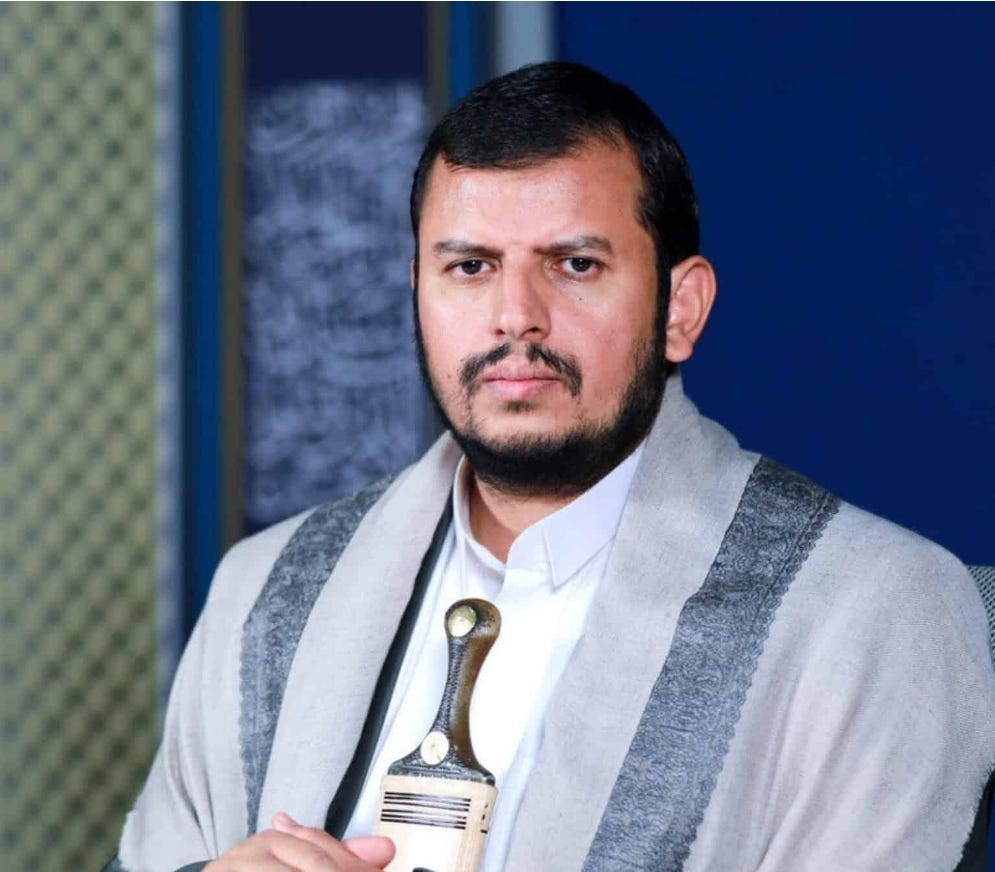
Between 2004 and 2010, the Houthis fought six brutal wars against the Yemeni government. Each conflict strengthened rather than weakened the organization. Years of relentless combat produced experienced commanders, disciplined fighters and an increasingly sophisticated military structure. By the time the Arab Spring reached Yemen in 2011, the Houthis had already become one of the country's most organized armed movements.
The political upheaval that swept Yemen during the Arab Spring fundamentally altered the country's balance of power. As long-serving President Ali Abdullah Saleh stepped down amid nationwide protests, state institutions weakened and political authority fragmented. The Houthis rapidly expanded beyond their traditional strongholds, capturing territory while presenting themselves as an alternative force capable of restoring order.
One of the most unexpected developments came when former President Saleh, who had spent years fighting the Houthis, forged a tactical alliance with his former enemies after losing power. The partnership provided the Houthis with access to experienced military officers, intelligence networks, heavy weapons and stockpiles belonging to Yemen's armed forces. This dramatically accelerated the movement's military development.
In September 2014, Houthi fighters entered the Yemeni capital, Sana'a, encountering little effective resistance. Within months they had become the country's dominant military and political force. Their rapid expansion prompted Saudi Arabia and a coalition of Arab states to launch a military intervention in March 2015, expecting a swift campaign that would restore Yemen's internationally recognized government.
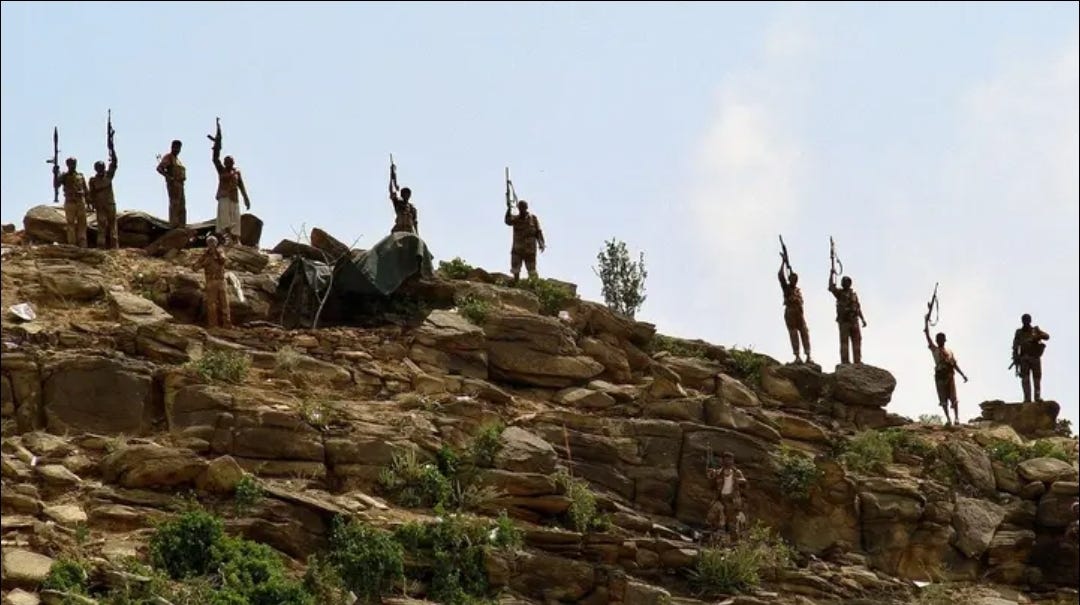
That expectation proved profoundly mistaken. Instead of collapsing, the Houthis adapted to one of the most intensive air campaigns in modern Middle Eastern history. More than a decade of continuous warfare transformed the movement into an exceptionally resilient military organization. It learned to combine conventional operations with guerrilla tactics, developed dispersed command structures, improved battlefield logistics and steadily expanded its indigenous weapons production.
Perhaps the greatest source of Houthi resilience has been geography itself. Northern Yemen's rugged mountain ranges have frustrated invading armies for centuries. The Houthis possess intimate knowledge of the terrain, enabling them to conceal equipment, establish defensive positions and move fighters with remarkable efficiency. Geography alone, however, cannot explain their endurance. Their centralized leadership under Abdul-Malik al-Houthi, strict organizational discipline and ability to adapt rapidly to changing battlefield conditions have all contributed to their survival.
Equally important has been the movement's investment in missile and drone technology. During the past decade, the Houthis have acquired and developed an increasingly sophisticated arsenal that includes ballistic missiles, land-attack cruise missiles, one-way attack drones, reconnaissance drones, naval drones and anti-ship missile systems. These weapons have enabled them to strike military bases, airports, energy facilities and commercial shipping at considerable distances, fundamentally changing the military balance in the region.
Their attacks on Saudi oil infrastructure, particularly the 2019 strikes on Abqaiq and Khurais that temporarily disrupted a significant share of Saudi crude production, demonstrated how relatively inexpensive drones and missiles could threaten some of the world's most valuable energy assets. More recently, their operations in the Red Sea have forced many international shipping companies to divert vessels around the Cape of Good Hope, adding thousands of nautical miles to global trade routes, increasing transport costs and disrupting supply chains worldwide.
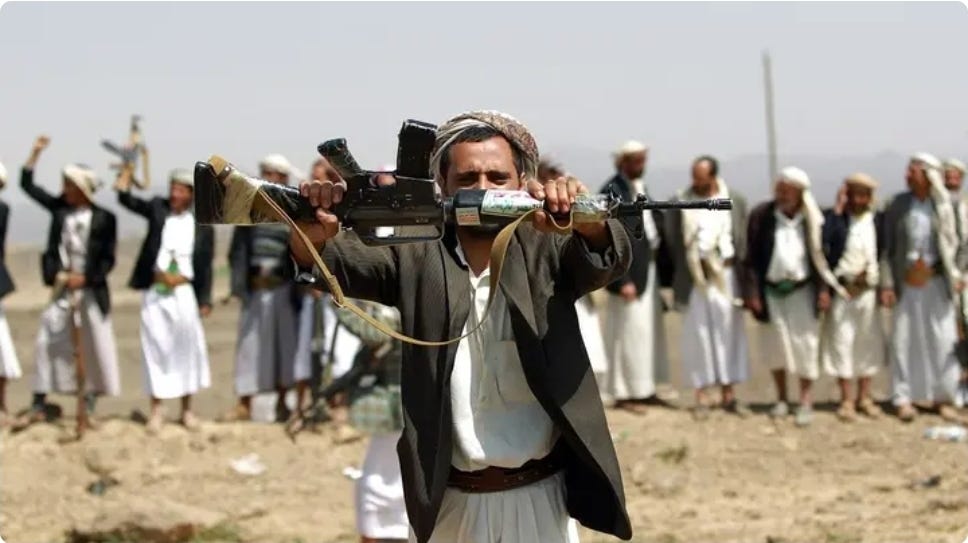
Although estimates vary, independent analysts generally believe the Houthis command tens of thousands of experienced fighters supported by a much broader network of tribal allies, reserve forces and local security units. More significant than their numerical strength is the territory they administer. The movement controls Yemen's capital, much of the country's population and many state institutions. This allows it to collect taxes, customs duties, fuel revenues and telecommunications income while maintaining administrative structures that provide a relatively stable financial base for its military operations.
Funding nevertheless remains one of the most debated aspects of the movement. A substantial proportion of Houthi resources comes from territories under their control through taxation, customs collection, commercial activities and state revenues. At the same time, the United Nations, Western governments and numerous intelligence assessments have concluded that Iran has supplied the movement with military technology, technical expertise, weapons components and training. Tehran openly acknowledges its political support for the Houthis but denies directing their military operations or exercising operational control over the movement. Most specialists argue that while the Houthis maintain considerable independence in decision-making, Iranian assistance has significantly accelerated the development of their missile and drone capabilities.
The movement's growing military sophistication reflects a broader shift in modern warfare. The Houthis have demonstrated that non-state actors equipped with precision missiles, drones and effective intelligence networks can challenge technologically superior adversaries at relatively low cost. Their operations have forced governments and multinational corporations alike to rethink maritime security, energy infrastructure protection and regional deterrence strategies.
Today, the Houthis can no longer be viewed simply as a Yemeni insurgency. They have evolved into a strategic actor capable of influencing events across the Middle East. Their ability to threaten vital shipping lanes, target critical energy infrastructure and withstand prolonged military pressure has elevated them from a domestic rebel movement into a regional force whose decisions carry global economic consequences.
As tensions continue to rise in the Red Sea and the wider Gulf region, the Houthis remain one of the most consequential armed movements of the twenty-first century. Whether future developments lead to renewed negotiations or deeper confrontation, one reality has become unmistakably clear: the movement that began in the isolated mountains of northern Yemen has become an enduring geopolitical force whose influence now extends far beyond the country's borders, shaping the security, economics and diplomacy of an entire region.
Mohamed Mohamoud Adde is an academic and a geopolitical analyst
Comments
Nothing yet. Say the first thing.
Sign in to join the conversation.