
In every conflict, there are those who carry weapons and those who carry hope. In Somalia, one organisation has spent two decades carrying hope through streets scarred by bombs, bullets and fear. While combatants have fought over territory and politics, Aamin Ambulance has fought a different battle—the battle to keep people alive.
Its story is not merely the history of an ambulance service. It is a chronicle of Somalia's resilience, revealing how ordinary citizens stepped forward to fill a vacuum left by decades of state collapse. Yet it is also a story of extraordinary sacrifice, where neutrality has become dangerous and humanitarian work has placed volunteers between opposing forces, financial hardship and relentless misinformation.
Before the Ambulance, There Was the Wheelbarrow
To understand Aamin Ambulance, one must first remember what Mogadishu looked like before its existence.
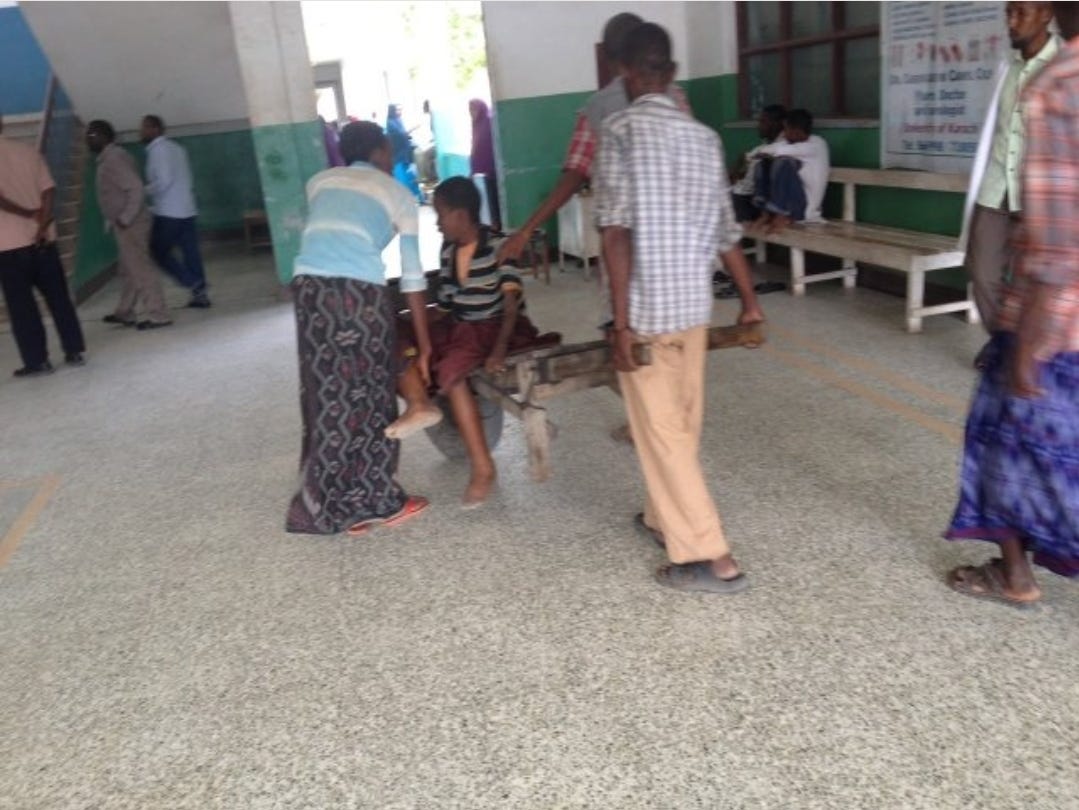
In the years following the collapse of the Somali state, emergency medical services simply did not exist. When explosions tore through neighbourhoods or armed clashes erupted, victims were carried however people could manage. Wheelbarrows became stretchers. Donkey carts became emergency vehicles. Wooden handcarts transported the wounded through shattered streets while relatives desperately searched for hospitals.
Many never arrived.
Parents carried injured children in their arms for kilometres. Neighbours improvised rescue operations with no medical training and no equipment. Countless victims died not because their injuries were unsurvivable, but because professional emergency response was absent.
For many Somalis, this became an accepted reality—until a small group of volunteers decided that it no longer should be.
Born During Somalia's Darkest Years
Aamin Ambulance emerged in 2006, one of the most turbulent periods in Somalia's modern history. The rise of the Islamic Courts Union, followed by the Ethiopian military intervention, plunged Mogadishu into intense violence, widespread displacement and humanitarian crisis.
It was hardly the moment one would choose to establish an emergency medical service.
Yet a handful of determined Somalis did precisely that.
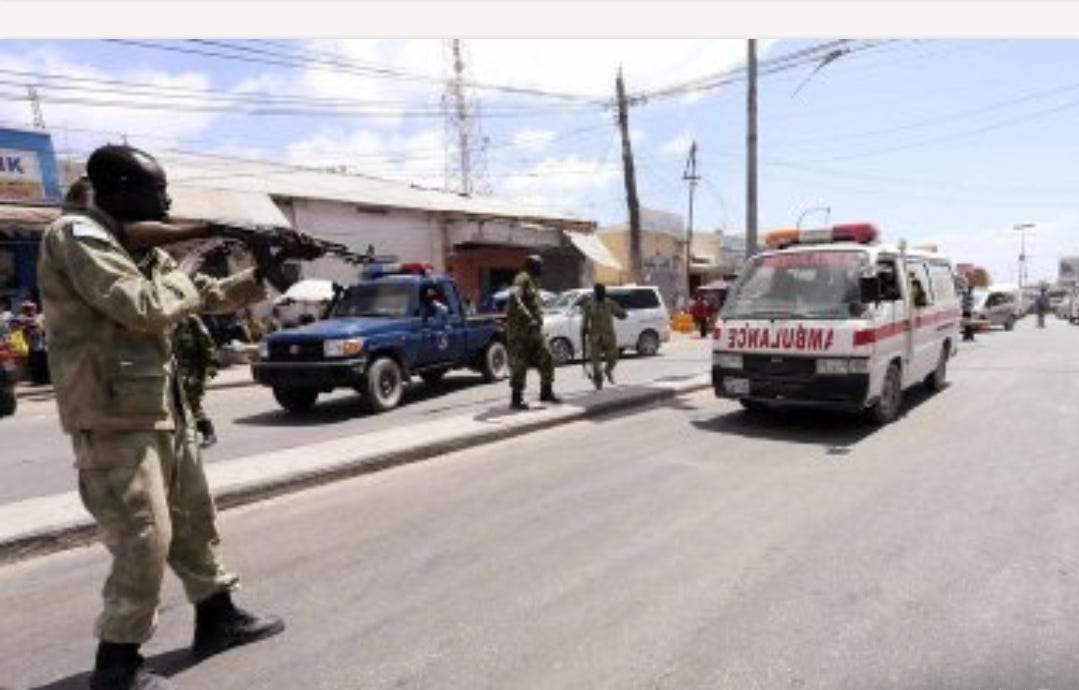
Armed with little more than commitment and a single vehicle, they created what would become the country's first free ambulance service. Their decision represented a profound humanitarian principle: while others fled danger, they would run towards it.
The distance between that solitary ambulance and today's fleet was never measured simply by time. It was measured through years of relentless service, personal sacrifice and lives saved under circumstances few emergency responders anywhere in the world would ever experience.
A Fleet Forged by Disaster
As attacks intensified over the following years, the organisation was repeatedly forced to expand beyond its modest beginnings.
The turning point came with Somalia's largest mass casualty incidents, culminating in the devastating October 2017 truck bombing in Mogadishu—the deadliest terrorist attack in the country's history.
Within hours, Aamin Ambulance found itself transporting more than 230 victims. Burn victims, trauma patients and critically injured civilians overwhelmed the service.
That catastrophe transformed the organisation overnight.
What had begun as a small volunteer initiative suddenly became an indispensable component of Mogadishu's emergency response system. Expansion was no longer an organisational ambition; it became a humanitarian necessity.
But greater capacity brought greater visibility, and greater visibility brought greater danger.
Saving Lives Without Sustainable Support
Perhaps the greatest paradox surrounding Aamin Ambulance is that despite performing an essential public service, it continues to operate without the financial certainty normally associated with emergency medical systems.
Unlike ambulance services in many countries, Aamin has had no sustained government contract to guarantee its operations. Instead, it has relied heavily on volunteers, community contributions and sporadic assistance.
International humanitarian funding has often focused on short-term emergency interventions, infrastructure projects or food assistance. While these initiatives remain essential, ambulance services require continuous investment rather than one-off funding. Fuel, vehicle maintenance, communications equipment, medical supplies, protective gear and trained personnel generate expenses every day of the year.
Without predictable financing, maintaining operational readiness becomes a perpetual struggle.
As a result, not every ambulance in the fleet can always remain on the road. Equipment must often be repaired rather than replaced, while volunteers continue serving despite limited resources.
It is a financial balancing act where any prolonged funding gap risks reducing emergency response capacity for an entire city.
The Human Price of Compassion
Behind every ambulance stands a team of individuals whose commitment has often come at immense personal cost.
Drivers, paramedics and volunteers have repeatedly entered dangerous environments moments after explosions or armed attacks, knowing secondary attacks or ongoing gunfire remained possible.
Some have been injured while attempting rescues.
Others have lost their lives.
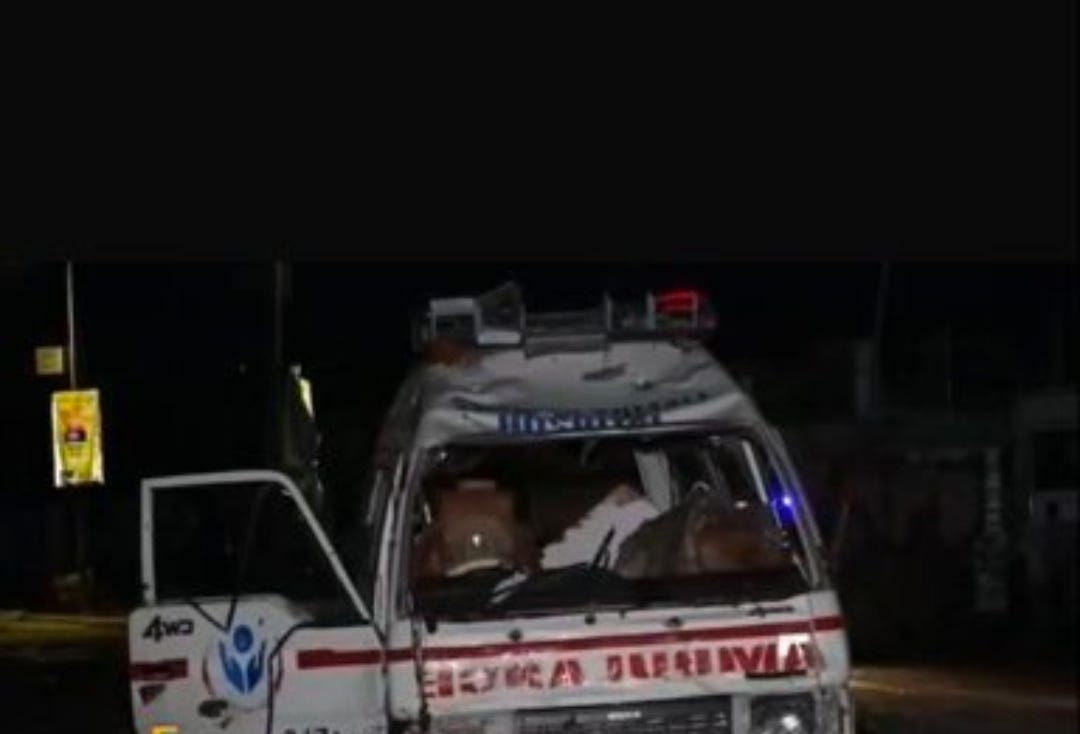
Several ambulances themselves have also been destroyed during the conflict, representing not merely the loss of vehicles but the loss of life-saving capacity for thousands of people.
Each damaged ambulance means fewer emergency responses, longer waiting times and diminished access to urgent medical care for civilians.
The cost of humanitarian service has therefore extended well beyond finances; it has been written in blood.
Neutrality Under Pressure
Humanitarian organisations depend upon neutrality to operate safely. Yet in modern conflicts, neutrality is increasingly questioned.
Aamin Ambulance has often found itself navigating an exceptionally complex environment where every action is scrutinised.
Militant groups seek attacks that maximise casualties and psychological impact. Emergency responders who rapidly evacuate victims inevitably reduce fatalities and undermine that objective.
At the same time, state authorities understandably prioritise security management and public order following attacks, sometimes restricting access to incident scenes while investigations and security operations continue.
Caught between these competing pressures, ambulance crews frequently confront difficult operational realities. Journalists searching for information may seek access to scenes through ambulance convoys, while authorities attempt to regulate movement for security reasons.
In such circumstances, maintaining humanitarian neutrality becomes increasingly difficult.
The organisation's sole purpose remains saving lives, yet its actions are often interpreted through political or security lenses beyond its control.
Fighting Invisible Enemies
Not all attacks arrive with bullets or explosives.
Throughout its existence, Aamin Ambulance has also faced waves of rumours, misinformation and propaganda.
False allegations have circulated claiming the organisation favours particular communities, cooperates with foreign actors or pursues hidden political agendas. Such narratives are especially dangerous because emergency medical services depend fundamentally upon public trust.
If communities hesitate to call an ambulance or refuse treatment due to misinformation, the consequences can become fatal.
Disinformation therefore functions as another battlefield—one capable of weakening humanitarian work without firing a single shot.
A Symbol of Somali Resilience
Despite overwhelming obstacles, Aamin Ambulance has become far more than an emergency service.
It represents a remarkable example of Somali civic initiative filling a critical gap during years when formal institutions struggled to provide essential services.
Its evolution mirrors Somalia's broader journey—from state collapse towards gradual recovery, from improvised survival towards organised resilience.
The wheelbarrows that once carried the wounded have largely disappeared.
In their place stands a fleet that continues responding to emergencies regardless of danger, politics or uncertainty.
Yet the future remains fragile.
Long-term sustainability will require stronger institutional partnerships, reliable funding mechanisms, investment in emergency medical infrastructure and continued protection of humanitarian neutrality. An ambulance should never become a target, nor should those who dedicate their lives to saving others be forced to defend their own legitimacy.
Faithful Until the End
The name Aamin means faithful, and few names could better capture the organisation's identity.
Faithful to humanity.
Faithful to neutrality.
Faithful to Mogadishu.
For nearly two decades, its volunteers have answered calls that many others would fear to receive. They have driven towards explosions while others fled. They have carried strangers from scenes of unimaginable tragedy. They have endured financial hardship, personal loss, public suspicion and relentless danger, yet they continue to serve.
Their story reminds Somalia—and the wider world—that humanitarian courage is often quiet. It wears no uniform of power, claims no political victory and seeks no headlines. It simply arrives when lives hang in the balance.
Between the wheelbarrow and the fleet lies not only the evolution of an ambulance service, but the story of countless unsung heroes who refused to surrender compassion in a city that desperately needed it. As long as their wheels continue turning, they carry more than patients—they carry the enduring hope that even amid conflict, humanity can still prevail.
Comments
Nothing yet. Say the first thing.
Sign in to join the conversation.