

Early spring. 2024.
“Daddy — I talked to the principal and he said it’s not OK.”
I froze with a knife in my hand.
Taco night was happening around me — beef browning, lettuce half-chopped, the usual standoff between hardshell and flour tortillas because nobody in this house agrees and that’s fine.
But my kindergartner had just said the word principal and I didn’t even know the man’s name.
Ozzy kept going. And the delivery didn’t match the words.
His tone was pure five-year-old. I told on you. The posture of a kid reporting to a friend at recess.
But the words coming out of his mouth weren’t his.
Adult words. Clinical. Specific.
Like a bad movie translation — lips moving one way, audio saying something else.
The night before, there’d been a small moment at the pantry. A miscommunication. He felt brushed aside. Not a proud moment. I apologized. We hugged.
Apparently that wasn’t that.
Ozzy told his teacher. And somewhere between a child’s feeling and an adult’s concern, the moment got a bigger vocabulary than it needed. The teacher told the principal.
And now my five-year-old was standing in the kitchen, delivering the verdict.
Dinner prep stopped.
And the committee showed up.
If you’re new here: I write about coherence — how the many yous inside one person learn to work together.
Last week: optimization vs. origination. The part that’s alive is the part you didn’t make.
This week: integration. The practice underneath all of it.
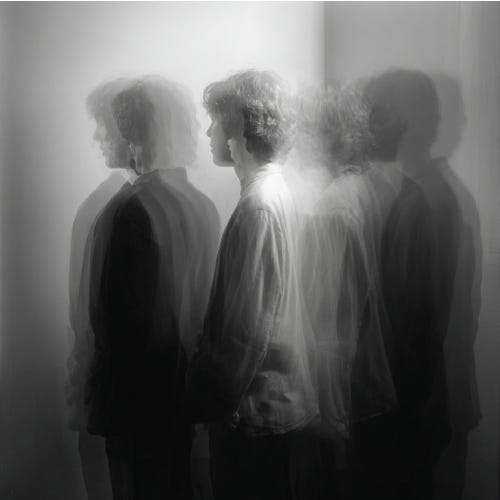
Here’s what happened inside me — all at once:
Mad at Ozzy for telling a story that wasn’t accurate.
Proud of Ozzy for speaking up. We’d spent years in social-emotional schools in Los Angeles working on exactly this — self-advocacy, using his voice, going to someone he trusted. The wiring worked. The signal just got distorted on the way up.
Mad at the teacher — not as a person, but at the feeling that my kid was holding words he didn’t own yet.
Mad at the principal for getting involved without ever reaching out to us.
Embarrassed. New school. New district. New community. People forming conclusions about a family they’d never met.
Crushed that anyone would believe I’d do what the story now implied.
Every one of those parts was right.
The protective father — right.
The proud parent — right.
The embarrassed newcomer — right.
The one who wanted to scream — right.
The one who wanted to hide — right.
None of them wrong.
All of them incomplete.
And if any single one had grabbed the wheel, it would have gone badly.

I started pacing.
Kitchen to bedroom. Bedroom to kitchen.
Every version of me reaching for the wheel at the same time. The angry one rehearsing speeches. The scared one running worst-case scenarios. The proud-parent one wanting to explain. The embarrassed one wanting to disappear.
Nobody driving. Everybody grabbing.
I was searching for my nest — the spot where the noise drops low enough for the parts to talk instead of shout.
Then I stopped at the window.
Early spring. Branches not bare anymore, not full yet. Birds back. Chattering about wherever they’d been.
And standing there, looking at something that wasn’t the problem, a sentence arrived.
“Ozzy came home and told me you two talked. I realized we haven’t really met yet — could I pop in for a quick chat?”
That’s what I said when I called the principal’s office.
The response was clinical.
Here is my availability.
Cold. But it didn’t matter. Something had already shifted — in me.
The swirl didn’t stop.
But it organized.
Wind scattering debris — versus wind filling a sail.

My wife and I walked into the school. Three secretaries at the front desk. A fleeting thought: do they have a position on us?
But I could feel something else, too — the humanness of a building that runs on people absorbing everyone’s urgency all day.
I’d walked in braced. Fortress up. The version of me who wanted to prove I was right had packed a bag and come early.
I started the way I’d started the call — not with a defense. With context. Our family’s background. The schools in L.A. Our philosophy. The transition into a new community.
He was cordial. Acknowledged the conversation with Ozzy. Downplayed the significance.
Then he shared details Ozzy had apparently described — details that didn’t match what I remembered. The kind of thing a five-year-old can assemble when adults hand him a narrative bigger than the moment it came from.
And somewhere in the conversation — no dramatic moment, no movie music — the fortress opened.
Not collapsed. Opened.
The determination to prove I was right softened into a curiosity to see what was true.
What was this principal actually navigating? A building full of families he barely knew. A teacher managing twenty-something kindergartners alone. A climate where people are trying to do the right thing without always having the full picture.
And Ozzy — doing exactly what we taught him to do. Using his voice. Taking it to someone he thought could help.
None of my parts had left the room.
But none of them were driving.
Something else had showed up — the part that could hold more than one truth at once.
Not because I summoned it.
Because the other parts finally stopped shoving each other out of the way.
He stood up, shook my hand, and said:
“Wow — this was one of the best parent conversations I’ve had.”
We walked out.
What I felt wasn’t relief. Relief is weight disappearing.
This was weight with a direction — toward a relationship, a community, a place we’d been orbiting for months without entering.
We’d arrived drinking from a firehose. New state, new district, knowing nobody.
We left feeling like we lived there.

The neuroscientist Dan Siegel uses a river.
One bank is chaos — reactive, flooded, everyone grabbing.
The other bank is rigidity — controlled, fortressed, sealed.
Wellness is the flow between them.
My swirl in the kitchen was the chaos bank.
The fortress I walked into the principal’s office with was the rigidity bank.
The conversation — the actual one, the human one — was the river.
This is what integration actually looks like.
Not a concept.
Not a state you achieve.
A moment where every part of you is right — and none of them can do it alone.
I didn’t have that language in the kitchen. But looking back, the integration sequence was simple:
Get everyone to the table.
Hold the discomfort of “not yet.”
Then act.
I later named those three moves: Seat. Stay. Serve.
For me, Seat was the pacing.
Stay was the window.
Serve was the call.
Most people skip straight to Serve.
That’s how drift regenerates — one partial self making the whole person’s decisions.
Next time the swirl hits — and you’ll know it, because every part of you will be right and reaching for the wheel at the same time —
Don’t pick a winner.
Instead, feel the grab.
Not the content of the argument. The grab itself.
Where is it in your body?
The angry one has a location.
The scared one has a different one.
The embarrassed one lives somewhere else entirely.
You’ll notice: every part that’s fighting for the wheel has a physical address.
Stay there for ten seconds.
Not thinking about the problem.
Just feeling who showed up.
Something will shift.
Not because you solved it.
Because the parts realized they were being witnessed — and the grabbing softened into presence.
That’s the threshold.
The moment before the swirl organizes on its own.
You can’t force it.
But you can feel the room it needs.

A few weeks after that meeting. End-of-year commencement for the kindergartners.
My wife and I were in the stands. Ozzy somewhere in the sea of tiny caps.
The principal was presiding.
He saw us. Went out of his way. Smiled and waved.
Not formal.
A hello.
The kind you give people you know.
See like you’re many. Act like you’re one.
With you in this,
Adam
P.S. When was the last time every part of you was right — and none of them could do it alone? What happened when you stopped picking a winner?
LAST WEEK:
No posts
Comments
Nothing yet. Say the first thing.
Sign in to join the conversation.