
I noticed a post on here and wanted to use my voice and experience as someone currently completing a PhD researching refugee camps, shelter, and placemaking, to clear up some misinformation about what these images actually represent. Before anyone asks: no, I am not going to restack the original post. I do not want to amplify an argument that relies on a fundamental misunderstanding of humanitarian shelter systems.
“IF TENTS ARE GOOD ENOUGH FOR THE UNHCR TO HOUSE REFUGEES… THEY SHOULD BE GOOD ENOUGH TO HOUSE THE ONES WE HAVE HERE [referring to the UK]. THERE ARE ENOUGH REMOTE SCOTTISH ISLANDS WHICH COULD BE USED TO HOUSE THEM IN CAMPS LIKE THIS. THE COSTS WOULDN’T RUN INTO BILLIONS OF POUNDS. THERE WOULD BE NO NEED FOR HMO’S OR HOTELS TO ACCOMMODATE THEM. AND MOST OF ALL…OUR WOMEN AND CHILDREN WOULD BE KEPT SAFE. WHAT IS NOT TO LIKE. IT GOES TO PROVE THAT WHERE THERE IS A WILL, THERE IS A WAY.”
There are several issues with this argument. The final section, which invokes “our women and children”, reflects a rhetorical strategy that is frequently used in anti-immigration discourse: framing migrants or refugees as inherent threats to women in order to justify exclusionary policies. That is a discussion in its own right. For this post, however, I want to focus on one specific claim...
The idea that refugee camps are simply fields of tents, and that tents represent an acceptable model of housing.
They do not.
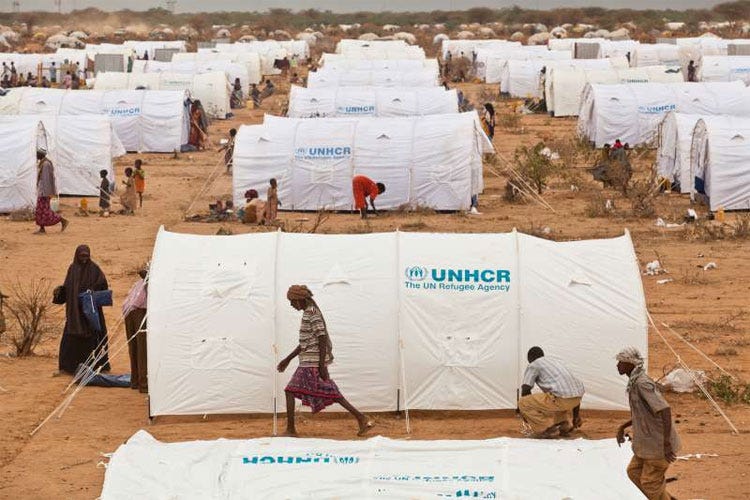
This photograph is one I have come across a few times in my PhD research. It was taken by B. Bannon for UNHCR showing the Ifo camp extension at Dadaab, Kenya.
Dadaab is one of the largest refugee camps in the world. Established in 1991, it has hosted hundreds of thousands of refugees, primarily from Somalia, during periods of conflict, drought, and insecurity. According to a 2025 report by the UNHCR, it currently has a population of 432,380 people. For reference, that is roughly comparable to the population of Bristol.
The settlement is located in Garissa County, in Kenya’s arid and semi-arid lands. The region frequently faces extreme temperatures nearing 50°C and erratic rainfall (300–500 mm annually), according to the UN Office for Disaster Risk Reduction, which leads to recurrent droughts and devastating flash floods. Yet the image tells only a fraction of the story. What is absent from the frame is just as important as what is visible. The photograph captures a moment of installation, not the everyday reality of life in Dadaab.
If you read the caption of the image, you learn that this is when the tents are brand new, “Workers erect up to 300 tents per day to accommodate 1,500 people in Ifo camp extension at Dadaab. The residents of the new tents are being shifted from unsafe areas at the outskirts of the camp.” Suddenly, the pristine rows of white tents against the red earth make much more sense. They are new. They have not yet weathered months of dust, heat, wind, rain, repairs, and adaptation by the people who will live in them. Treating this image as evidence that tents are an acceptable long-term housing solution is like a chocolate teapot.
The next issue is that the image is removed from all its context. Where are the water infrastructure, the sanitation systems, the healthcare facilities, schools, roads, distribution networks, protection services, markets and governance structures? Because I can assure you they exist outside of the image.
The tent is only one visible element of a much larger system, one that takes hundreds, if not thousands, of workers around the world to design and run. The image itself is misleading because it strips away the infrastructure around the shelter.
The central misunderstanding in this argument is the assumption that because UNHCR uses tents, UNHCR considers tents to be an acceptable form of permanent housing.
This is just not the case.
Tents are one tool within a wider humanitarian shelter response. The UNHCR publishes a Shelter Design Catalogue of these responses, freely available on the internet. It includes emergency global shelter solutions ranging from family tents and refugee housing units to transitional and more durable shelter systems designed for different climates and operational contexts.
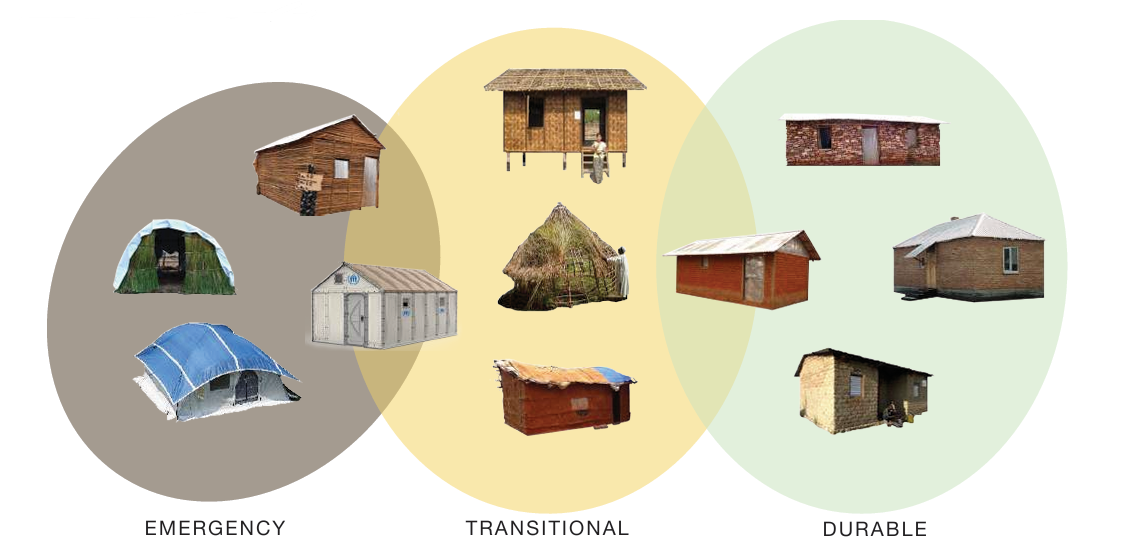
In this document, you can start to understand some of the logistical thinking behind the shelter selection within emergency responses. Tents are often used because they can be transported quickly, deployed rapidly, and provided at scale during emergencies where people have suddenly lost their homes due to conflict, disasters, or persecution.
For example, where 300 shelters are needed to be made in a single day, as we established, was the case in Dadaab. Their purpose is immediate protection. They provide a temporary physical barrier from the elements while more appropriate solutions are developed.
This distinction is crucial: emergency shelter is not the same thing as housing.
A shelter response in Kenya’s arid lands is not automatically appropriate for a different country, climate, or political context. The Sphere Handbook, widely regarded as the international benchmark for humanitarian response, emphasises that shelter should provide protection from climate, privacy, dignity, safety, and access to essential services. It does not define a tent as an acceptable long-term housing solution.
The existence of emergency tents does not demonstrate that tents are an ideal housing solution. It demonstrates that, in moments of crisis, rapid shelter saves lives.
If we dive a little deeper into the SHELTER DESIGN CATALOGUE, we can see that every structure has specific specifications and capabilities to sum:
Capacity: The three standard family tents included in the catalogue are for a capacity of 3 people and labelled as family tents. This inevitably means families of over 3 people, which is many, considering multi-generational homes and anything more than a single child are, by specification, overcrowded.
Temperature: all three tents are specified for 5-40 degrees Celsius, not ideal in the Kenyan desert, so a SHADE NET can be added, allowing temperatures of 45 degrees, still not sufficient for the 50-degree weather mentioned before. This also lowers the capacity to two.
But what about the UK? We don't get 45+ degree summers. But according to the MET Office, the long-term average for UK winter is 4.09°C (1991–2020), which is below the minimum operating temperature specified for the standard configuration. There is a WINTERIZATION KIT that allows for as low as 0 degrees, but that still doesn't cover some of the winter lows, especially in your proposed site of the Scottish islands. Oh, and it again lowers the capacity to 2.
Warranty: All three tents and their added kits are quoted for a year. Which is not an issue if this is an emergency solution. But as a solution to housing refugees raises some startling problems. Most refugees are in protracted situations, where the reason for their displacement has lasted for over 5 years. But many conflicts last far longer; the Syrian Civil War lasted 13 years, 8 months, the War in Afghanistan was 19 years, 10 months; the Iraq War was 8 years, 8 months and the Somali Civil War, where the majority of the refugees from the camp in that photo have lasted 35 years, 2 months and is still ongoing. So a shelter that is good for one year seems impractical to say the least.
On top of that, there are the wind conditions, Rain, and the fact that these things are manufactured from lightweight polymer fabrics designed for emergency deployment rather than permanent housing.
To start, there is an uncomfortable contradiction in the idea of using remote landscapes as places to remove displaced people from public view. Land is not simply empty space waiting to be occupied. The Scottish Highlands and islands are ecological, cultural, and lived landscapes with their own communities, histories, and environmental considerations. I don’t think I'm alone in saying that Scotland is not the storage unit for what you don’t want to see.
Secondly, as established, the tents would not work in the environment.
Third, to link it back to camp design and governance: A location is not suitable for a settlement merely because there is physical space available. Settlement planning considers access to healthcare, education, employment opportunities, transport networks, legal support, community connections, and long-term possibilities for people’s lives.
Many large refugee settlements are located close to countries of origin because most refugees are hosted in neighbouring countries. Displacement is often regional as well as fluid. People frequently remain close to their homes. Many hope to return when conditions become safe, because they maintain cultural and family connections, or because crossing a nearby border is the only possible route to safety.
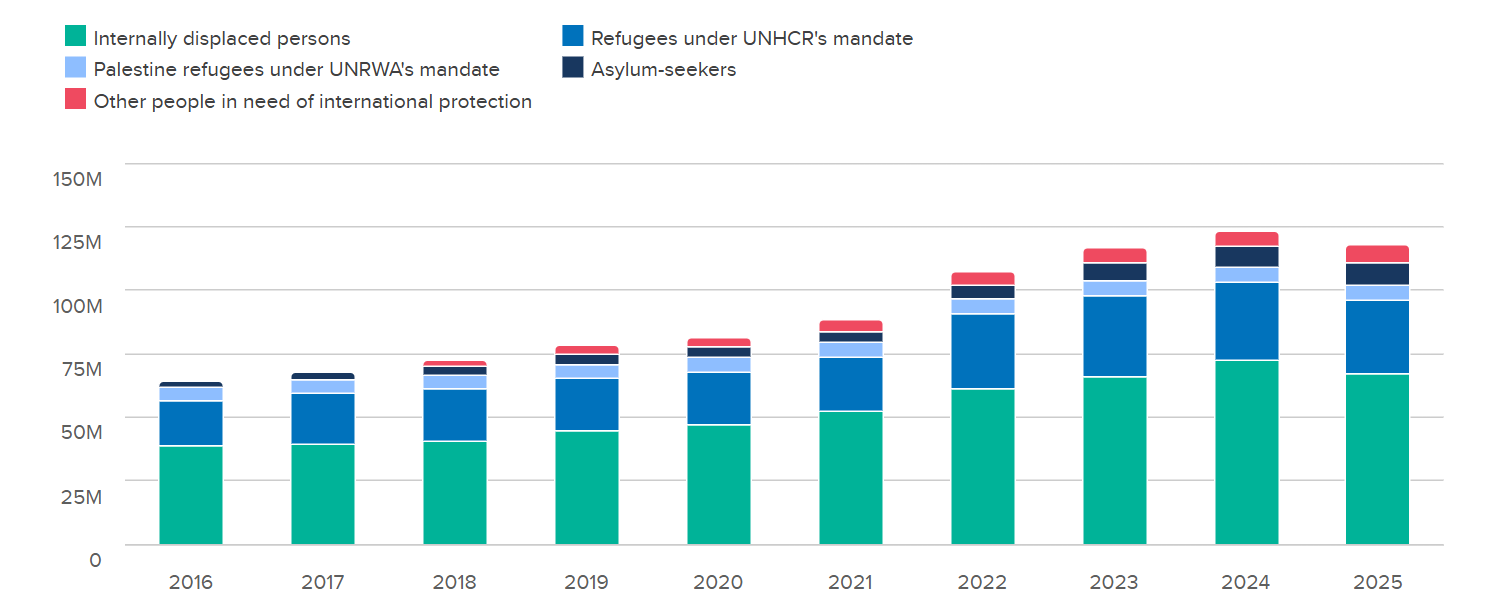
It is also worth remembering that internally displaced people now make up the largest category of forcibly displaced people globally.
In short, A remote island in Scotland is not comparable to a refugee settlement near a country of origin.
The idea that tented camps are automatically a cheaper alternative to existing accommodation is another oversimplification. The physical appearance of a shelter does not represent the true cost of maintaining a settlement.
A tent may appear inexpensive when viewed individually, I can tell you from the catalogue that the tent (minus the needed extras we mentioned) costs 420-700 USD, minus transport, set up, etc., but then what about everything else we mentioned before? A refugee camp housing thousands or hundreds of thousands of people requires enormous investment in infrastructure and services. Costs include water provision, sanitation, healthcare, education, logistics, food systems, transportation, staffing, administration, and protection services.
And if this were to be on a remote Scottish island, away from any existing infrastructure and not given the grace of a flat desert to drive or fly over, it would likely cost even more.
Then, after setting up, there are the running costs. Because UNHCR publishes Kenya-wide operational budgets rather than camp-level expenditure, it is impossible to calculate Dadaab’s precise annual operating cost from publicly available data. A simple population-based estimate suggests that tens of millions of US dollars are spent annually on supporting Dadaab, but this should only be treated as an approximation rather than a formal budget. I could only imagine that the same would cost more in the UK, where cost of living is significantly higher.
But this is partially why this is not the end goal of the UNHCR, why tents are not considered a durable solution to mass displacement. For many years, humanitarian organisations have increasingly focused on supporting refugee agency, livelihoods, and participation. This recognises that refugees are not simply recipients of aid; they are people with skills, knowledge, aspirations, and the ability to contribute to the places where they live. Research on refugee settlements has repeatedly shown that people create economies, social networks, and systems of everyday life even under extremely restrictive conditions.
Increasingly, humanitarian policy has shifted away from long-term aid dependency towards self-reliance, livelihoods, and integration wherever possible. Refugees are not simply recipients of assistance; they are people who establish businesses, build communities, create places, and contribute economically when they are permitted to do so. That is why durable solutions focus on agency rather than indefinite emergency shelter.
If you have been reading my other work, you may have noticed this is a little different, but I have had enough of the misuse of refugee camps as a rhetorical prop and the misinformation and disingenuous use of very accessible information on refugees just to push individuals’ personal and political agendas. Human rights cannot become the playthings of politicians. Frankly, I’ve had enough.
I would greatly appreciate it if you were to share this, ask questions and spread the facts of the matter. Feel free to quote elements that resonated with you, but remember to include the context to avoid others deliberately representing information for the purposes of hate.
Here are some of the resources I used to write this. If you want to check them out yourself:
UNHCR. Shelter Design Catalogue (2016).
https://emergency.unhcr.org/sites/default/files/2024-01/unhcr_shelter_design_catalogue_january_2016.pdf
UNHCR. Emergency Handbook – Shelter and Settlement.
https://emergency.unhcr.org/protection-and-solutions/shelter-and-settlement
UNHCR. Kenya Operational Data Portal (Dadaab Population).
https://data.unhcr.org/en/country/ken
UNHCR. Global Trends: Forced Displacement 2025.
https://www.unhcr.org/global-trends
Sphere Association. The Sphere Handbook: Humanitarian Charter and Minimum Standards in Humanitarian Response (2018).
https://spherestandards.org/handbook/
UN Office for Disaster Risk Reduction. Kenya Risk Profile / Arid and Semi-Arid Lands. (Use the specific report you sourced rather than the homepage.)
UK Met Office. Winter Weather and Climate.
https://weather.metoffice.gov.uk/learn-about/weather/seasons/winter
UNHCR. Kenya Operational Budget / Global Appeal (2024 and 2025 operational plans, for the funding figures).
UNHCR. Global Appeal / Durable Solutions.
https://www.unhcr.org/global-appeal
UNHCR. Refugee Data Finder.
https://www.unhcr.org/refugee-statistics
No posts
Comments
Nothing yet. Say the first thing.
Sign in to join the conversation.