

“And what is he?”
“Retired.”
We meet Ben Reilly in a very different position from the typical superhero origin story. A total 180 from how we are introduced to Steve Rogers or Peggy Carter. We are in the Prohibition era (yes, I know we are now going back in time, I messed up the chronological order, sorry) between wars, with our protagonist: a war hero, science experiment and retired vigilante once known as The Spider, portrayed by Nicolas Cage, who perfectly captures the strange, grizzled private investigator.
He is a man who, no matter how down-on-his-luck or bruised, cannot quit. Not in a Steve Rogers “I can do this all day” way, but from a tragic, introspective ache and agony that drives him to keep going regardless of the suffering. That feeling, that compulsion, that thing inside that makes desire feel like a scratch on the surface of your skin, makes passion feel like a flesh wound. His curiosity and need to protect are compulsive and all-consuming.
I thought that yearning was reserved for detective shows and eccentric fictional characters. Then I began studying refugee camps and was introduced to the field of humanitarian research.
Curiosity is often described as an innocent trait; something we praise in children but perhaps discourage in cats. We celebrate curiosity as the foundation of discovery, but rarely discuss the cost of constantly searching. It is the itch that demands scratching, the question that refuses to leave you alone until you find an answer. The human psyche is marked by a lifelong tendency to seek and acquire information. It is that very tendency that the makers of algorithms exploit, because curiosity can become almost addictive. The reward systems in our brains create a cycle where the anticipation of discovering new information becomes motivating in itself (Gruber, Gelman & Ranganath, 2014). The more we learn, the more we realise there is still to understand.
The tragedy of Spider-Noir comes from knowing that one person cannot repair a broken city. There will always be another case, another injustice and another person who needs help. Purpose has become inseparable from identity; he has been consumed by the responsibility he has chosen to carry. Researchers encounter the same reality. One thesis cannot transform an entire field. One intervention cannot solve displacement. One paper cannot end misinformation. The scale of the problems we study often exceeds the contribution any individual can make. It is a frustrating realisation and can make the pursuit of knowledge feel almost impossible.
Yet every contribution still matters. Every paper adds something to the global discourse. Every conversation, every mind changed, and every person inspired becomes part of something larger than the individual who started it. Even when it feels like you are gritting your teeth watching public trust collapse, misinformation spread, and political decisions made at the expense of vulnerable people, knowledge and curiosity still matter.
This is where I want to introduce you to one of my academic inspirations (and perhaps someone who will become one of yours, too): Gil Loescher
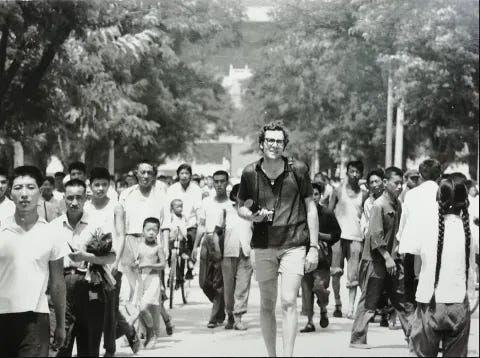
Born in 1945, Loescher became one of the most influential scholars in refugee studies, combining historical research with humanitarian practice. His work examined how displacement is shaped by politics, institutions and the complex realities of international protection.
Loescher’s career embodied the same curiosity and relentless pursuit of answers that define Spider-Noir. Forced displacement has no simple ending. Political circumstances change, new conflicts emerge, and millions of people continue to be forced from their homes. There is no single intervention, policy or publication that can make refugee crises disappear. Yet Loescher continued researching because understanding a problem is part of responding to it. Before societies can create better solutions, they must understand how systems developed, why failures occur and whose experiences have been overlooked.
His book Beyond Charity: International Cooperation and the Global Refugee Crisis challenged the idea that refugee protection could simply be viewed as an act of generosity. Loescher explored how refugee responses are shaped by international cooperation, political interests and the responsibilities of states. Humanitarian action exists within systems of power, and understanding those systems is essential if we want to improve them.
In The UNHCR and World Politics: A Perilous Path, Loescher examined the difficult position of the United Nations High Commissioner for Refugees: an organisation created to protect displaced people while operating within the political realities of the international system. His work highlighted the tension between humanitarian ideals and the constraints placed upon those trying to achieve them.
His final book, Refugees: A Very Short Introduction, reflected another important part of his legacy: making complex research accessible. Academic knowledge has its greatest value when it can travel beyond universities and contribute to wider conversations.
In a tribute from the Oxford Refugee Studies Centre, Alexander Betts described Loescher as: “the single most important academic to work on the international relations of forced migration.”
Across decades of research, Loescher transformed how scholars and policymakers understood refugees. He demonstrated that refugee crises are deeply political, shaped by the actions and failures of states, international organisations and global systems. His later work on protracted refugee situations challenged the assumption that refugee camps are temporary spaces, highlighting the need for approaches that recognise refugees as people with agency, autonomy and futures.
But perhaps the clearest example of Loescher’s commitment came in August 2003.
While advising on the humanitarian response for displaced Iraqis, Loescher was present during the bombing of the United Nations compound in Baghdad. The attack killed 22 people, including UN Special Representative Sergio Vieira de Mello, and left Loescher with life-changing injuries, including the loss of both legs below the knee.
Despite the challenges caused by his injuries, he returned to teaching, research and engagement with refugee communities. His later fieldwork included working with disabled refugees in Burmese border camps in Thailand, while his scholarship continued to explore protracted displacement and alternatives to long-term encampment.
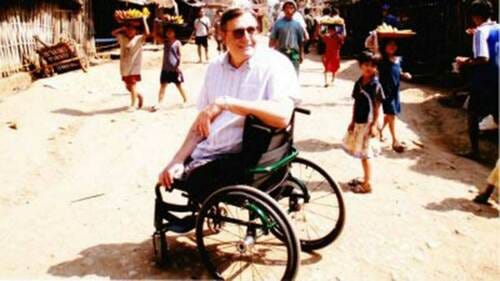
This is what makes Loescher’s legacy so powerful. It was not simply the number of books he wrote or policies he influenced. It was his belief that research should remain connected to the people and communities behind the concepts.
Research can feel frustrating because the problems we study often remain after we are gone. Refugee crises continue. Political systems remain imperfect. New questions emerge before old ones are resolved. But Loescher’s career demonstrates why unfinished work still matters. Every investigation adds another piece of understanding. Every researcher contributes to a conversation larger than themselves. Every person who learns something new becomes part of how knowledge moves through the world.
Loescher’s legacy offers a lesson that extends far beyond academia. None of us will solve every problem or have every answer, but progress has never depended on one person doing everything. It comes from people asking better questions, challenging what came before and leaving behind stronger foundations for a better understanding of the world than the one we inherited.
This is BONUS #1, making the real number of essays 103
Between now and the release of Avengers: Doomsday, I’ll be working through every corner of the Marvel multiverse, using each story as a starting point to explore a bigger question about politics, philosophy and what it means to be human.
If that sounds like your kind of thing, I’d love for you to join me.
Subscribe below to follow the countdown, receive every new essay in your inbox, and let me know your own thoughts in the comments. Whether you agree, disagree, or have a theory of your own, I’d love to hear it.
If you want to learn more about the theories mentioned here, why not check them out? They should be available at your local library or through second-hand book sellers. They are both great reads that say far more than I can fit in this quick 600-word reflection.
Betts, A. (2025) Remembering Gil Loescher.
Gruber, M.J., Gelman, B.D. and Ranganath, C. (2014) ‘States of curiosity modulate hippocampus-dependent learning via the dopaminergic circuit’, Neuron, 84(2), pp. 486–496.
Loescher, G. (1993) Beyond Charity: International Cooperation and the Global Refugee Crisis
Loescher, G. and Scanlan, J.A. (1986) Calculated Kindness: Refugees and America’s Half-Open Door, 1945 to the Present.
Loescher, G. (2001) The UNHCR and World Politics: A Perilous Path.
Loescher, G., Betts, A. and Milner, J. (2008) The United Nations High Commissioner for Refugees (UNHCR): The Politics and Practice of Refugee Protection into the Twenty-First Century.
Loescher, G. (2021) Refugees: A Very Short Introduction.
No posts
Comments
Nothing yet. Say the first thing.
Sign in to join the conversation.