
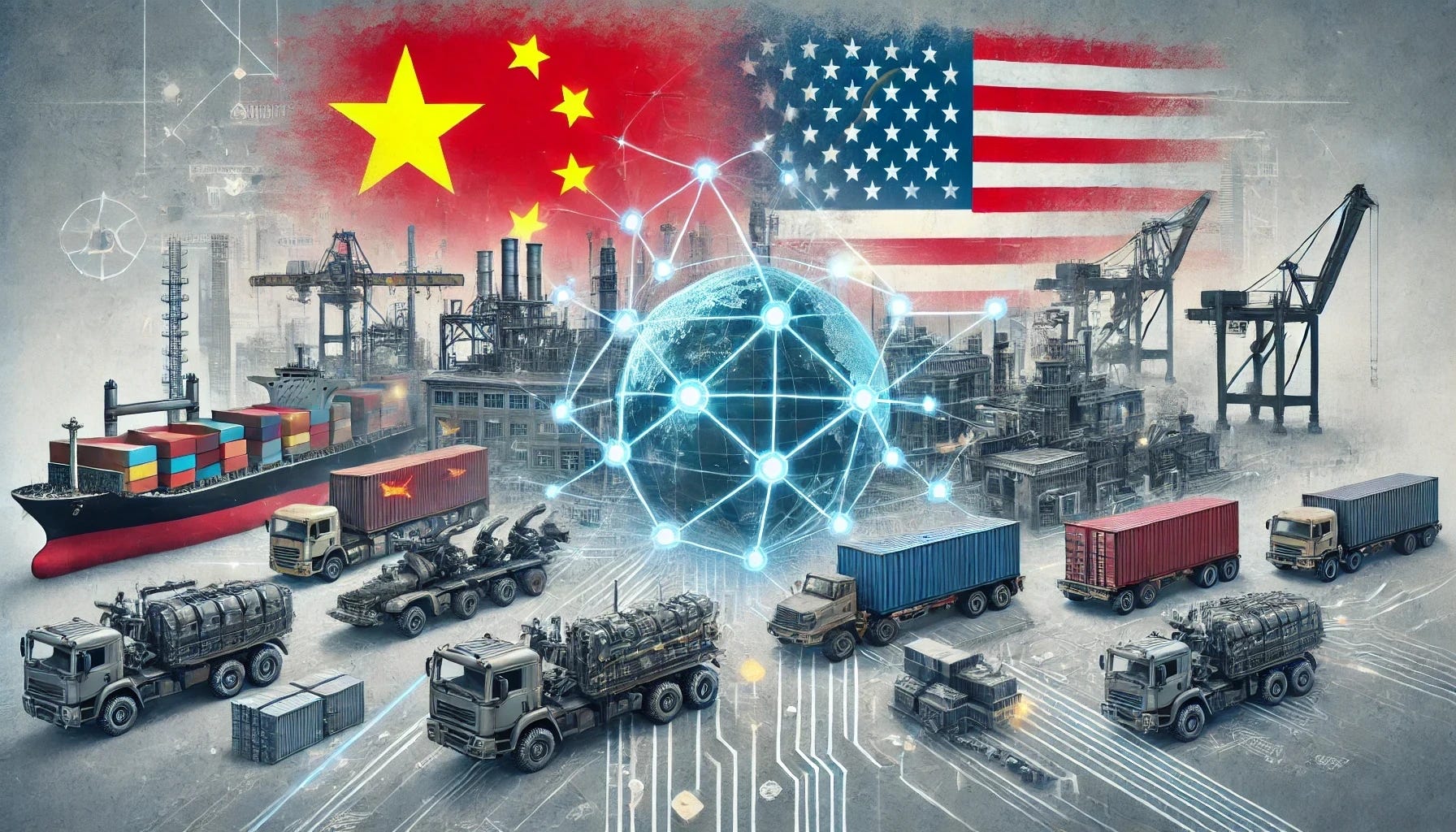
Recent geopolitical developments have exposed critical vulnerabilities in the United States' supply chains for essential raw materials and intermediate parts, particularly those vital to the defense industrial base. China's recent export bans on gallium, germanium, and antimony—key materials for semiconductors and advanced technology—, have amplified the urgency for robust U.S. supply chain risk mitigation measures. The move by China to sanction Skydio, a leading American drone company, has already concretely impacted US defense capabilities.
China’s Strategic Export Restrictions
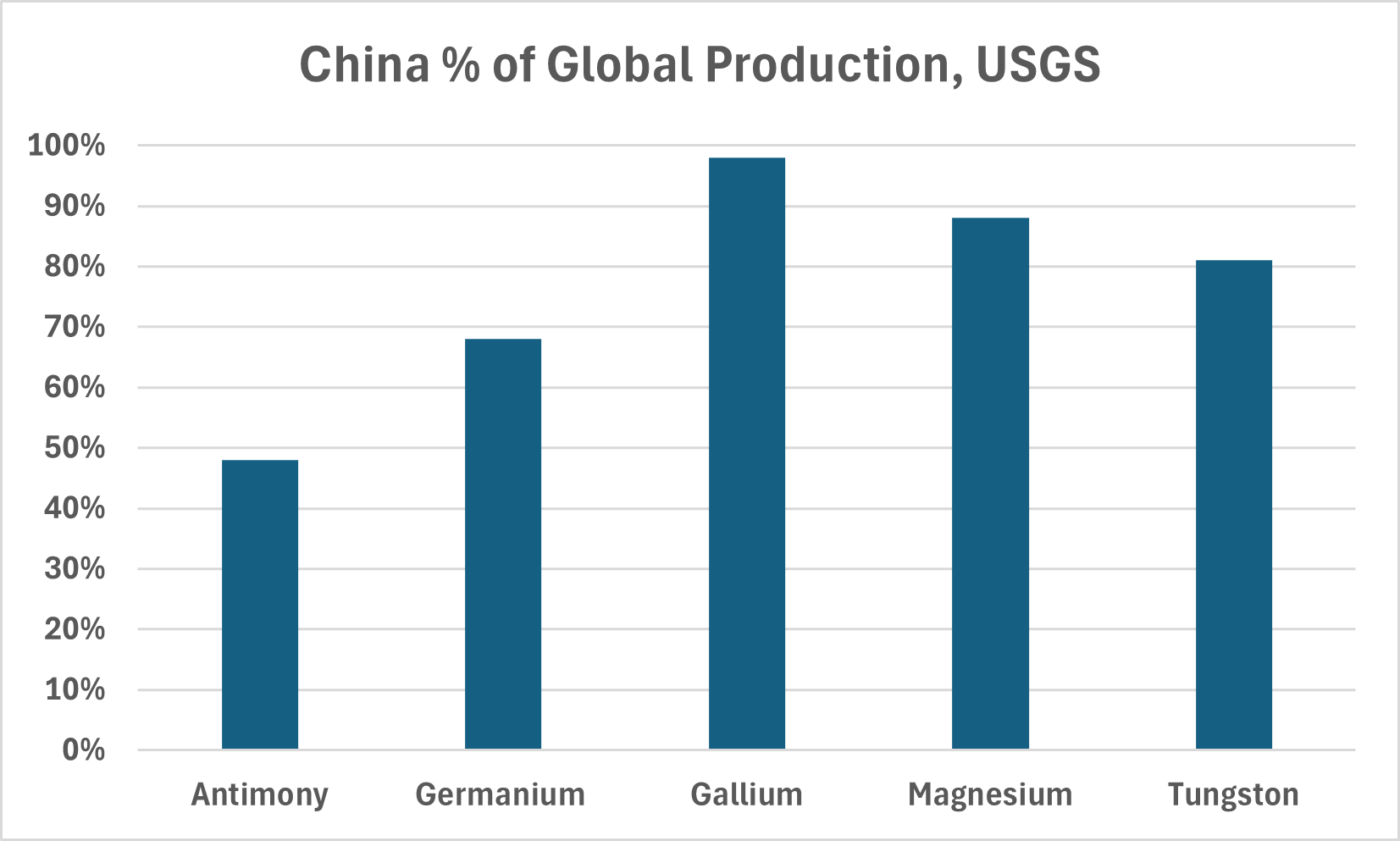
On December 3, 2024, China announced an immediate prohibition on exporting "dual-use" materials to the United States, including gallium, germanium, and antimony. Other metals, such as magnesium and tungston, have seen exports banned for certain grades, opening the door for future, more expansive bans. These minerals are indispensable for manufacturing semiconductors, batteries, communication devices, and numerous military weapon systems, and as a result are crucial for the US economy and the defense industrial base.
China's dominance in these markets is stark: it controls 48-99% of global production among these key minerals. According to USGS, should China ban all exports of gallium, not just to the US, it would cost the US $3.1 Billion dollars in lost GDP, and drive the price of gallium up by 14x. The abrupt disruption from the steps China has already taken has left U.S. industries scrambling to secure alternative sources to avoid supply shocks and potential production delays.
Impact on Defense and Technology Sectors
The U.S. defense and technology sectors are feeling the immediate effects of these restrictions. For example, Skydio, a leading American drone manufacturer supplying technology to Ukraine and other allies, is experiencing severe supply chain disruptions. Chinese sanctions have cut off Skydio’s access to essential components such as batteries, forcing the company to ration its supplies. Skydio’s CEO, Adam Bry, characterized the restrictions as "an attempt to eliminate the leading American drone company and deepen the world’s dependence on Chinese drone suppliers." Per the company, they are being forced to ration batteries available for customers and do not expect to find alternative suppliers until the spring.
This scenario highlights the broader implications for the U.S. defense industrial base. Key players across aerospace, defense, and advanced manufacturing are now grappling with significant supply chain uncertainties, threatening the nation’s ability to meet its defense production requirements and maintain technological superiority. In a scenario of wartime surge, Chinese trade policy decisions could severly cripple the U.S. defense industrial base. Since, 2019 China has been building an “unrealiable entity list” which mirrors the us “entity list” designed to apply sanctions to companies that pose a national security risk, a list which is likely to expand in periods of increasing geopolitical tensions between China and the U.S.
In areas such as rare earth minerals, the U.S. has made significant investments to build a secure supply chain not dependent on China. Yet, establishing reliable alternative supply chains is a time-intensive process, requiring investment, infrastructure, and regulatory alignment. Given the geopolitical landscape, these efforts must be expedited to avoid prolonged vulnerabilities.
How To Fortify U.S. Supply Chains
Proactive efforts are key to securing supply chains before threats materialize, and the first step to taking proactive action is supply chain intelligence. Research and studies on where defense industrial base, as well as larger economic, vulnerabilities exist will be necessary to mitigate supply chain risks. Once vulnerabilities can be identified, actions such as initiating buffer stock and stockpiling, investing in new capacity, creating incentives for on/near-shoring, and promoting new technologies that reduce dependence, can be advanced in a targeted manner.
While these risks are particularly acute for the Department of Defense, private industry can also be proactive by studying where its supply chains are at vulnerable to disruption by China and thinking of ways to mitigate those risks. Actomas LLC has a proven track record of doing just that.
The recent disruptions underscore the strategic importance of securing critical supply chains to safeguard national security and economic stability. By adopting proactive risk mitigation measures and fostering resilience across the defense industrial base, the U.S. can reduce its dependence on geopolitical adversaries and strengthen its position in an increasingly contested global landscape. Time is of the essence—the future of the nation’s security and technological leadership depends on it.
Comments
Nothing yet. Say the first thing.
Sign in to join the conversation.