
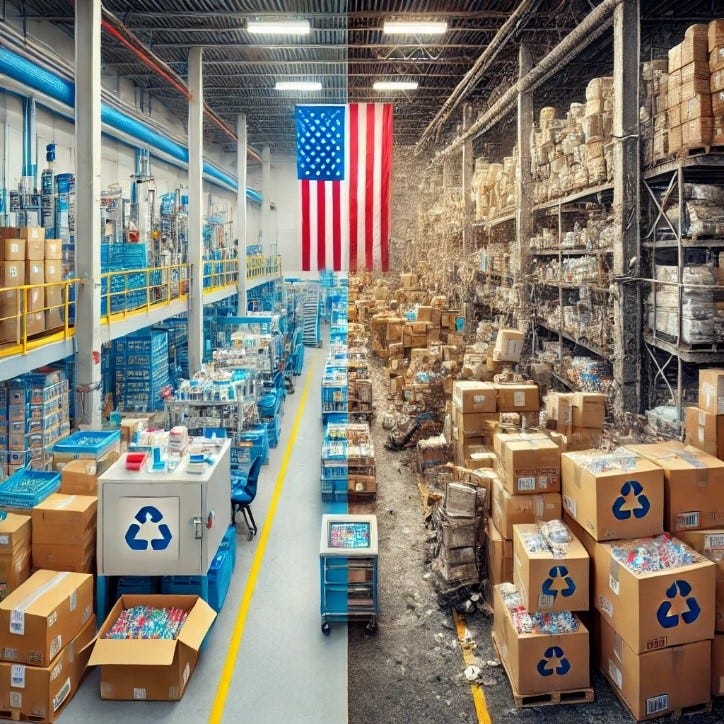
The experience of the COVID-19 pandemic and the subsequent shortages and supply chain disruptions have shown the importance of preparedness for national emergencies, particularly pandemics. Yet, despite the lessons learned from recent crises, our federal statutes still do not mandate that any cabinet secretary maintain an industrial program that ensures readiness contracts for strategic preparedness and response. This oversight has left the United States vulnerable, lacking a cohesive national industrial readiness strategy to guarantee the availability of critical medical supplies from our domestic industrial base.
The current approach relies heavily on stockpiling. The October 2022 GAO Report (GAO-23-105210) reported $10.5 billion in Strategic National Stockpile obligations of the $13.9 billion planned for in FY22 had been completed to replenish the national stockpile. This is in addition to the CARES Act funding in 2020. This stockpiling strategy has proven to be both inefficient and ineffective. The strategy of stocking medical items with limited shelf lives, hoping that these stockpiles will be fully funded and utilized before they expire, is fraught with waste and uncertainty. Moreover, the de facto strategy of building industrial capacity only after an emergency has occurred, as demonstrated by the $1.3 billion of CARES Act industrial expansion funding, is a reactive measure that fails to create sustainable long-term readiness. Once the immediate crisis passes, these efforts often fizzle out, leading to wasted resources and a weakened national response capability.
Our analysis suggests a more proactive approach would be sustaining 40 domestic medical providers to include personal protection equipment (PPE) manufacturing plants through continuous industrial readiness contracts, we could both significantly improve our readiness response and reduce the federal budget by over $500 million annually—assuming only 50% of the stockpile requirement is covered by this strategy. This approach not only cuts costs but also mitigates the risk of industrial expansion collapsing post-crisis, ensuring a robust and ready industrial base for future emergencies.
What America needs is a new national policy—one that establishes a contractual partnership with industry to maintain preparedness for national medical emergencies. Such a policy would offer fair and reasonable funding structures, providing industry with financial stability to sustain readiness, ensuring government stability during emergencies, saving taxpayer dollars, and ultimately improving public health outcomes. This long-term, sustainable strategy would help solve the ongoing issue of medical material shortages during pandemics, promote onshoring of critical domestic capabilities, and secure these capabilities for the future.
Implementing a National Industrial Readiness Strategy for Strategic Preparedness and Response (NIRS-SPR) at the national level is not only feasible but necessary. By consolidating Whole-of-Government requirements, granting the proper authority for industry to enter into readiness contracts, and providing adequate funding, we can incentivize industry to maintain the needed readiness.
This blog advocates funding a study to validate the merits of NIRS-SPR. Such a study would document the scalability of this solution, the benefits to commerce, the reduction of supply chain risk, the potential for onshoring sustainable critical medical industries, and the significant cost savings this approach could offer.
A National Industrial Readiness Strategy for pandemics is not just a financial imperative but a moral one. We owe it to the American people to ensure that our nation is prepared, resilient, and capable of responding to the next crisis with speed, efficiency, and effectiveness.
References:
Congressional Research Service, The Strategic National Stockpile: Overview and Issues for Congress January 25, 2023 (https://crsreports.congress.gov/product/pdf/R/R47400)
Department of Health and Human Services OFFICE OF INSPECTOR GENERAL THE STRATEGIC NATIONAL STOCKPILE WAS NOT POSITIONED TO RESPOND EFFECTIVELY TO THE COVID-19 PANDEMIC (https://oig.hhs.gov/reports/all/2023/the-strategic-national-stockpile-was-not-positioned-to-respond-effectively-to-the-covid-19-pandemic/
Fiscal Year 2022 Budget in Brief Strengthening Health and Opportunity for All Americans, U.S. Department of Health & Human Services HHS.GOV (https://www.hhs.gov/sites/default/files/fy-2022-budget-in-brief.pdf)
United States Government Accountability Office, Report GAO-23-106210, PUBLIC HEALTH PREPAREDNESS HHS Should Address Strategic National Stockpile Requirements and Inventory Risks, October 2022 (https://www.gao.gov/products/gao-23-106210)
Comments
Nothing yet. Say the first thing.
Sign in to join the conversation.