
In late 1941, the Japanese were at the gates of Manila following a lightning campaign that caught American forces completely off guard. The city’s fall was only a matter of time, and it was crucial to make Philippine gold and silver disappear before the Imperial Army could get its hands on them. But how?
On December 23, 1941, MacArthur declared Manila an open city, as a result of which all equipment and troops still present in the capital were redirected to Bataan. Warehouses that could not be emptied were set on fire; Colonel Willoughby, of the US Army Intelligence Bureau G-2, was tasked with transferring — with the assistance of a team from the US Army Finance Office — the Philippine national treasury as well as all assets held by the Philippine Central Bank to the fortified island of Corregidor. Until then stored in the severely bombed Fort Santiago, this treasure consisted largely of gold currency (at least 320 gold bars worth approximately $7 million), silver (between 187 and 469 short tons1 in ingots, Philippine pesos, and centavos worth at least $12 million), as well as paper currency ($3 million in US dollars, $28 million in Philippine securities, and $38 million in Treasury bonds), precious stones, and other valuables2.
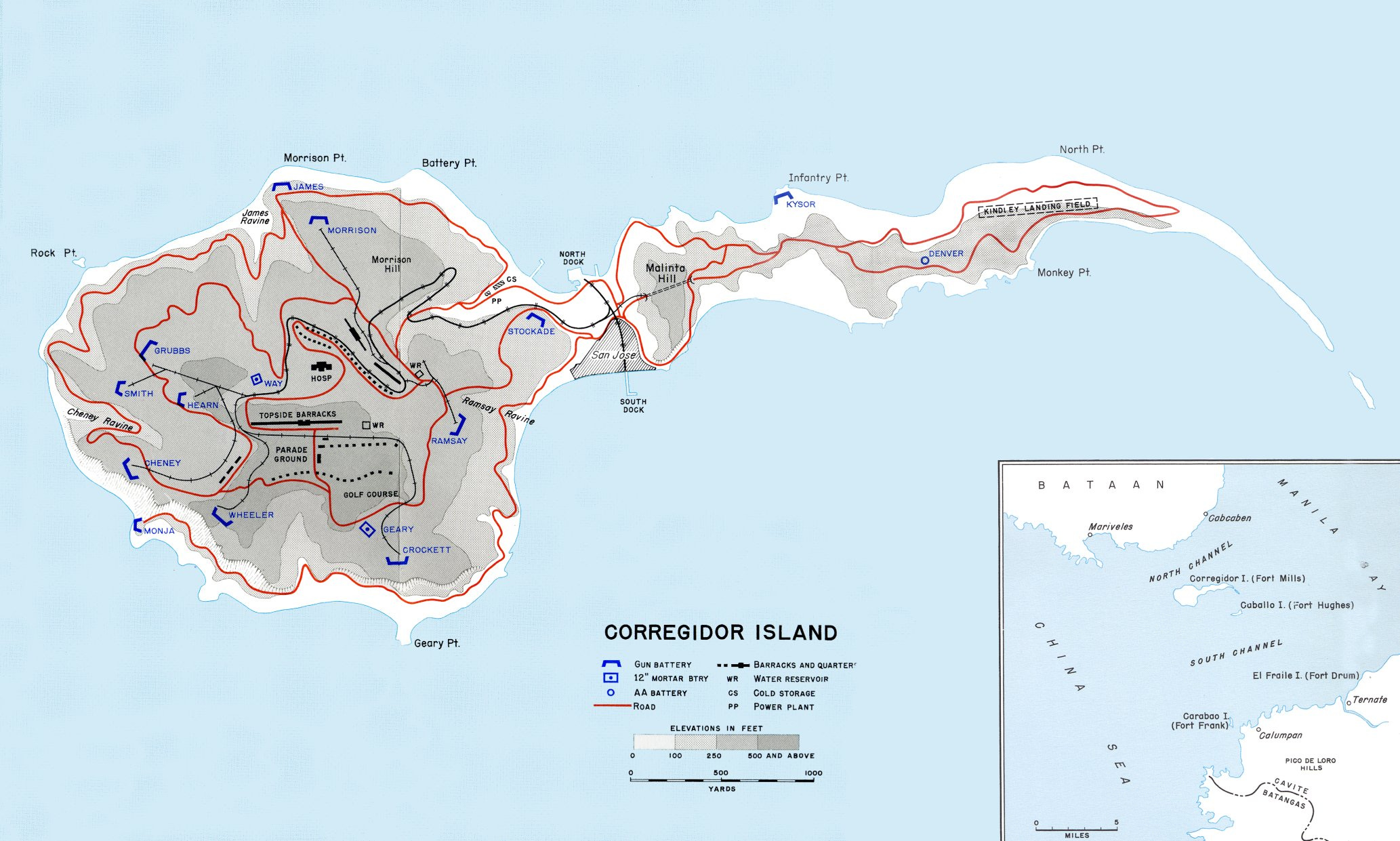
There was no time to waste, and Willoughby assembled a motley flotilla to transfer the treasury from Manila to Corregidor. Most vessels were tugboats or small civilian craft, but the fleet also included the presidential yacht Cassiano; together with the Don Esteban, they transported the equivalent of $41 million. Loading everything took four full nights, and the flotilla set out at nightfall on December 27 to avoid detection by enemy aircraft. At Corregidor, a total blackout made unloading an agonizingly slow process: each vessel had to moor at the North Dock to offload its precious cargo before making way for the next ship. The procedure was laborious, and it took two full nights and an entire day for the treasure to be finally secured in two cellars. From there, the 154 short tons of pesos were transferred to the underground complex at Malinta, while private funds were sent to the center of the island, to a concrete structure located just below a heavy mortar battery. The remaining bars and paper securities were eventually distributed among various vaults in the southern section of Malinta Tunnel. Willoughby’s team spent January 1942 cataloguing and sorting bars, coins, and banknotes. Two problems quickly arose: the serial numbers on banknotes and paper securities had to be recorded before being destroyed so they could be reissued in the United States. But how to dispose of such an enormous mass of paper? For lack of a better solution, three open-air incinerators were put to use; mountains of banknotes were burned there in an apocalyptic atmosphere. The other challenge was getting rid of the gold before the Japanese set foot on the island — which could not be long in coming. Sinking it at sea was considered, but with some effort the enemy might retrieve it... What to do?
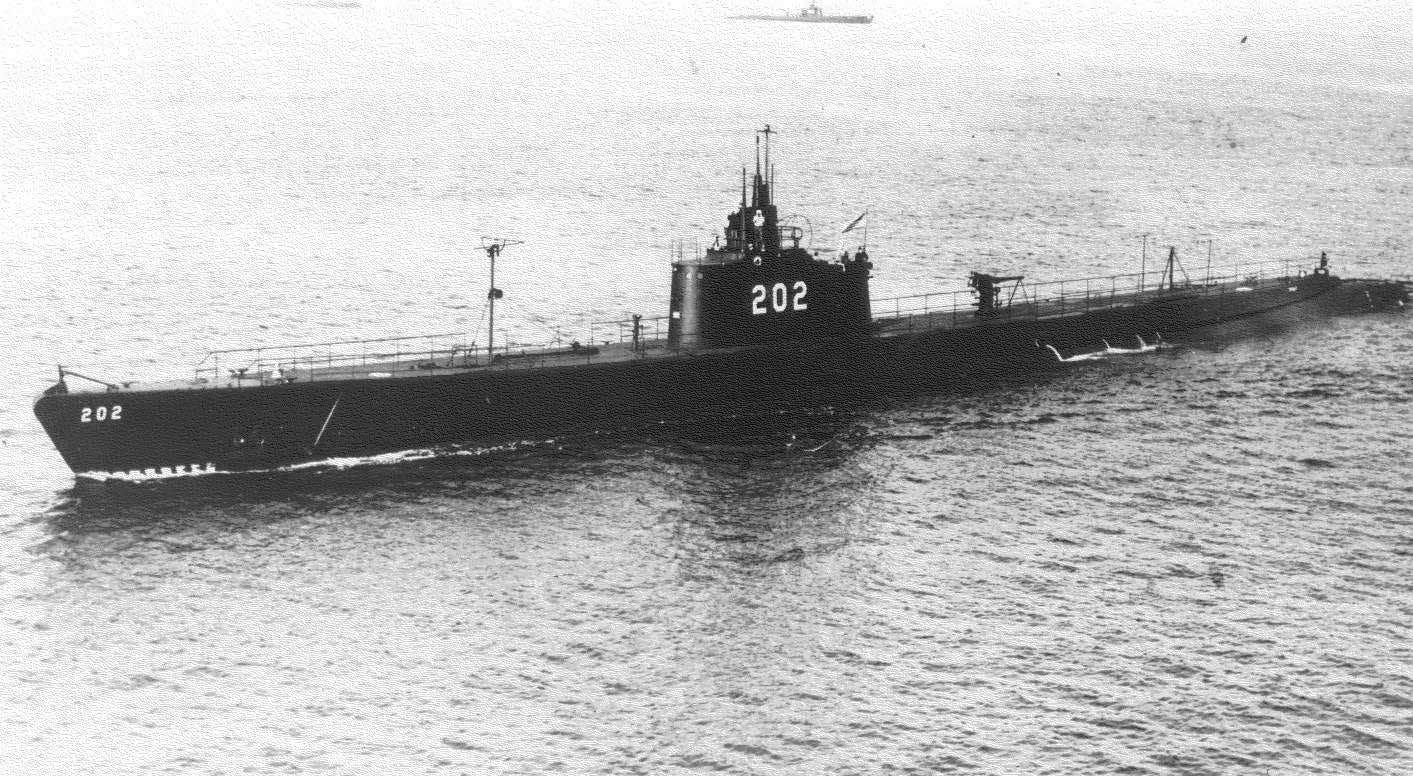
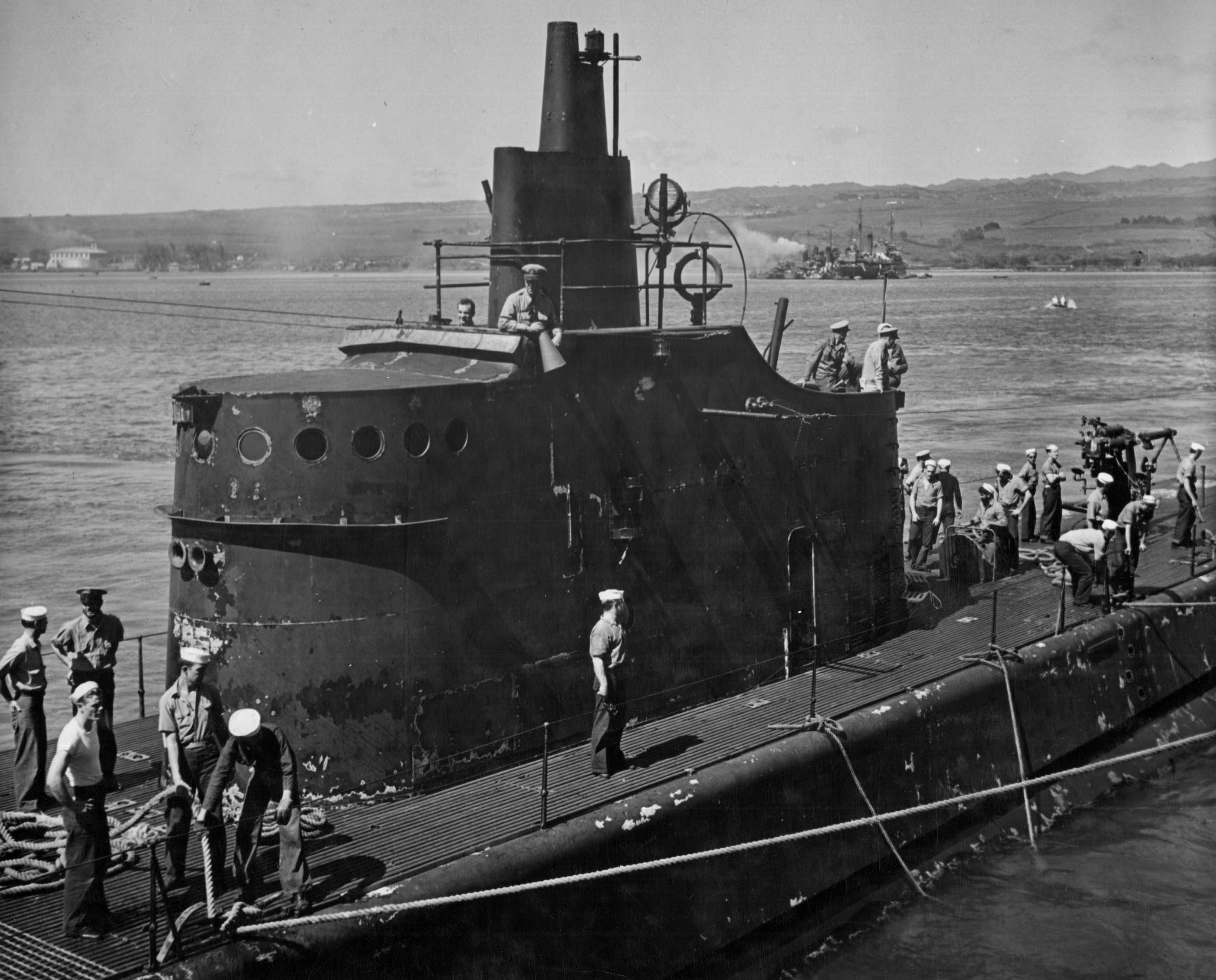
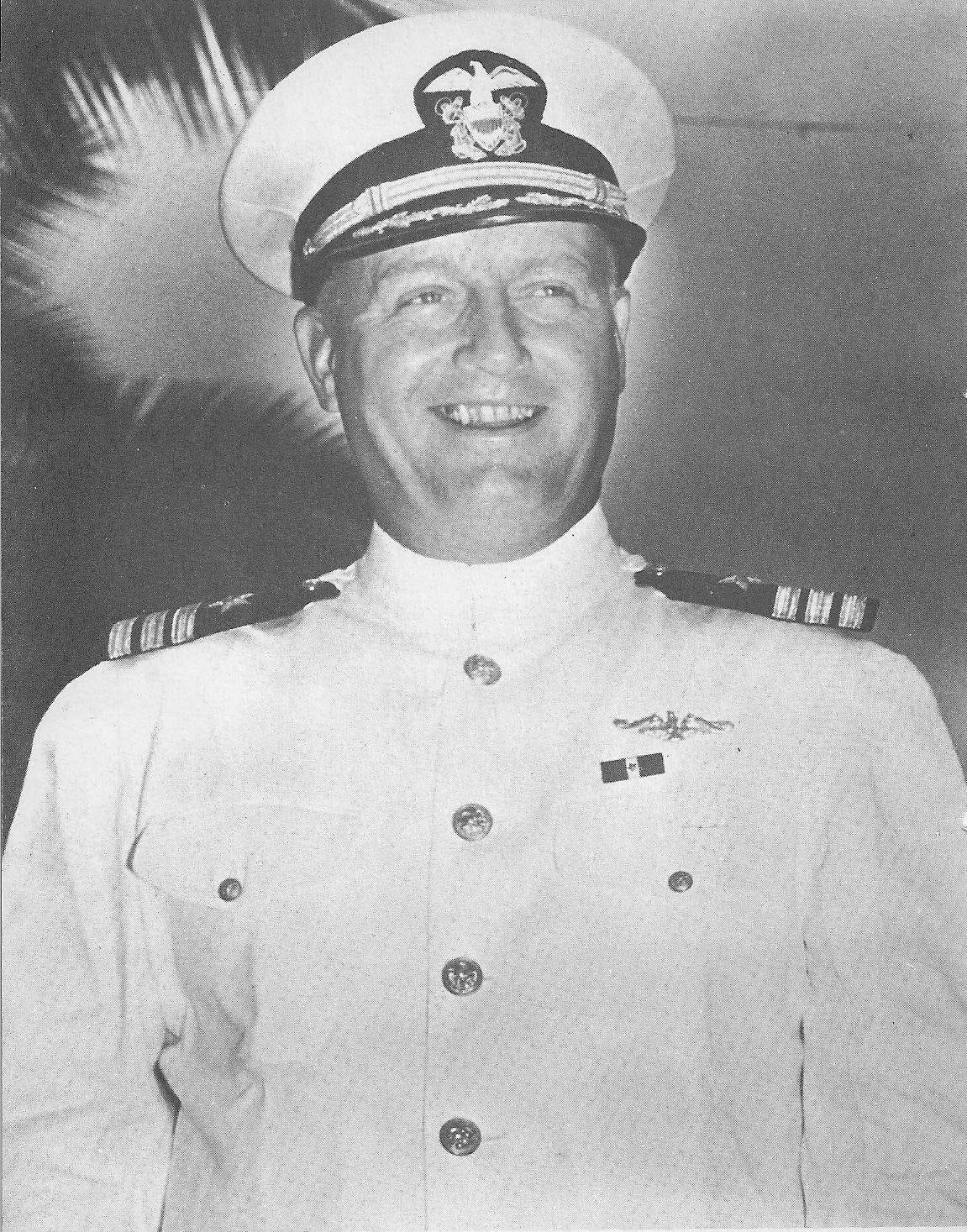
At that time, the US Navy had undertaken to resupply the forces engaged at Bataan and Corregidor through the only means available to it given the Japanese blockade: its submarine fleet. The USS Trout was a submarine of the recently commissioned Tambor class. Commanded by Lieutenant Commander Frank W. Fenno, she had been conducting her first patrol off Midway at the time of the attack on Pearl Harbor. Following mechanical problems, she was in dry dock at Hawaii for a propeller replacement when, on January 10, 1942, the division commander informed Fenno that his boat had been selected to deliver a cargo of ammunition, food, and medical supplies to Manila Bay. The mission was urgent, as Corregidor’s anti-aircraft defenses were short of shells for their 3-inch (76.2 mm) guns capable of reaching 29,500 feet: Japanese aircraft were overflying American positions at 22,000 feet, with no fear of American anti-aircraft fire, which had on hand only shells fitted with older fuzes that could not reach beyond 19,700 feet.
Fenno therefore wasted no time preparing his submarine and departed for the Philippines on the morning of January 12. He had on board 3,517 rounds for the 3-inch guns, as well as 500 cases of food and medical supplies of all kinds. To carry as much as possible, the Trout had offloaded all her reserve torpedoes, keeping only those already loaded in the tubes. Similarly, to facilitate unloading, the shells had been removed from their crates and stacked in the torpedo and maneuvering rooms. The Trout reached Midway quickly, where she put in for a few hours to refuel and carry out minor repairs, then on the 16th headed toward the Bonin Islands (present-day Japanese Ogasawara archipelago, of which Iwo Jima is a part), passing them on the 21st. Six nights later, a lookout reported a bright light off the port bow. Battle stations were called, and the submarine closed on the light source; so close to the Bonins, such a vessel could only be Japanese, and at 1,500 yards, the commander fired a torpedo... which missed its target. The Trout closed to within 600 yards of the intruder, which turned out to be a Japanese ASW patrol boat! The submarine then withdrew as quietly as possible, apparently without having been detected.
She sighted Corregidor on the afternoon of February 3, but remained submerged until nightfall. At 7:45 PM, she surfaced close to San Jose Bay on the southern coast of Corregidor. She first had to navigate through two minefields — one belonging to the Army, the other to the Navy — and that is why she waited for a “guide.” This turned out to be a torpedo boat, PT-34, faithfully at the rendezvous and tasked with piloting the submarine. Following such a fast craft in total darkness proved no easy feat, but the Trout eventually moored discreetly at the island’s South Dock at precisely 8:34 PM. The munitions were unloaded in the minutes that followed at a furious pace, taking advantage of the absence of enemy activity. By midnight, everything was done, and the Trout was ready to leave. But to do so, she needed ballast. The shells she had been carrying had provided the displacement necessary to perform emergency dives or to remain submerged and thus evade the Japanese blockade. The submarine was now considerably lighter, and any dive would be, if not impossible, at least far slower. She had taken on two reserve torpedoes, but that was not enough. Fenno requested 27.5 short tons of ballast. Sandbags would have been ideal, but Corregidor needed them far too badly to reinforce its defenses. The problem was passed up to a naval attaché, Lieutenant Commander Parker, who immediately put to Philippine Vice President Sergio Osmena — then taking refuge on the island — an original idea: why not use the central bank’s gold as ballast — bars that no one knew what to do with and that were taking up a monstrous amount of space? They could thus be discreetly transferred to Pearl Harbor and eventually to a port on the US West Coast.
Thanks for reading! This post is public so feel free to share it.
Osmena gave his agreement by telephone to MacArthur, who invited Commander Fenno ashore to work out the details. In the dead of night, the Malinta Tunnel buzzed with activity: Fenno and Lieutenant Gunn, his engineering officer, were briefed on the plan by MacArthur and Admiral Rockwell, while Colonel Willoughby was roused from sleep and sent to prepare the transfer. Everything had to be finished before dawn. All available men formed a chain to pass the ingots to two flatbed trucks. Present were Treasury employees, soldiers, and Filipino dock workers, as well as Willoughby and his wife, officers, and more. One by one, the yellow metal bars disappeared from the South Mine Dock into the belly of the USS Trout. The operation took time, but by 2:50 AM, 319 ingots and 630,000 silver pesos were stowed in the forward and aft battery compartments of the submarine. There was no time to lose: ten minutes later, the Trout left the dock, moved out 3 nautical miles, dove to 130 feet... and settled on the bottom. Fenno had arranged with Willoughby to resume loading the following night at a rendezvous point at sea in San Jose Bay. In the meantime, the submarine had to vanish so that the Japanese would remain unsuspecting. With morning came the wait: “all day long, the men scanned the skies for enemy aircraft, anxiously watching for the telltale signs of an air raid,” Colonel Willoughby’s wife would later testify. “The submarine was not far away, and they knew that in tropical waters, submarines could be spotted even at great depth. They were watching for the single aircraft the Japanese sent over Corregidor every day to take aerial photographs.” Underwater, the Trout’s crew took the opportunity to rest after thirty-six hours on watch. Night fell quickly at those latitudes, however, and once total darkness had settled in, a PT boat was quickly loaded. It then quietly slipped away from the dock and patrolled the designated rendezvous area for three hours. It finally located the submarine, and the transfer resumed immediately. It lasted only fifty minutes, despite an increasingly rough sea. The USS Trout now had on board valuables worth $10 million, along with diplomatic mail of the utmost importance, and she hastened to return to depth and move away from Corregidor and the Japanese blockade forces.
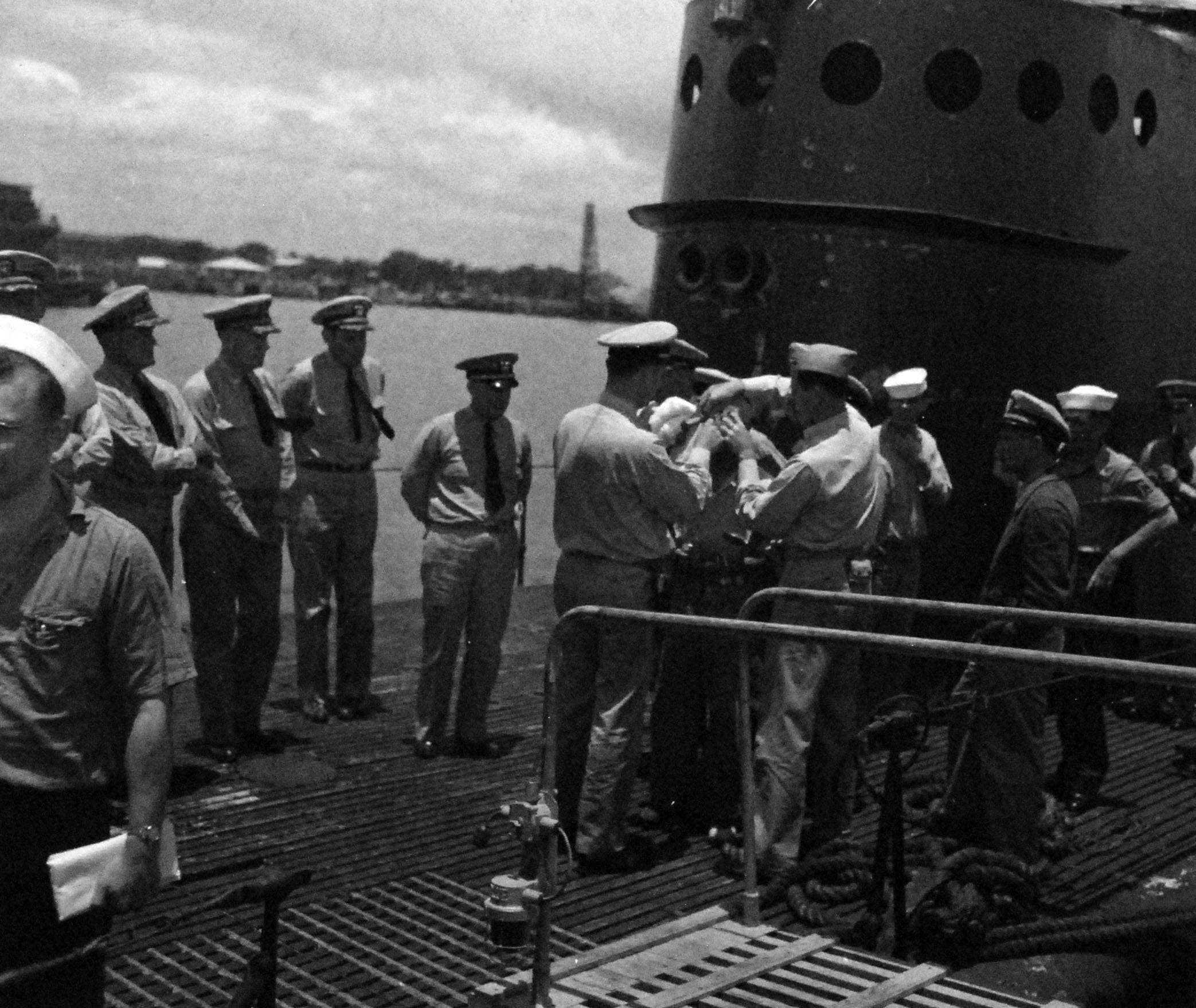
Fenno now held a letter forwarded to him by Philippine President Quezon, asking him to transfer his cargo to the United States and place it at the disposal of the Secretary of the Treasury. That was indeed what the commander intended to do — but in due course. With 22 short tons of precious materials on board, the temptation to head directly for Hawaii was very real, but when he had left Pearl Harbor, his superiors had assigned him a combat mission — the resupply of Corregidor had been intended merely as a parenthesis in their minds — and he still had to carry it out. The submarine therefore headed for the East China Sea. The monsoon had begun, and conditions deteriorated considerably, slowing the boat, which did not reach her patrol sector until February 10. That day, at 4:25 PM, she spotted a Japanese cargo ship of 2,700 tons, the Chuwa Maru, crossing 35 nautical miles (40 miles) north of Taipei. She fired three torpedoes (at 2,000 yards, 690 yards, and 600 yards respectively). The last two struck home, sinking the USS Trout’s first victim. After an evasive maneuver to the south, the submarine headed back northeast and patrolled for eight days in the East China Sea in appalling weather: continuous rain, poor visibility, and worse. Any hunt was of course impossible, and on February 15, Fenno pushed north toward the Bonin Islands. On the 19th, while cruising in the vicinity of that archipelago, a light was reported; but the commander had learned his lesson on the outbound leg and cautiously approached what he believed to be the lure light of an ASW hunter. He ordered a dive to periscope depth at 9:00 PM and fired two torpedoes from a safe distance. In vain. Worse still — the ship’s sonar indicated that the target had also launched a torpedo! The Trout dove to 120 feet and heard a second torpedo pass overhead. The commander then returned to periscope depth, reacquired his target, and fired one last torpedo. The third attempt was the right one: an explosion briefly lit up the ocean; the crew distinctly heard the characteristic sound of a ship going down (the Trout would be credited with a 200-ton patrol vessel), as well as the engines of another fleeing at full speed.
The submarine then set course for home — a peaceful voyage undisturbed by any contact until the appearance, two days out from Pearl Harbor, of the USS Litchfield, an old ASW destroyer serving as escort for submarines in Hawaiian waters.
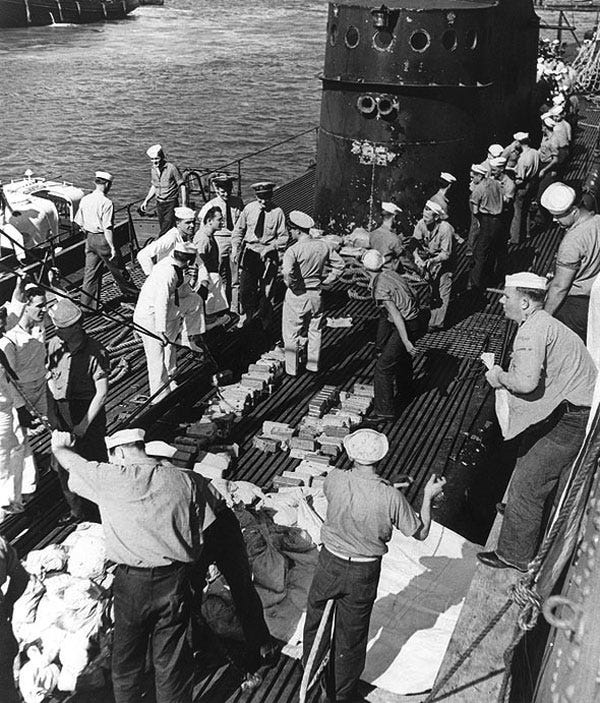
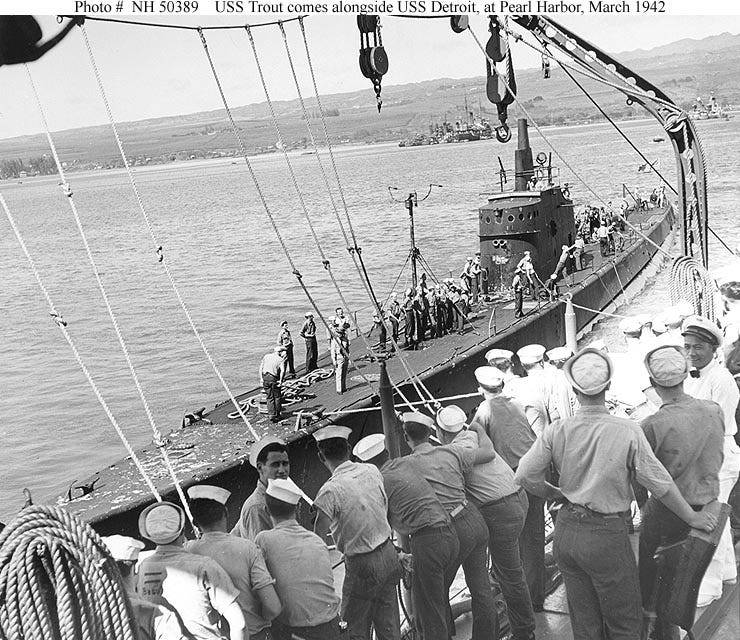
On the afternoon of March 3, 1942, the submarine came alongside the light cruiser Detroit, onto which were soon transferred the 8.8 short tons of gold and 13.2 short tons of silver from the Philippine Central Bank. The light cruiser would then depart for San Francisco, where she would deliver the entire cargo to the Treasury Department. For the submariners, arriving at Pearl Harbor was a genuine relief: the USS Trout had completed a 51-day patrol, certainly marked by port calls and successful torpedo attacks, but the presence of all that gold had begun to weigh heavily on the commander’s shoulders. In a fine irony of fate, several days later he discovered a forgotten ingot wedged in a corner of his submarine — a “poisoned gift” he wasted no time delivering to the Treasury in exchange for a receipt.
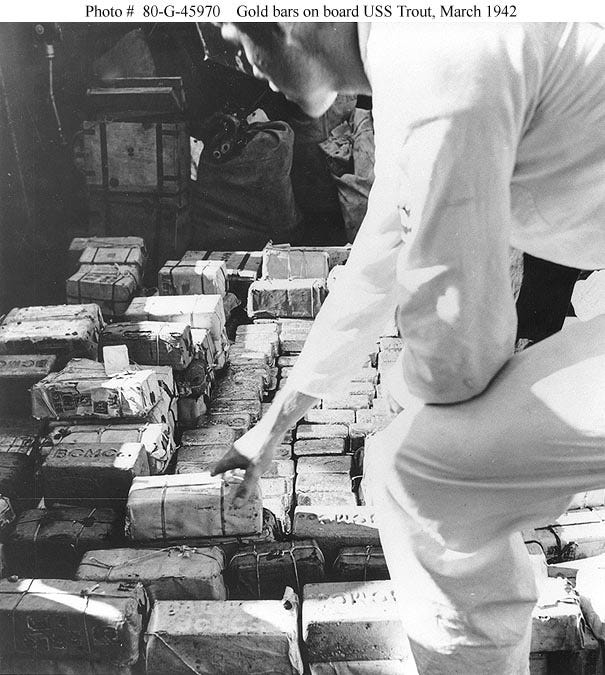
For the success of this very special mission, Washington issued a cascade of awards: the Trout received a Presidential Unit Citation, all 70 members of her crew the Silver Star, and her commander the Navy Cross as well as the highly coveted Distinguished Service Cross. The gold had stirred passions, however, and a year or two later Fenno decided to assert what he considered to be the law of the sea: for the “salvage” of the precious cargo, his crew should be entitled to a percentage of its value. Traditionally, that was indeed the maritime custom, but the US Navy had a ready-made answer: one month after the Trout’s fruitful mission, it had “clarified” its maritime salvage rules, and this particular case was no longer a salvage but a “government-to-government transfer,” which entitled no one to any compensation whatsoever.
The story was not quite over. A large portion of the Philippine silver remained stored on Corregidor: millions of dollars in pesos and centavos were still waiting in the Malinta Tunnel. And the island’s fall was only a matter of time. So, between March 12 and May 6, General Wainwright organized the disappearance of those tons of precious metal: for several nights in a row, the besieged garrison loaded the silver onto barges, which were then scuttled offshore at a carefully recorded location in 130 feet of water. The operation succeeded in making all stocks disappear into Caballo Bay. The Japanese found only a tiny fraction, using prisoners of war as divers — who were anything but eager to oblige their captors: to celebrate the capture of the Philippines, the Emperor had about a hundred of these pesos restruck and offered as gifts to certain soldiers; they bore the inscription “Commemoration of the Philippines Expedition, Year 2602.” When the Americans retook the island in 1945, they recovered approximately $3 million before the end of the year; then in 1947, veterans mounted a salvage operation — apparently of modest returns — and the Philippine government continued where they left off, though the exact results remain unknown to this day (perhaps 8 million coins recovered). Stories still circulate claiming that $3 million in pesos are still waiting for the skilled diver who can find them off Corregidor.
Depending on the source, figures concerning the amounts transferred from Manila and Corregidor vary considerably, and the explanations pertaining to them are not always reliable.
For a conservative total estimate of $92 million — almost certainly a great deal more.
Comments
Nothing yet. Say the first thing.
Sign in to join the conversation.