
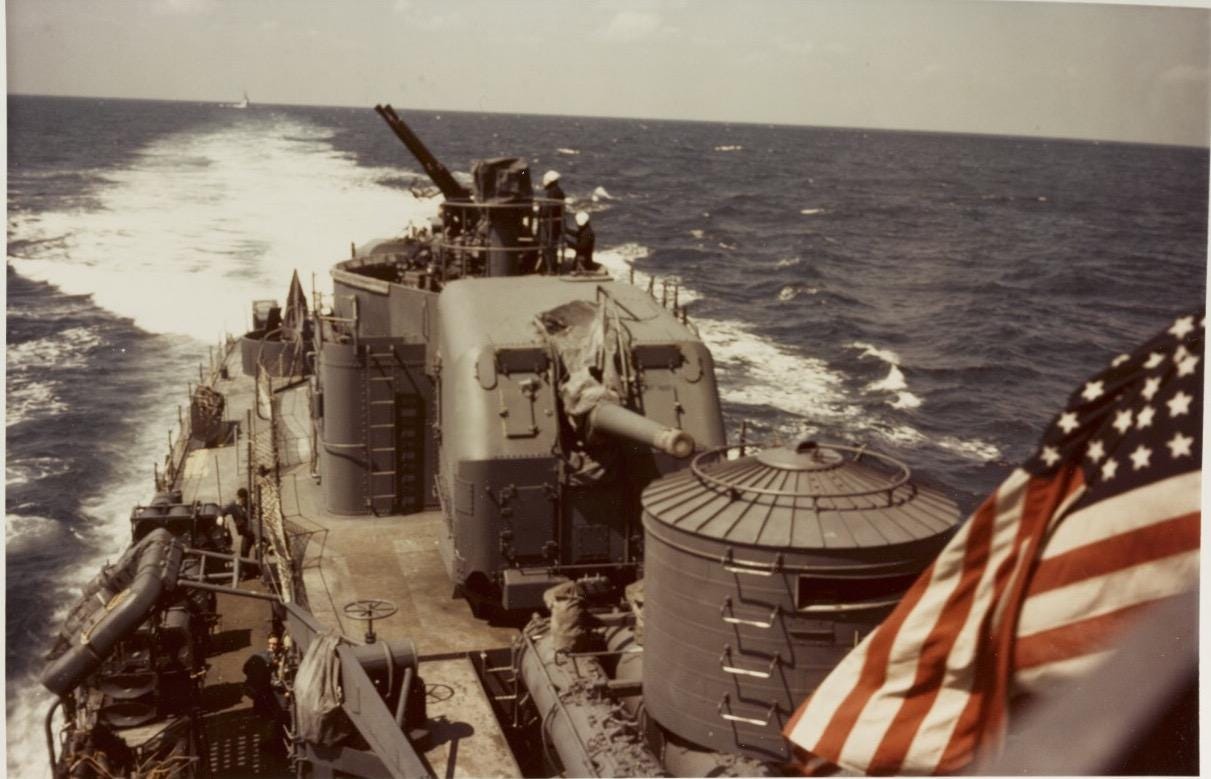
There are stories we know are false - yet we love telling them as if they really happened - and true events we happily embellish to make them funnier or more thrilling. The tale of the destroyer that nearly sank USS Iowa with Roosevelt aboard is one of those: the core is real, but it has ballooned into a grotesque legend stuffed with approximations, apocryphal details, and contradictions. Let’s try to separate the true from the false, the likely from the dubious, by retracing the nonetheless extraordinary sequence of events behind this naval anecdote.
Washington, 21:30: President Franklin Delano Roosevelt leaves the White House in a discreet ballet of cars. With him are his confidant and chief diplomatic adviser Harry L. Hopkins; Admiral William D. Leahy, chief of staff of the U.S. armed forces; Rear Admirals Wilson Brown and Ross T. McIntire, respectively FDR’s naval aide and personal physician; General Edwin M. Watson, his military aide and private secretary; and Lieutenant Commander George A. Fox of the U.S. Navy Medical Corps. The presidential party is small—but for security reasons. FDR is about to cross the Atlantic to attend two successive inter-Allied conferences, and it would not do for American journalists or German spies to confirm his departure. True, the Battle of the Atlantic has largely been won, but U-boats still prowl parts of the ocean—and it would be beyond awkward if they intercepted and torpedoed the ship carrying FDR and his entourage… Accordingly, many military and political advisers and diplomats are already waiting for Roosevelt in North Africa, or will join him by other routes. The Atlantic crossing is only one leg of the journey: after passing through the Strait of Gibraltar, FDR is to land at Mers el Kébir and from there fly to Tunis, then take a second flight to Cairo. He is scheduled to spend four days there to meet Generalissimo and Chinese President Chiang Kai-shek, as well as the British delegation led by Churchill, to agree on Japan’s surrender terms. Finally, he will fly on to Tehran, where Roosevelt, Churchill, and Stalin—the “Big Three”—are to discuss strategy against Germany, and in particular a possible landing in Normandy in June 1944 to relieve the Soviets by opening a Western Front.
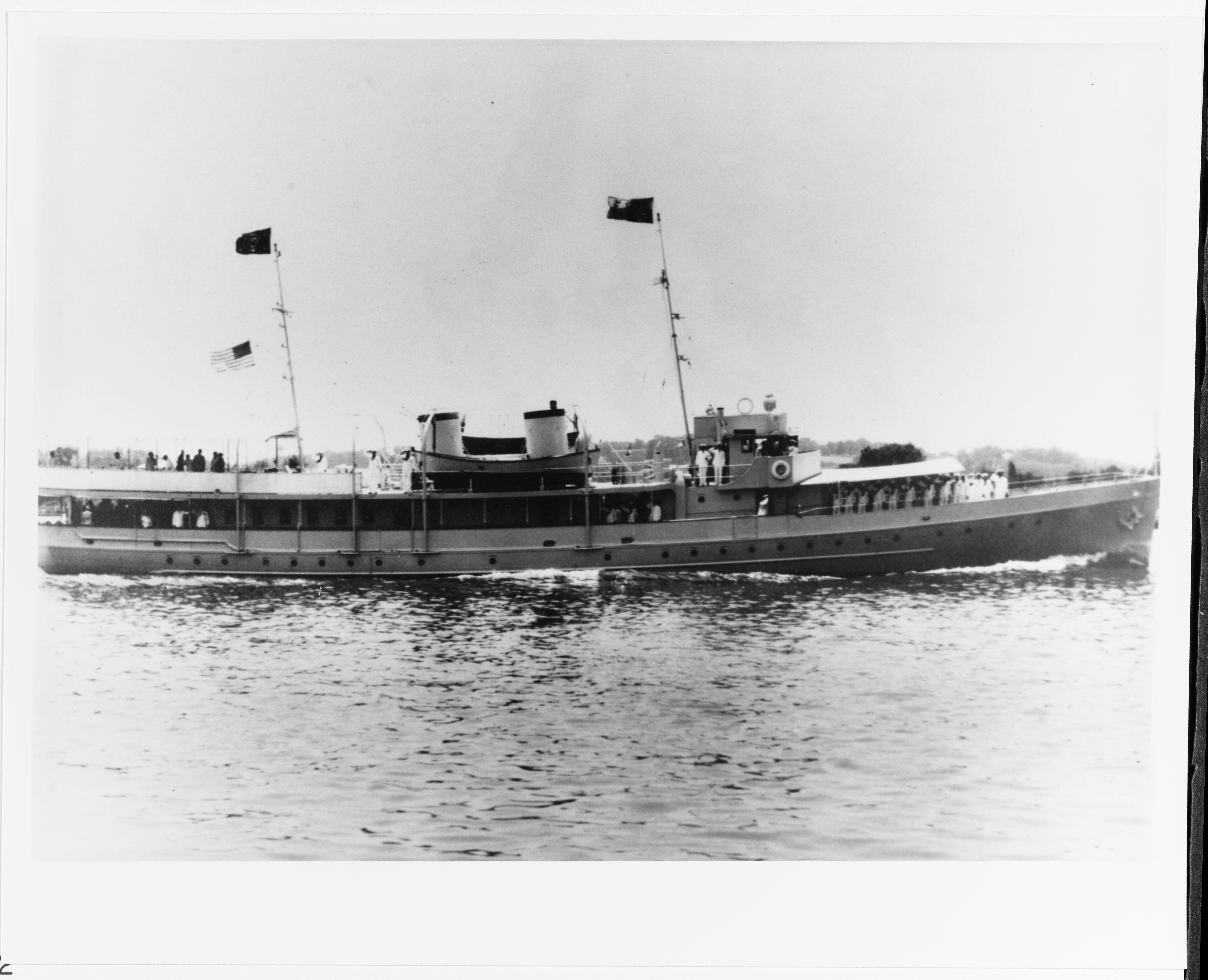
22:38: the convoy arrives at Quantico Naval Base (Virginia), a few dozen kilometres south of Washington, and the VIPs board USS Potomac, a U.S. Coast Guard vessel converted into the presidential yacht in the 1930s. She gets under way shortly thereafter, protected only by a submarine chaser, and makes her slow way downriver. Is the President of the United States really going to cross the ocean aboard a cutter barely 50 metres long, with virtually no escort? Of course not. The Potomac is merely meant to carry her passengers to a secret rendezvous point at the confluence of the river and Chesapeake Bay, where they will transfer to a more suitable—and far better protected—ship. All of it shrouded in secrecy, because since the arrest of an eight-man German spy ring in New York in the summer of 1942 (Operation “Pastorius”), a kind of acute “spy mania” has been gripping the nation’s security services.
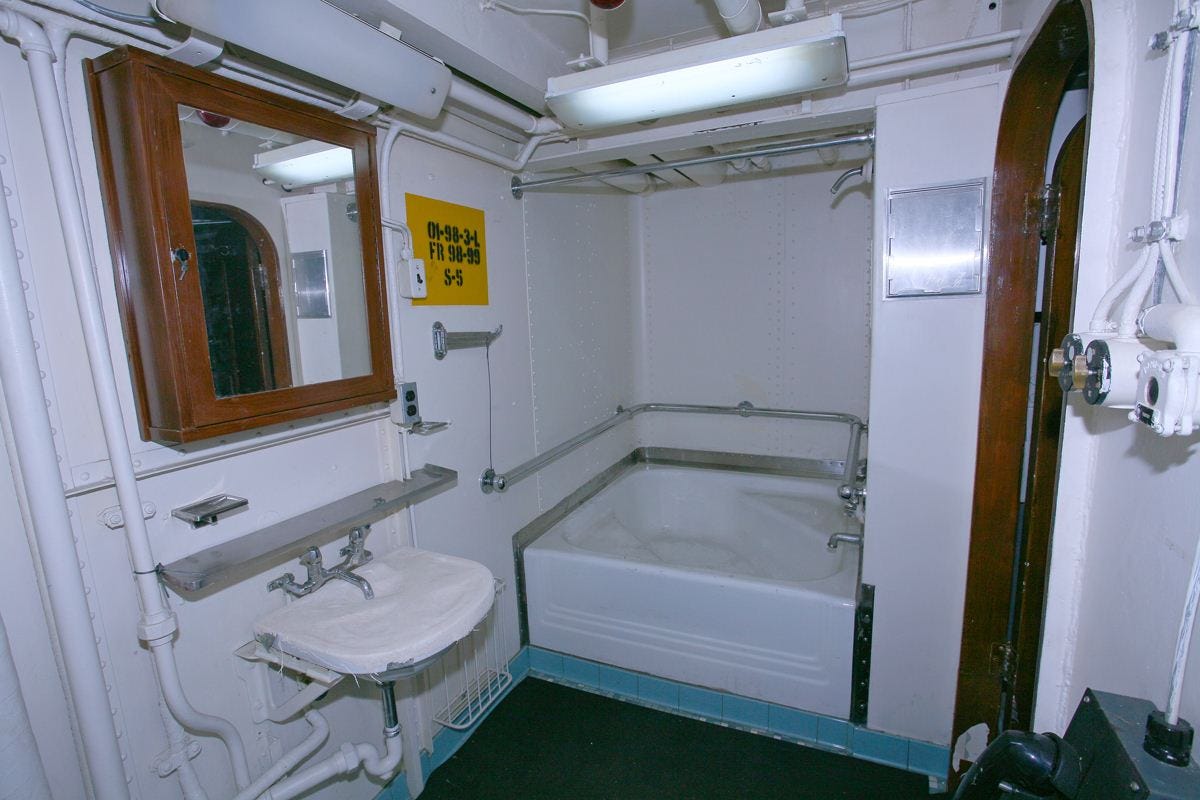
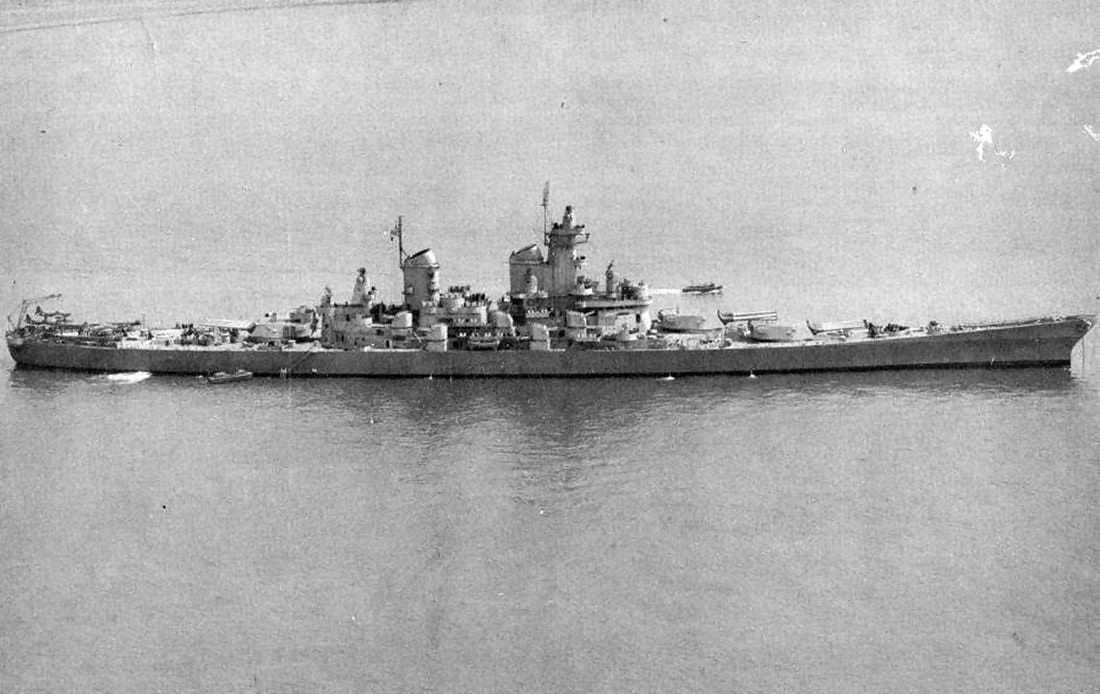
03:36: USS Potomac drops anchor off Cherry Point, a short distance from the mouth of the Rappahannock River. It is pitch-black, but the watch make out—five nautical miles to the south—the dark mass of a large battleship at anchor. To cover every contingency, the U.S. Navy has not done things by halves: for the occasion it has mobilised its newest and largest ship, USS Iowa. Commissioned only in February 1943 and fresh from a brief mission off Newfoundland, she has just completed two weeks of maintenance at Norfolk Navy Yard to prepare to receive the President. Roosevelt has suffered from Guillain–Barré syndrome since 19211, an inflammatory autoimmune disease of the nervous system that left him with partial paralysis of the lower limbs. Though he sometimes appeared in public walking with braces or a cane, physically supported by an aide to conceal the deterioration of his health, in private FDR preferred to use a wheelchair. Iowa’s commanding officer, Captain John L. McCrea, gave up his own quarters to the President for the voyage, and modifications had to be made aboard the battleship. A large bathtub fitted with handrails was installed in place of the traditional shower—making the Iowa the only American warship of the period equipped in that way—and an external lift was assembled on the starboard side, between the first two twin 127 mm mounts, to allow Roosevelt access to the conning tower.
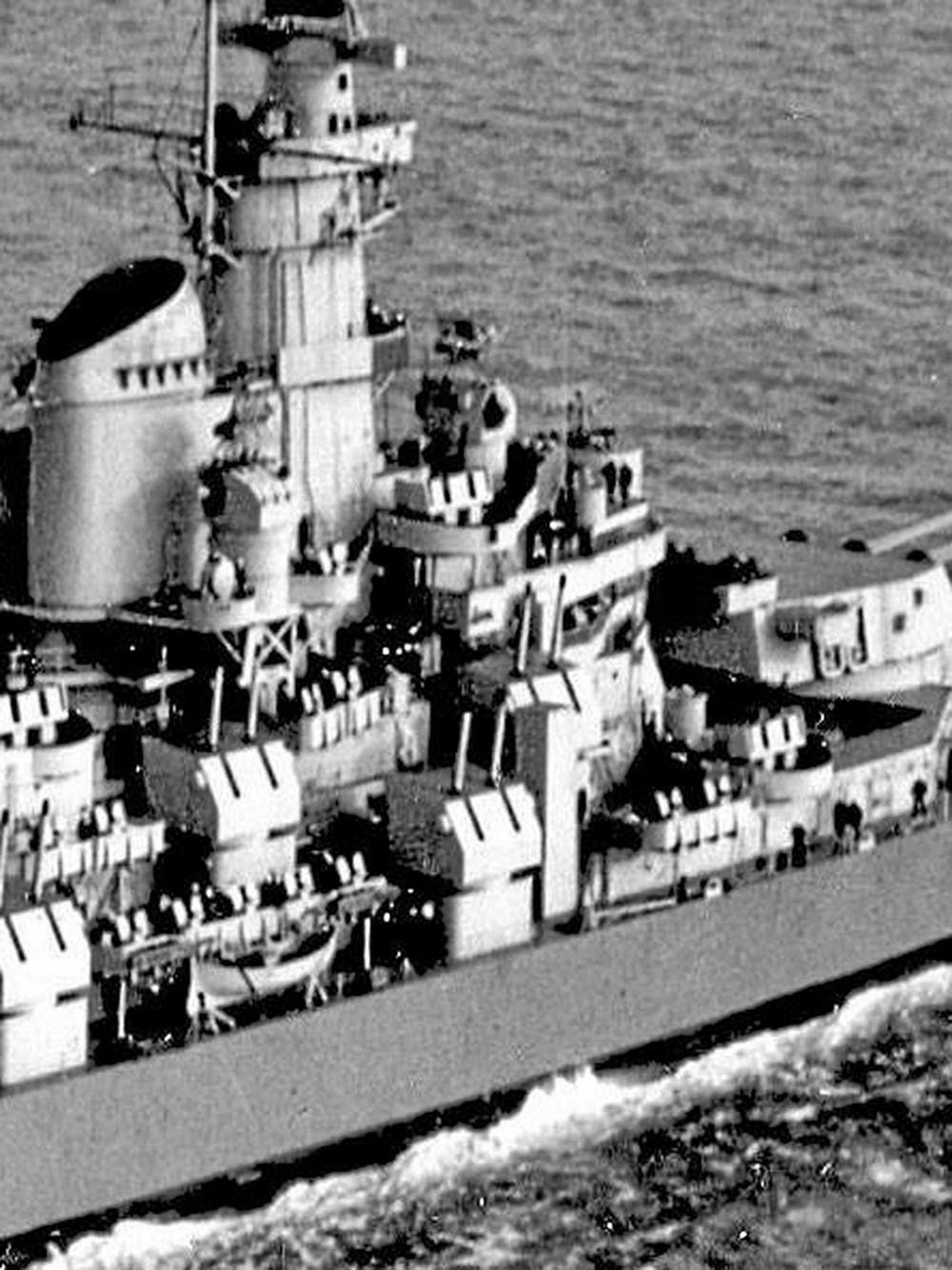
08:51: the Potomac comes alongside the Iowa to starboard and the VIP transfer is completed quickly. FDR is the last to leave the yacht, with no fanfare and no guard of honour, using a specially designed platform that sets him down on the battleship’s main deck. As the Potomac departs—tasked with giving the impression that the President is still aboard for a week of relaxation and fishing—USS Iowa gets under way and heads for Hampton Roads to take on fuel. In the previous days, to steam up the Chesapeake, the big battleship had had to pump out part of her fuel oil to reduce draught to the bay’s depth. Aboard, FDR is joined by the chiefs of the three services—General George C. Marshall (U.S. Army), Admiral Ernest J. King (U.S. Navy), and General Henry H. Arnold (USAAF)—as well as around twenty advisers and analysts. The peak of America’s military and political hierarchy is now concentrated on a single ship.
17:43: the Iowa is joined by her anti-submarine destroyer screen and anchors at Mooring B late in the afternoon. After 19:00, two tankers complete her refuelling. For security reasons, the general officers and Roosevelt are instructed not to go on deck during these operations, so they will not be noticed by the tankers’ crews.
22:30: refuelling is complete, and the Iowa must wait another hour for the high tide that will allow her to enter the Chesapeake estuary. Informed of the schedule, FDR asks Captain McCrea a favour: “You know, John, today is Friday. (…) I’m just sailor enough to share the seafaring superstition that Friday is an unlucky day. Do you think you could delay our departure until Saturday?”
00:01: the order is given to weigh anchor, and four minutes later USS Iowa and her three destroyer escorts begin their long transatlantic voyage. According to some sources, an incident occurred during departure: while the three Fletcher-class destroyers were still moored alongside, the middle ship—USS William D. Porter—supposedly mishandled her movement and her anchor slightly damaged one of her two sister ships (Cogswell or Young), crushing plating and a lifeboat skid, perhaps even a whaleboat. The William D. Porter would have got away with a bent anchor. But the accident—mentioned in none of the ships’ logs—may well have been invented outright. Once past Cape Henry, the Iowa settles at 25 knots so the escorts can keep station without driving their engines hard, which would have severely reduced their far more limited radius of action2 compared to the battleship’s. That is why three successive escort groups are planned over the voyage: the Cogswell, Young and William D. Porter will accompany the Iowa to Bermuda; they will then be relieved by three other destroyers to take her to the Azores; and those in turn will be replaced by a final trio of the same class for the last leg. The battleship and her escorts form Task Group 27.5 under McCrea.
05:22: the sea is rough and aboard USS Iowa one man suffers a minor injury after a fall. Since departure, radio silence is enforced between the ships so the enemy—especially U-boats—cannot locate them. Aboard the battleship, one third of the crew is constantly at action stations to react quickly in case of an encounter. While the logs mention a boiler problem aboard the William D. Porter that temporarily prevented her from holding position in formation, nearly all post-war accounts replace this mundane malfunction with a far juicier story: as sea conditions deteriorated, an explosion followed by a great geyser of water supposedly erupted astern of the convoy. The destroyers immediately began anti-submarine manoeuvres—but the suspense was short-lived. After a few minutes, the William D. Porter allegedly confessed, with disarming innocence, that one of her depth charges had shaken loose and gone over the side; it then exploded when it reached the depth to which it had been preset. No official report mentions such an event, and the authors who present it as authentic never provide a precise time. It is true that such an explosion could have compromised Task Group 27.5’s discretion—for instance by revealing its approximate position to any U-boats prowling the area. But its seriousness should not be overstated: the next day, the ships would conduct a full-scale anti-aircraft exercise without anyone raising objections on “discretion” grounds. Another version claims that not long afterward a larger-than-usual wave struck the destroyer broadside, flooding a boiler and hurling a man overboard. The unfortunate sailor could not be recovered, and the William D. Porter’s captain supposedly broke the sacred radio silence to inform USS Iowa of his problems—earning a blistering rebuke from Admiral King, famously severe. Again, it is possible, but nothing supports it—especially since King was not the officer handling Task Group 27.5 at the time; Captain McCrea was.
Thanks for reading! This post is public so feel free to share it.
14:00: after an uneventful night and morning, Roosevelt asks for a demonstration of the battleship’s firepower and the crew’s skill. FDR began his political career as Assistant Secretary of the Navy in 1913 and always loved the maritime world, spending long periods from 1934 onward aboard his presidential yacht to fish or quietly host political figures. McCrea therefore orders an anti-aircraft drill: weather balloons are inflated and launched from the Iowa and, once they are at a safe distance, the battleship opens a furious fire. Some balloons drift within range of the destroyers, which join in to shoot them down.
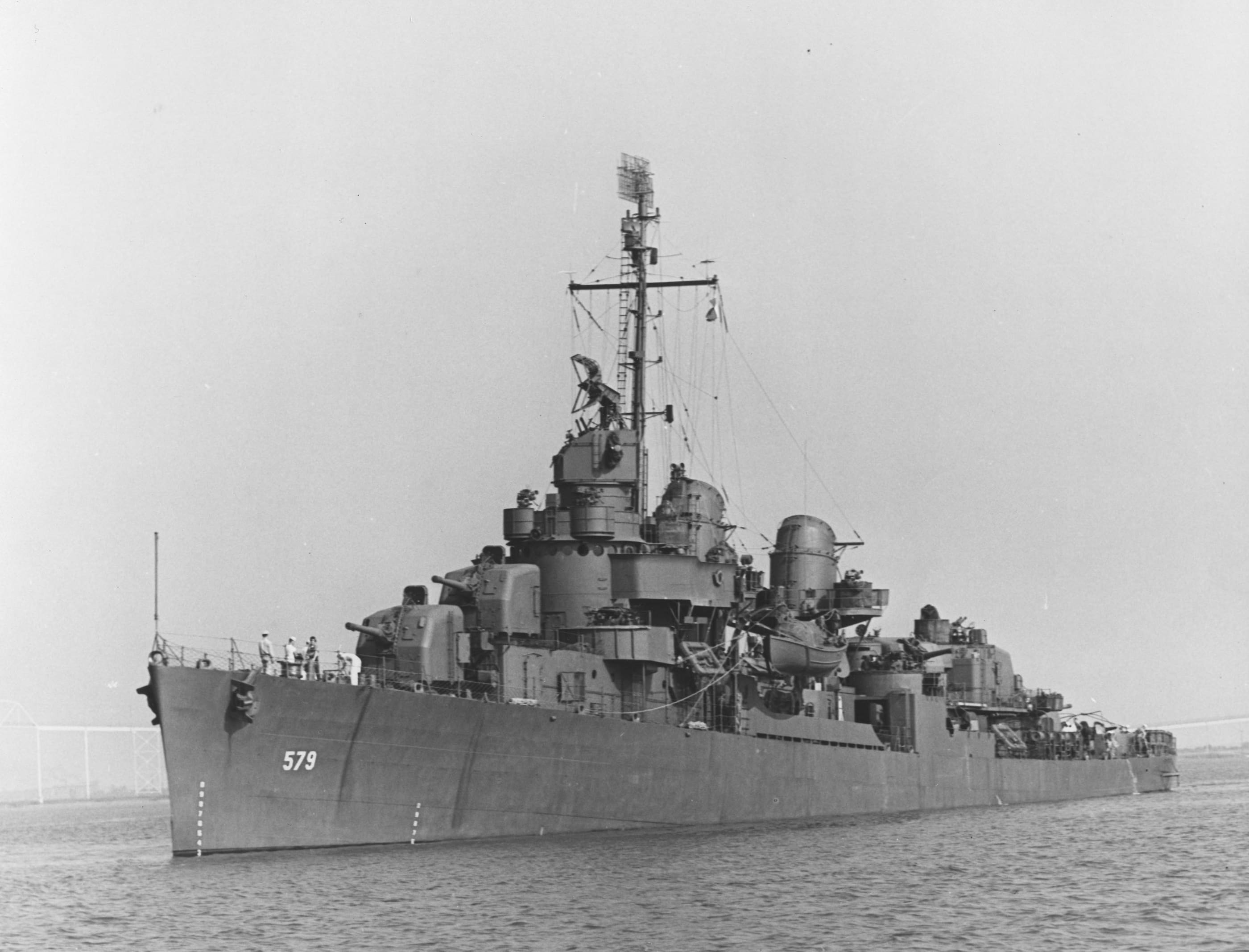
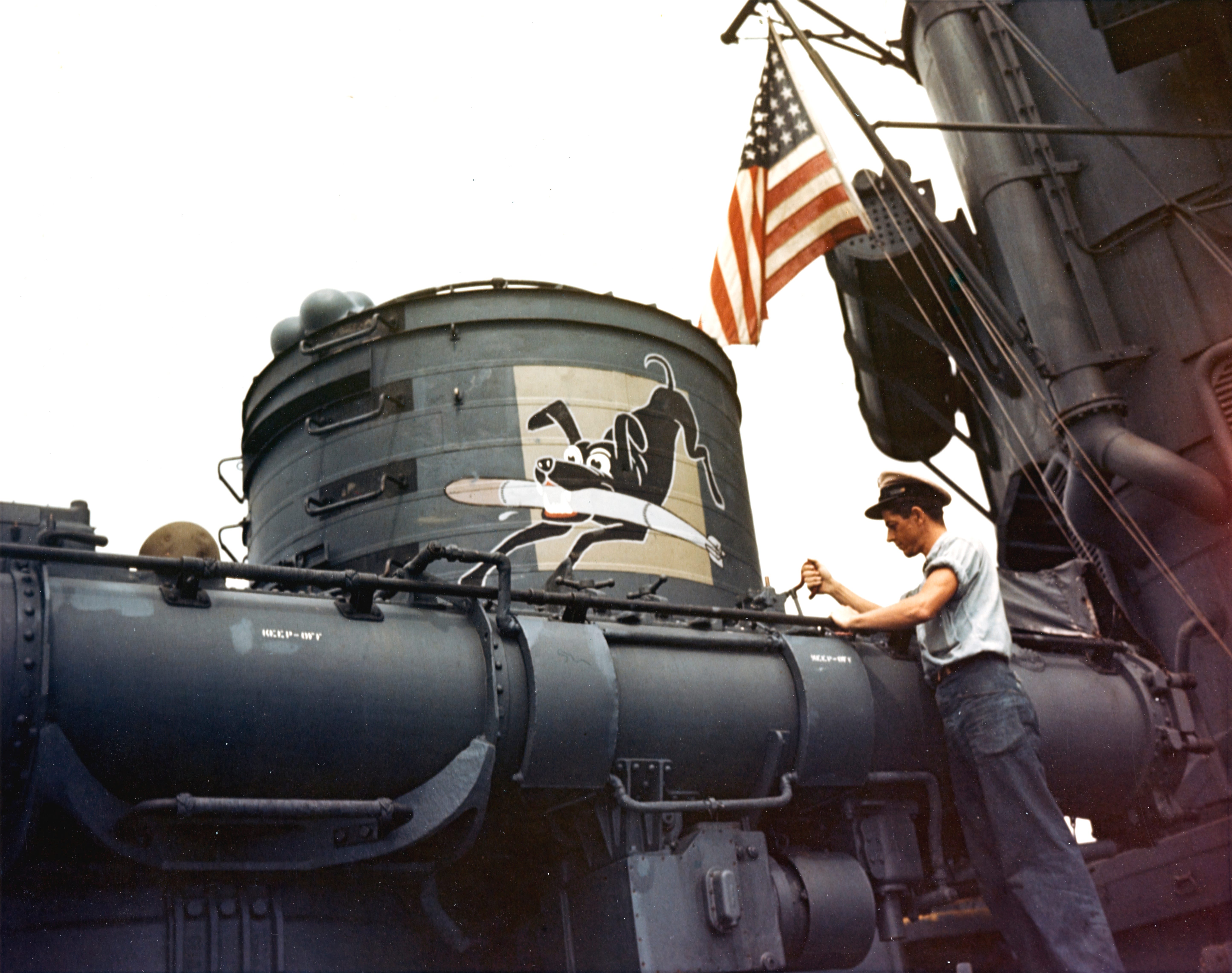
14:36: this is the moment USS William D. Porter truly enters the history books. Her captain orders the demonstration to conclude with a simulated torpedo attack against the Iowa, about 6,000 metres away on the port side. It is more than likely that the exercise is not intended to impress Roosevelt, but simply to train the destroyer’s crew. The drill is not especially “visual”: the team responsible for the torpedo tubes (two quadruple mounts, in this case) is supposed to remove the primers from the tubes, making it impossible for a torpedo to be ejected. The point is chiefly the aiming procedure. Official sources are sparing about the true sequence, but it is now generally assumed that after two successful simulated launches (with no torpedoes entering the water), a crewman either could not—or forgot to—remove the primer from the third tube, causing the torpedo to eject immediately. As the Mark 15 races at full speed toward USS Iowa, a subordinate asks Lieutenant Commander Wilfred A. Walter, the destroyer’s commanding officer: “Did you authorise that launch?” Walter stares as he spots the straight torpedo wake and stammers a denial. Panic spreads on William D. Porter’s bridge. A single torpedo was unlikely to sink the Iowa outright, but it could cripple her, inflict casualties, perhaps even kill the President observing the exercise from the main deck. Walter first orders the battleship to be warned by signal lamp3 to avoid breaking radio silence. But whether the message was wrong in the confusion or the operator mistransmitted it, aboard the battleship no one understands what the destroyer is trying to say. A second message is sent—again misunderstood. With time running out and no other option, Walter finally transmits a radio warning: “Lion, Lion, turn to starboard!” (Lion was Iowa’s code name within Task Group 27.5.) This breach of procedure surprises but does not immediately alarm the battleship; further exchanges are needed before Iowa’s bridge grasps that there is real danger. Roosevelt is present and asks for his wheelchair to be rolled up to the rail so he can watch the approaching wake. As tension rises and fearing an assassination attempt, Secret Service agents protecting him allegedly drew their revolvers—an entirely useless precaution against a torpedo 7.3 metres long and weighing 1,742 kg. Meanwhile, McCrea orders the only sensible manoeuvre: a hard emergency turn at maximum speed—port according to some authors, starboard according to others.
14:40: USS Iowa turns early enough for the danger to pass quickly. The torpedo finally detonates 3,000 metres astern of the battleship, in her wake. But the legend rolls on, and it becomes difficult to separate what happened from what was invented later: the Iowa—perhaps even the other two destroyers—supposedly trained all guns on the wretched William D. Porter, and an inquiry allegedly ordered by Admiral King supposedly led to the entire crew being arrested in Bermuda, followed by a thorough investigation of “the affair” (or the succession of affairs, if one includes the alleged departure damage, the man overboard, the accidental depth-charge explosion, the first improper radio message, and finally the torpedo launch). None of this is proven.
09:15: in reality, Bermuda is simply the planned destination for the three destroyer escorts, which will be relieved in Task Group 27.5 by USS Hall, McComb and Halligan for the second leg of the voyage. The William D. Porter therefore had to stop there to refuel in any case. It does appear, however, that the inquiry found Chief Torpedoman Lawton Dawson—then responsible for the No. 2 quadruple torpedo-tube mount—guilty of serious negligence, and a court-martial sentenced him to a heavy term of fourteen years’ hard labour. Informed of the case, FDR reportedly granted him clemency, since this was clearly an accident, not an attack.
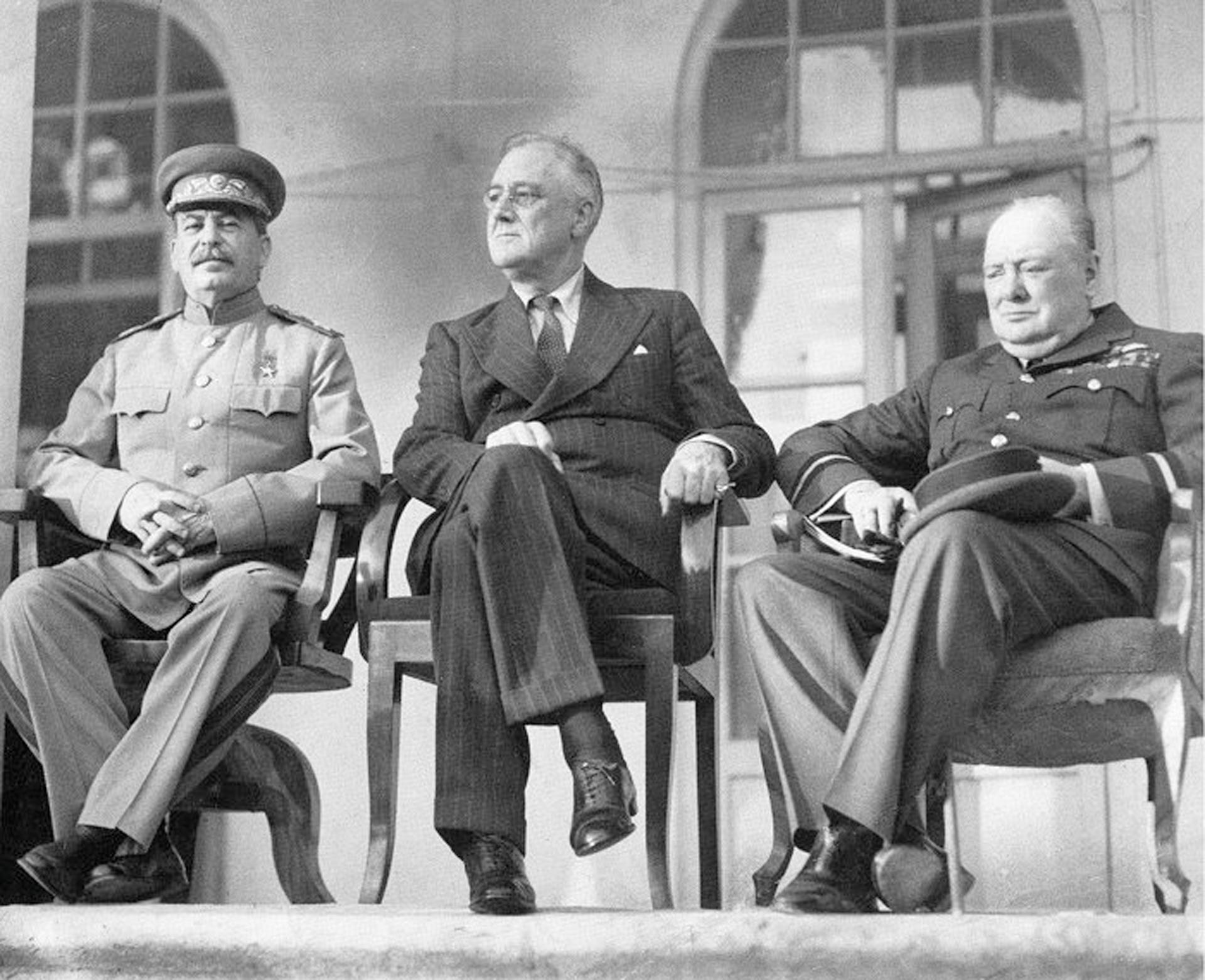
The anecdote ends here. In the days that follow, the Iowa completes her crossing without incident, under heavy protection, and reaches Oran. President Roosevelt attends the Cairo Conference and then the Tehran Conference, before returning to the United States in December 1943—still aboard the famous battleship. For her part, USS William D. Porter remains in Bermuda from 16 to 23 November before returning to Norfolk to prepare for transfer to the Pacific. Wilfred A. Walter is not relieved of command—as one might have expected after such a string of blunders, which tends to suggest those blunders never occurred—and from 1944 onward the destroyer takes part in the Aleutians campaign and then in the Philippines. She earns four battle stars for bravery in combat, which again contradicts the simplistic refrain found in many articles: an inexperienced crew led by an incompetent officer. What is true, however, is that the story of the torpedo fired at the Iowa made the rounds of the U.S. Navy more than once, and the destroyer could not easily shake her image as a clumsy, badly commanded ship. Whenever she entered a port or joined a formation, other ships competed to greet her with jokes: “Don’t shoot—we’re Republicans!” they would say, a reference to FDR’s membership in the Democratic Party.
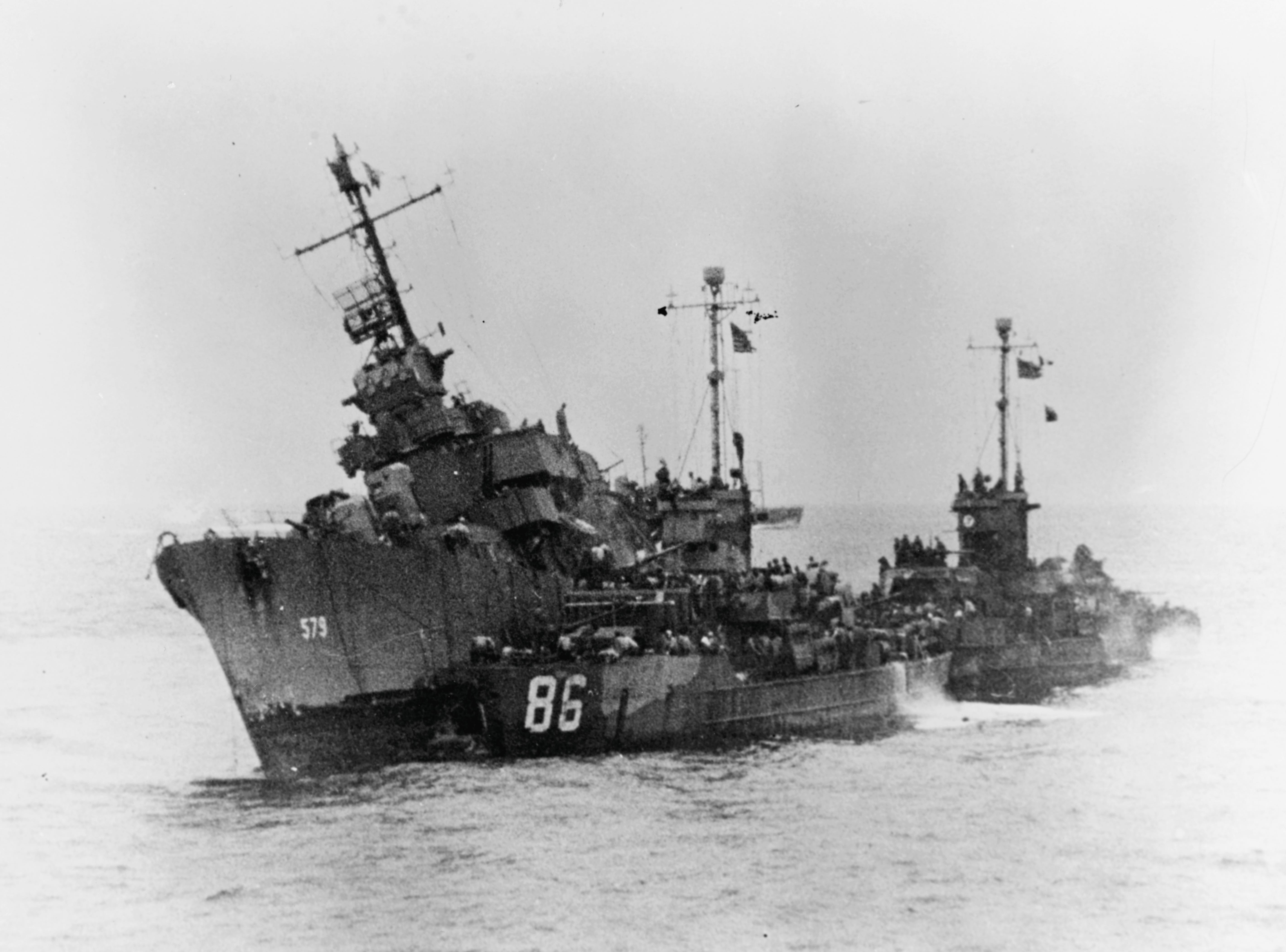
USS William D. Porter met her fate during the Battle of Okinawa when, on 10 June 1945 at 08:15, she was struck by a kamikaze and so badly damaged that, after three hours of fighting fires, the crew had to abandon ship. The destroyer sank twelve minutes later. Remarkably, there were no fatalities—a small miracle for a vessel supposedly so unlucky.
At the time, it was thought to be poliomyelitis.
6,500 nautical miles at 15 knots, versus almost 15,000 for USS Iowa.
A specially designed projector to transmit coded light signals in SCOTT (System of Communication by Optical Transmissions in All Weather), a dedicated Morse alphabet.
Comments
Nothing yet. Say the first thing.
Sign in to join the conversation.