
In the 1930s, the German Navy sketched out numerous naval construction programmes, many of which would never leave the drawing board. Among them, the Type XI U-boat is a textbook example of what can happen when neither strategic concepts nor the underlying technologies have been sufficiently tested beforehand.
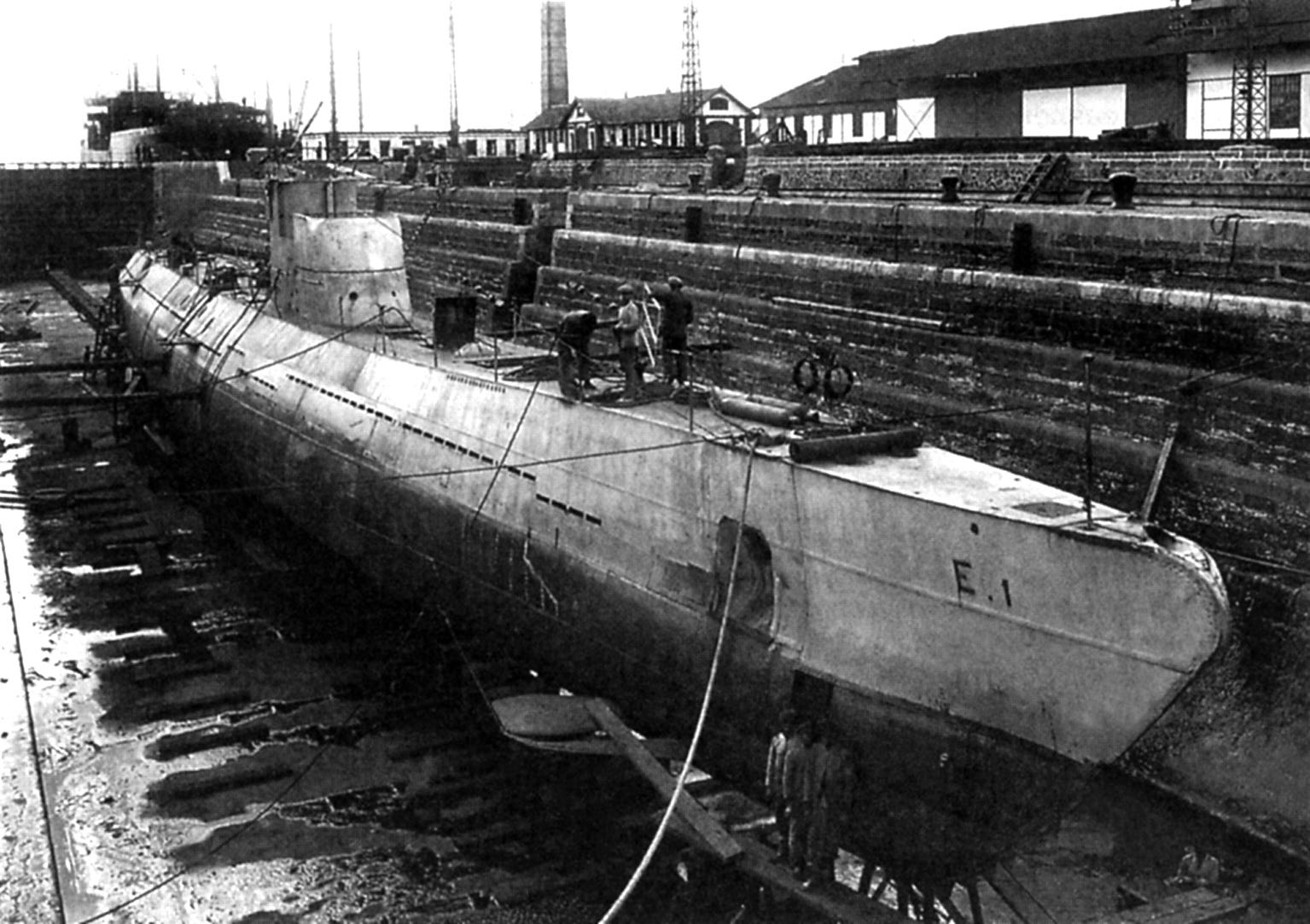
Germany’s defeat in 1918 imposed extremely harsh conditions. Among other things, the country had to surrender its entire submarine force, and from January 1919 onward any boats still under construction or being delivered were to be destroyed or dismantled. Article 191 of the Treaty of Versailles further stipulated that “the construction or acquisition of any kind of submarines, even for commercial purposes, shall be forbidden to Germany.” To circumvent the clause, Berlin decided in July 1922 to create a specialised design bureau, soon installed in the Netherlands. Named Ingenieurskantoor voor Scheepsbouw (“Engineers’ Office for Shipbuilding,” or IvS), it was in reality a front company run by the AG Vulcan and Krupp shipyards in liaison with the Reichsmarine. Its purpose was to continue developing submersibles for export by exploiting the fact that its engineers were not working in Germany but abroad. In the second half of the 1920s, IvS designed for Spain the E-1, a large double-hulled submarine of 745/965 tons, powered by 1,400 hp diesel engines, capable of 17 knots on the surface, with an endurance of 7,000 nautical miles at 10 knots.
A Long Development
In autumn 1932, Germany launched a naval rearmament programme intended to produce a genuine battle fleet by 1938. For its submarine arm, the Admiralty envisaged three types of boats: a small coastal unit derived from the Finnish Vesikko1 (the future Type II), an intermediate 500-ton torpedo boat copied from the Vetehinen (the future Type VII), and an 800-ton ocean-going submarine inheriting the E-1’s qualities.
German designers set about improving the Spanish boat’s plans: they redesigned the conning tower to reduce the silhouette, repositioned the deck gun, fitted tubes compatible with 53.3 cm torpedoes, and housed the mine load in “wet wells” arranged under the deck. The pressure hull was now fully welded, and specialists estimated a construction time of two years and a cost of 4.5 million Reichsmarks per unit. After much hesitation, it was decided in the summer to build ten of these new 800-ton boats, designated Type IA.
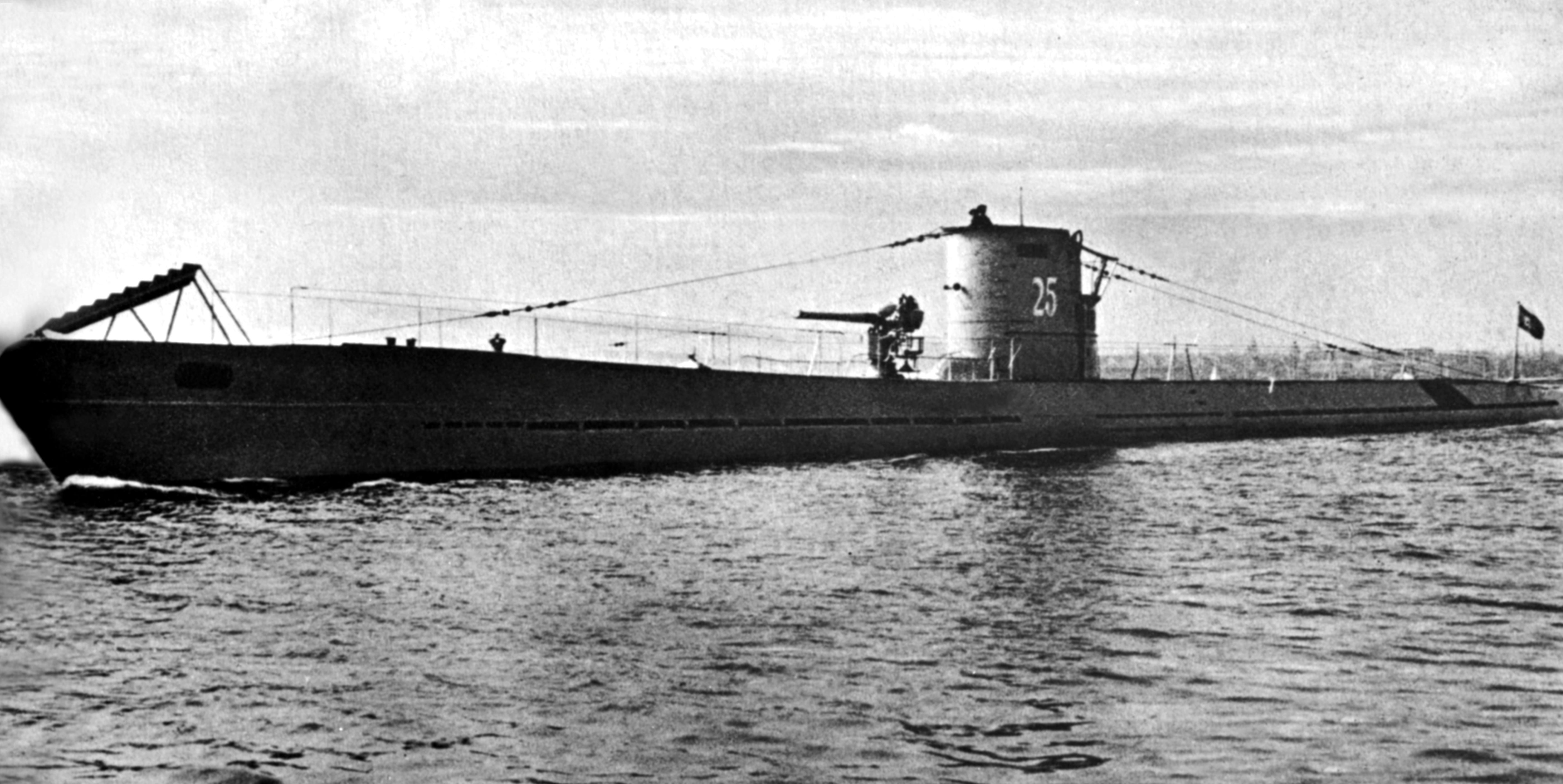
To save time in case war broke out, the German Navy clandestinely began major preparatory work on submarine construction: from 1933, spare parts for two Type IAs were produced and stored at Kiel, pending the order to assemble them. The two units were launched in 1936 but quickly revealed undeniable flaws: despite the weight savings produced by welding the hull, U-25 and U-26 had an excessively long dive time, were difficult to handle underwater due to chronic instability, and were plagued by mechanical problems. Disappointed by the Type IA—on which it had pinned high hopes after the E-1’s promising results—the Kriegsmarine decided to abandon further production.
At the beginning of 1934, even as the Type IA’s failure was already taking shape, the Germans accelerated the development of submarine mines that could be laid through 53.3 cm torpedo tubes. The project suffered serious delays but was finally brought to completion in the second half of the 1930s, making it possible for all U-boat models—whatever their size—to lay naval mines during patrols. Design offices then launched a programme for a heavily armed “heavy” submarine that would carry either torpedoes or mines depending on its mission. This decision came from the Admiralty, setting it against the new head of the German submarine arm, Admiral Dönitz, who argued that the U-boat force did not need a large minelaying submarine but rather a long-range attack boat able to carry many torpedoes: “Despite my objections, the High Command thought it better to build very large submarines—cruisers of about 2,000 tons—with very long range, carrying a large number of torpedoes and, above all, capable of fighting on the surface with guns. They were to have priority in the construction programme.”
This large-displacement U-Kreuzer was an ocean-going minelayer project known as Type III, developed from the Type IA plans to save time—though extensive improvements were intended. The specification required a major increase in torpedo/mine capacity and in endurance. The Kriegsmarine therefore contemplated lengthening the Type IA by 7.5 m to add a storage compartment for thirty TMA moored mines—or 45 TMB mines (in addition to those that could replace torpedoes in the forward and aft tubes)—between the stern compartment and the electric-motor room. In total, the Type III was expected to carry up to 54 TMAs, or 75 TMBs, if it carried no torpedoes. It would have been about 80 m long and displaced 880 tons surfaced, but would have approached 1,000 tons once fully provisioned for a long patrol.
By late June 1934 the project was on track—but only briefly. By the end of 1935, the Type IA’s shortcomings finally led the German naval staff to abandon the programme because of the design difficulties—and therefore the cost and time it would have required. The Type III would never be built, even though the Kriegsmarine would desperately revive the idea in 1945, considering displacement figures of 1,500 or 2,000 tons—partly because a watertight hangar large enough for two small motor torpedo boats (12.5 m long and 10 tons each) was now envisaged aft of the conning tower. Germany’s surrender would end this oversized project.
Technical Data - Type III (1935)
Displacement (surfaced/submerged): 880 t / 970 t
Length: 79.9 m
Beam: 6.20 m
Draught: 4.35 m
Propulsion (surfaced/submerged): 2 MAN diesel engines / 2 electric motors
Power (surfaced/submerged): 3,080 hp / 1,000 hp
Speed (surfaced/submerged): 18.5 / 9 knots
Endurance (surfaced/submerged): 12,000 nautical miles at 10 knots / ?
Maximum diving depth: 200 m
Fuel carried: 100 t
Armament: 6 torpedo tubes (4 forward, 2 aft); 14 torpedoes; up to 54 TMA mines or 75 TMB mines (in place of torpedoes); 2 × 10.5 cm deck guns; 1 × 2 cm flak gun
The cancellation of the Type III left the submarine-mine projects without a dedicated platform—even as their development continued. Thus, in early 1937, the Germans were working on the Sonder-Mine A (SMA), a 1,600 kg moored mine (including 350 kg of explosive) with magnetic firing. The Kriegsmarine then examined the feasibility of a new large minelaying submarine suited to the SMA. This became the Type X, for which two versions with mine shafts were developed (Types XA and XB) in 1937–1938. Both boats had excellent endurance and carried a substantial mine load, but were under-armed in torpedoes and artillery—making them unsuitable for commerce raiding.
The Kriegsmarine therefore decided to develop a “complementary” ocean-going submarine: an U-Boot-Kreuzer operating alone in distant waters, capable of attacking enemy shipping with gunfire—its firepower intended to match that of an auxiliary cruiser—and then disappearing underwater to evade pursuit.
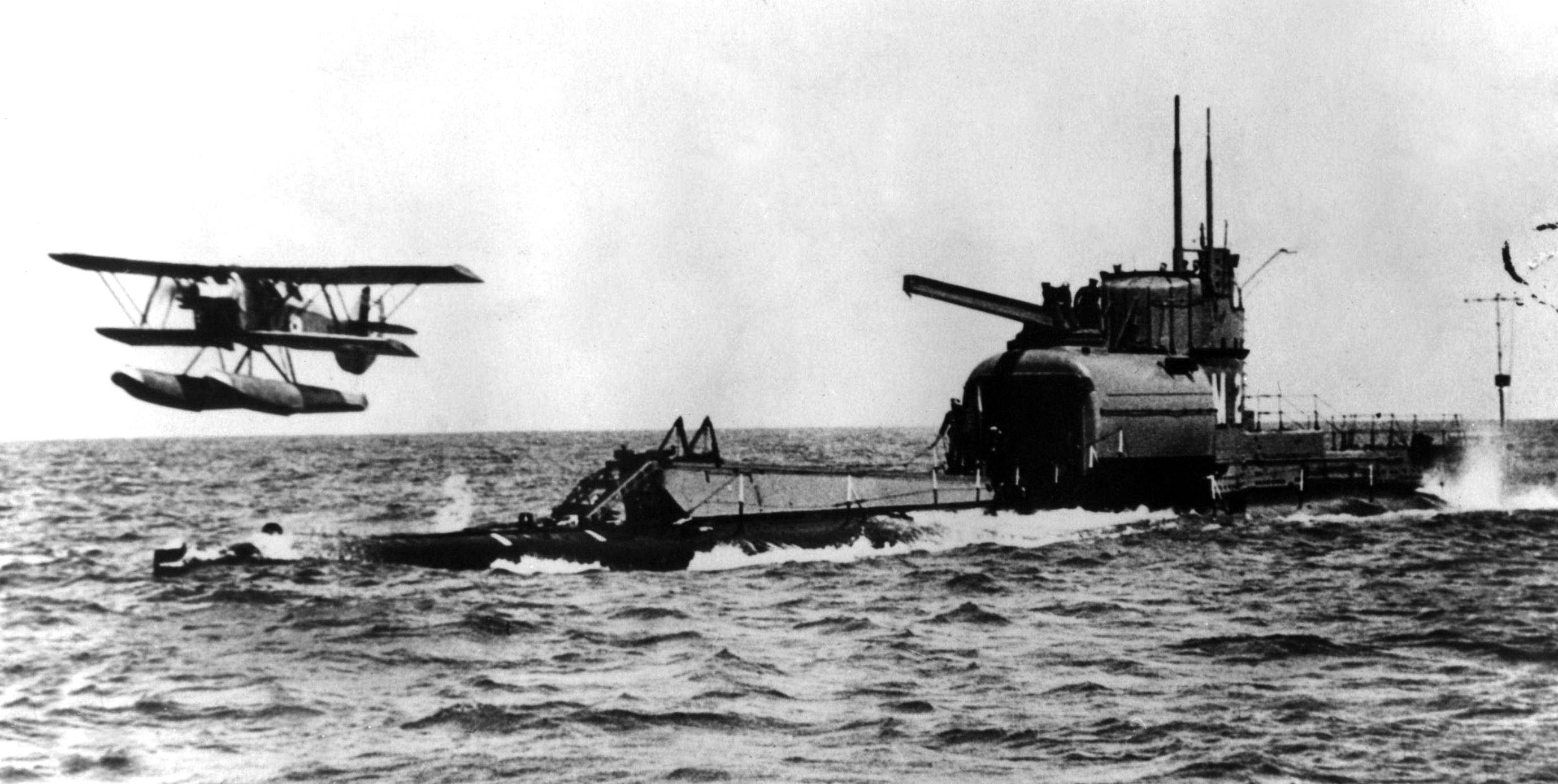
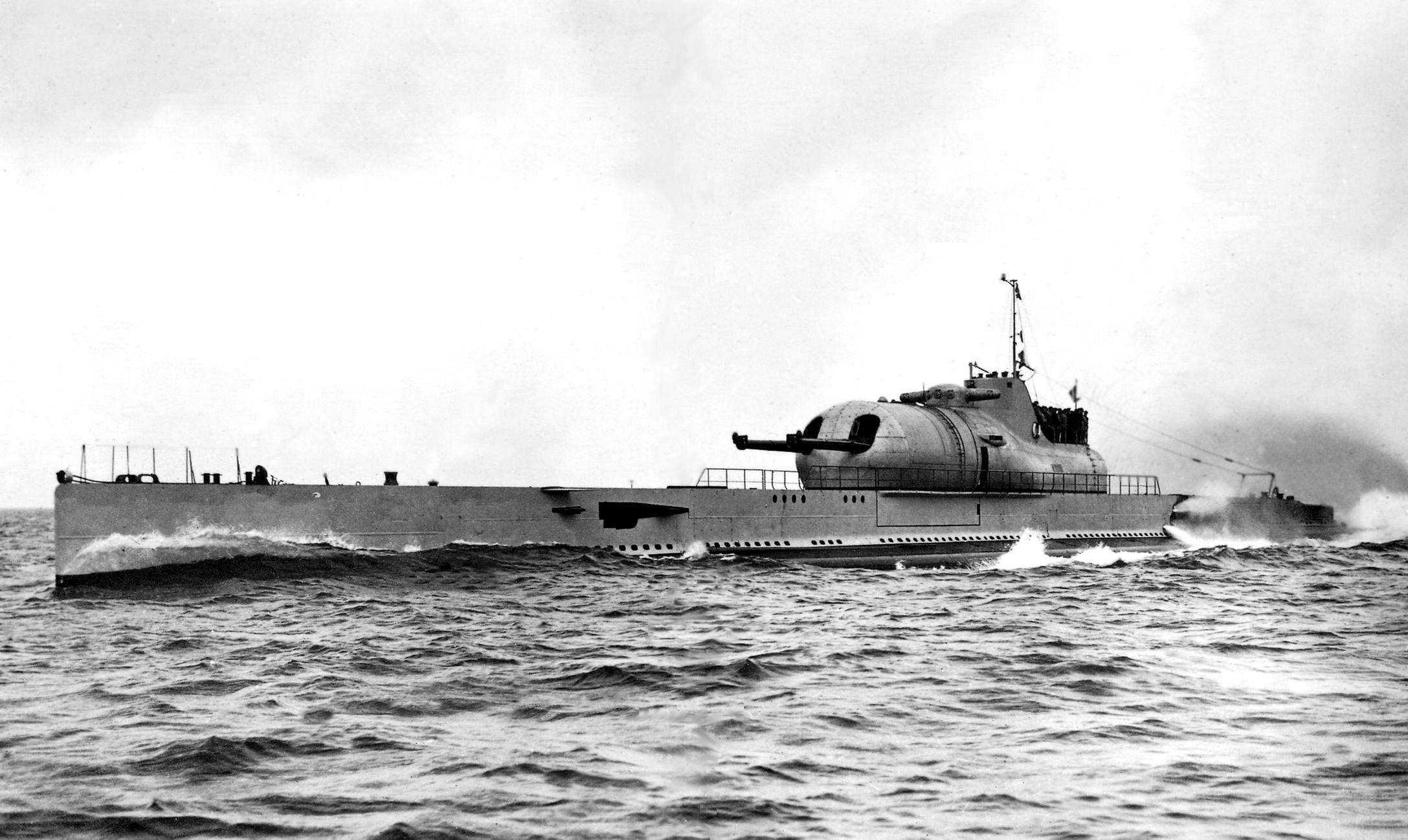
This type of project was not entirely new. In the interwar period, many major naval powers studied the combination of heavy guns and submarines. The 1922 Washington Naval Treaty was notably vague about the calibre of submarine deck guns, which, on paper, made it possible to arm submarines with 203 mm guns like cruisers. For countries with colonial empires or distant possessions, the goal was to design a true “submarine cruiser,” relatively versatile and autonomous, with very long range. Britain had begun building three submarines armed with a single 305 mm gun in 1916 (the M class), followed by the large experimental X1 with four 132 mm guns in two twin turrets. France, for its part, designed the Surcouf in the late 1920s. With her twin 203 mm turret, a trainable triple torpedo mount, and a hangar for a Besson MB411 reconnaissance seaplane, she was then the heaviest submarine in service anywhere in the world.
Thanks for reading! Subscribe for free to receive new posts and support my work.
In German planners’ view, their U-Kreuzer would be sent into the least monitored enemy waters—those around the most distant colonies—particularly along African and American coasts, but also into the White Sea (against the USSR), along the Norwegian coast, in the western Mediterranean, and so on, to rack up victories and sow disorder in maritime traffic and the metropolitan supply chain. To conduct such missions, the boat required artillery powerful enough to engage an auxiliary cruiser at 10,000 m. That in turn demanded guns that could be brought into action and ready to open fire as soon as the submarine broke the surface.
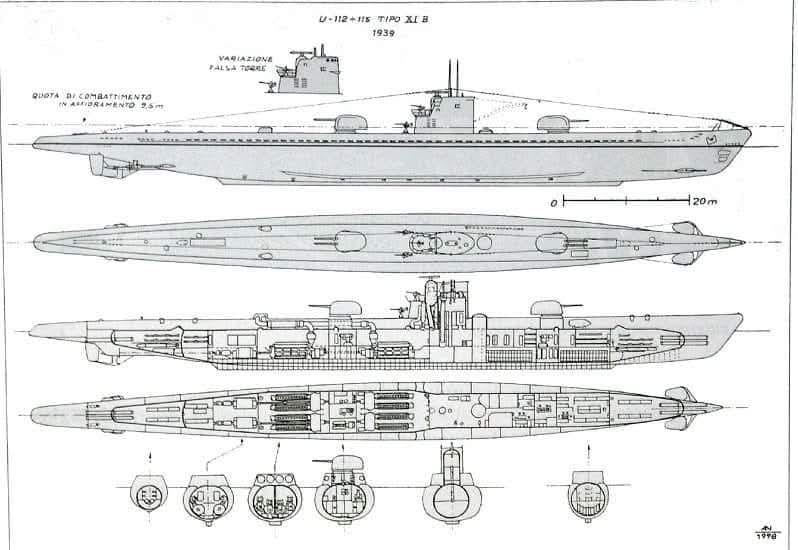
Engineers hesitated: four 15 cm guns or five 12.7 cm guns? In any case, anti-aircraft protection was to be provided by two 3.7 cm guns. The submarine would also carry four torpedo tubes, with a substantial load of torpedoes and mines. The Navy required tropicalisation and long-range radio equipment. The project was launched in summer 1937 and received the name Typ XI. The german navy then refined its requirements: the deck armament would consist of four 15 cm guns in two non-watertight twin turrets. These turrets could be installed either both forward, or on either side of the conning tower, but in all cases had to retain maximum traverse.
From 7 July 1937 onward, international diplomacy affected the project: Germany had just ratified a naval agreement with the United Kingdom requiring that submarines thereafter either displace no more than 2,000 tons or be armed with guns no larger than 13 cm in calibre. Engineers therefore changed tack, proposing an armament of four to six 12.7 cm guns distributed among several turrets (for example, two triple turrets). But placing that many guns on a submarine’s deck was only part of the equation. The design offices faced major problems in fire control, stabilising the platform while firing, feeding ammunition to the guns, and so forth. If each gun had to fire ten rounds per minute, then 250 shells per barrel had to be carried and stowed inside the hull in a way that did not compromise overall stability—while still allowing rapid delivery to the deck when needed. And that was before counting the 4,000 rounds for the flak weapons.
Another challenge was protecting the conning tower. On U-boat designs of the period, the conning tower was largely a light outer casing enclosing a smaller access trunk, generally armoured against bullets and small-calibre shells. Given the Type XI’s offensive mission set, however, the Germans considered it necessary to armour their conning tower against direct hits from 13 cm guns and to protect the upper part of the pressure hull against splinters.
Engineers used the ocean-going Type IX U-boat as their starting point, but introduced numerous changes. They judged that the pressure hull had to be strengthened: it would be built from 21.5 mm plating, whereas Types VII and IX used 18.5 mm plates. They then redesigned and enlarged the aft section of the pressure hull: space was created by cutting and welding two cylindrical hull sections into a “figure eight” shape to install eight powerful diesel engines. To balance this major aft weight, the electric batteries (248 cells) were installed under the floor of the forward compartment.
Thanks for reading! This post is public so feel free to share it.
The Type XI’s underwater armament matched that of the Type IX, but because it lacked external watertight containers, its carried torpedoes were limited to twelve. Where the new design truly differed was its artillery: it ultimately featured two twin 12.7 cm turrets linked to an armoured director and fire-control dome, topped by a rotating rangefinder protruding slightly above the conning tower. All three positions were accessible only from inside the boat. Anti-aircraft defence (Flak) was assigned to two single 3.7 cm mounts placed just aft of the conning tower, and one 2 cm flak gun mounted atop it.
The Type IX conning tower was also heavily modified: it became tall and spacious enough to house two levels opening into the control room. The lower level served as the submarine commander’s cabin; the upper level was a surface watch platform, semi-open or enclosed depending on the variant. To ease movement for flak crews, the bridge was fitted with two access hatches and pierced by four periscopes: the standard attack and observation scopes found on any U-boat of the period, plus two dedicated to the boat’s artillery.
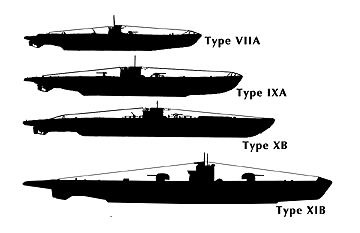
One drawback of the Type XI as designed was its large “air draught”—the height of the structures above the water when surfaced—making it visually conspicuous. Several months earlier, however, chief engineer Hans Vogel had imagined a system of buoyancy reserves distributed in the lower part of the hull (so that these ballast spaces would not be pierced by gunfire or explosions), allowing the submarine to hold station easily in a half-submerged condition, with the pressure hull remaining 1 m below the surface. The concept promised two advantages: the silhouette would be less conspicuous (only the conning tower and turrets would be visible), and the pressure hull would also be protected from enemy fire by a “water cushion” that would drastically reduce the velocity of incoming projectiles.
Technical Data - Type XI U-Boat Cruiser
Displacement (surfaced/submerged): 3,140 t / 3,930 t
Length: 115 m
Beam: 9.5 m
Draught: 6.2 m
Propulsion (surfaced/submerged): 8 MWM diesel engines / 2 electric motors
Power (surfaced/submerged): 17,600 hp / 2,200 hp
Fuel capacity: 500 t
Speed (surfaced/submerged): 23 / 7 knots
Endurance (surfaced/submerged): 15,800 nautical miles at 12 knots / 50 nautical miles at 4 knots
Armament: 6 torpedo tubes (4 forward, 2 aft); 12 torpedoes; 2 twin 12.7 cm gun turrets; 2 single 3.7 cm mounts; 1 × 2 cm flak gun; 1 Arado Ar 231 seaplane
Complement: 110 officers and ratings
The Arado Ar 231 Seaplane
As early as 1915, the Germans had experimented with operating seaplanes from their U-Kreuzer. The idea was to give submarines dramatically expanded scouting range, enabling them to intercept convoys or enemy squadrons with certainty. After the First World War, and once the submarines handed over as reparations had been received, several other major powers launched similar studies with mixed results: Britain converted HMS M2 into an experimental seaplane carrier (with a watertight hangar), but the vessel vanished at sea in 1932. In France, the Surcouf was never quite satisfactory, and the concept was largely dropped after her2. Throughout the 1930s, the Japanese commissioned around ten seaplane-carrying submarines whose missions during the Second World War drifted away from those usually associated with “submarine cruisers”: the objective was soon less about detecting enemy dispositions and more about serving as forward bases for two or three seaplanes tasked with bombing and harassment missions against the enemy fleet. That doctrine culminated in 1942 with the I-13 (AM class) and I-400 types.
It was within this conceptual lineage that the Kriegsmarine required its future Type XI to carry a seaplane intended to provide aerial reconnaissance, detecting targets—and predators—at long range. The difficulty was to design an aircraft small enough that stowage aboard would not compromise the submarine’s handling, while still allowing rapid, simple launch and recovery. Where other nations had favoured adding a bulky deck hangar, the Germans chose an innovative solution: their single-seat seaplane would be stored in disassembled form inside a watertight cylindrical container 2.25 m in diameter and 7.5 m long, positioned vertically inside the hull between the conning tower and the forward turret.
This arrangement had several key advantages: it did not disrupt water flow while submerged, it preserved adequate stability on the surface (a deck hangar would have raised the centre of gravity), and it did not require major changes to the external layout, since only a large hatch had to be cut into the centre of the hull for the container’s opening. The solution, however, demanded a light aircraft that was easy to handle. The specification required assembly and disassembly in two minutes, and total launch-or-recovery time of no more than six minutes—because a submarine, necessarily stationary on the surface during these evolutions, was extremely vulnerable.
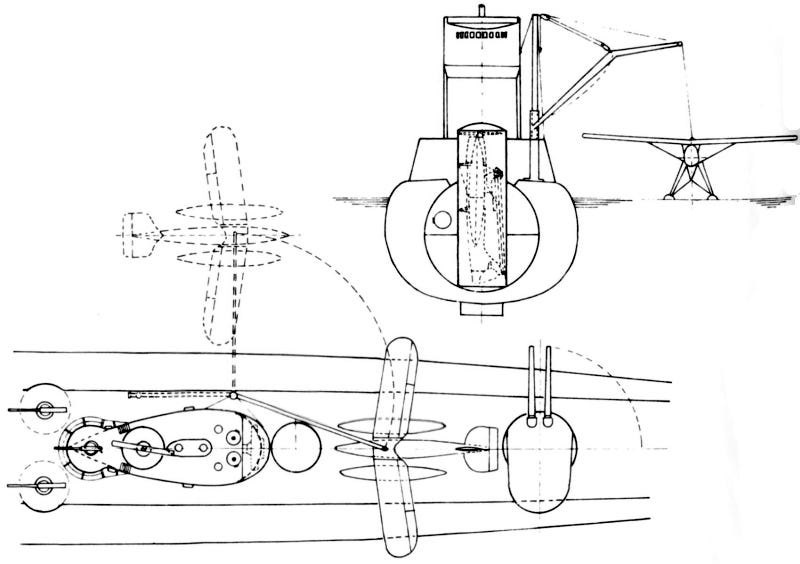
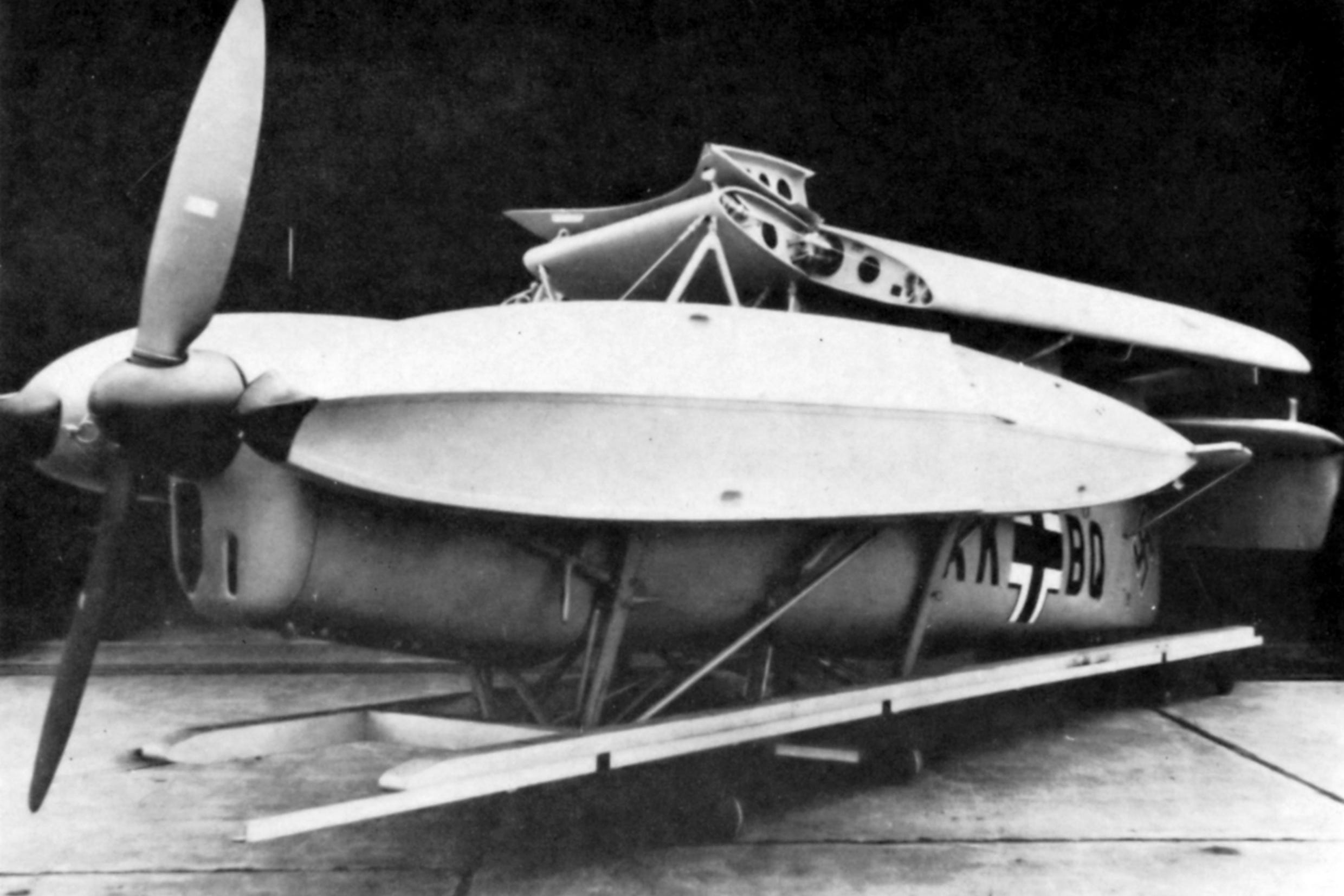
Arado proposed the Ar 231: an all-metal parasol-wing monoplane whose twin floats folded alongside the fuselage while the wing panels folded over the fuselage, one above the other with a slight vertical offset. The aircraft was unarmed, and its parts had to be assembled manually before being lowered into the water using a demountable crane positioned to starboard of the conning tower. On paper, the Ar 231 met the Navy’s requirements, but trials conducted in 1941 with six prototypes showed that the seaplane would in reality have been of very limited use to the Type XI. Underpowered and too fragile, it could not remain airborne with winds above 20 knots, and in fresh winds (3–4 m seas) it was impossible to recover the seaplane without it colliding with the submarine. This explains why it was abandoned in early 1942 in favour of the Focke-Achgelis Fa 330 Bachstelze autogyro for the Type IXD2 U-boat.
Technical Data - Arado Ar 231
Length: 7.81 m
Wingspan: 10.18 m
Height: 3.12 m
Weight (empty / take-off): 833 kg / 1,050 kg
Powerplant: 1 inverted inline 6-cylinder air-cooled Hirth HM 501; 1 fixed-pitch two-bladed propeller
Power: 160 hp
Ceiling: 3,000 m
Max speed: 170 km/h
Range: 500 km
Endurance: 4 hours
Complement: 1 pilot
The End of the Programme
In September 1937, the Kriegsmarine approved launching Type XI production from October 1938, with delivery planned for October 1940. It quickly became clear, however, that this class of U-boats was complex and expensive to build—and therefore could only be produced in small numbers if Germany did not want to clog its shipyards and delay the entry into service of Type VII and IX attack submarines, which Dönitz had made a priority. The third version of Plan Z therefore envisaged building only seven Type XI U-boats deliverable by late 1943, rising to a total of nine units by late 1945. Production was assigned to Weser AG (Deschimag) at Bremen and divided into three blocks. The first four examples were officially ordered in January 1939 and designated U-112 to U-115. In May, it was decided that all Type XIs would eventually join the 20th U-flotilla, a formation not yet in existence, which would be based at Wilhelmshaven.
When war broke out in September 1939, the U-boat arm revised its construction programme to meet its most urgent needs as quickly as possible. The Type XI was now far from a priority, and Dönitz doubted the model’s capabilities: in a letter to the High Command, he judged that “opportunities to use its artillery are more than uncertain.” He suggested stripping the boat of its turrets to give it higher speed and greater endurance, allowing it to serve as a “long-range U-boat” to locate enemy convoys in the Atlantic and escort German surface squadrons. With this challenge, the entire U-Kreuzer concept took a blow. The submarine cruiser was simply not suited to the Battle of the Atlantic that was now beginning; Dönitz primarily needed torpedo attack submarines that could be mass-produced. Accordingly, the Type XI programme was cancelled in autumn 1939—and it would never resurface.
A 250-ton submersible designed by IvS in 1930.
The Surcouf saw service throughout the 1930s. It sailed to England in 1940, then was handed over to the Free French Naval Forces (FNFL). It disappeared in February 1942 in the Caribbean Sea.
Comments
Nothing yet. Say the first thing.
Sign in to join the conversation.