
Colonised late, the island of Nauru lived a turbulent history, one that scarred both its people and its land. Successively dominated and exploited by Germans, Australians, and then Japanese, the local population suffered every kind of violence that the two world wars - and later modern hyper-consumer society - could unleash: forced labour, war crimes, famine, ethnic tension, public-health crises, and ecological catastrophe.
In 1886, Great Britain and the German Empire ratified a convention defining their respective spheres of influence in the western Pacific. For Berlin it was a diplomatic victory, because London finally acknowledged German rights over several territories then forming the protectorate of Deutsch-Neuguinea (German New Guinea): Kaiser-Wilhelmsland, the Bismarck Archipelago, the Northern Solomons, and so on. Two years later, tiny Nauru also fell under German control. Located in Micronesia, it was an isolated speck positioned along the line of demarcation between British and German possessions, a line running from the Solomons in the south to the Gilbert Islands in the north. Settlers exploited copra there, but in 1899 a New Zealand geologist discovered that Nauru’s limestone subsoil concealed an unexpected treasure: phosphate, a mineral then in high demand as a fertiliser. Early assessments were unequivocal: not only did Nauru hold an enormous deposit, its phosphate was also the purest in the world.
In 1906, a British company bought the mining rights and placed the island under strict control: almost the entirety of Nauru’s 21 km² (8 sq mi) of land was surveyed and then devoted to exclusive extraction of the precious ore. The roughly 1,400 islanders, of course, had no say. Soon, some 1,000 Chinese and Melanesian workers arrived1, supervised by around a hundred Germans and Britons. The island and its central plateau (rising to 71 m / 233 ft) became a vast open-cast mine, complete with railway, loading piers, warehouses, and the rest. Until 1914, extraction made the Pacific Phosphate Company prosperous. But when the First World War broke out, Nauru found itself completely isolated and unable to feed its inhabitants. The fifty or so Britons present were evacuated on 6 September, and three days later the Australian Navy took possession of the German island without bloodshed. Mining could thus continue uninterrupted for Britain throughout the war. In 1920, a new structure was created: the British Phosphate Commission (BPC), in practice managed by Canberra. Extraction became industrial and systematic, exhausting the most accessible seams one after another.
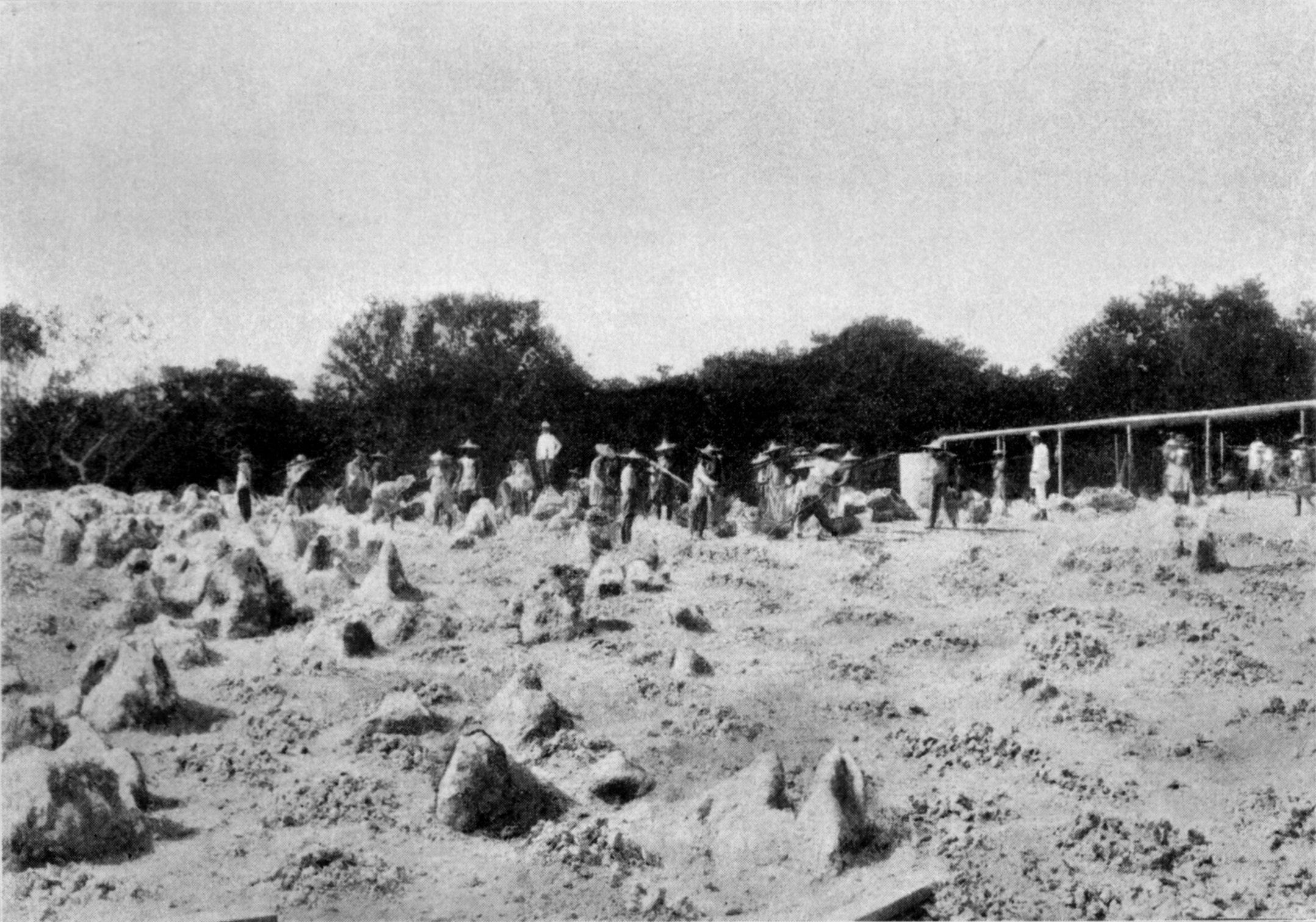
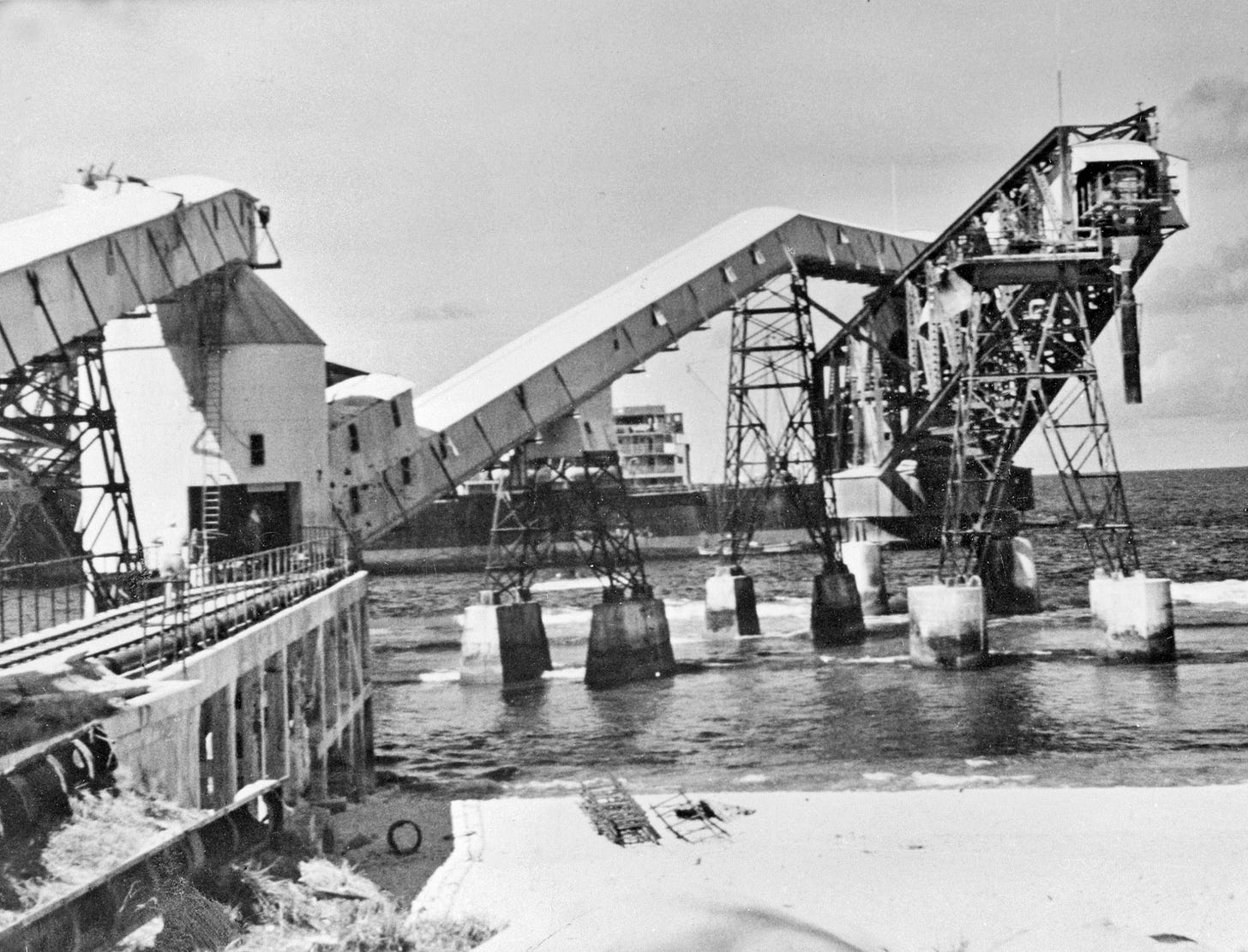
In 1940, the BPC exported one million tonnes of Nauruan phosphate (about 984,000 long tons / 1.10 million short tons), almost exclusively to Australia. Since the start of the Second World War, the island-continent sought to build up a strategic stock of fertiliser: Australian agriculture was actively supporting the British war effort. This did not escape the Axis, which aimed to strangle Britain economically: halting phosphate imports would strike a hard blow at enemy agricultural output. And it was easy because the ore left Nauru only thanks to a small specialised fleet of phosphate bulk carriers, necessarily loaded offshore. Nauru had no deep-water port, which prevented loading at a quay. Ships had to use metal cantilever structures, long overhanging conveyor piers extending far out above the sea, to fill their holds. Such operations were possible only in calm weather. Otherwise, ships had to wait offshore for wind and sea to ease; and the wait could be long, especially late in the year when equatorial storms raged.
To the frequent presence of such prey was added another vulnerability: Nauru had no coastal defences at all, because the League of Nations formally forbade Australia to fortify an island that did not officially belong to it. Finally, no escort or patrol vessel was permanently detached to protect it. In 1940, Imperial Japan was not yet at war, and Italian or German squadrons were far too distant to pose a threat, so Canberra believed. In reality, Japan - having signed the Tripartite Pact in September 1940 - would provide discreet logistical support to the Kriegsmarine from the territories it controlled in the South Pacific under League mandates: the Caroline Islands, the Palau, the Marianas (excluding Guam), and the Marshalls. In these island groups, the Japanese agreed to shelter and refuel German units sent to raid the region. At the start of the war, Berlin commissioned nine auxiliary cruisers for commerce raiding and ordered two of them to the South Pacific.
The HSK-1 Orion left first. She sailed in April, rounded Cape Horn in May, and reached New Zealand waters in June. On the night of the 13th to the 14th, she mined the entrance to Auckland harbour, then cruised nearby under various false identities, sinking three merchant ships and sending one prize back to Europe. The HSK-7 Komet departed Gotenhafen in July and reached the Pacific via the Arctic Ocean with the help of a Soviet icebreaker. It was at Lamotrek (an Eastern Carolines atoll under Japanese mandate) that, on 20 October, she rendezvoused with the Orion and the supply ship Kulmerland. The commanders of the two raiders and the auxiliary vessel then sailed under the Japanese flag and concentrated their efforts in the lightly protected waters around New Zealand. After 18 days on patrol, results were disappointing: they sank only two merchant ships by late November and then shifted sectors. The new objective was to attack phosphate freighters waiting off Nauru. But not only that: the Germans also planned to land a raiding party on the atoll to destroy the port infrastructure at Aiwo and the island’s radio station.
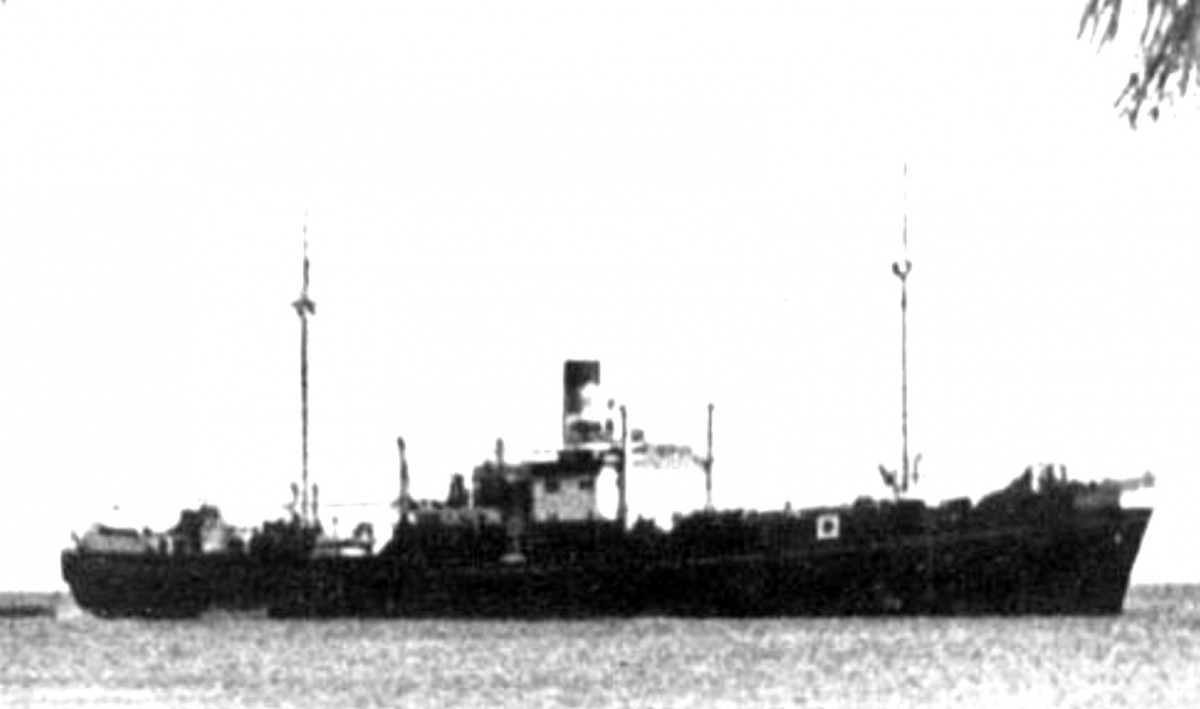
6 December: halfway between the Solomons and Nauru, the raiders intercepted and torpedoed the Triona, a BPC ship. Very quickly, the German commanders understood they would not be able to land on their objective: a violent typhoon swept the area and made any small-boat manoeuvre impossible. But that also meant phosphate freighters would be “running circles” offshore, waiting for weather calm enough to load ore.
Evening of 7 December: on reconnaissance, the Komet found and sank the Vinni by gunfire 14 km (8.7 mi) from Nauru, without her presence being detected by other ships.
8 December: at dawn the German flotilla regrouped off Nauru. In a few hours, the two raiders intercepted and sank three phosphate bulkers, either by gunfire or by placing explosive charges aboard them. From shore, island authorities witnessed explosions and sinkings, but - because of the typhoon - mistook the attackers for Japanese ships coming to aid vessels in distress. Their attempts to establish radio contact with the unknown ships failed. Stranger still, the raiders soon disappeared eastward without ever trying to identify themselves. 32 km (20 mi) from the island, the German commanders took stock. While waiting for weather that might allow a landing on Nauru, the Komet and the Kulmerland would refuel at Ailinglaplap (Marshalls), while the Orion pushed on to Ponape. For a week, the German ships found no prey, because Australia had begun to suspect something and rerouted its bulkers.
15 December: the three German ships reunited northwest of Nauru. The storm still raged, and the landing operation was finally abandoned. Instead, they decided to rid themselves of their prisoners (including several dozen women and children) by putting them ashore on Emirau, a remote atoll in the Bismarck Archipelago with no radio station.
21 December: the Germans very formally took possession of Emirau “in the name of the Reich” and landed 514 of their 675 prisoners2. They then split up: the Orion headed north with the supply ship, while the Komet steered south.
23 December: the Komet tried unsuccessfully to mine the entrance to the naval base at Rabaul (New Britain), then set course for Nauru.
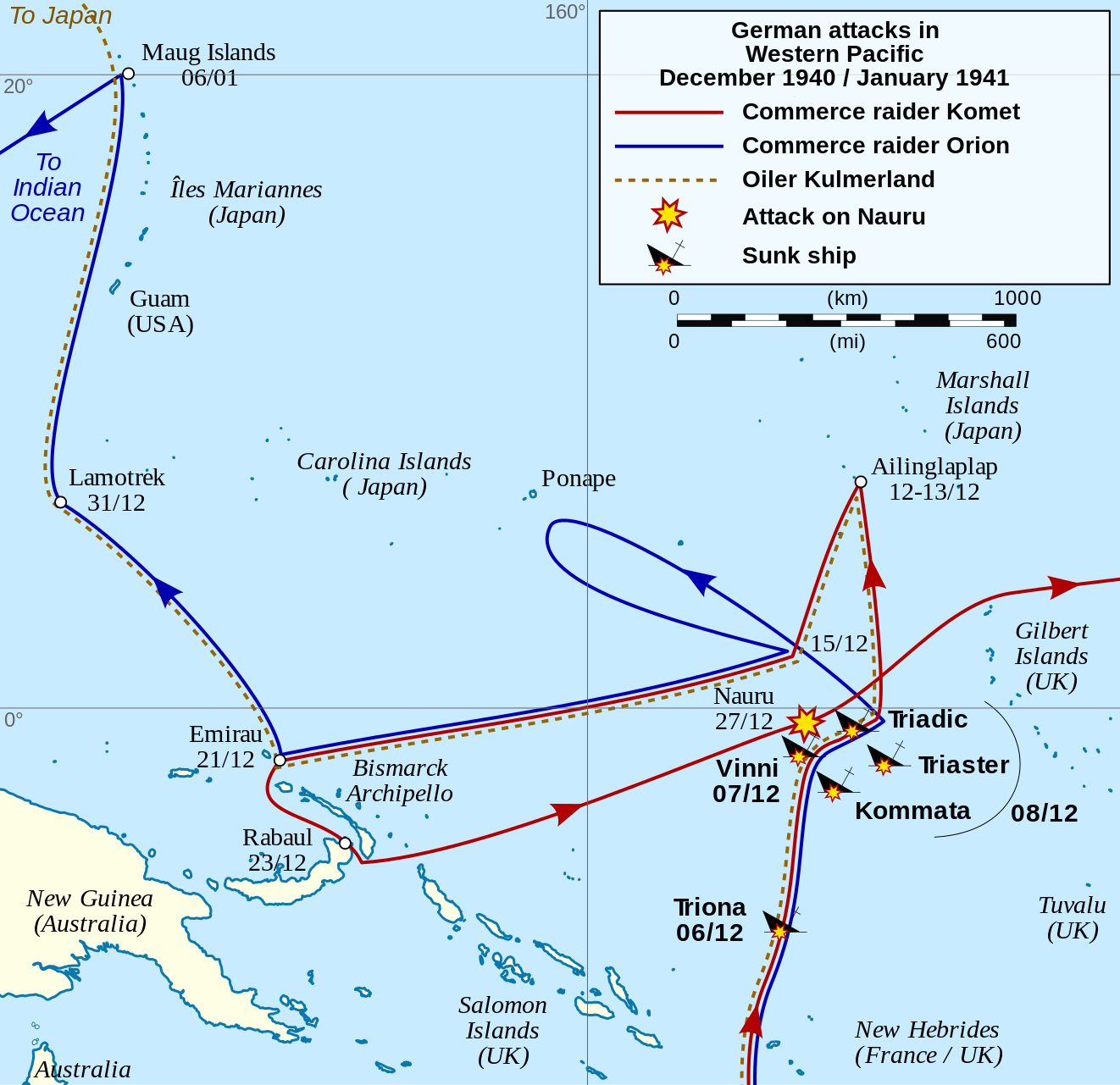
27 December, 05:45: the German raider came in sight of the island and hoisted the Kriegsmarine ensign. Remaining at a distance offshore, she informed the Nauru authorities - who had come out to investigate - that she was about to bombard the port installations and that the area must be evacuated. Any use of radio to warn Canberra, she said, would be harshly punished. Panic swept through the Chinese quarter along Aiwo: workers fled within minutes to shelter in the phosphate quarries.
06:40: over the course of one full hour, the auxiliary cruiser fired roughly 200 shells at the cantilever structures, warehouses, silos, and fuel-oil tanks. The Komet then steered southeast and vanished over the horizon. Damage on Nauru was severe. The overhanging loading structures were badly hit - one was considered a total loss - while 12,000 tonnes of fuel (11,800 long tons / 13,200 short tons) poured into the lagoon and burned. Only one person was killed, but it would take ten weeks for phosphate production to resume. The fertiliser shortage created by the bombardment did not affect Britain alone. Australian and New Zealand agriculture suffered first, of course—but Japanese authorities (whom the German commander had not warned) also saw their main phosphate supply dry up at the same time. The Nauru attack strained diplomatic relations between Berlin and Tokyo, even as London quickly made up its shortfall by importing phosphate from Egypt, Banaba, French Polynesia, and elsewhere. The Kriegsmarine would not return to prowl those waters, and such initiatives were henceforth forbidden to raider commanders.
In Canberra, military authorities drew the lesson: from 1941 onward, convoys in that zone would be escorted, while Nauru, still beyond the reach of Australian air patrols, would receive regular visits from warships. The island even gained a garrison of a few dozen soldiers and a single artillery piece for defence. But Nauru remained too isolated, especially now that Japan’s entry into the war seemed inevitable. In March 1941, Canberra decided to evacuate the women and children of Western employees; they were transferred to Australia on 27 July. Phosphate extraction continued until early November 1941.
9 December 1941: only two days after Pearl Harbor, three Japanese aircraft appeared over Nauru. They came from the Marshalls, farther north and under Japanese mandate since 1920. This was not entirely surprising: a reconnaissance aircraft had been seen the previous day. But this time, the intruders raided the island’s radio station. Damage was negligible and there were no casualties; the population had been warned by radio from neighbouring Banaba.
10–11 December: Nauru suffered daily raids in which the Japanese dropped 51 bombs, exclusively on the radio station, which was finally destroyed. Phosphate mining installations were not targeted, showing that Tokyo hoped to seize them and exploit them for itself.
December 1941 – February 1942: the island was completely cut off from Britain’s other possessions in the region, possessions that were falling one after another (the Gilberts at Christmas, Rabaul in January, and so on). Not only were Nauru’s communications severed, Japanese aircraft “visits” became daily. In late January, Canberra decided to evacuate the Westerners still on the island. The final plan also took into account the Chinese miners, who were expected to be the first victims of enemy abuses.
23 February: the BPC bulk carrier Trienza and the Free French fast destroyer Le Triomphant reached Nauru. They embarked the 49 men of the small garrison, 61 Westerners, and 391 Chinese, but had to leave 191 other workers behind for lack of space. They promised to return for them; they never did. The Allies lacked ships in the region, and the operation was not considered a priority. BPC officials left after sabotaging the mining installations. Governor Chalmers remained with four other white colleagues.
11–15 May 1942: the Imperial Navy launched Operation “RY” to seize Nauru and Banaba. A small amphibious force3 from the 4th japanese Fleet sailed from Rabaul to arrive on the objective on 15 May. At the last moment, the Japanese detected the carrier force built around USS Enterprise and Hornet nearby. The American ships had indeed been dispatched after intercepting Japanese communications, to prevent any landing. With no air cover, the Japanese were forced to abandon the attempt and turn back. It was only a postponement: the Imperial Navy judged its posture too weak in the Gilberts and decided to occupy all the islands abandoned by the Allies in the area.
23 August: three waves of aircraft bombed Nauru by day. That night, they were followed by the cruiser Ariake.
24 August, 02:30: Governor Chalmers raised the white flag in surrender. A small contingent from the Ariake went ashore and formally took possession of the island.
26 August: another amphibious force4 sailed from Truk for Nauru and landed 300 japanese soldiers the next day. The five Westerners were placed under house arrest, and a heavy pall fell over the island: requisitions, rationing, beheadings, and forced labour quickly became daily reality. The new occupiers began by building what the island most lacked for defence: an airfield, essentially a simple runway, operational from January 1943. In parallel, they constructed bunkers, an underground hospital, and firing positions for their 152 mm (6-inch) coastal artillery. These works demanded manpower: 1,500 Korean and Japanese labourers were sent to Nauru and lived in deplorable conditions. The Chinese were treated worst. Nauruans were regarded more favourably, and efforts were even made to win them over: targeted propaganda, creation of a school, and so on. Yet despite the arrival of 72 civilian specialists, phosphate extraction did not resume. Sabotage of equipment and labour shortages (men being diverted by the military to other tasks) likely explain why the Empire of the Rising Sun would never profit from Nauru’s “treasure.” Japan came to regard the island only as one more defensive bastion in its perimeter.
25 March 1943: having regained the initiative in the Pacific over the previous year (battles of the Coral Sea and Midway), the Americans decided to retake lost ground, especially territories too close to Australia. Nauru’s airfield had been operational only three months when it was hit by a full-scale air raid: 15 aircraft were destroyed on the ground and installations badly damaged. In reprisal, the Japanese garrison’s deputy executed the five Western prisoners; their bodies were then burned on the beach5.
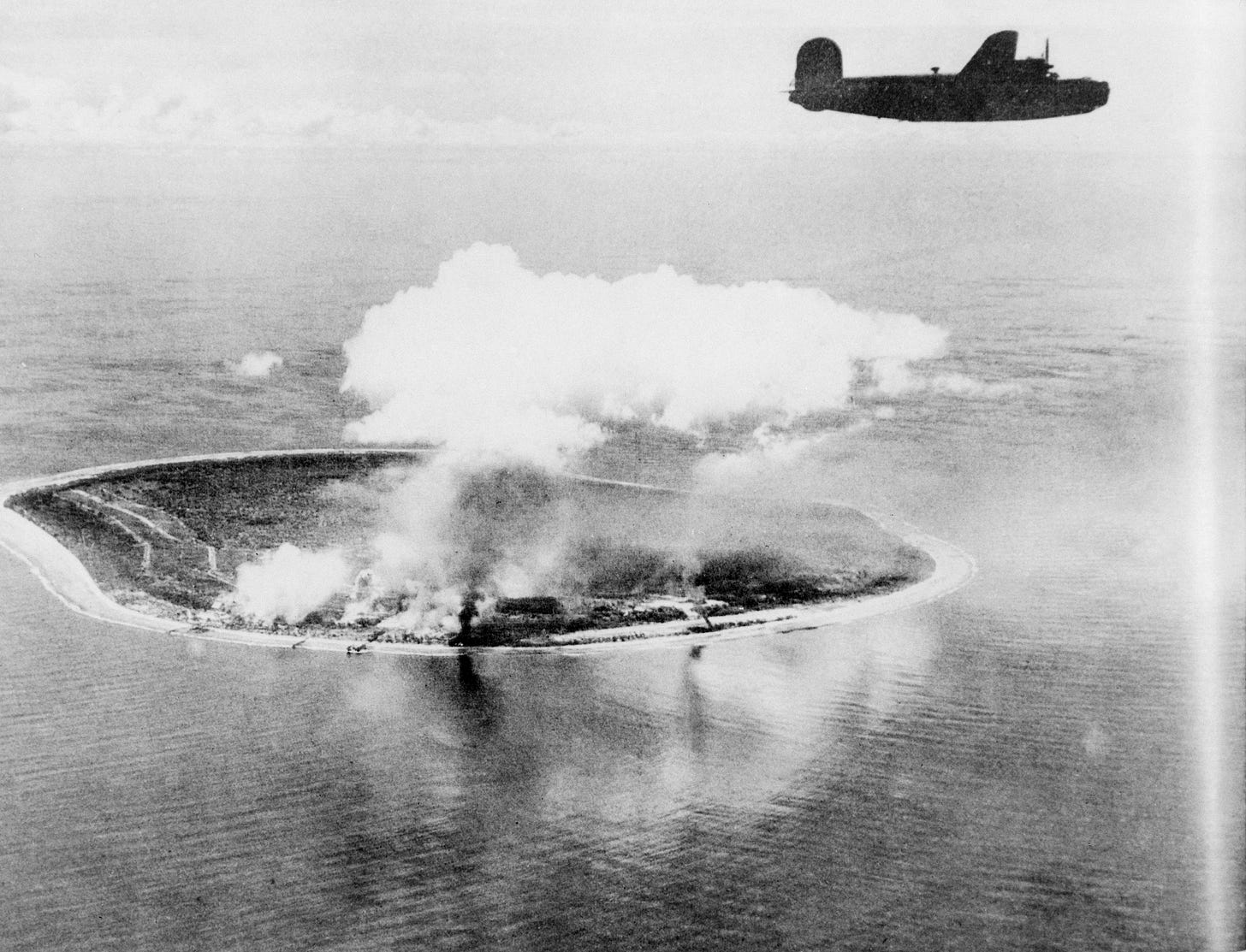
20 April: 22 Consolidated B-24 Liberators of the 7th Air Force, flying from the Tuvalu Islands, bombed Nauru again. The airfield and phosphate installations were heavily hit. From May onward, American raids became almost daily. They intensified in November, with bombers using the island as a practice target in preparation for the assault on Tarawa.
In 1943, the Japanese realised Nauru and Banaba had become too advanced in their defensive scheme and increasingly difficult to resupply. The population of these islands had also grown sharply since the war began: while Nauru had 3,000 inhabitants in 1940, it held more than 5,000 by June 1943. The garrison was too large for the island to feed everyone, and Japan decided in June to carry out major population transfers.
29 June: 600 Nauruans and 7 Chinese workers embarked at night (to avoid American air raids) on a cargo ship bound for the Truk Islands, 1,600 km (1,000 mi) farther north, an archipelago where the Imperial Navy had built one of its main bases. After five days at sea, the group reached the small island of Totiw, where it was abandoned to fend for itself. The exiles built a village and did their best to find food.
11 July: on Nauru, the Japanese executed the 49 patients of the leper colony to prevent any risk of contagion. This war crime remains the most serious in the island’s recent history.
Early August: 659 Banabans (Banaba too having become overcrowded after the arrival of a strong Japanese garrison) were sent to Nauru. As 1,200 new Japanese soldiers landed on the island, a second contingent of Nauruans (601 people) embarked for Truk. It would be the last transfer: the cargo ship was torpedoed by an American submarine on 11 September. Japan no longer had the means to “empty” Nauru of its islanders. Resupply of the island became extremely erratic and dangerous because of enemy submarine forces in the region. A cargo ship was sunk at the end of 1943, and the last vessel able to dock did so in January 1944. Meanwhile, public health deteriorated (drought, dysentery, malnutrition) under the constant threat of American air raids. This state of scarcity lasted a full year. Less accustomed, Japanese troops suffered more than the local population, but continued to rule with an iron hand.
Thanks for reading! This post is public so feel free to share it.
14 September 1944: two Japanese submarines managed to pass through the enemy blockade. They brought weapons and supplies. 600 soldiers were also evacuated around the same time. Conditions improved slightly with the return of the rainy season… and with supply drops by American propaganda services.
19 November: on the eve of the Tarawa landings, 90 American bombers carried out a major raid on Nauru to prevent Japanese aircraft from interfering with the amphibious operation. From the end of the month, bombings became rarer, then stopped completely in January 1945 after Tarawa was taken and the front shifted far to the northwest.
Nauru could have been liberated by U.S. forces as early as November 1943. The island was initially one of the objectives of Operation “Galvanic,” meant to secure the Gilbert Islands, and Tarawa in particular. The 27th Infantry Division was to land there but, after a detailed study of Nauru’s topography and the forces concentrated on it, the U.S. high command reversed the decision: the operation would have cost too many men for limited gain. It was judged preferable to eliminate the Japanese air threat by wiping the airfield off the map under a carpet of bombs, without launching an amphibious assault. Nauru thus became an early example - and a victim - of the “leapfrogging” strategy the Allies would use across the Pacific to bypass strongly fortified islands or those of limited military value.
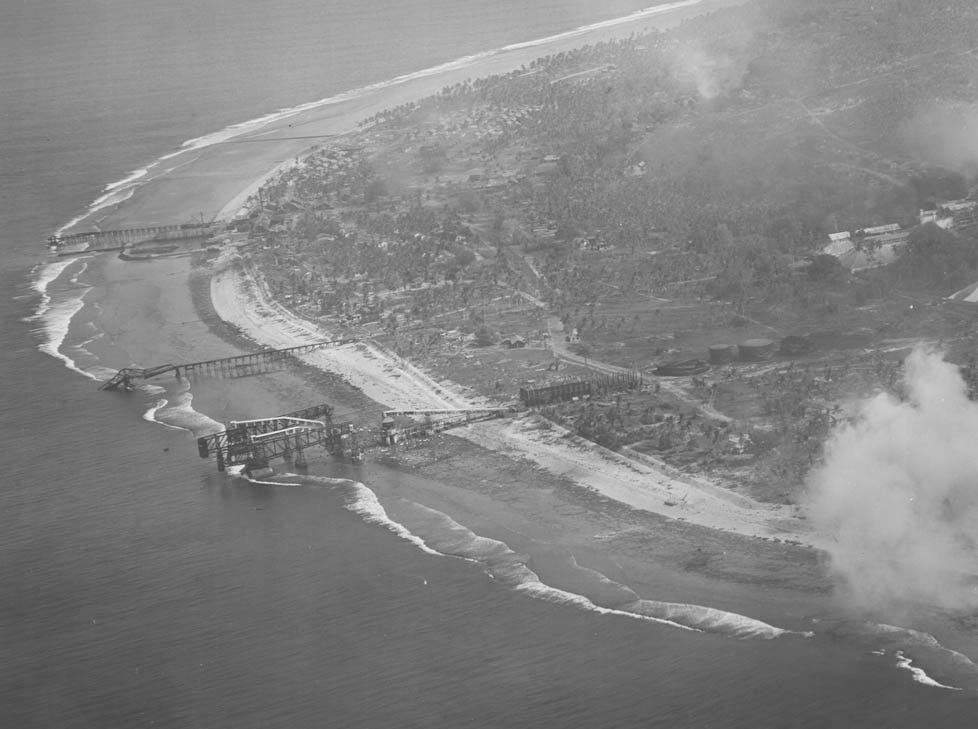
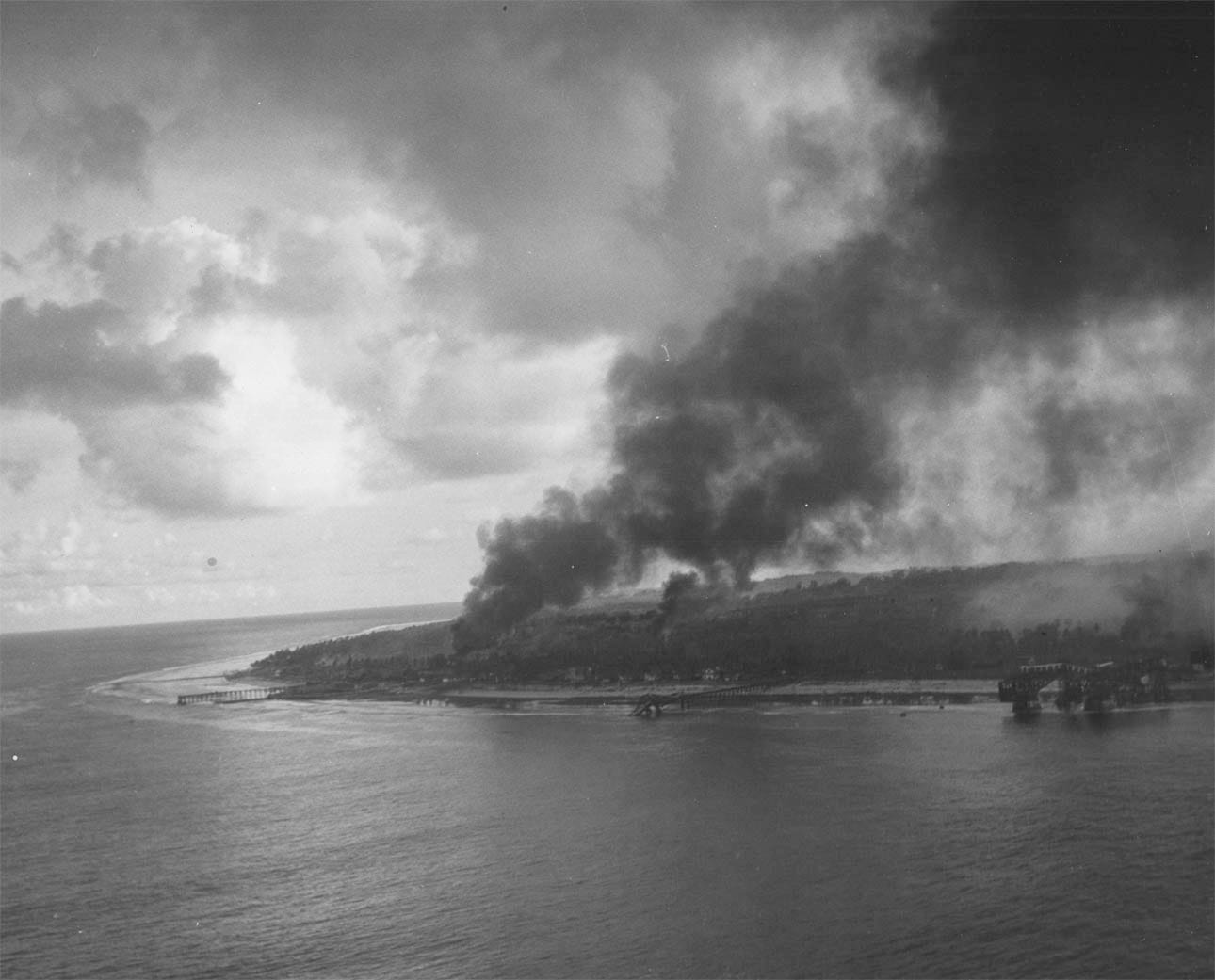
9 December: a U.S. carrier Task Force returning from Tarawa bombed the island, destroying about a dozen aircraft on the ground and killing several islanders. Allied bombs are estimated to have caused around forty civilian deaths on Nauru during the war. In addition, around 300 Japanese died during the occupation, from disease or under bombs. Though health conditions improved somewhat, scarcity remained severe. Two Japanese soldiers deserted during 1945 by stealing a small boat. Around the same time, a Japanese officer is said to have altered a radio message ordering the liquidation of all Nauruans, thus saving the local population from a planned massacre.
15 August 1945: the garrison learned by radio of Japan’s capitulation and prepared to surrender. A white flag was raised on 21 August at the request of American aircraft frequently overflying the island.
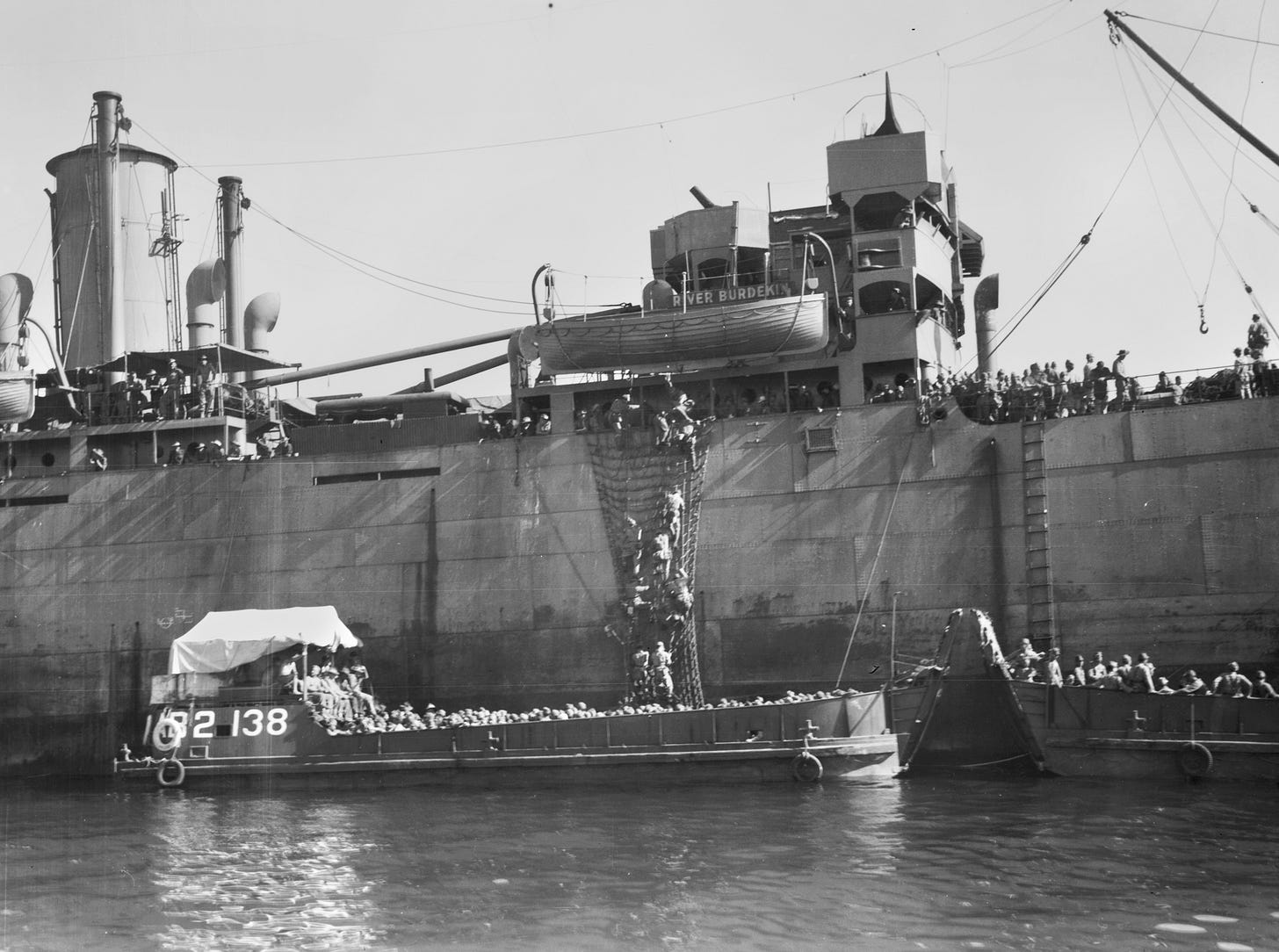
13 September: eleven days after Japan’s effective capitulation, the Australian frigate Diamantina and two cargo ships appeared off Nauru. Japanese officers came aboard to offer their surrender before a mixed audience that included BPC officials and New Zealand representatives. The next day, 500 Australian soldiers went ashore to take possession of the devastated island.
3 October: the 3,745 Japanese prisoners were transferred by ship to the Solomons. Their embarkation led to violence, as Nauruans sought revenge for three years of occupation. Meanwhile, the BPC began restoring the island’s infrastructure, a task requiring major work. 500 Koreans were forced to remain on site to carry it out. In November, the Australian Army handed control of Nauru to a civilian administration.
24 November: 777 islanders from the Gilbert Islands and Banaba left Nauru. Banaba was no longer habitable; its population was moved to Rabi, an island in Fiji. The following month, Nauruans exiled to Truk were gathered by the Australians, who discovered the appalling living and working conditions they had endured, and began investigating Japanese war crimes.
31 January 1946: only 759 survivors were repatriated from Truk to Nauru, barely more than half of those exiled in 1944. At that date, administrators counted 1,369 Nauruans - 500 fewer than in 1940. The Japanese occupation thus left an indelible mark on collective memory.
For Nauru, the war was now truly over. Reconstruction had begun, but phosphate extraction would not resume until 1947. The island was then under UN trusteeship, with administration delegated to Australia. Once again, exploitation of mineral resources by the BPC came at the local population’s expense, and a riot - led chiefly by the Chinese minority - broke out in 1948. A representative Nauruan council was created in 1951, but the island did not become independent until 1968. Yet from the early 1960s, the British and Australians knew perfectly well that they were exhausting the last phosphate deposits, and that extraction was inexorably destroying the local ecosystem. Plans were even drawn up (but never implemented) to relocate the population in the long term to various Australian islands.
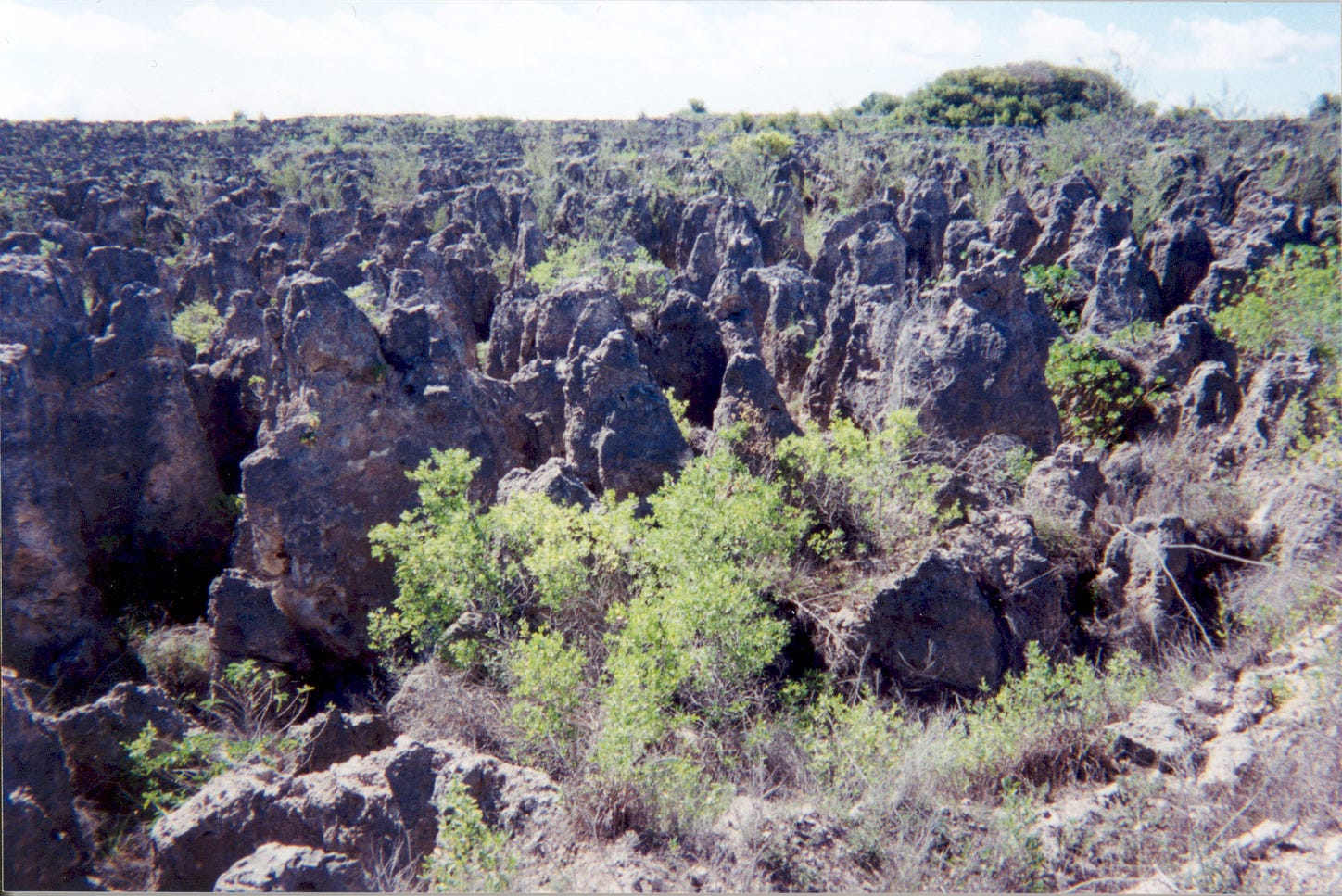
From 1968 to 1975, phosphate prices soared, giving the newly independent republic and its citizens extraordinary income. In just a handful of years, Nauru became the second-richest country in the world in GDP per capita - behind Saudi Arabia. This windfall6 drove an extreme “Westernisation,” and consumer society replaced older ways of life in a few years. But in the early 1990s, Nauru was abruptly pushed to the edge: deposits were exhausted, phosphate prices collapsed, and investments meant to diversify the economy proved costly failures. With no remaining economic, industrial, or agricultural base, the micro-state declared bankruptcy in 2003 after a series of political and financial scandals.
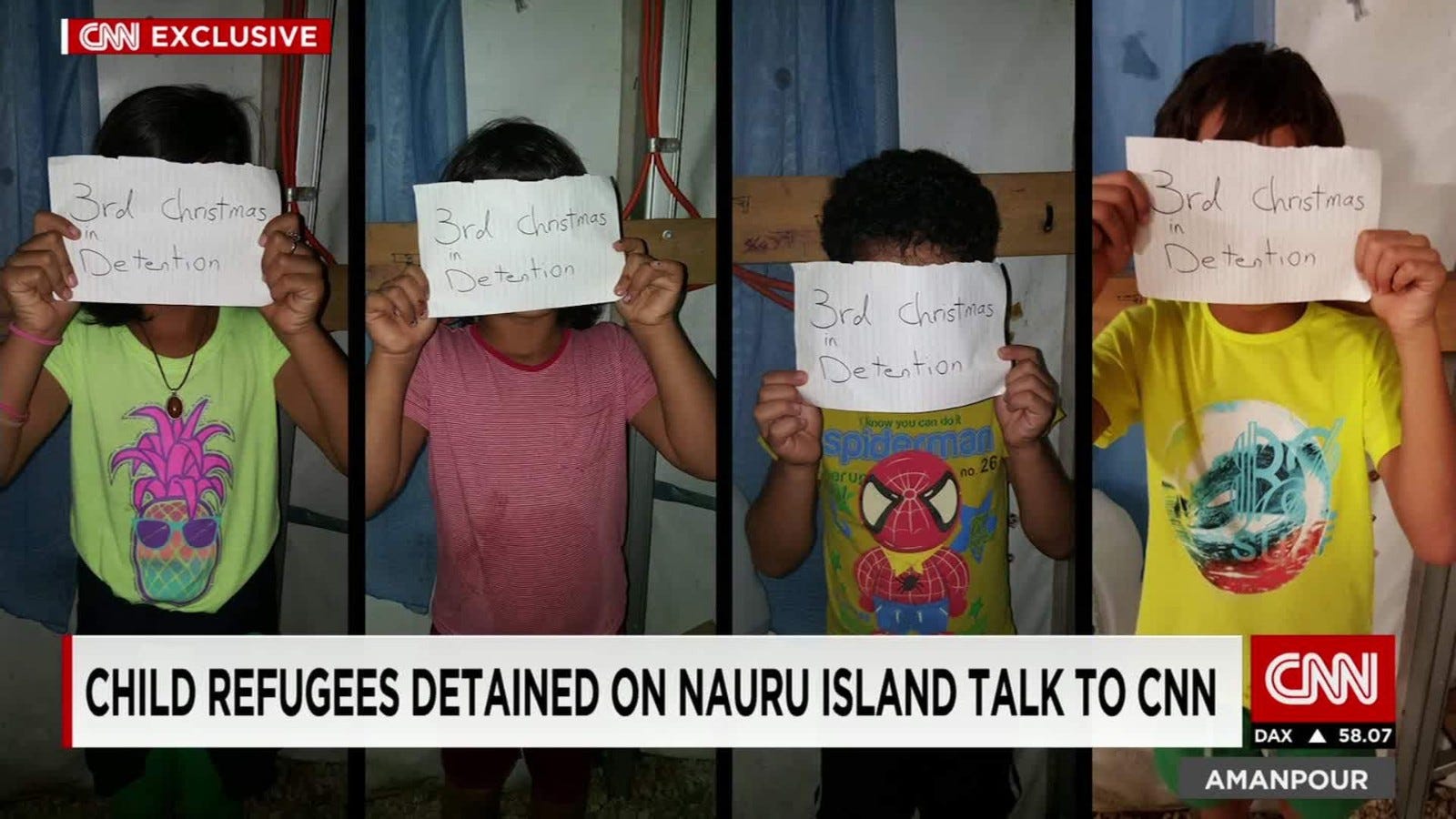
Today, it is among the poorest countries on earth, facing acute health and social emergencies: ecological disaster, endemic unemployment, severe alcoholism, the world’s highest obesity rate, and more. The island survives partly thanks to subsidies Canberra pays it to host refugees and illegal migrants in detention centres before they reach Australia7.
Nauru is thus, at once, a dumping ground, a shantytown, and an open-air prison, where little hope seems able to emerge.
The mechanisation of labour and the multiplication of social and inter-communal problems led the BPC to send some of these workers home between 1924 and 1932.
The Orion kept aboard the men of fighting age. They were sent into captivity upon the raider’s return to Germany.
One cruiser, two minelayers, two troop transports, and two destroyers, covered at distance by two heavy cruisers and four destroyers.
One cruiser, five destroyers, and one troop transport.
Those responsible were tried for war crimes at Rabaul, and one of them was hanged in August 1946.
In the 1990s, Australia, New Zealand, and the United Kingdom also paid several hundred million dollars in compensation for over-exploitation of the island.
Applied to several islands and known as the “Pacific Solution,” this policy was implemented by Australia from 2001 to 2007 before being abandoned amid criticism. It was revived in 2012. There were around 107 asylum seekers remaining on Nauru as of July 2021.
Comments
Nothing yet. Say the first thing.
Sign in to join the conversation.