
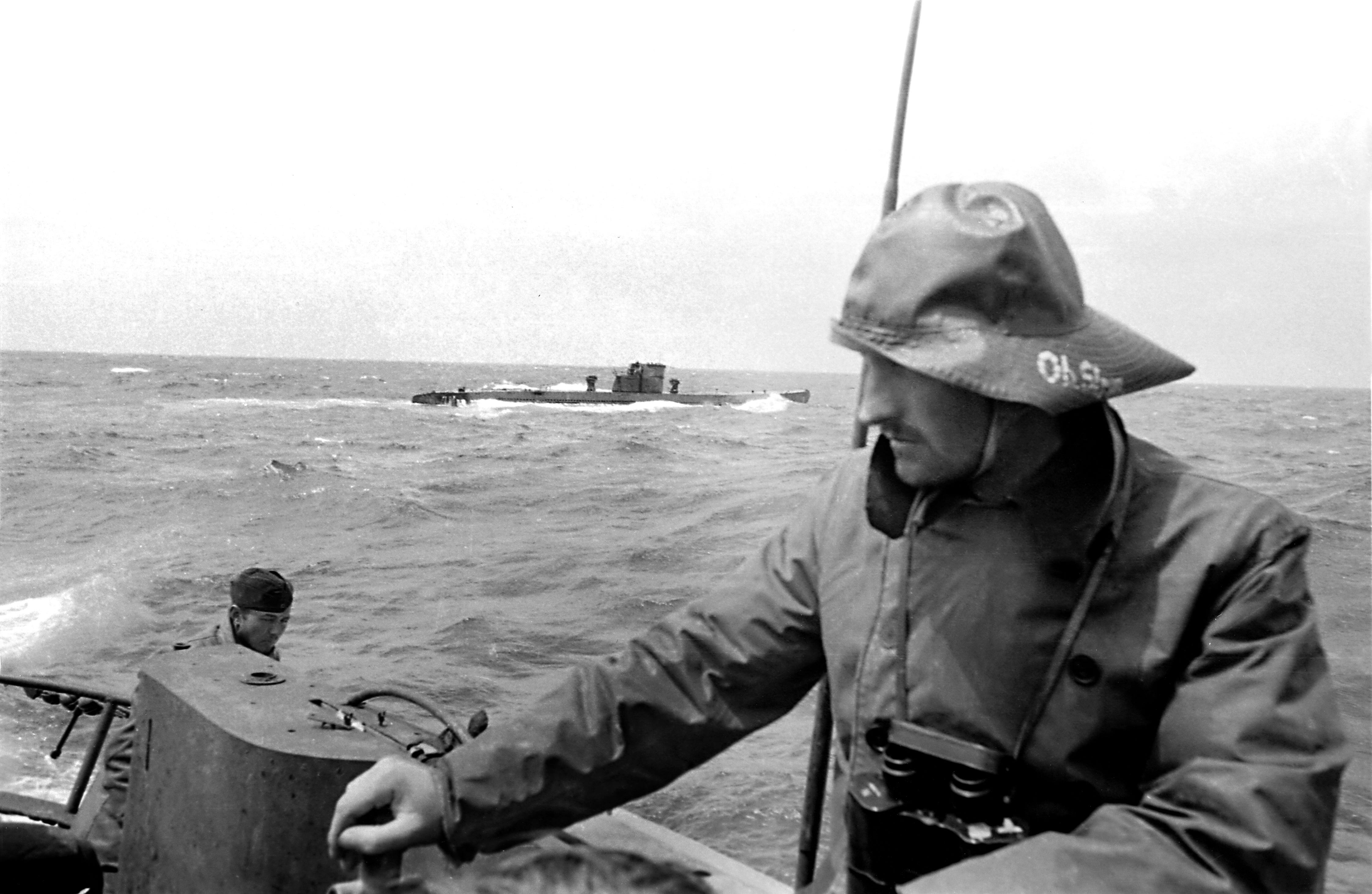
As the father of the U-Bootwaffe, Dönitz was also the man who laid down its tactical principles, including the famous “wolfpack” attack. Yet concentrating several submarines around an enemy convoy and sending them in simultaneously was not a risk-free method. It could happen that multiple boats found themselves in the same place at the same time, on intersecting tracks…
From September 1935 onward, Kapitän zur See Karl Dönitz, newly appointed head of the German submarine arm, issued tactical principles that would later shape U-boat operations during the Battle of the Atlantic. Among the ideas he set out, “group tactics” (Gruppentaktik) emerged as an ambitious and promising concept. Later called Rudeltaktik (“wolfpack tactics”) it was meant to allow submarines to attack enemy merchant ships sailing in convoy, the most effective and discouraging countermeasure developed by the Allies during the First World War. As Dönitz would later write in his memoirs, “a concentration of targets required a concentration of submarines.” In practice, an attack by several submarines had to be simultaneous, to overwhelm the convoy’s escorts by weight of numbers, and was generally to be carried out at night on the surface, after an underwater approach. This raised a host of organisational questions that would only truly be resolved after the war began: who commands the pack, and from where, shore or one of the boats involved? How do you communicate during the attack? What formation should be used? How many submarines are needed for an effective pack?
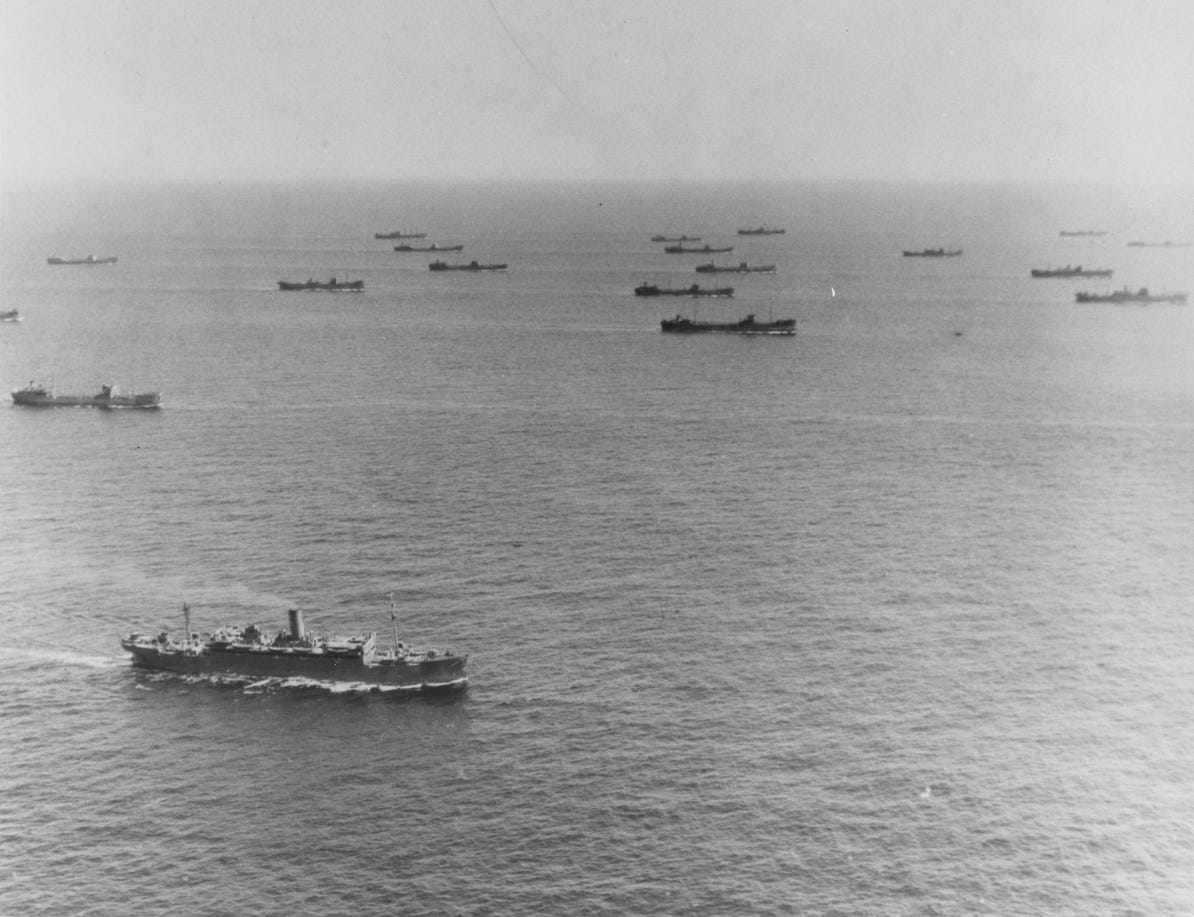
During the war, British and American submarines would also adopt “pack” attacks, but with notable practical differences. They established local tactical commands, whereas the Germans’ BdU (U-boat Command) guided boats to the objective by radio from the French coast, then granted each commander considerable freedom of action. Another major difference was the number of submarines grouped together. Ninety percent of American “packs” would consist of only three or four boats, occasionally rising to six or seven in a few rare cases. By contrast, Dönitz preferred numerically large groups, very often 10 to 15 submarines. This was due first to differences in operational theatres. Japanese convoys in the Pacific, and Italo-German convoys in the Mediterranean, usually contained only a small number of transports, around a dozen at most. Too many submarines attacking simultaneously in so limited an area could produce “unfortunate” situations: collisions, friendly-fire incidents, and so on. In the Atlantic, convoys were far larger and more spread out, often with more than forty freighters advancing in several parallel columns. The Allies’ aim was to form a wide rectangle whose flanks were as short as possible to reduce exposure to submarine attacks from the sides. This forced U-boats to strike from ahead or astern, but the very extent of these convoys also allowed them to attack en masse, from several directions at once, without fearing they would interfere with each other. Dönitz took full advantage: while many packs contained only three or four boats, others gathered more than twenty. The largest ever constituted - Panther, active in October 1942 - counted 34 U-boats. And in fact, combat accidents between U-boats of the same pack remained rare.
One exception that proves the rule involved the Type VIIC U-221 and U-254. It began on 27 November 1942, when convoy HX-217 left New York for Liverpool with 33 merchant ships. Eleven of them soon returned to their departure port for various reasons, mostly mechanical. The convoy was then reinforced by eight more ships off Halifax, before leaving the North American coast and heading into the open ocean, where it met its protection force, Escort Group B6, consisting of two destroyers, four corvettes, and a Rescue Ship. Up to that point the weather had been tolerable, but from 2 December a dreadful storm struck the merchantmen. At that season this was common, even expected by seamen who hoped the very poor visibility would prevent enemy submarines from spotting them. And indeed, several U-boats were searching for HX-217.
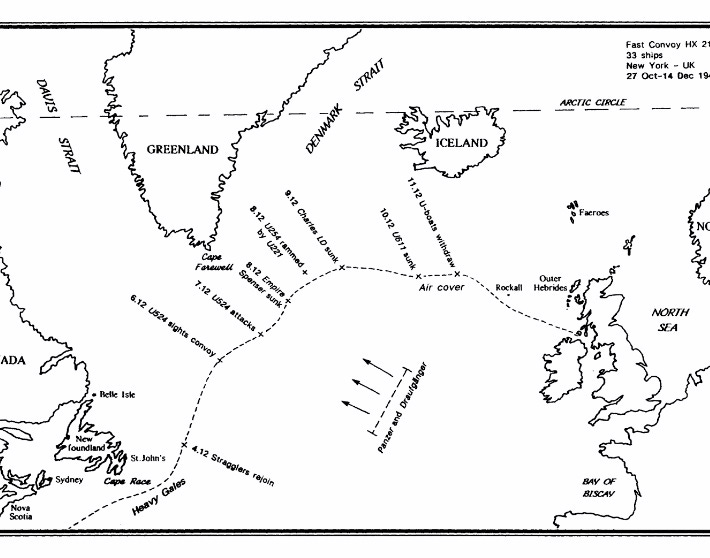
First, there were the seven “grey wolves” of the Panzer wolfpack, formed on 23 November to intercept (unsuccessfully) convoy ONS-151. There were also the ten submarines of Draufgänger, formed on the 29th, which had just lost contact in the fog with another convoy. On 1 December, Dönitz redirected Draufgänger’s boats farther north to help Panzer on the route taken by ONS convoys. One of them, U-524, was equipped with an experimental radio receiver capable of intercepting very-high-frequency messages exchanged between ships of the same convoy using Talk Between Ships (TBS), a radio communications system introduced during the year. On the 4th, U-524 did indeed intercept a flow of exchanges among about ten interlocutors near grid square AJ 8766; in less technical terms, a convoy south of Greenland’s tip. Panzer was immediately sent to the area. Seas were rough and visibility dreadful; only on the 6th did U-524 gain the first visual contact. Conditions were still too bad to attack, so on the 7th the submarine shadowed its prey all day while awaiting reinforcements: five U-boats arrived before sunset, while Dönitz summoned Draufgänger’s units. They were expected during the night of the 7th or the day of the 8th, bringing the total number of attackers to 17. The Germans therefore hoped to maul the convoy. The Allied escort, however, had already detected two U-boats approaching on the 6th and braced for a hard night’s fighting.
At 18:00 on the 7th, U-524 opened hostilities with a first spread of torpedoes, all misses. The convoy was harassed all night, and at 01:25 on the 8th the same U-boat finally torpedoed the tanker Empire Spenser (8,194 GRT). The convoy commodore’s log offers grim detail: “At once, the entire area nearby [around the tanker] became a sea of flames and columns of dense black smoke rose to 150 m [about 500 ft]. The convoy continued straight ahead, as ordered (…). A great battle was taking place all around the convoy and within sight.” Yet at daybreak, no other merchant ship had been lost.
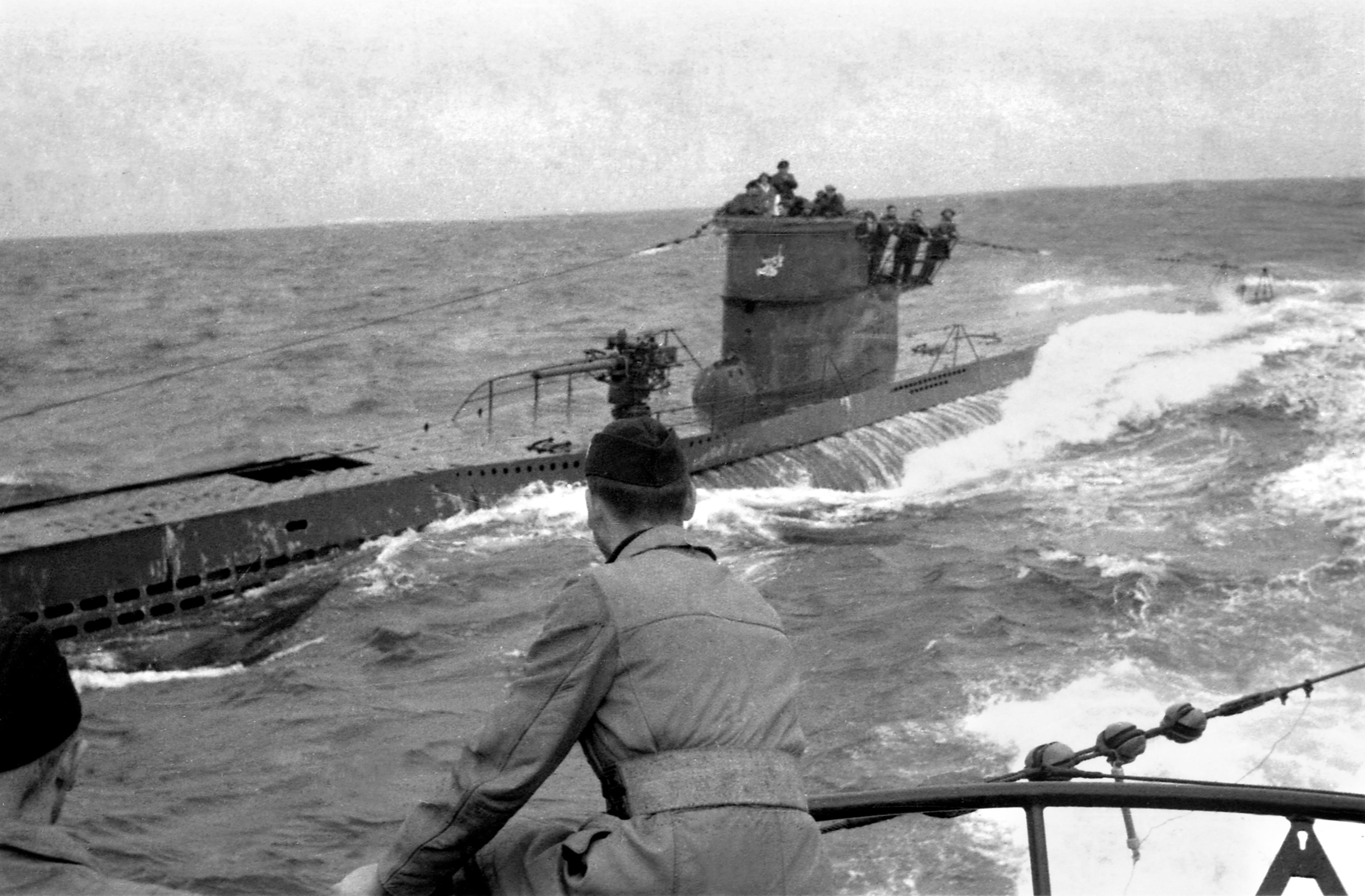
Another drama did unfold during the night, but its protagonists were German. On the evening of the 7th, U-221, a Type VIIC from Draufgänger, did make contact with the convoy in grid square AK 2551. She began a high-speed surface chase, a tactic that allowed her to close quickly without being detected by the escorts’ Asdic. Only her silhouette against the horizon might betray her, but darkness was deep and the weather especially bad, limiting the risk.
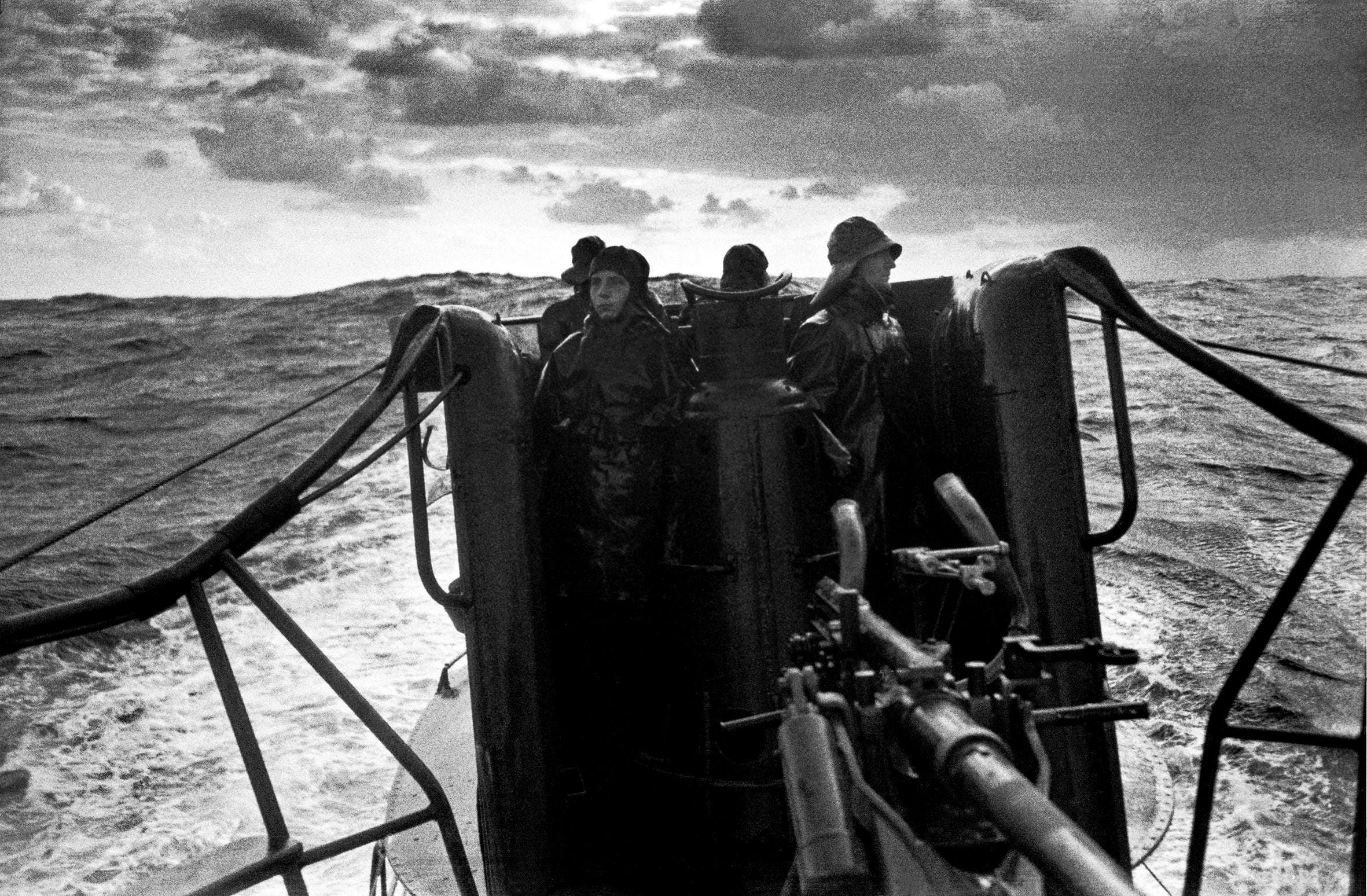
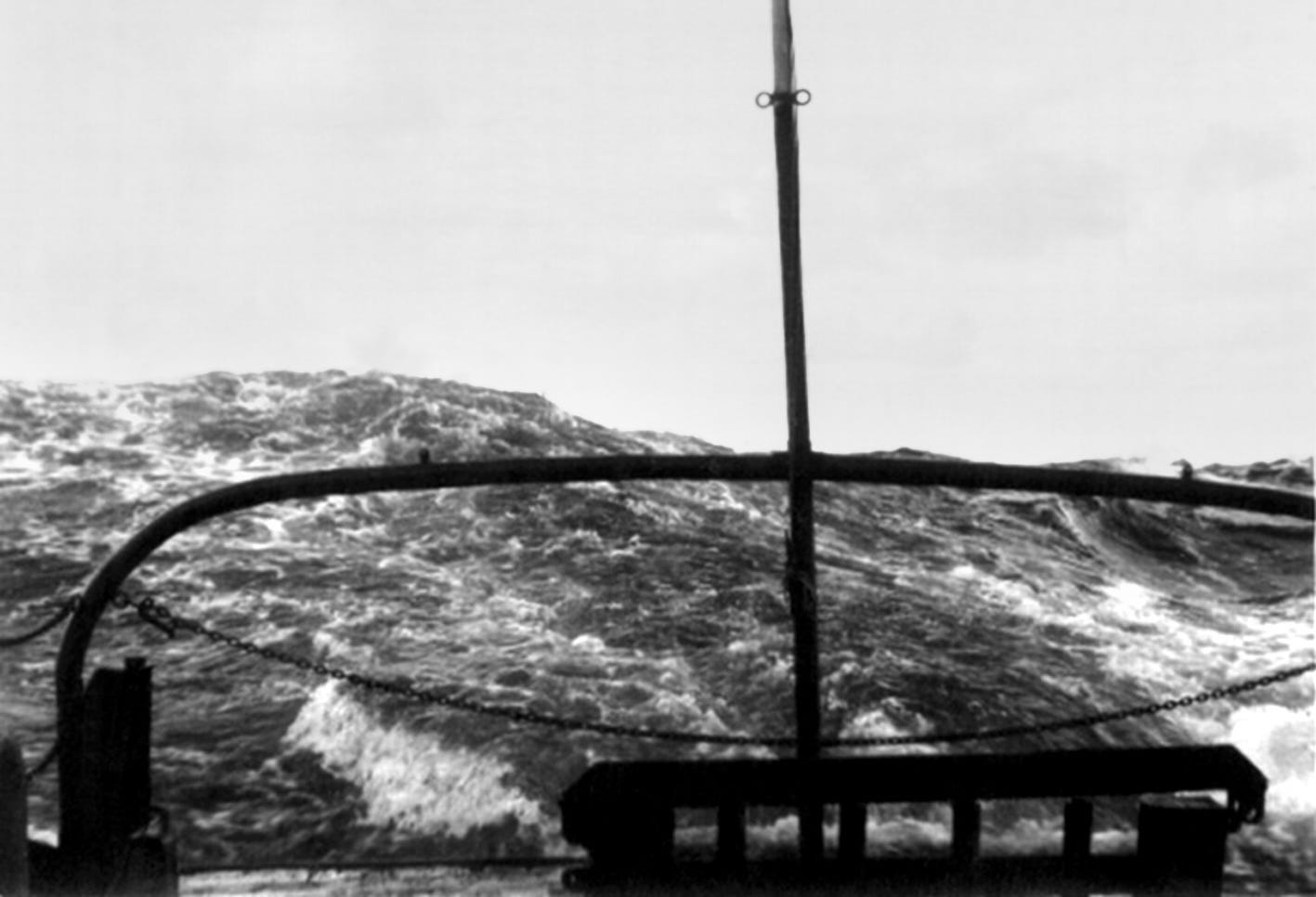
At 21:34, in sea state 5 (waves 2.5 to 4 m — 8 ft 2 in to 13 ft 1 in) and in a rain squall, the watch in the conning tower’s “bathtub” spotted another U-boat approaching at full speed on the starboard side. It was U-254, a Panzer’s boat executing a similar approach, but on a collision course. The war diary of U-221’s commander, Kapitänleutnant Hans Trojer, continues:
“We turned as much as possible, but we could not avoid a violent shock against the aft part of the pressure hull. (…) The other vessel remained afloat, but began to sink. We saw a few flashes of torchlight and about thirty men wearing life jackets (…). We switched on our searchlights and called for the men to remain calm. Constant cries for help. We threw a floating heaving line, but all attempts failed because of the heavy sea. Some of my own men, secured by lifelines, jumped in but could do nothing. Only one petty officer and three seamen managed to seize the lines and were hauled aboard despite seas breaking over the deck. It was U-254.”1
No one saw U-254 vanish beneath the surface, yet it was that night that 41 members of her crew perished, including all her officers.2
“After persisting in our efforts for two hours, during which the searchlights were used continuously, two star shells were fired east of our position and a ship switched on two searchlights.”
Thanks for reading! This post is public so feel free to share it.
It was time to leave.
The collision had seriously damaged U-221, which was now unable to dive. She therefore left the combat zone as quickly as possible on the surface and contacted BdU to report the situation. BdU immediately authorised her return, and the U-boat reached Saint-Nazaire safely on 23 December.
Meanwhile, Dönitz reflected on the risk incurred by his “grey wolf” packs. In a note drafted on 8 December, only hours after the drama, he nevertheless reaffirmed his approach:
“For the first time during a convoy operation, a ramming incident has occurred between two U-boats, causing the loss of one of them. From what is known, this accident happened on a dark night and in a heavy sea, so the boat that struck the other cannot be blamed. The presence of so large a number of U-boats engaged in convoy operations has long made such damage possible. Consideration shows that, in general, it is not feasible to have more than 13 to 15 units on a single convoy. Any tactical limitation related to the number of attacking submarines - at the moment of attack, in the attack disposition - by which such collisions could be avoided, will be rejected, because the difficulties of convoy warfare do not permit applying even the smallest of these conditions. (…) all opportunities for attack must be exploited to the maximum. The maxim repeated again and again aboard U-boats - ‘to the target as quickly as possible, attack as often as possible, immediately exploit every chance to attack’ - must not be rejected for reasons of safety.”
Despite this near-fanatical call for relentless attack, the results of the Panzer and Draufgänger wolfpacks fell well short of BdU’s hopes. In the days following the collision of U-221 and U-254, up to 21 submarines would assail HX-217, destroying only one additional merchant ship, at the cost of two of their own.
This quotation, and the others above, are from: Robert C. Stern, The Hunter Hunted: Submarine versus Submarine, Encounters from World War I to the Present, Chatham Publishing, 2007, pp. 134–135.
For a long time after the war it was believed that an RAF No. 120 Squadron Liberator delivered the coup de grâce to U-254, but more recent research has ruled out that possibility.
Comments
Nothing yet. Say the first thing.
Sign in to join the conversation.