
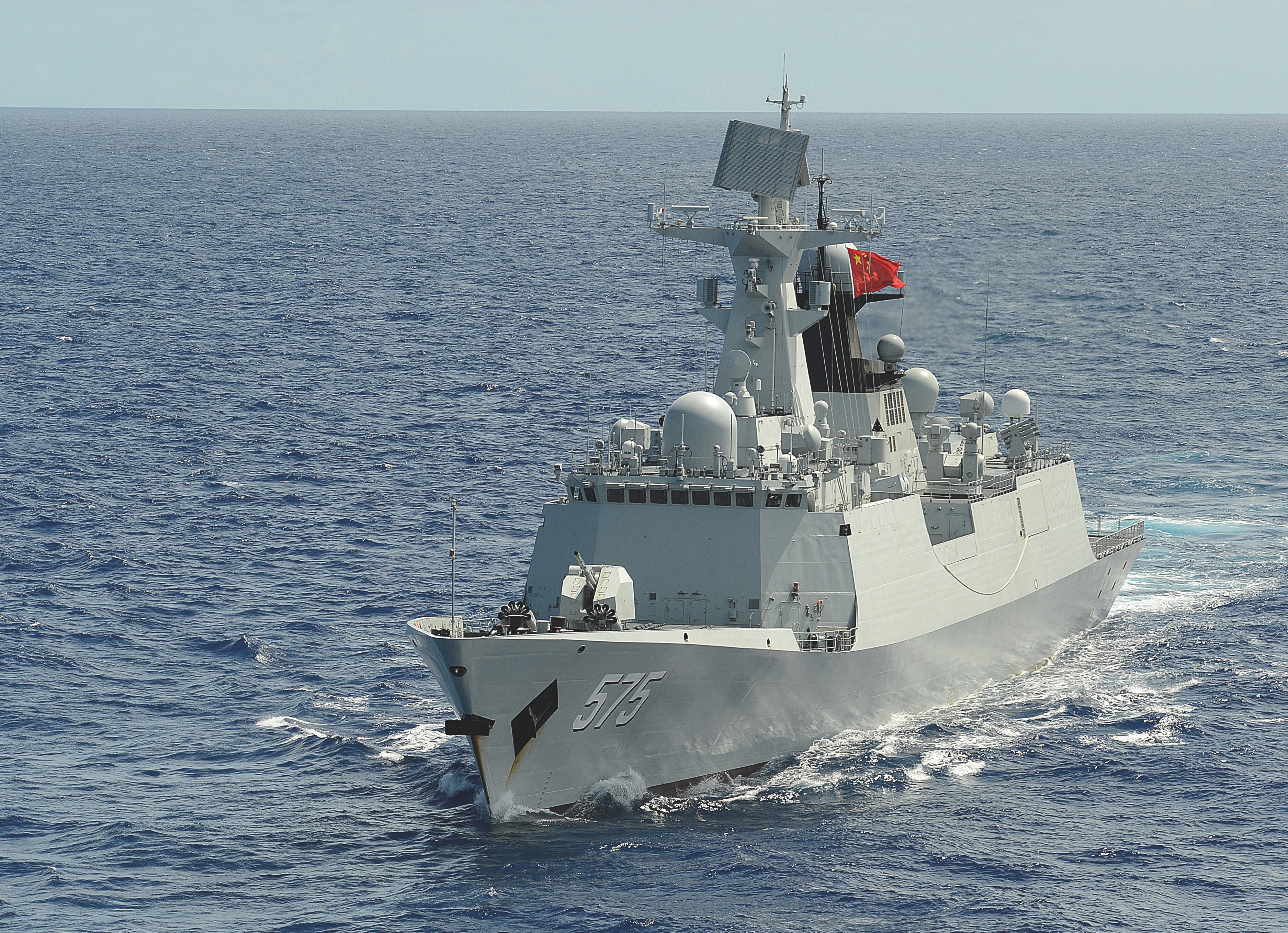
From time to time, Action Stations! will present a frigate class currently in service. This week, let’s turn our attention to China and the Jiangkai II Class / Type 054A.
The People’s Liberation Army Navy (PLAN) was created in 1949 with Soviet material and human support: the USSR sent several thousand military advisers to China and delivered numerous vessels until the end of the 1950s. It was only from 1970 onward that China’s naval budget rose sharply, allowing the fleet to field ever more surface combatants—including large numbers of frigates. The earliest commissions were Soviet Riga-class units, then, from 1966, local Type 065 copies. The PLAN could then concentrate on improving the quality of its embarked weaponry, as frigates formed the backbone of its surface fleet.
The early years were difficult. A first model armed with surface-to-air missiles - designated Type 053K (NATO: Jiangdong class) - proved disappointing, and it was not until the mid-1970s that genuinely effective equipment entered service. Between 1975 and 1995, China built 33 “modern” frigates in successive sub-variants : Types 053H, 053H1, 053H1Q, 053H2 and 053H1G (NATO: Jianghu I to Jianghu V)1. Each ship carried four, then six, and finally eight anti-ship missiles: first SY-1s (Chinese copies of the Soviet P-15 Termit), then SY-2s from 1991, and finally supersonic YJ-83s. Here again, performance was initially limited, and it was only in the mid-1980s that the latest ships received air conditioning, an ASW helicopter, and surface-to-air missiles.
Despite this clear qualitative leap, at the dawn of the 1990s the Type 053 frigates were still under-armed. At the same time, Taiwan embarked on an arms race and acquired, between 1993 and 1998, six ultra-modern units from the French firms DCNS (today Naval Group) and Thomson-CSF (today Thales). This Kang Ding class - at the centre of the infamous and bitter “Taiwan’s frigates” corruption scandal - was based on the French La Fayette-class, highly innovative at the time, with stealth at the core of its design.
Seeing the risk of its own frigate force being outclassed, the PLAN responded by developing a supposedly equivalent new model, the Type 054 (NATO: Jiangkai I). The first ship was laid down in 1999, only three years after the Taiwanese Kang Ding entered service. The Type 054 clearly borrowed from it, both in overall lines (enclosed superstructures with no portholes) and in size (around 3,800 tonnes - about 3,740 long tons / 4,190 short tons) as well as propulsion (diesels built under licence from the same French engine maker, SEMT Pielstick). Much of its electronics were also of French design, including surface-search and fire-control radars and the TAVITAC combat management system developed by Thomson-CSF.
In terms of armament, the Type 054 essentially inherited the final Type 053 fit: eight YJ-83 anti-ship missiles, an octuple launcher for short-range HQ-7 surface-to-air missiles (a Chinese variant of the French Crotale), and a 100 mm (3.94-inch) forward gun, again a copy of French equipment. The aft hangar housed a Harbin Z-9C, a copy of the Eurocopter (now Airbus Helicopters) AS365 Dauphin.
Two ships entered service in 2005, but no further units followed. By then, China had already cancelled the originally planned orders in favour of a modernised version, the Type 054A (Jiangkai II). The Type 054 was indeed the modern frigate China lacked - multi-role and, at the time, unmatched within the PLAN for radar discretion - but major improvements were still possible, notably in anti-air warfare, and more broadly by replacing most French equipment with fully indigenous solutions.
Thanks for reading! This post is public so feel free to share it.
The Type 054A programme was ambitious from the outset: it called for the construction of at least 24 ships to replace the oldest units of China’s ocean-escort force. Production was to be rapid and was split between two geographically distant, administratively independent shipyards : Hudong-Zhonghua Shipbuilding (Shanghai) and Huangpu Wenchong Shipbuilding (Guangzhou/Canton) ; each of which had already built one Type 054.
Jiangkai II production began in 2005; the lead ship was launched in 2006 and entered service in 2008. Keels were then laid at a high tempo: thirty frigates were delivered by 2019, and ten more followed by the end of 2022 - forty Type 054As commissioned in fifteen years! These frigates are not all identical, however, as they were produced in successive batches incorporating specific features and/or upgrades:
Batch 1 (2008)2: four units powered by French-origin diesels ;
Batch 2 (2010–2013): twelve ships with an entirely Chinese-built propulsion plant, plus a redesigned bow and hull plating for improved stealth ;
Batch 3 (2015–2018): ten ships with upgraded close-in self-defence weapons and fitted with a towed sonar, giving them significantly improved ASW capability. They are sometimes unofficially referred to as Type 054A+ or Type 054A2 ;
Batch 4 (2018–2019): four ships incorporating a new generation of electronic warfare system ;
Batch 5 (2022–2023): currently ten frigates, but potentially ten more, making Type 054A the second most-produced warship class in service worldwide (50 units!), behind the U.S. Navy’s Arleigh Burke-class destroyers (73 in service out of 92 planned).
The apparent “pause” in commissions between 2019 and 2022 is partly explained by the delivery to Pakistan of four Tughril-class ships derived from the Chinese frigates (Type 054A/P) by Hudong-Zhonghua. It also reflects a broader reorganisation of naval production: since 2019, both shipyards have been overseen by the same administrative entity, which may have assigned the future of the Type 054A programme to Huangpu Wenchong alone (but still to be confirmed).
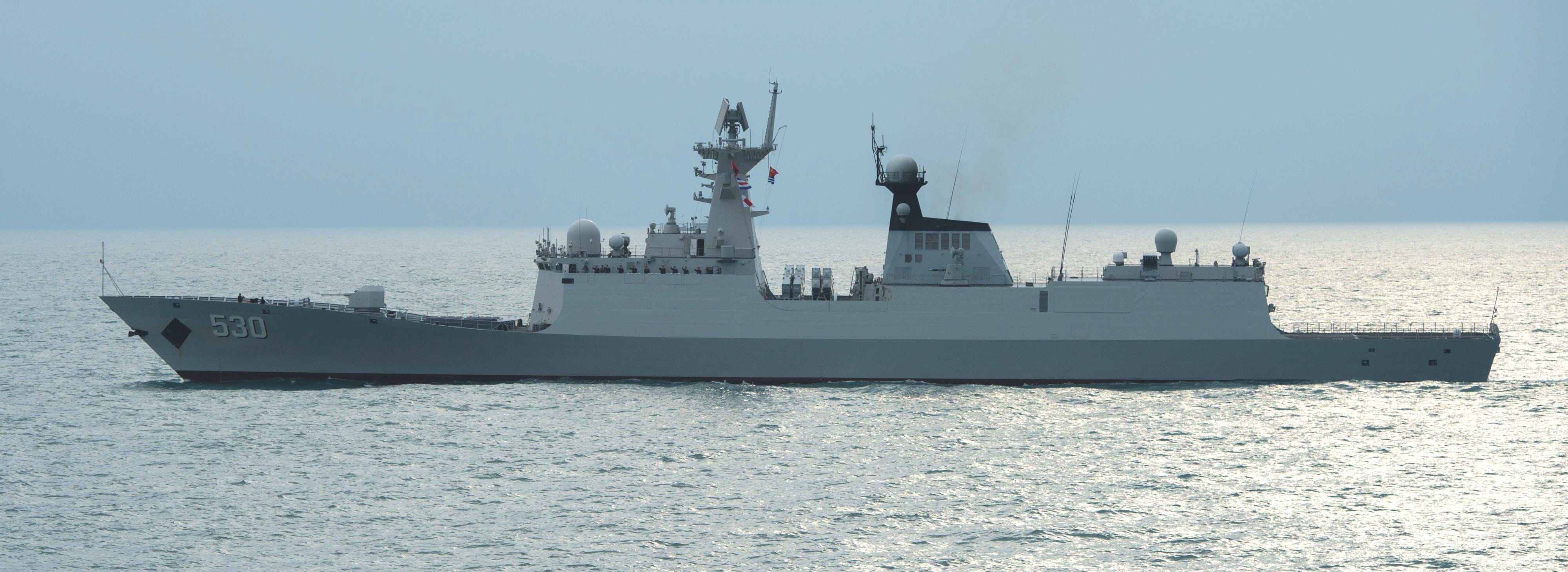
The Type 054A retains the Jiangkai I hull but redesigns it in places to further reduce radar cross-section (RCS). With 4,050 tonnes combat displacement (about 3,986 long tons / 4,464 short tons) and an overall length of 134.10 m (440 ft), it has the same basic dimensions as its predecessor. Propulsion remains CODAD (Combined Diesel And Diesel), originally using four SEMT Pielstick 16 PA6V-280 STC diesels and, from the fifth unit onward, Chinese equivalents built under licence by Shaanxi. This configuration gives a maximum speed of 27 knots and a range of 4,000 nautical miles at 18 knots (about 4,600 mi / 7,400 km), broadly comparable to foreign counterparts.
Overall length: 134.10 m (440 ft)
Beam: 16 m (52.5 ft)
Draught: 4.50 m (14.8 ft)
Combat displacement: 4,100 tonnes (4,035 long tons / 4,519 short tons)
Max speed: 27 knots
Range: 4,000+ nautical miles at 18 knots (about 4,600+ mi / 7,400+ km)
Crew: 165-180 officers and ratings
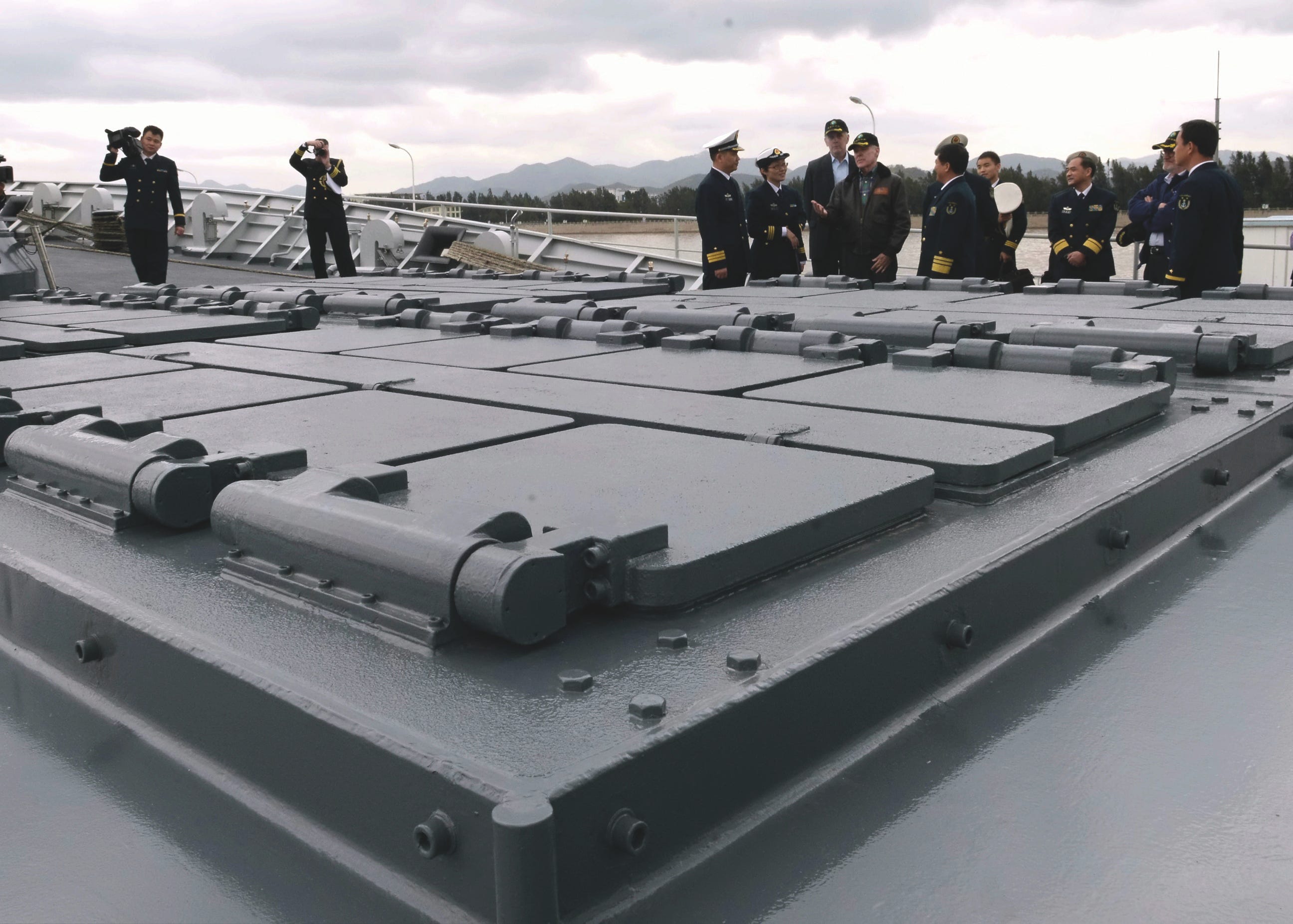
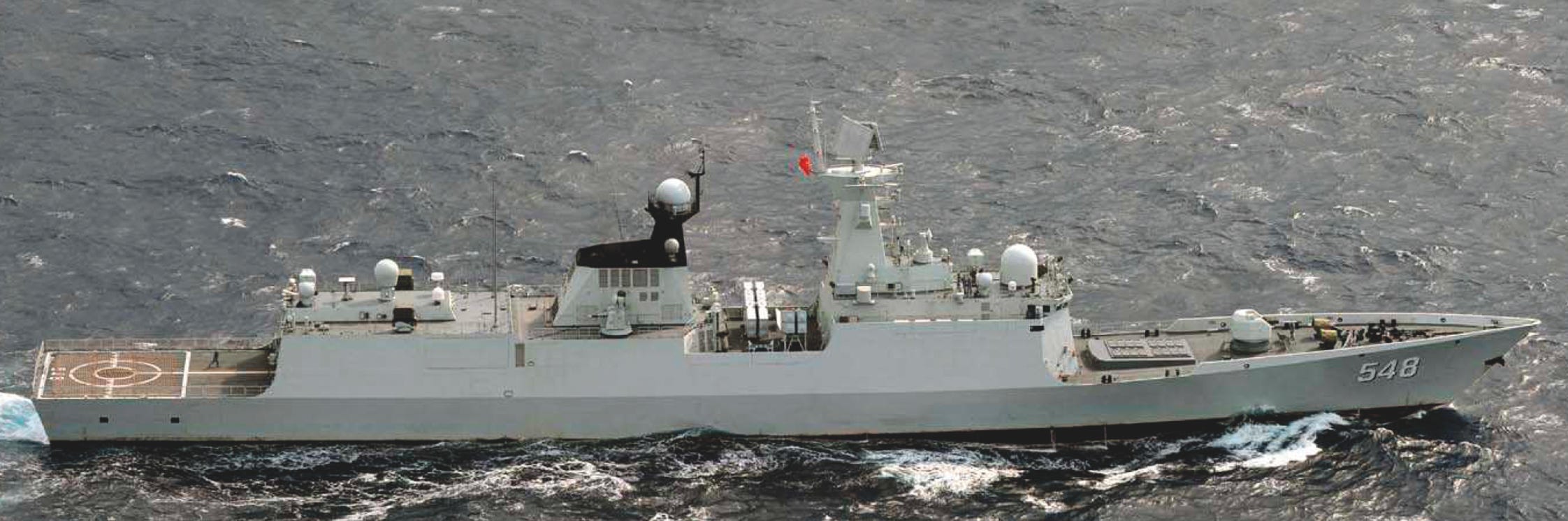
Visually, the easiest way to distinguish a Jiangkai II from a Jiangkai I is its weapons fit (though sensors also differ). Designed primarily for fleet air-defence of Chinese carrier and surface action groups, the Type 054A’s main weapon system is the 32-cell H/AKJ-16 vertical launch system for HQ-16 medium-range surface-to-air missiles, with a range of 40 km (about 25 mi / 22 nmi). The VLS is installed conventionally on the foredeck, forward of the bridge block. The navalised HQ-16 is designed to engage aerial targets at altitudes of 15 to 18 km (about 49,000 to 59,000 ft) and, more specifically, sea-skimming anti-ship missiles flying at very low level (less than 10 m / 33 ft above the surface). Vertical launch also provides 360° coverage even in complex coastal geography. For Chinese frigates, this system provides, finally, a truly modern area air-defence capability.
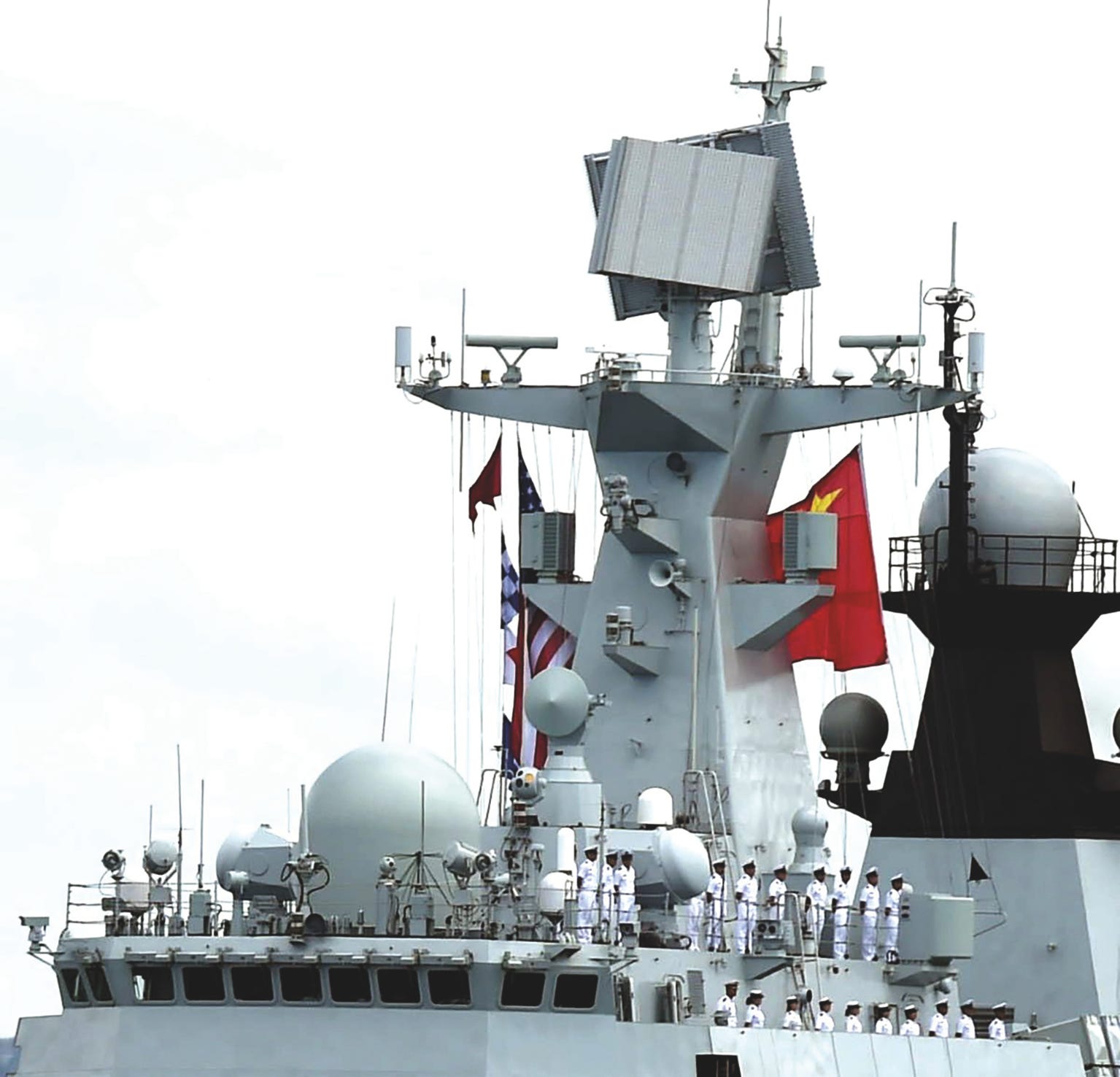
HQ-16 is paired with the ship’s main radar, the Type 382 (H/LJQ-382), a 3D air- and surface-search set mounted atop the single mast3. Note that from 2012 onward, these VLS cells can reportedly be “mixed” with CY-5 or YU-8 anti-submarine weapons which, on the model of the American ASROC, deliver a lightweight ASW torpedo.
Immediately ahead of the VLS sits the H/PJ-26 76 mm (3-inch) gun turret at the centre of the foredeck. It is a substantially improved Chinese copy of the Soviet AK-176 rapid-fire gun (120 rounds per minute) dating from the 1970s. Introduced in 2003, the H/PJ-26 differs notably through its composite turret, redesigned for lower RCS. It can engage land, surface, or aerial targets (including missiles) thanks to the Type 347G fire-control radar on the roof of the bridge.
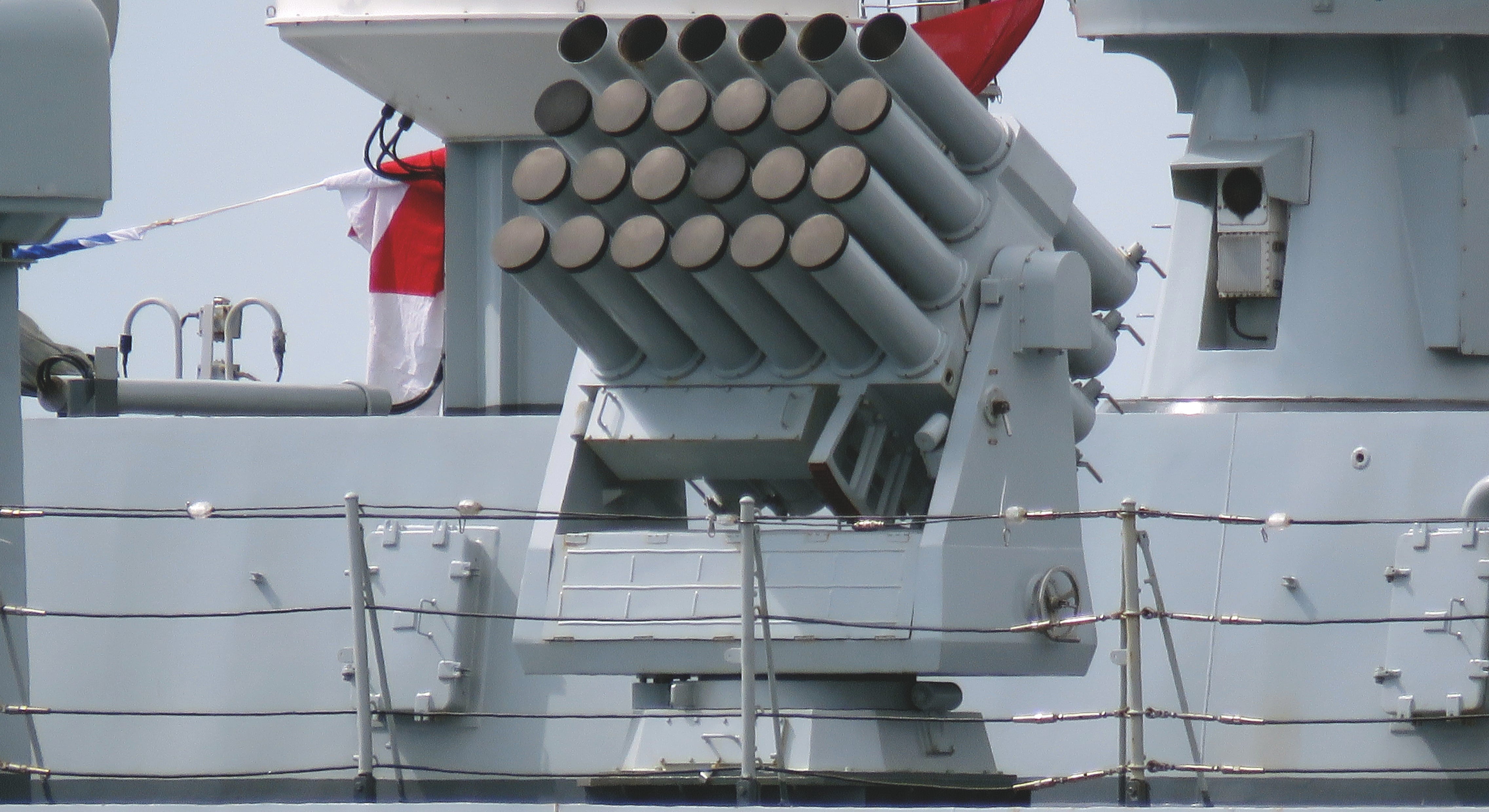
Forward of the gun are two Type 87 six-tube 240 mm (9.45-inch) anti-submarine rocket launchers for close-range ASW defence, with a maximum range of 5 km (about 3.1 mi / 2.7 nmi) and a total of 36 projectiles. Reloading is manual, and firing uses data provided by the ship’s sonar suite: an H/SJD-9 hull-mounted active/passive sonar and, from the 17th ship produced, the first Chinese-designed low-frequency passive towed sonar (H/SJG-206), plus a variable-depth active/passive set (H/SJD-311).
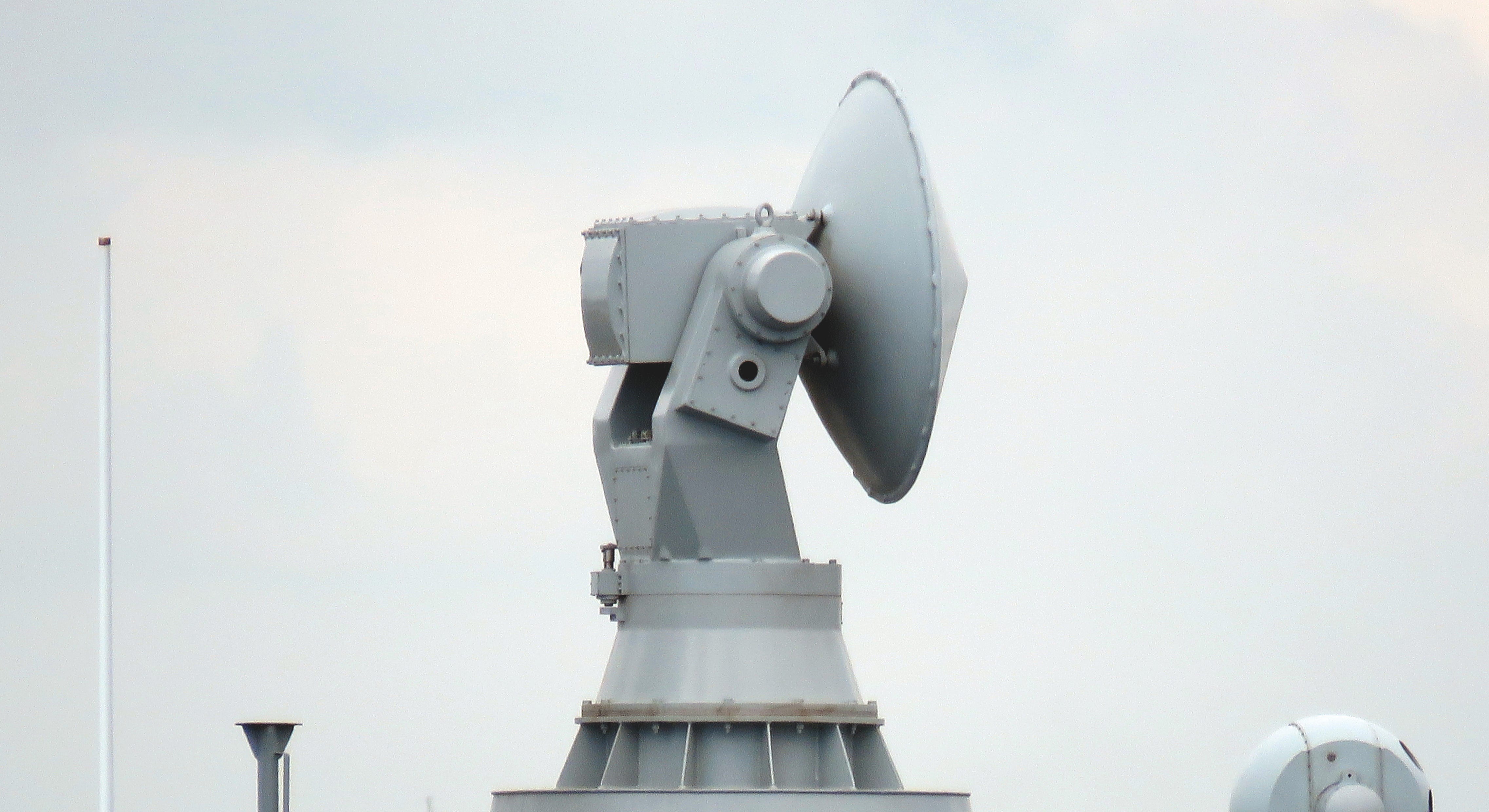
Between the bridge block and the funnel are two angled quadruple launchers—one to starboard, one to port—for a total of eight YJ-83 anti-ship missiles. With a Mach 2 terminal sprint, a range of 180 km (about 112 mi / 97 nmi), and sea-skimming flight at 5 m (about 16 ft), this supersonic missile is a credible surface-strike weapon. It is associated with the Type 366 surface-search radar - currently regarded as the PLAN’s most capable - reportedly superior to the Russian MR-331 Mineral-ME on which it was modelled. It is said to detect a sea-skimming incoming missile out to 35 km (about 22 mi / 19 nmi). The radar is installed under a radome atop the bridge.
Aft superstructures house two triple Type 7424 torpedo-tube mounts for 324 mm (12.8-inch) YU-7 torpedoes, one on each beam.
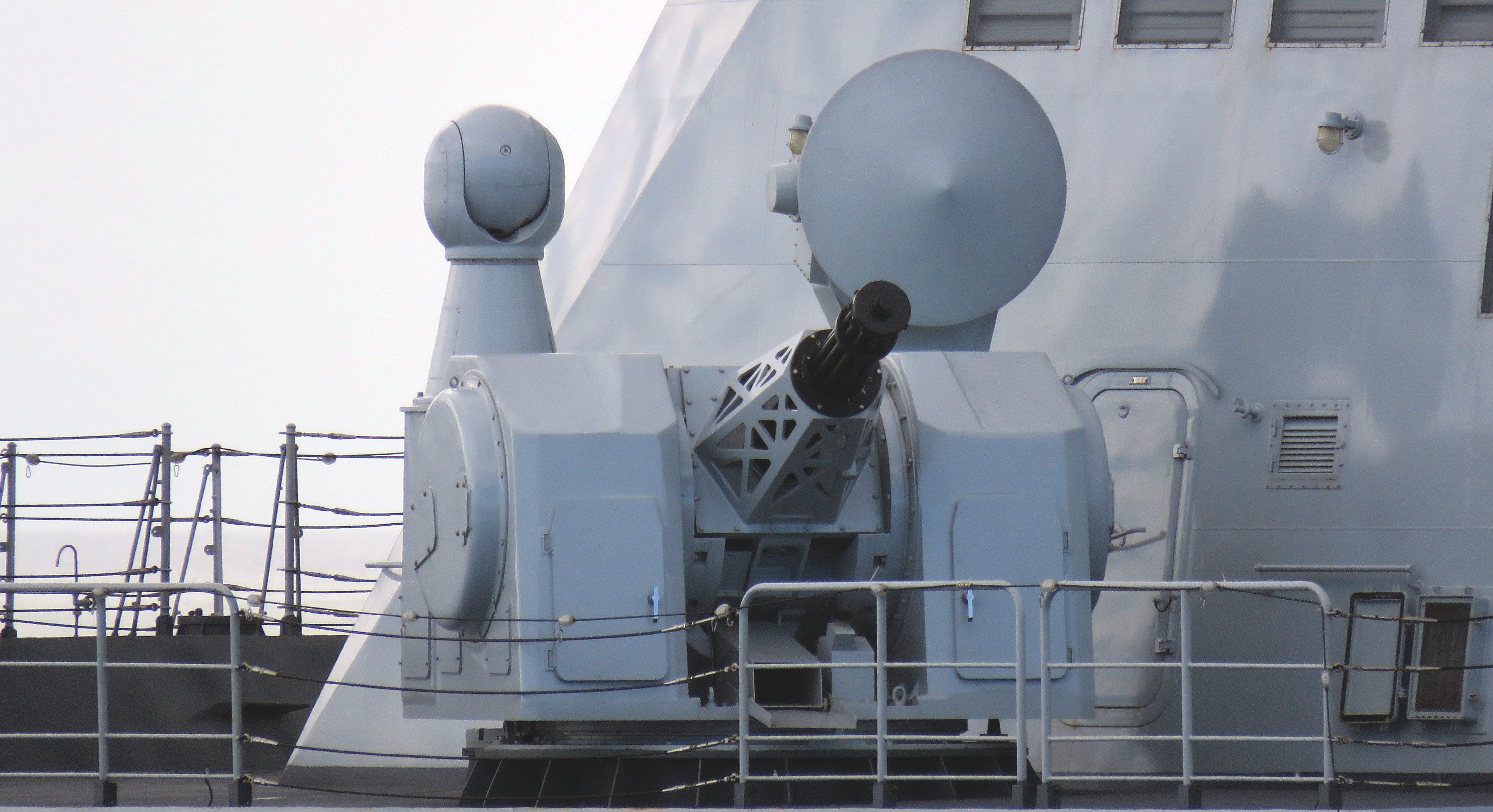
Point-defence against incoming missiles is provided, on the first two production batches (sixteen ships), by two Type 730 Gatling-style CIWS mounts. Installed on either side of the funnel (and/or on the roof of the aft hangar), these turrets consist of a 7-barrel 30 mm (1.18-inch) H/PJ-12 gun plus radar, optical, and infrared tracking systems. With a rate of fire of 5,800 rounds per minute and a range of 3,000 m (about 3,280 yd / 1.9 mi), they form the Chinese frigates’ “last ditch” defence against sea-skimming missiles.
From 2015, they were replaced by a modernised third-generation system: the Type 1130 CIWS, with an 11-barrel 30 mm (1.18-inch) H/PJ-11 gun, a striking rate of fire of 11,000 rounds per minute, and improved accuracy. The Type 1130 is said to be able to shoot down a Mach 4 missile out to 4,000 m (about 4,370 yd / 2.5 mi).
Missile defence is complemented by two H/RJZ-726 rotary launchers mounted on the roof of the aft superstructures, each capable of firing 24 countermeasures: electronic (chaff), hydroacoustic, optical (smoke), or infrared (thermal).
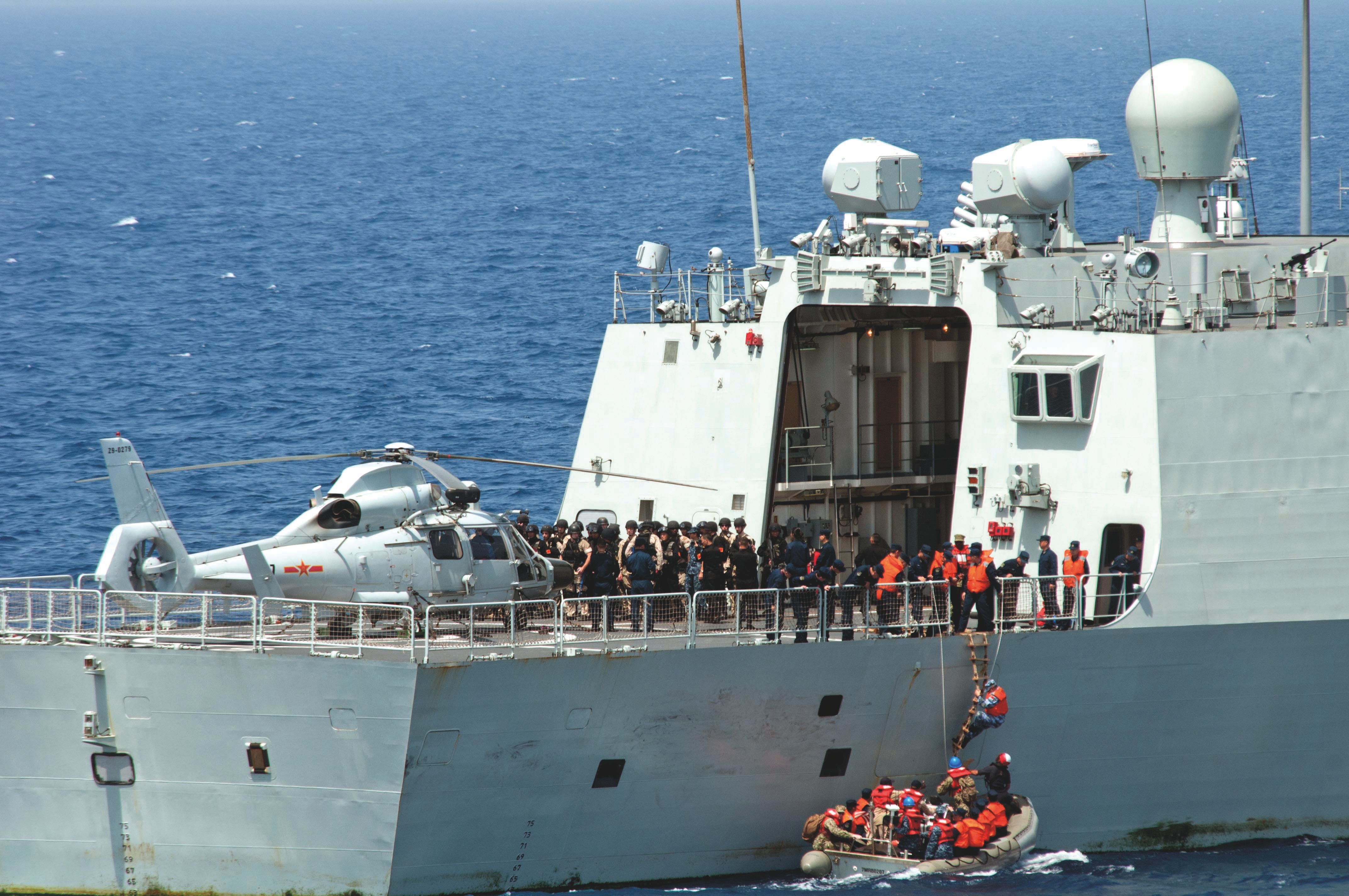
Finally, as on all modern frigates, the stern includes a flight deck and a helicopter hangar for a single aircraft: either a Kamov Ka-28 or a Harbin Z-9C ASW helicopter.
China has already fielded a successor design, the Type 054B (Jiangkai III), intended to carry the concept forward with a larger hull and a more modern sensor-and-weapons suite. For now, however, this “next step” is only a limited step: the class has entered service in just two ships, suggesting a cautious transition, more of a bridge and a proving ground than an immediate, large-scale replacement for the Type 054A.
Not counting four Type 053H2G anti-aircraft frigates (NATO: Jiangwei I), construction of which began in 1990.
Year of commissioning (entry into service).
Probably a Chinese version of the Soviet Fregat MAE-3 radar (NATO: Top Plate).
Comments
Nothing yet. Say the first thing.
Sign in to join the conversation.