
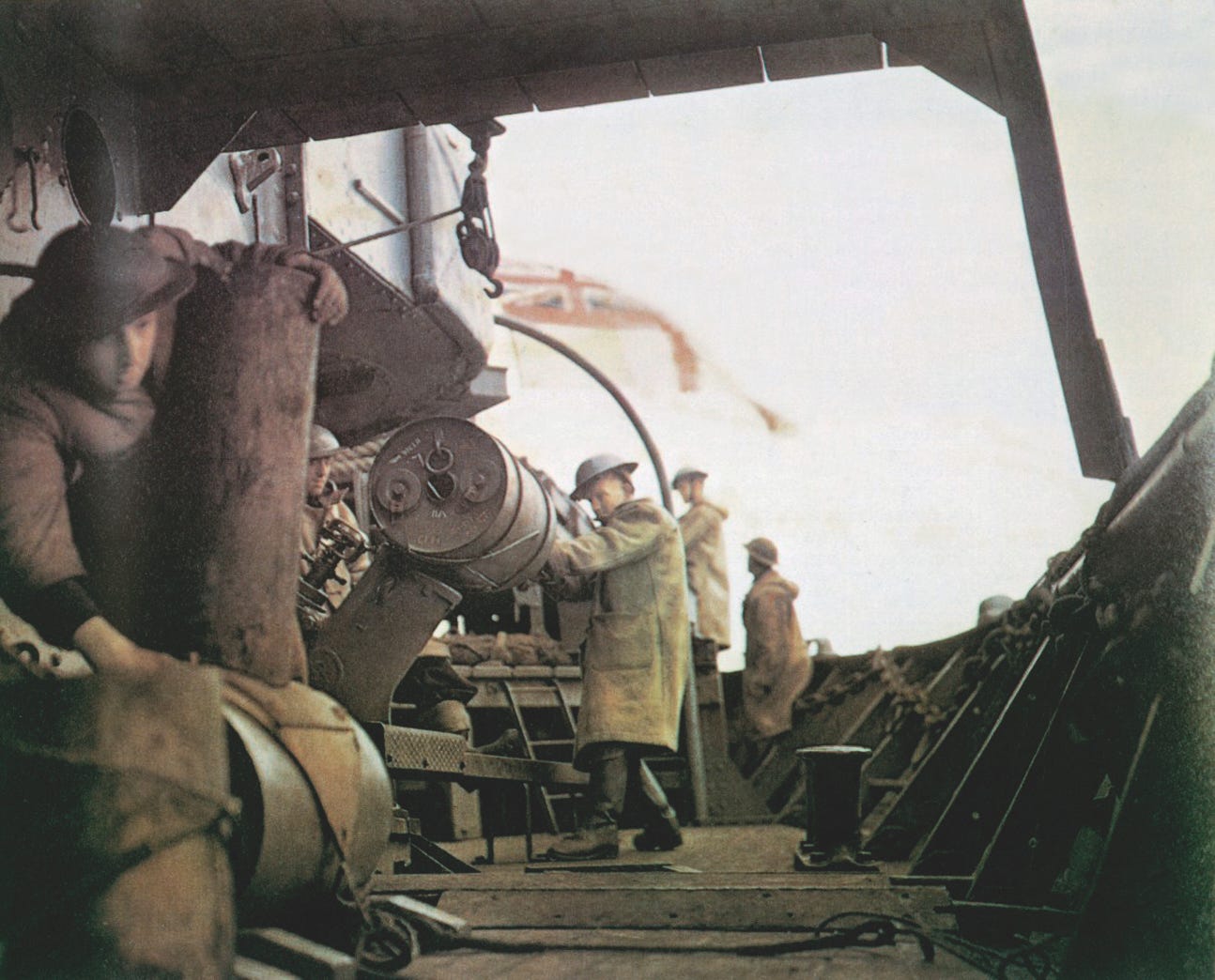
Bringing merchant ships and escort vessels together is one thing; organising an efficient ocean crossing is another. To cope with increasingly sophisticated U-boat attacks, as well as major logistical and strategic constraints, the British had to adapt: convoys grew steadily larger, and escort forces increased in both numbers and effectiveness.
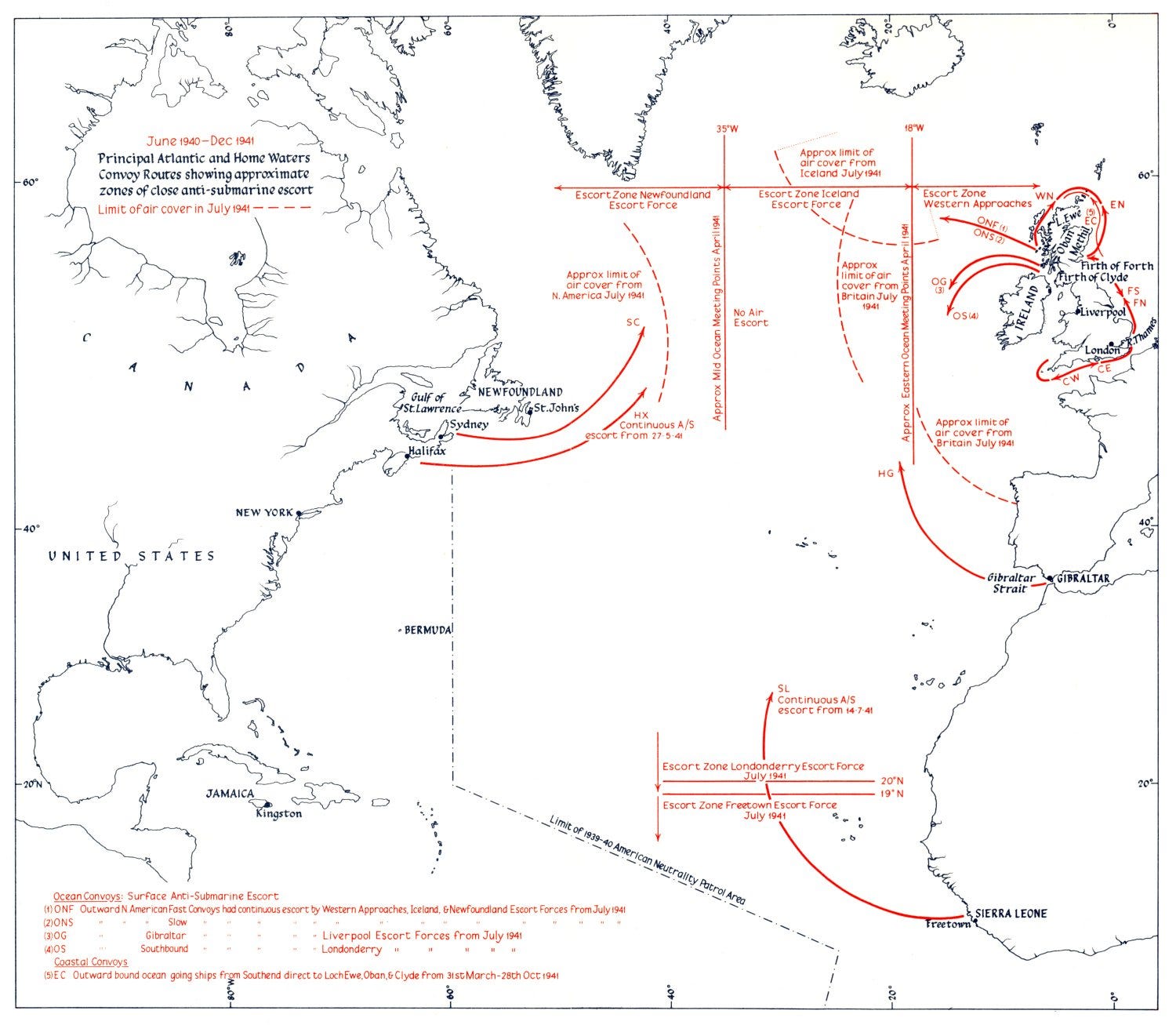
The Admiralty assumed control of all British merchant shipping from 26 August 1939 and introduced the convoy system as soon as war began. Under this system, for ships assigned to convoys, the Ministry of War Transport determined cargo and destination. In each departure port, a Naval Control officer allocated every ship to a specific convoy mainly according to its type (tanker, cargo ship, liner, etc.) and speed: ships making 7 to 9 knots joined a slow convoy; from 10 knots upward, a fast convoy. All routes were designated by two- or three-letter codes that sometimes (but not always) hinted at their meaning. HX convoys did indeed sail from Halifax, as did the fast HXF series (“F” for Fast). SC did not mean “Slow Convoy”: it indicated a North American origin, more precisely the Sydney area in Nova Scotia (Sydney Cove). As assembly points, destinations, and convoy types multiplied, more than 450 different codes had to be created (each followed by a running number), from AB to ZT. Certain ports used so frequently that they were assigned letter identifications, sometimes modified during the war for various reasons: HX designated Halifax–UK routes; OB, later ON, covered UK–Halifax. HG and OG were reserved for Gibraltar–UK and return, SC for Sydney–UK. Other series included KJ (Kingston–UK), OS and SL (UK–Freetown and return), and the famous PQ and QP (UK–USSR via the Arctic and return) until November 1942, when they were renamed JW and RA. An S added to the code meant Slow; an F meant Fast.
The Admiralty was able to dispatch a few small, limited convoys as early as 7 September 1939, but it was not until October that the system became truly operational. Air cover was provided out to 200 nautical miles (about 230 mi / 370 km) from Ireland’s south coast for convoys sailing toward America, and only 100 nautical miles (about 115 mi / 185 km) for Gibraltar convoys, simply because there were not enough flying boats. At that time, North Sea patrols absorbed a very large (perhaps excessive) share of available aircraft, all the more so because Coastal Command possessed only one long-range maritime reconnaissance aircraft: the Sunderland. The first inward convoys were launched on 14 September from Freetown, on the 16th from Halifax, and on the 26th from Gibraltar. Many merchant ships were still sailing independently, and the Sunderlands of 15 Group were swamped with distress signals from U-boat attacks. Meanwhile, each convoy leaving the east coast was escorted, from dawn to dusk, by at least one maritime patrol aircraft.
The Convoy Commodore directed the convoy’s movement from the ship at the head of the centre column. Before every sailing, a meeting was held under the authority of the port’s Naval Control officer. All merchant captains attended, along with the Commodore and the commander of the ocean escort. Each received a copy of the sailing order; technical issues were reviewed, as were weather forecasts and likely threats. Signal codes to be used in emergencies were defined, and each master was handed a sealed envelope containing secret routing instructions.
A convoy sailing from Great Britain was often made up of ships scattered across several ports, assembling at the entrance to St George’s Channel, a process that could take several hours. It then formed a rectangle wider than it was long, reflecting the main threat these ships faced: submarine attacks on the convoy’s flanks. To present the smallest possible target while keeping the same number of ships, the solution was to widen the convoy’s front by increasing the number of columns. To keep columns short, each contained only three to five ships, with the longest columns placed at the centre. Columns were separated by 600 to 1,000 m (about 660 to 1,090 yd): far enough for escorts to manoeuvre and to reduce collision risk, yet close enough to remain defensible. Within each column, ships were separated by 400 to 800 m (about 440 to 875 yd), depending on conditions. A convoy of 35 merchant ships could therefore occupy a very large area: roughly 6,500 m (about 7,110 yd / 4.0 mi) across the front and 3,000 m (about 3,280 yd / 1.9 mi) on the flanks. Early in the war, it was considered difficult (if not impossible!) to manage convoys larger than 35 ships. That ceiling would rise steadily as escorts became more capable and more numerous. The largest convoy of the war was HX 300 (July–August 1944) with 166 ships.
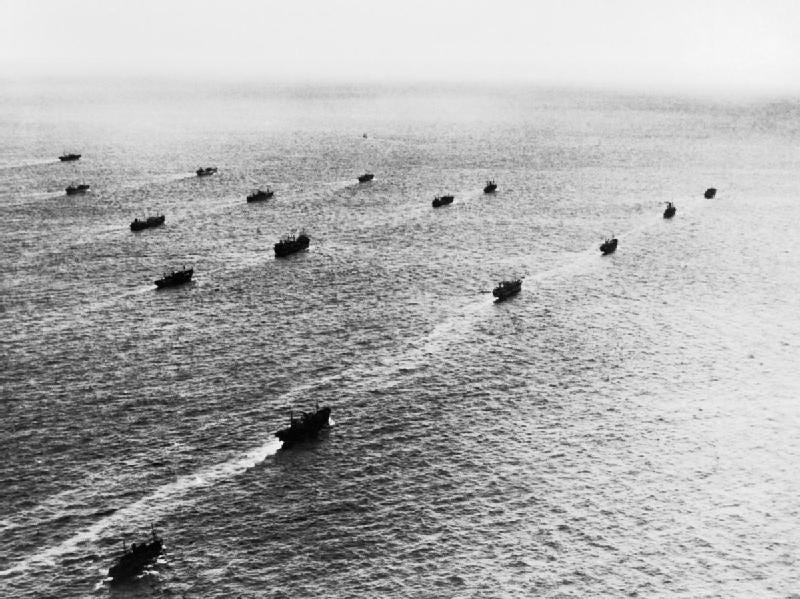
By concentrating escort vessels around a large number of merchantmen, the convoy system saved the Royal Navy’s scarce resources—but it also had drawbacks. The simultaneous arrival of dozens of ships clogged ports and slowed loading/unloading. Above all, convoys required formation steaming, something most Merchant Navy masters had little experience of. They had to conform to the speed of the slowest ship and plod along at roughly 8 knots, maintaining station in all conditions. To make this feasible, convoys were ordered to zigzag only when necessary. Frequent course changes, though effective against torpedoes, would otherwise shatter the formation and multiply collisions, already a significant risk in heavy weather or during night attacks. In 1939–1940, ships capable of 15 knots or more (rare) were initially kept out of convoys, on the assumption they could cross independently and evade U-boats by speed alone. Experience proved otherwise, and they were eventually integrated. Ships unable to maintain even the mandatory 8 knots were, as far as possible, not used.
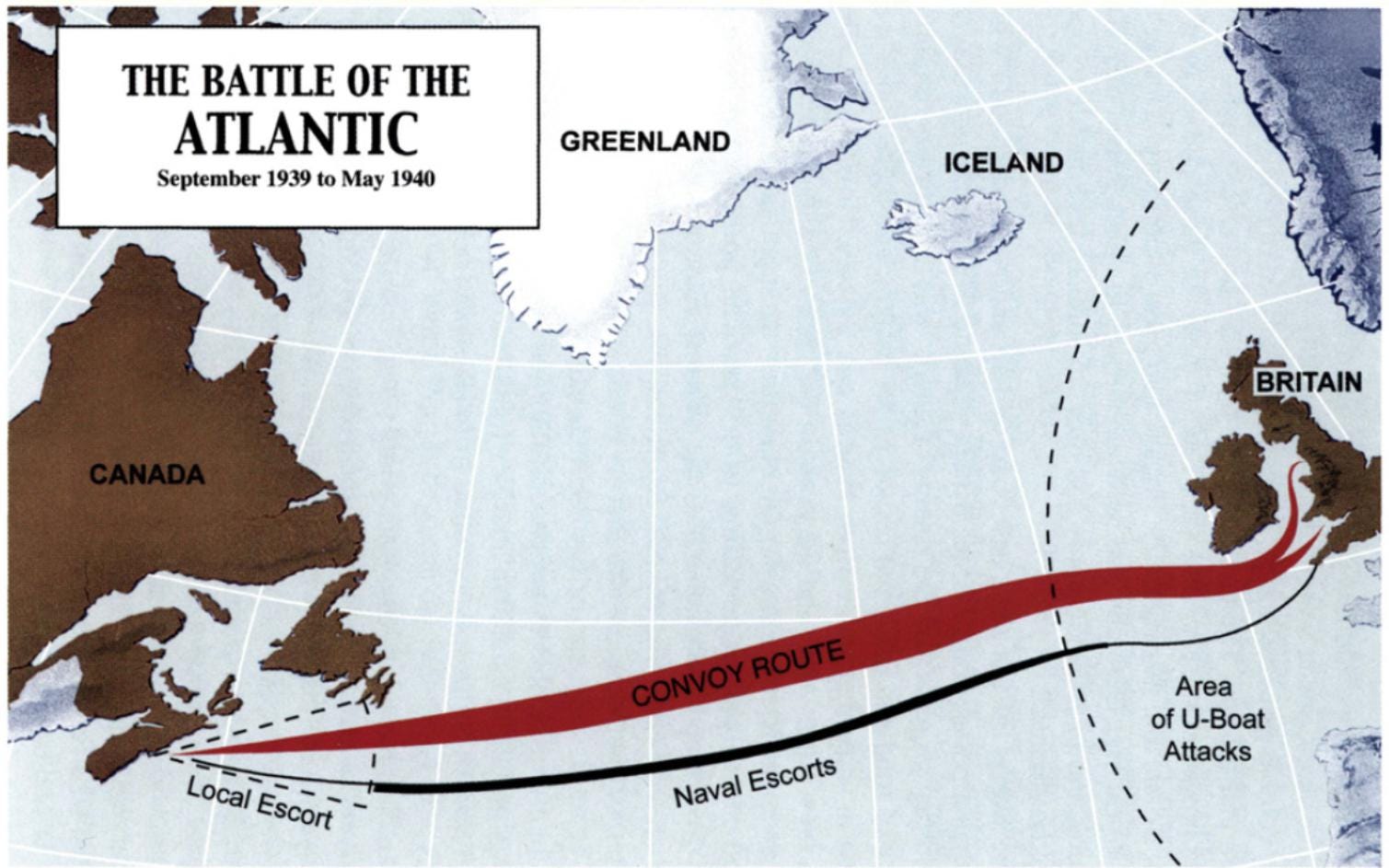
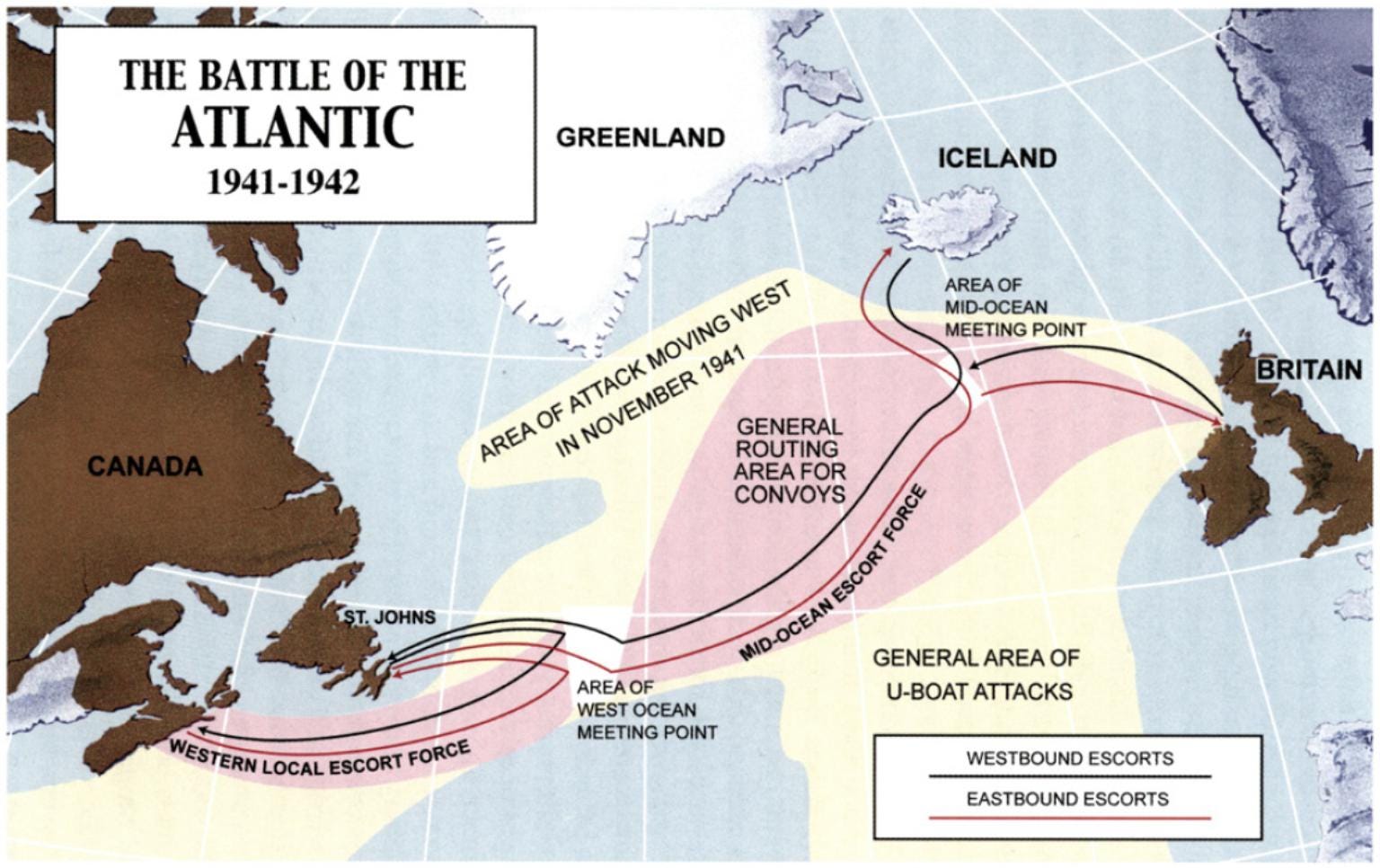
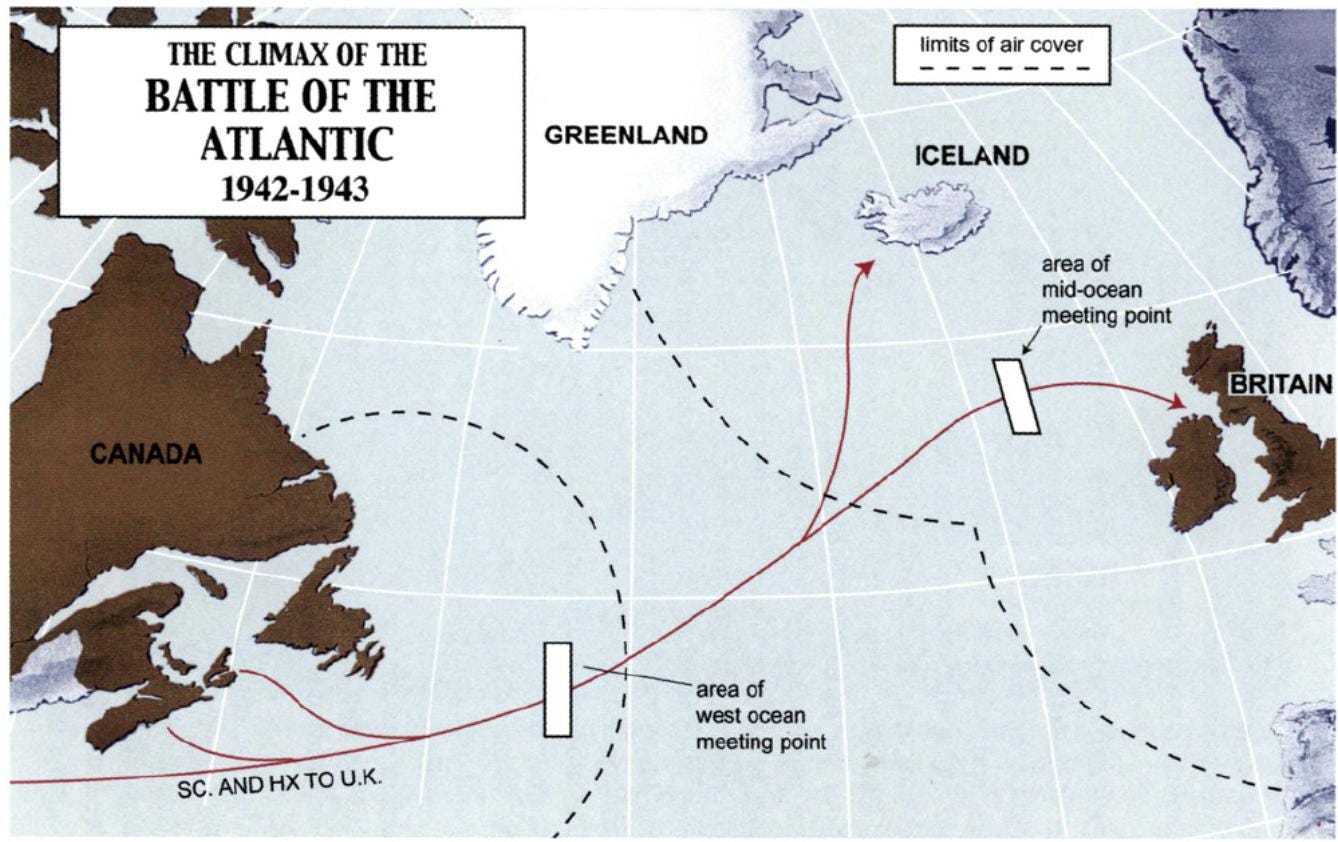
Until July 1940, convoys were escorted by British-based units only as far as the 17th meridian west, nearly 1,900 km (about 1,180 mi) from London. That limit shifted west to the 19th meridian in October 1940. Using refuelling bases in Iceland later allowed escorts to reach the 35th meridian west in April 1941. More serious was the existence of a vast area in the centre of the North Atlantic beyond effective air cover: the famous “Air Gap”. It was a perfect hunting ground for U-boats, largely free from aerial patrols until 1943.
An HX convoy sailed every four days and took 17 days to cross Halifax–Liverpool; a faster convoy needed four days less. For all these reasons, convoy tracks were relatively predictable. From September 1940 onward, U-boats multiplied wolfpack attacks, often at night and on the surface, against Atlantic convoys that were still too lightly escorted. The loss of 32 merchant ships from SC 7 and HX 79 between 18 and 20 October 1940 led the Commander-in-Chief Western Approaches, Admiral Sir Martin Dunbar-Nasmith, to conclude:
“Our escorts were too few in number and insufficiently equipped to meet the enemy’s new methods of attacking on the surface at night, particularly when the convoy was scattered and visibility poor.”
From 1939 to 1940, average monthly tonnage sunk nearly doubled from 105,000 GRT to 203,000 GRT. Over the same period, average monthly crew losses quadrupled, from 125 to 470 men. To these alarming figures were added: merchant fleets falling under enemy control (French, Dutch, Norwegian), systematic attacks on neutral shipping supplying Britain, and growing numbers of damaged ships waiting in port for repair. By autumn 1940, British imports had fallen by one third. In the first half of 1941, British shipping losses remained severe (almost 2 million GRT), as did those of other Allied merchant fleets (825,000 GRT sunk) and neutral shipping (over 100,000 GRT). Merchant ships were disappearing faster than new construction could replace them. To reduce exposure to German submarines, all convoys were rerouted to approach Britain north of Ireland, farther from French coasts and therefore judged safer.
June 1940: over 265,000 GRT
July 1940: over 265,000 GRT
August 1940: over 265,000 GRT
September 1940: over 300,000 GRT
October 1940: over 300,000 GRT
November 1940: over 300,000 GRT
December 1940: over 265,000 GRT
January 1941: 210,000 GRT
February 1941: 316,000 GRT
March 1941: over 360,000 GRT
April 1941: over 360,000 GRT
May 1941: over 385,000 GRT
June 1941: 270,000 GRT
From May 1941 onward, the system was well established. A standard convoy sailing from Nova Scotia to Britain was escorted by the Royal Canadian Navy to the Western Ocean Meeting Point (WOMP)—a rendezvous area off Newfoundland where the mid-ocean escort took over. At the Mid-Ocean Meeting Point (MOMP), around the 35th meridian west off Iceland, that escort group was replaced by a third, which carried the convoy to the Eastern Ocean Meeting Point (EOMP) on the 18th meridian west. There, a final group escorted the convoy through the Western Approaches to its British port.
In September 1941, the U.S. Navy proposed that convoys supplying the British Isles merge with American convoys resupplying troops based in Iceland since July, so they could benefit from U.S. destroyer protection between WOMP and MOMP. From mid-1942, after the United States entered the war, New York replaced Halifax as the main departure port. The convoy then sailed to the Halifax Ocean Meeting Point (HOMP) to meet its Canadian, British, or American escort. That escort accompanied it to the EOMP (around the 18th meridian west), where a British force then took over for the final leg.
By late 1942, an Admiralty operational research study - commissioned to improve convoy efficiency - concluded that despite rising escort numbers, protection was still insufficient. The report argued it was better to increase convoy size rather than increase convoy frequency, concentrating escorts more effectively: fewer convoys, but bigger ones; more escorts, but not in proportion to merchant numbers. Calculations suggested losses would fall sharply: by half for merchant ships and by roughly one quarter for warships. The Admiralty followed this logic, gradually increasing convoys from 30–35 ships to 50–55, or more, maintaining a five-abreast column formation. 55 merchants in 11 columns produced a convoy about 9,000 m wide (about 9,840 yd / 5.6 mi)—with column length unchanged at 3,000 m (about 3,280 yd / 1.9 mi).
Escorts were strengthened by a few additional ships (often placed astern) and rose from four to six units to ten, and even twenty if one includes armed trawlers and auxiliaries (minesweepers, Rescue Ships, etc.). These escorts were heavier than before: corvettes were now often accompanied by destroyers or frigates. Escort vessels typically operated about 6,500 m (about 7,110 yd / 4.0 mi) off each flank and 10,000 m (about 10,940 yd / 6.2 mi) ahead of the convoy. The covered area thus formed a large quadrilateral roughly 22 × 13 km (about 13.7 × 8.1 mi).
Air cover improved as well, beginning in September 1941 with the integration of the first escort carrier (HMS Audacity). That still did not fully protect against surface threats—rarely used by the Kriegsmarine, but potentially devastating in specific circumstances. To reduce that risk, the Royal Navy created support squadrons of cruisers, battleships, carriers, and destroyers tasked with patrolling near the most dangerous sectors and covering convoys at a distance. The Admiralty relied heavily on these forces to protect the Murmansk convoys against a sortie by the Tirpitz or one of her consorts.
Any new escort vessel entering service first passed through the HMS Western Isles training centre at Tobermory, run by Commodore Sir Gilbert Stephenson, a retired vice-admiral who had escorted Atlantic convoys early in the war and was infamous for driving trainees hard. It took 18 days of intensive training to prepare a corvette crew properly, including 35 hours of ASW and anti-aircraft exercises, 37 hours of live-fire training, and 160 hours of classroom instruction. From late 1942, ships then sailed to Larne in Northern Ireland for technical training before joining an Escort Group. Between missions, Escort Groups returned to Northern Ireland for tactical exercises and manoeuvres not covered at Tobermory. The King’s Regulations nevertheless insisted that protecting the convoy took priority over destroying the attacker—specifically to prevent escorts from dispersing in prolonged hunts that might ultimately leave the convoy unprotected.
The Admiralty considered creating Support Groups, so-called “hunter-killers”, to patrol the central Atlantic and remain available to reinforce convoys in trouble. But this concept only became practical in March 1943, once enough ships were in service to form five Support Groups. These were more homogeneous than Escort Groups and usually consisted of ships of the same class, combining speed and firepower so they could dash to a threatened convoy and break up a concentration of U-boats. Thus, the 1st Support Group relied mainly on River-class frigates, while the 2nd Support Group used primarily Black Swan sloops.
Escorts were organised in groups under the supervision of the senior officer responsible for their home base. Each group was led by a Commander or Captain, who also commanded his own ship. Depending on availability, Escort Groups could be made up of very different ship classes. In July 1940, the system was still thin: only one escort was present in one convoy out of two. By October, average escort strength rose to two ships per passage. To protect the 20 convoys organised that month, only 9 destroyers, 10 sloops, 10 corvettes, and 18 armed trawlers were available. One year later, mass production had changed the picture: 45 corvettes, 30 destroyers, and 96 sloops or trawlers were in service. This made it possible to protect each convoy with six escorts, as the 5th Escort Group did in April 1941 for HX 122, for example.
Availability fell during winter months because harsh conditions quickly wore down ships and crews. In March 1943, HX 229 was intercepted while defended by only three destroyers and two corvettes. By July, availability rose sharply again, averaging 7.5 escorts per convoy (82 escorts at sea for 11 convoys), including modern frigates. In November 1940, escorts were instructed to position themselves in a ring about 2,700 m (about 2,950 yd / 1.7 mi) from the convoy. Formations naturally varied with escort numbers and visibility. In the typical daytime case of seven escorts, the planned layout was:
three ships 3,700 m (about 4,050 yd / 2.3 mi) ahead and on each side of the convoy’s rectangle;
two more positioned between them at 60° and 2,700 m from the convoy;
the final two astern, 3,700 m behind.
A U-boat overtaken by a convoy had little chance of catching up for a submerged attack, but the two “sheepdogs” at the rear could manage stragglers and assist damaged ships. At night, the arrangement shifted: only one escort remained forward, while the rear screen was strengthened. By 1943, radar had become widespread across escort forces, allowing a tighter cordon. If escort strength was sufficient, a detachment could be sent up to 11,000 m (about 12,030 yd / 6.8 mi) ahead to scout. Asdic range was only 2,300 m (about 2,515 yd / 1.4 mi), often preventing complete coverage of the convoy’s immediate surroundings.
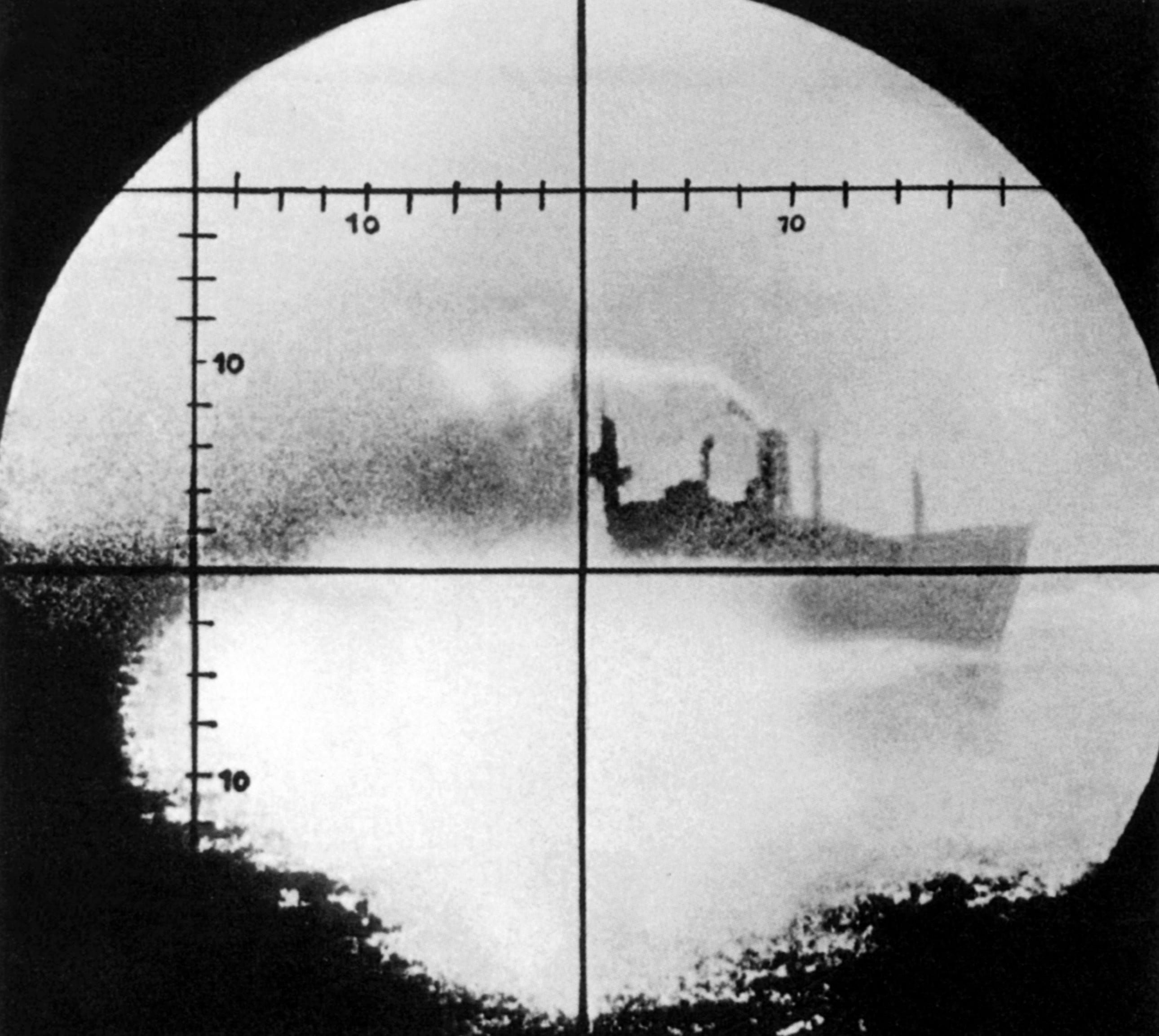
In dangerous waters, convoys and escorts zigzagged to disrupt torpedo solutions. In 1940 the Royal Navy listed 43 zigzag patterns, 14 of which were usable by convoys. Pattern No. 15, for example, could be applied by any convoy - slow or fast - in heavy seas or poor visibility: the convoy held its normal course for exactly five minutes, then turned 30° to port for ten minutes, then 30° to starboard, then another 30° to starboard five minutes later. Five more course changes followed within the hour. The convoy ended up having covered 91% of the distance it would have made on a straight track. Pattern No. 16 was even more complex, with 16 course changes of 15°, 25°, 30° and 35° over more than two hours, and was therefore used only in daylight when crossing heavily infested U-boat areas. By the end of the war, merchant ships zigzagged less and less, but escorts continued to do so to widen their Asdic coverage.
Thanks for reading! This post is public so feel free to share it.
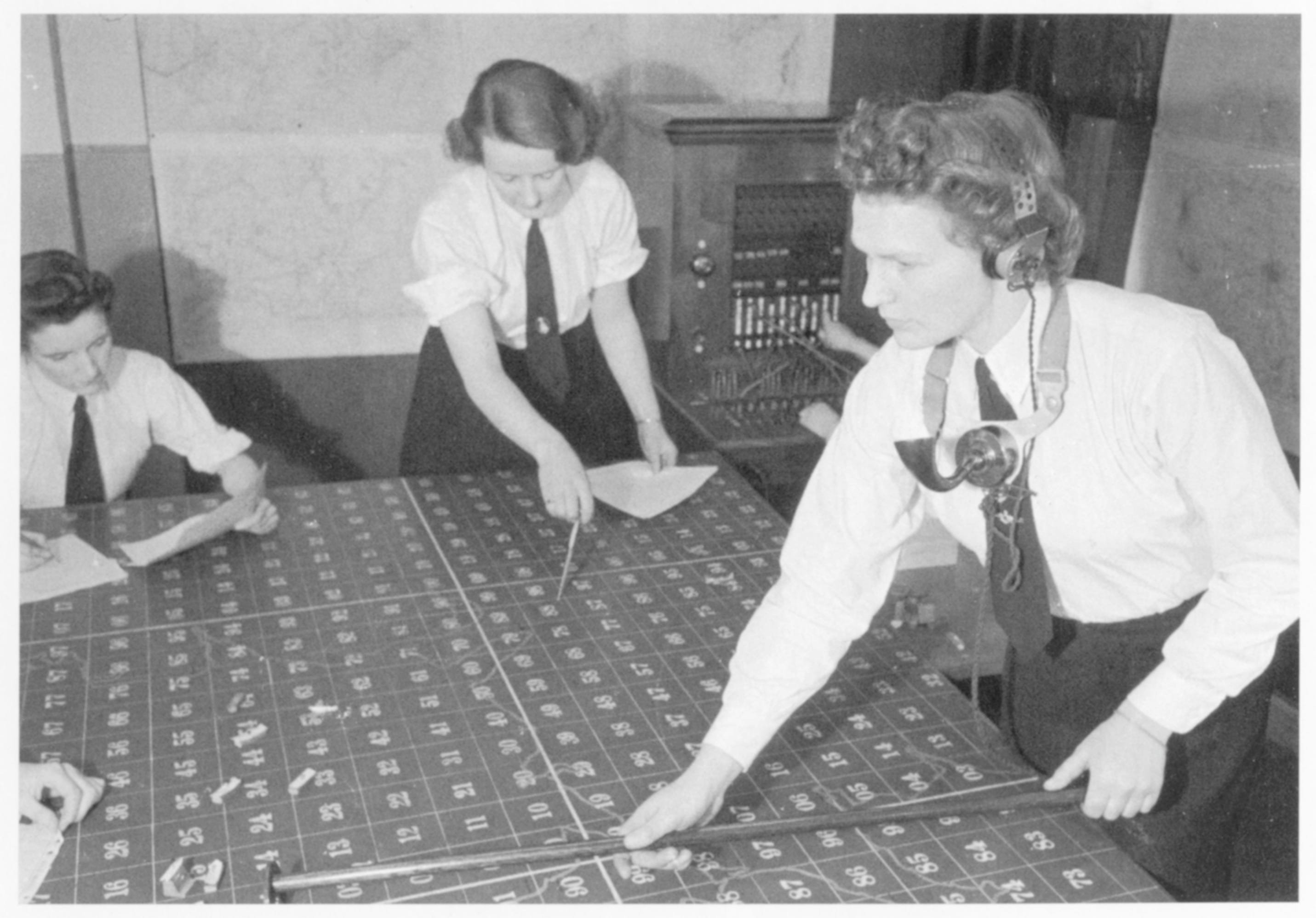
The Western Approaches Tactical School, under Commander Gilbert Roberts, developed multiple escort deployments around convoys with two goals: detect attackers quickly during their approach (before they struck the merchants), and respond effectively after an attack by hunting the enemy before it slipped away. This was not easy: it required accounting for available technology, U-boat attack methods, and weather/seasonal conditions (rough seas or calm, overcast or clear, day or night). Below are the main tactics used by the Royal Navy between 1940 and 1943.
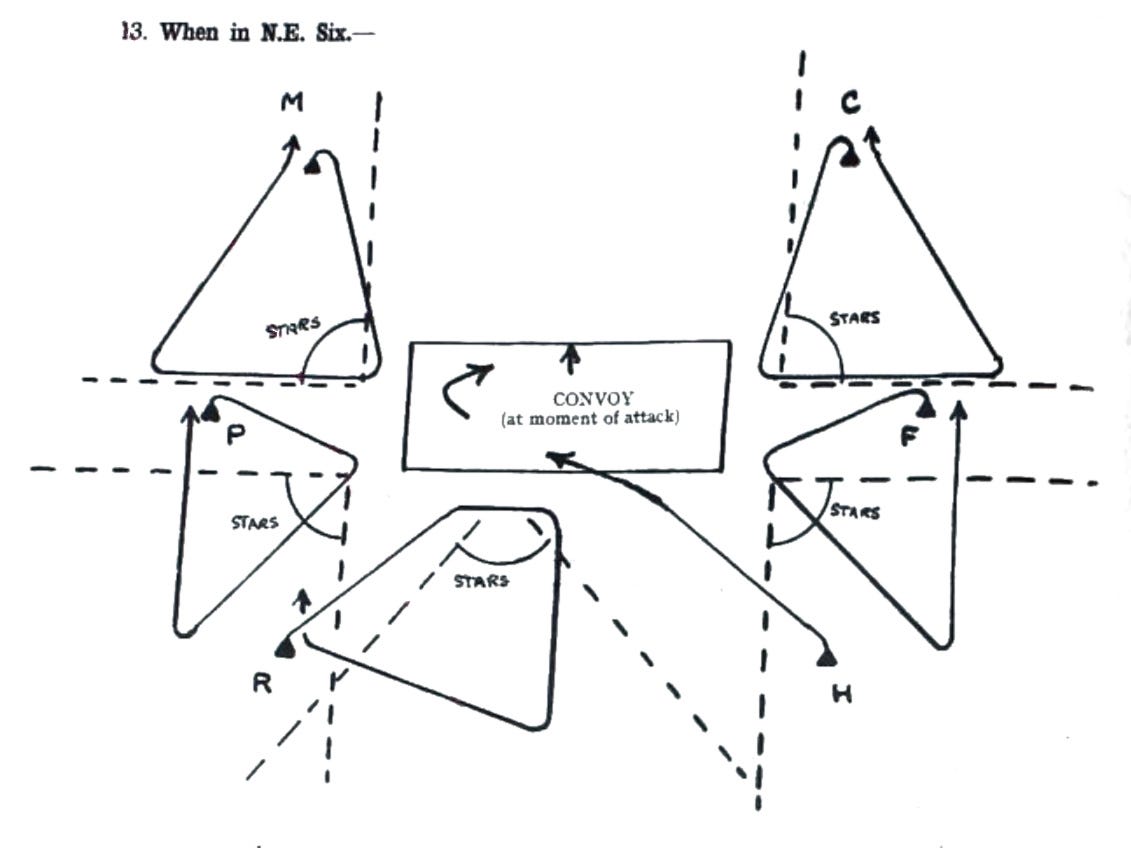
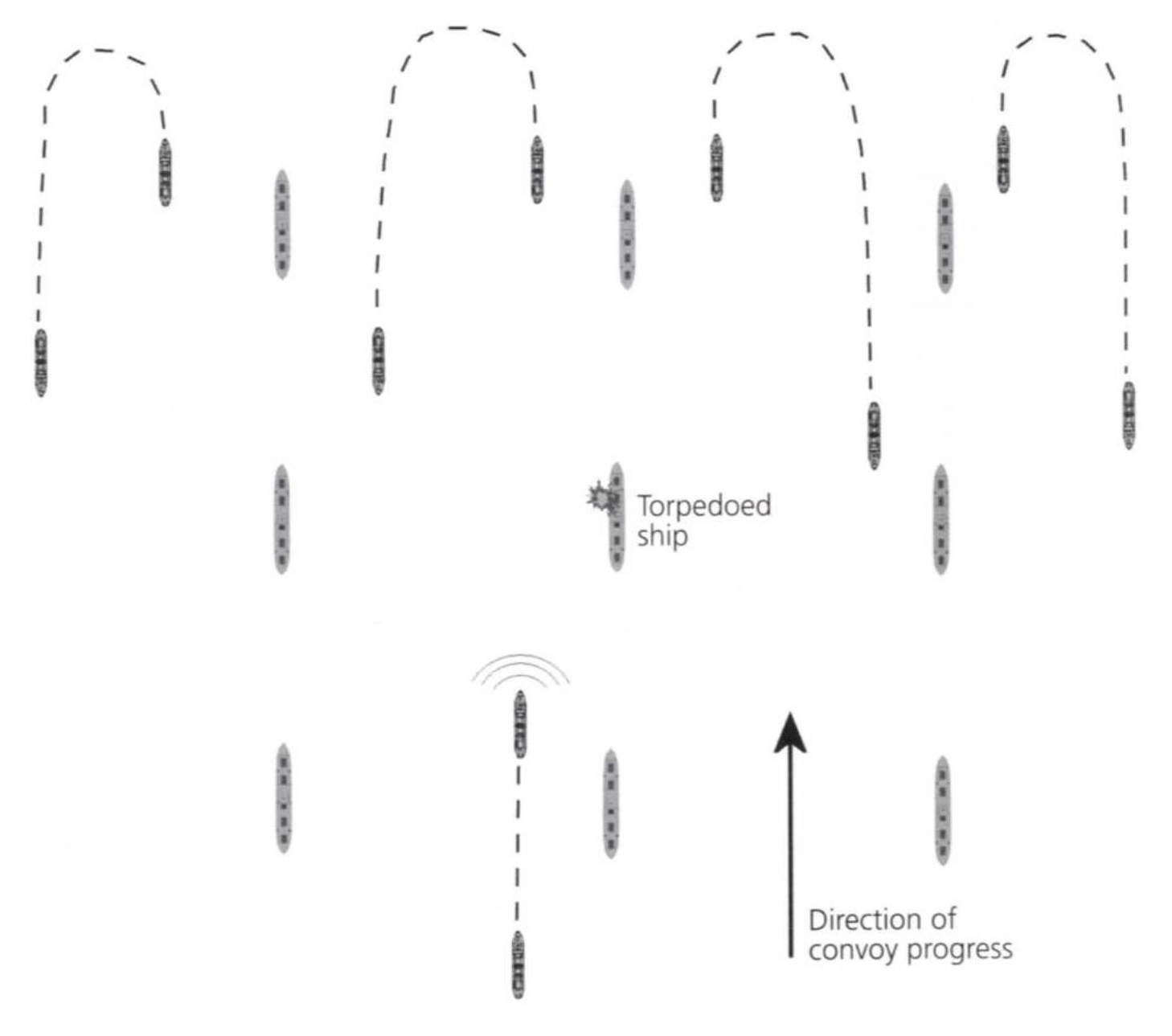
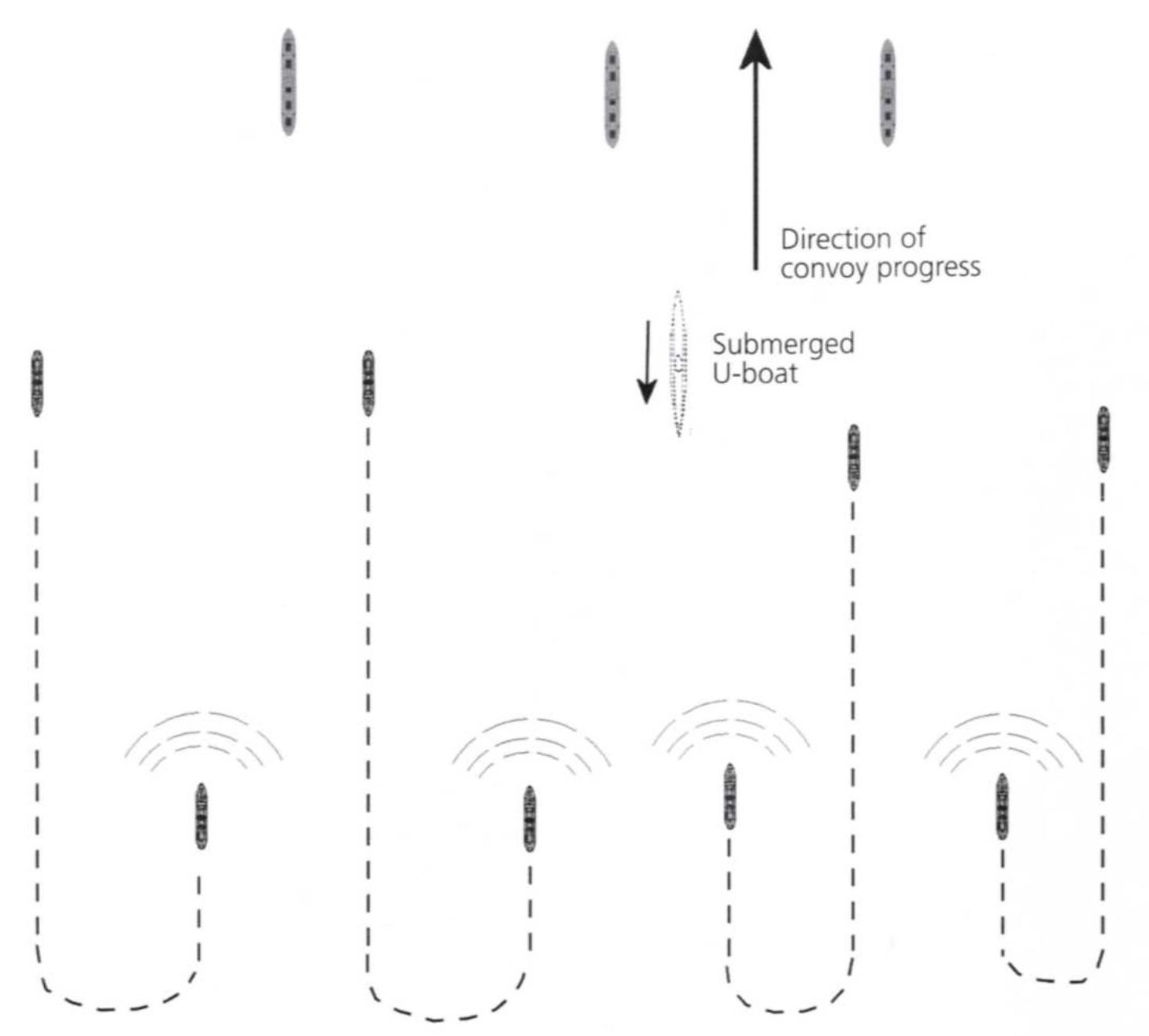
From 1940, the British observed U-boats slipping through the escort screen ahead of the convoy, submerged and at night. There they fired into the inner columns, then dived deep, went silent to evade Asdic, and let the convoy pass over them. They would then surface astern to resume the attack. After a torpedoing in the centre, flank escorts, on signal, immediately turned back outward to reach the convoy’s rear. They passed the torpedoed ship’s position, then turned 180° again to form an Asdic patrol line across the convoy’s width, aimed at catching the U-boat that had deliberately allowed itself to be overtaken in order to reload.
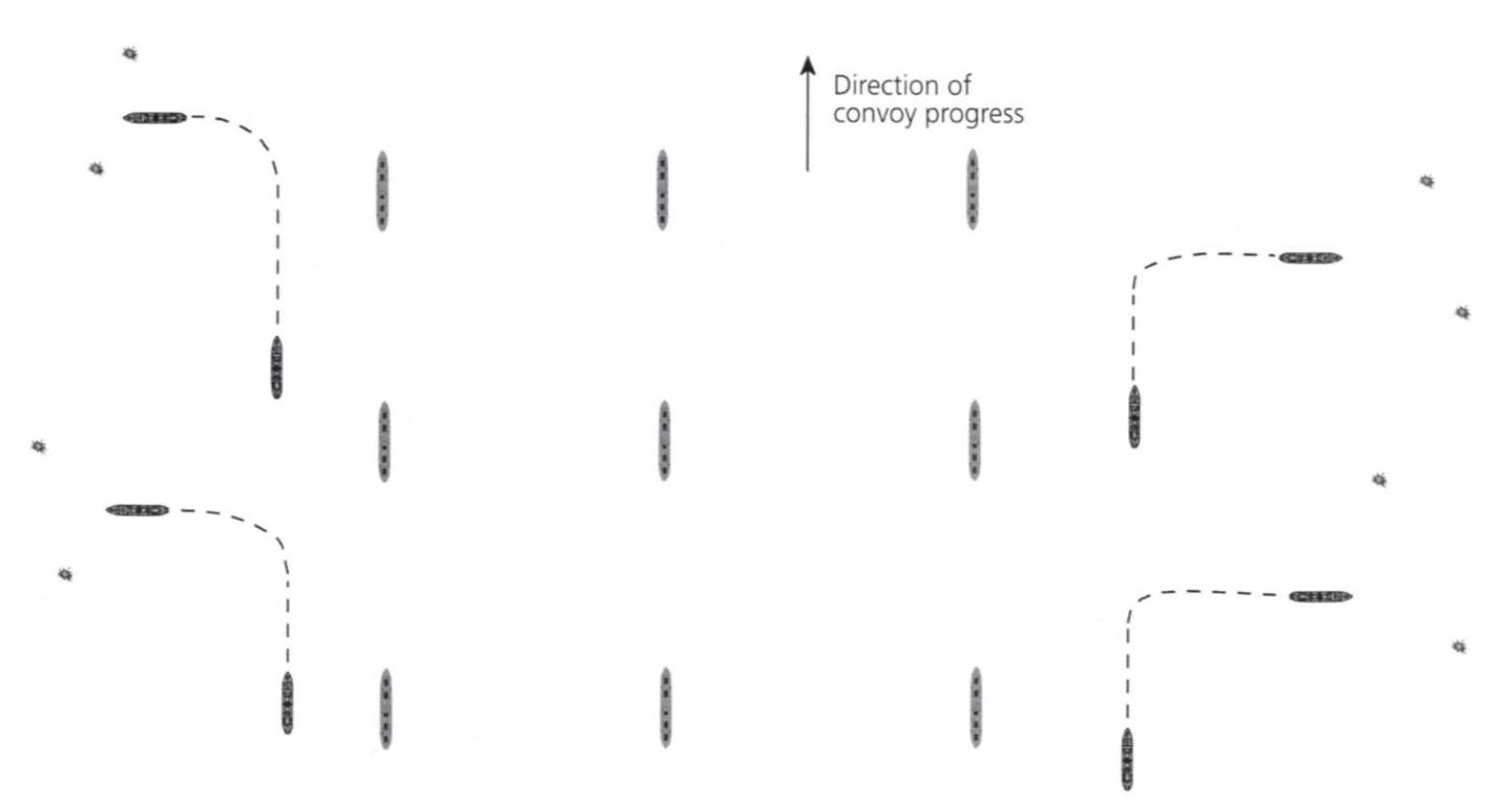
German submariners could also attack the flank columns, preferably at night on the surface, a less risky method than infiltrating the convoy. To counter this, the famous 36 Escort Group leader Frederic “Johnny” Walker devised Buttercup, a risky but effective tactic designed to force U-boats down. When a merchantman on the flank was torpedoed, Walker ordered all flank escorts to turn 90° outward and sprint away from the convoy while firing Snowflake flares continuously to illuminate the area. If no intruder was seen, they resumed station after twenty minutes. If a submarine was detected, it usually dived—much to the escorts’ satisfaction, because at night a submerged U-boat was slower, and at that period sonar could often detect it more reliably than radar could detect a surfaced boat. Results were good, but double-edged: illumination also helped the attacker locate convoy and escorts precisely.
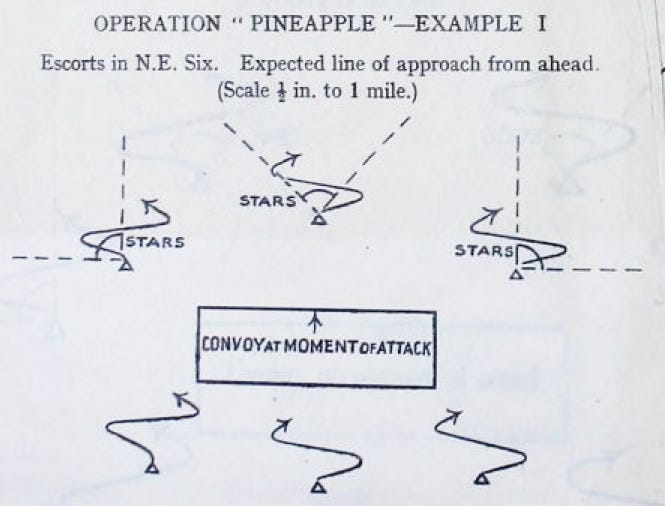
This responded to a common situation: a whole group of submarines detected waiting ahead of a convoy. Once the enemy was located, the forward escort screen charged straight ahead at full speed, pulling away from the convoy while firing flares continuously. The sudden rush forced U-boats to dive—but the escorts were then moving too fast for effective Asdic detection. Now positioned between the escorts (which had surged past them without detecting them) and the convoy, the submerged U-boats typically attacked, believing the screen had been cleared. When the escorts had reached four nautical miles (about 4.6 mi / 7.4 km) beyond their original position, they turned back toward the convoy at reduced speed to search effectively with Asdic.
An improved variant of Raspberry for cases where a ship in the convoy centre had been torpedoed. Rear escorts advanced up the convoy columns while maintaining alignment, while forward escorts made a rapid turn to meet them. This had to be done at the maximum speed compatible with Asdic—15 knots at most. Flank escorts turned outward. The gaps between columns were thus searched by Asdic from both directions. If no U-boat was found, the attacker had likely dived and let itself fall behind either to escape or reload. Escorts reaching the rear then continued straight ahead along the wake of the last merchant ships, passing one nautical mile (about 1.15 mi / 1.85 km) beyond the convoy’s position at the moment of torpedoing before turning back. They returned at the most recommended Asdic speed. The U-boat was often still in the convoy wake at shallow depth and had little chance of escaping.
While commanding the 36 Escort Group in 1942, Johnny Walker identified a problem with Asdic: it searched ahead of the escort ship, while depth charges could be dropped only astern or on the beam. A submarine could exploit the “blind angle” created by the escort’s hull to change course at the last moment and evade. Walker’s solution was the Creeping Attack, requiring two ships: one maintained Asdic contact without passing over the target, while a second ship—its own detection gear silent—approached as quietly as possible (“creeping”) so as not to warn the submarine. On the first ship’s signal, the second dropped its depth charges on a target that had heard nothing. Demanding in training and coordination, it was extremely effective.
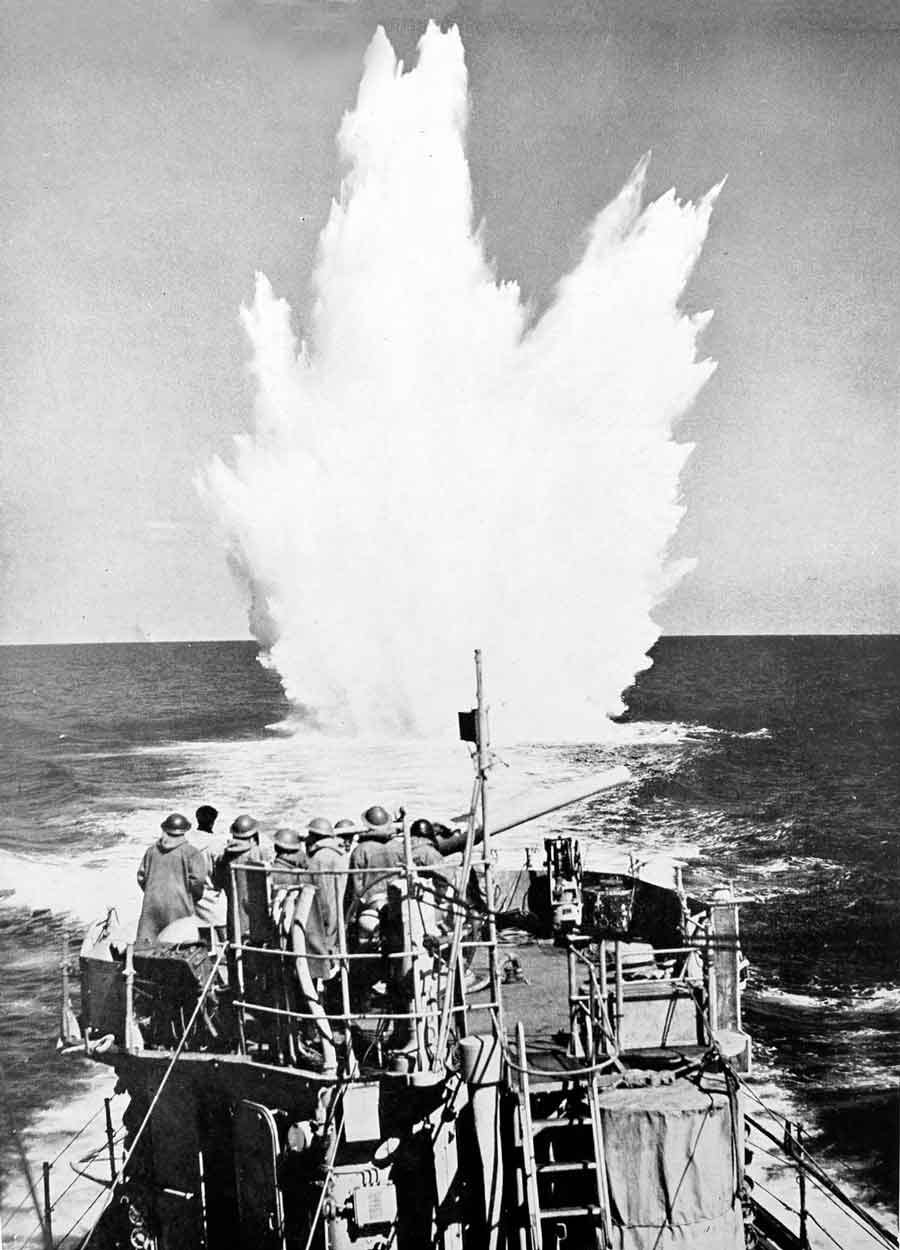
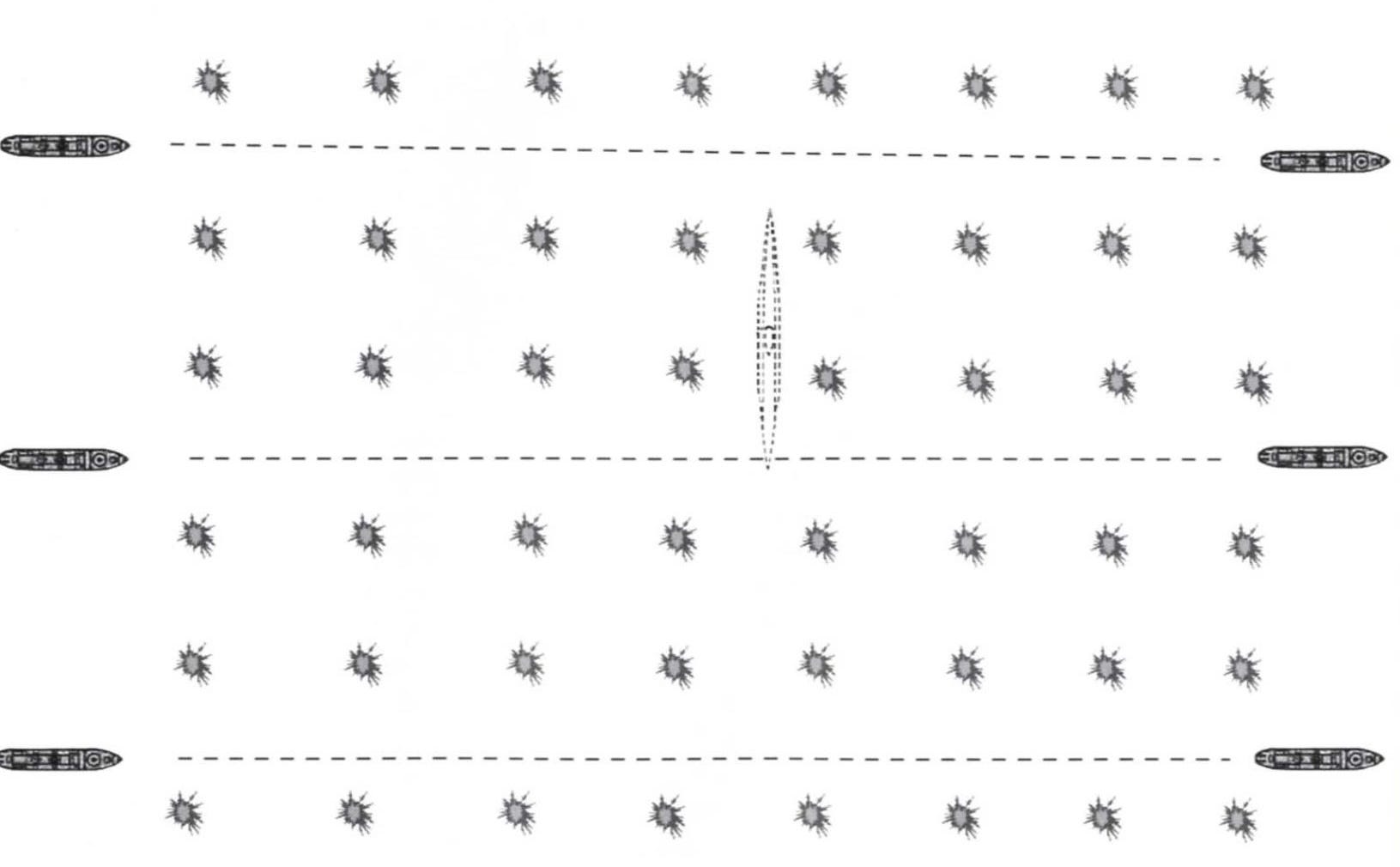
In early 1943, after taking command of 2 Escort Group, Walker devised Plaster (also called Barrage Attack) to compensate for his ships’ technical/material limits. Three sloops aligned abreast swept a suspected area, dropping a continuous stream of depth charges set to different depths at five-second intervals—essentially a naval equivalent of a land artillery barrage. It helped compensate for the limited destructive power of depth charges, which generally had to explode within 10 m (about 33 ft) of a U-boat’s hull to cause serious damage. By “carpeting” a sector in seconds, Walker increased the chances of damaging the enemy. The drawback was enormous expenditure: up to 80 depth charges in a single pass (across all escorts involved).
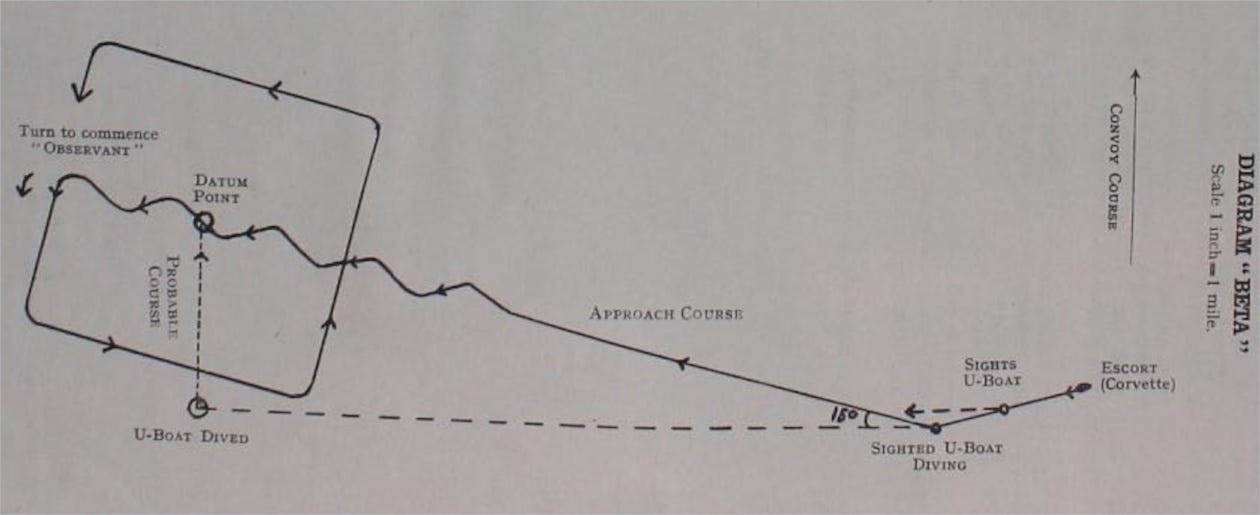
In 1942, Commander Tait of the destroyer HMS Harvester, leading Escort Group B3, observed that a lone U-boat was often detected ahead or on a flank, holding a safe distance, likely to radio the convoy’s course and speed to other submarines. After about two hours, it typically dived, having sent a message that (each time) began with the Morse letter “Beta.” Tait and Roberts concluded this was a contact report. Their countermeasure was simple: the escort waited until the submarine had transmitted and dived, then sprinted at full speed to the last known position. Meanwhile, the convoy altered course to move away and shake its tracker. Now submerged, the U-boat was limited to only a few knots, allowing the escorts to search a relatively small area with Asdic. The U-boat could not remain at periscope depth and had to dive deep to evade; if not sunk on the first attack, it would often not surface until nightfall, without having regained the convoy. Surprise was essential: once the enemy was detected, escorts maintained constant course and speed until it dived. Only then did they charge. The U-boat’s hydrophone operator would struggle to distinguish the escorts’ approach from the background noise of the merchant ships; only exploding depth charges would reveal that it had been tracked for some time.
The appearance of German Zaunkönig acoustic torpedoes in 1943 demanded an immediate response. These torpedoes were designed specifically to target aggressive escorts. The British developed a material countermeasure: the Foxer noisemaker towed behind ships to decoy the torpedo. In parallel, WATU developed a manoeuvre for ships making 7 to 24 knots (below and above that range the risk was considered negligible). Roberts inferred from early reports that Zaunkönig likely used a 60° hydrophone arc. He also assumed U-boats would fire toward the convoy, slightly ahead to account for its movement. If an escort detected a surfaced submarine at night by radar, it initiated Step-aside: first firing flares to illuminate the area, convoy, and escorts. The “grey wolf” would likely launch an acoustic torpedo to remove the nearest escort before attacking the merchants. The escort then turned 150° away and ran at 15 knots, opening distance both from convoy and submarine and slipping out of the torpedo’s sensor cone. After travelling one nautical mile (about 1.15 mi / 1.85 km), it made a wide detour on a course parallel but opposite to the torpedo’s probable track, working back toward the U-boat. During that interval, the submarine—having fired—would typically have dived and could not have moved far. The escort now had a strong chance of detecting it by Asdic and attacking before it escaped too deep. The “step aside” proved highly effective, and many U-boats fell victim to it in the war’s second half.
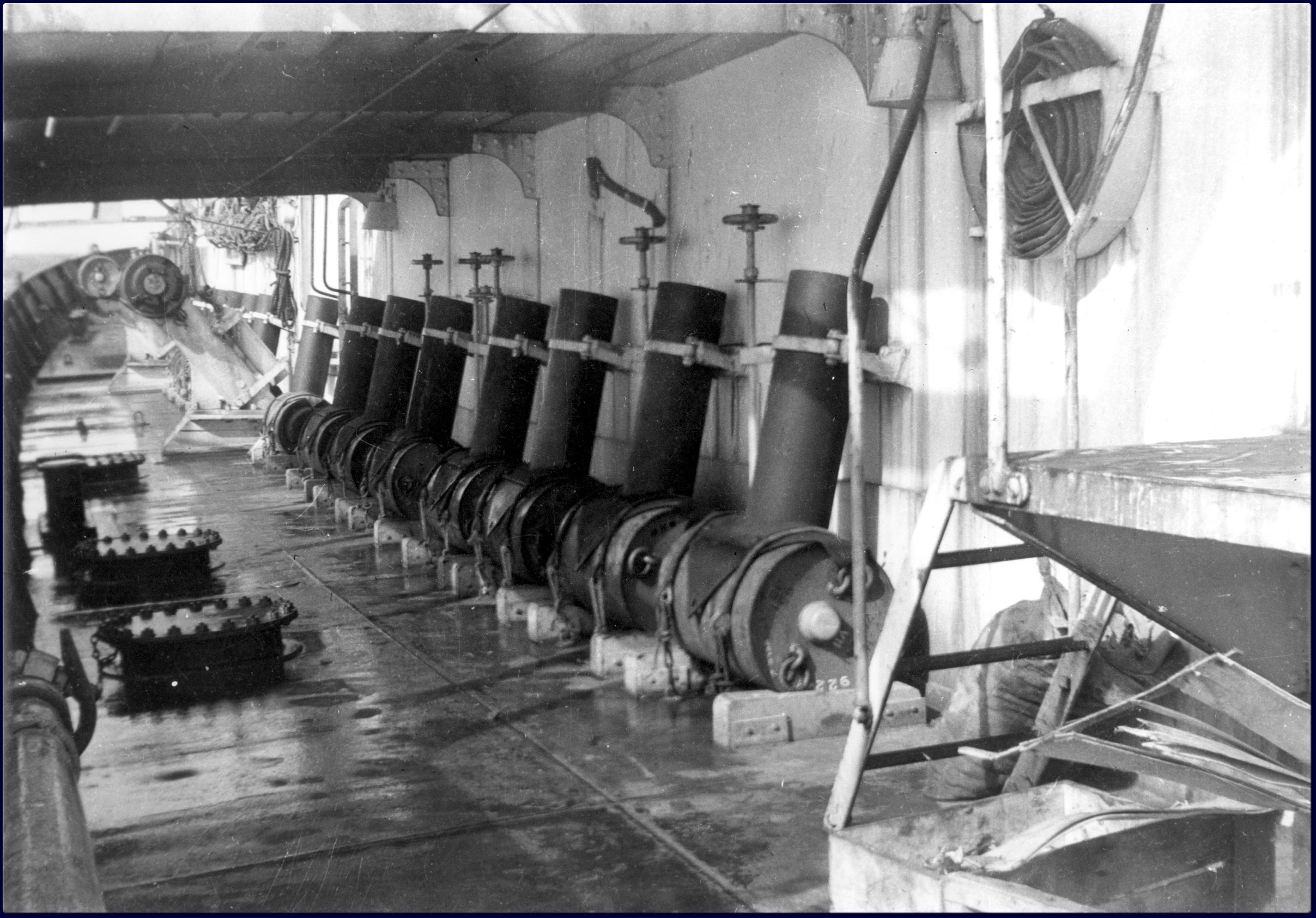
From 1943 onward, tactics continued to evolve. If an escort gained a close hydrophone contact ahead of the convoy, it was to counter-attack immediately while alerting other escorts. If the contact was distant, it was to refine identification first, then raise the alarm and attack. Thus, if an escort gained an Asdic contact at night, it would manoeuvre to try to obtain a radar contact as well: if it did, it could be confident the enemy was surfaced, making pursuit easier. Conversely, if an escort spotted a torpedo wake, it was forbidden to chase the U-boat before first reporting the sighting to the convoy.
Comments
Nothing yet. Say the first thing.
Sign in to join the conversation.