
From time to time, Action Stations steps outside strictly naval history, a deliberate breathing space to tackle other corners of military history.
Germany, May 1945. The Nazi regime and the Wehrmacht are collapsing under the combined pressure of the Allies, who entered Germany at the start of the year. Despite numerous delaying actions, cities fall one after another before the American juggernaut, which soon reaches the Austrian border. Yet despair, propaganda, and fanaticism sometimes push German soldiers to hold out at all costs…
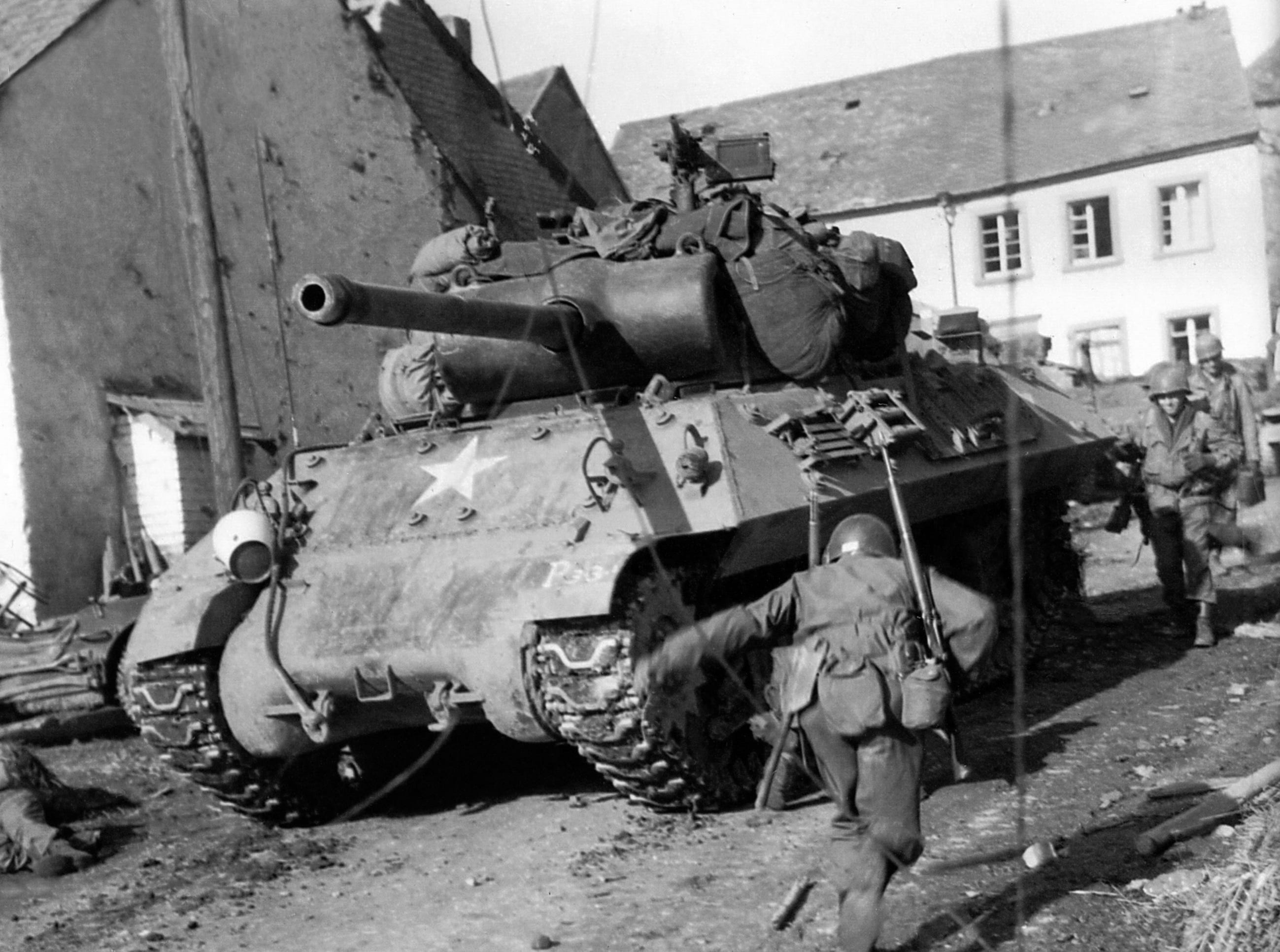
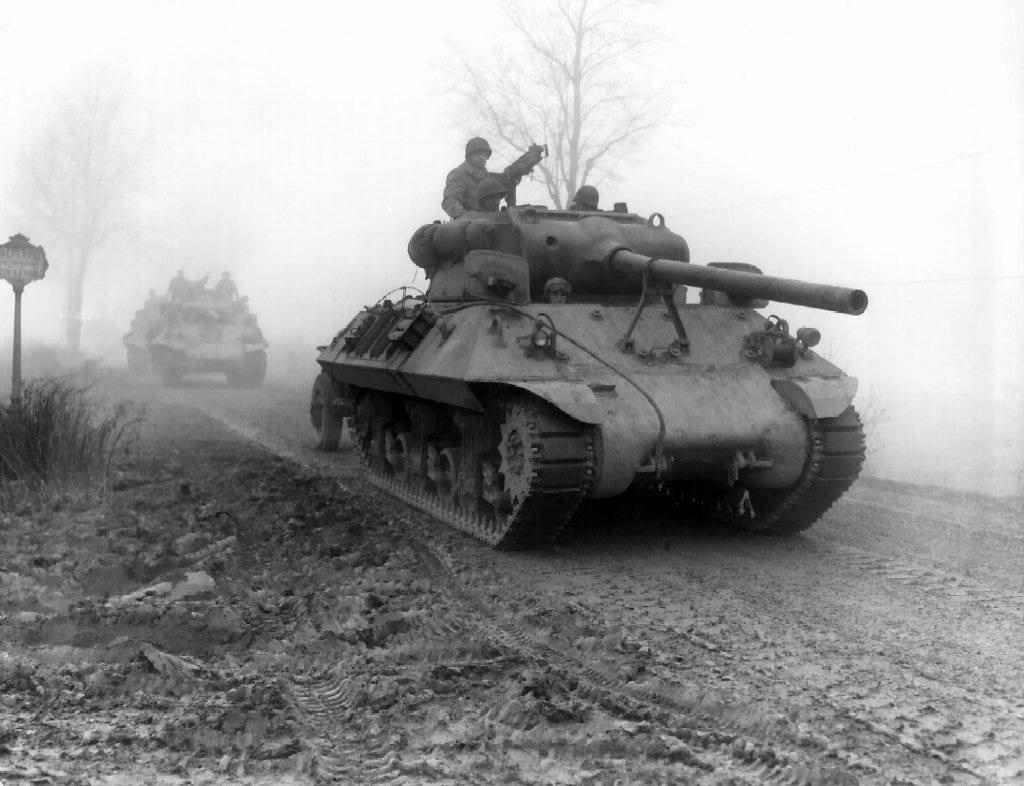
The 808th Tank Destroyer Battalion was formed in late March 1942 in Arkansas. Initially equipped with towed 3-inch (76 mm) M5 anti-tank guns, it landed with them on Utah Beach on 19 September 1944. It crossed the Moselle six days later, then was abruptly sent to the Ardennes on 21 December to protect the XII Corps’ flank through January 1945. The following month, it re-equipped with M36 self-propelled tank destroyers. At the end of March, the “808th” crossed the Rhine and accompanied the 3rd Army’s advance to Erfurt and Nuremberg. Attached in April to the 65th Infantry Division, the battalion then pushed into Bavaria, following the Danube and driving ever farther east toward the Austrian border. Its objective was Linz ; and the mandatory crossroads on the way was Passau, a border city at the confluence of the Danube, the Inn, and the Ilz1. It is across its bridges that one reaches Austria.
The war is ending, but depending on the place, fighters still resist the American advance with stubborn determination. In Passau, the Donauzeitung - the local newspaper - calls for armed resistance: “All traitors and cowards will be put to death! Long live Germany, long live the Führer!” it headlines on 30 April, the day Hitler commits suicide…
Until then, the remnants of the SS Panzer Division Das Reich still controlled the region. From 29 April, however, under American artillery fire, they left the city’s defence to the local Volkssturm and the debris of routed military units. That does not mean Passau will fall like ripe fruit. The GIs may not realise it, but Hitler is considered a local “son of the soil” here: though born in Braunau, Austria, he lived in Passau as a child from 1892 to 1894, when his father was posted there as a Zolloberamts-Offizial, a senior customs official2. In the 1920s Hitler even returned several times during campaign tours; the region was largely sympathetic to him.
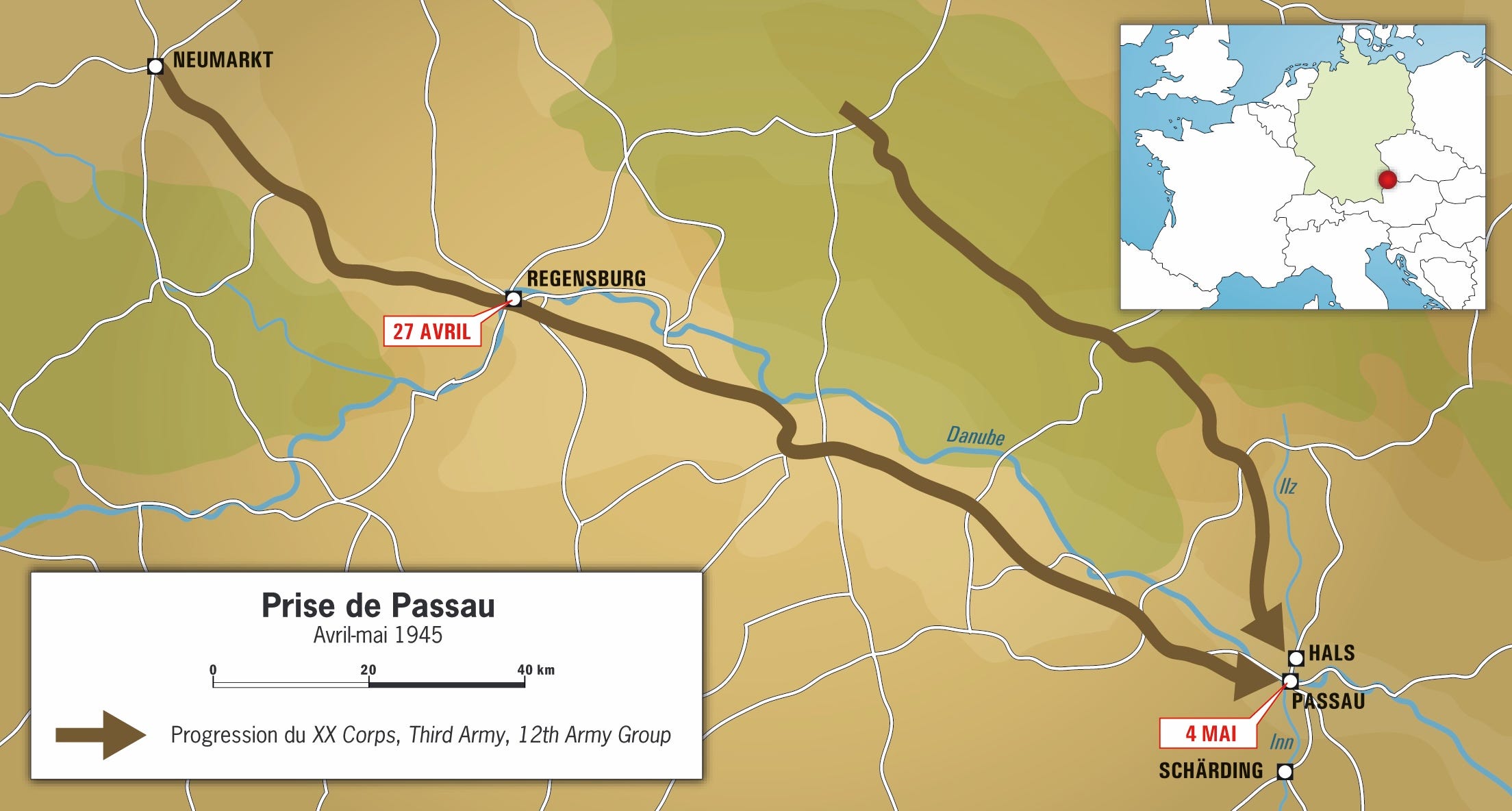
The American advance to Passau is particularly macabre. They discover mass grave after mass grave: 800 Buchenwald deportees executed in the picturesque town of Fürstentein; dozens of corpses of “traitors” summarily shot or hanged; and more. Added to this is the liberation of the auxiliary concentration camp at Pocking (190 survivors), those of Passau I, II and III, and Russian POW camps at Hacklberg, Jacking, Fatting, Rosenau and Tifenbach… Nevertheless, on 1 May 1945, American troops enter Hals, just north of Passau, a village Göring and his entourage have just left. The U.S. Army is then stopped by the Danube’s north bank: there are a few bridges, but a frontal assault seems too risky; better to try to take them from the flank.
Thanks for reading! This post is public so feel free to share it.
The 65th Infantry Division receives orders to take the city from the west and establish itself on the far side of the Inn. The division has advanced along the Danube’s south bank and is therefore well positioned to enter the border city through the only approach not bordered by a watercourse. With this in mind, a Task Force is formed.
For the Germany campaign, the 808th Tank Destroyer Battalion distributed its line companies in support across the various formations of the 65th Infantry Division: A Company with the 260th Infantry Regiment, B with the 261st IR, and C with the 259th IR. The capture of Passau, however, required a suitable ad hoc unit. This Task Force brought together the 3rd platoon of the 808th’s B Company, part of the 1st Reconnaissance Platoon, the 2nd Battalion of the 261st Infantry Regiment, and C Company of the 748th Tank Battalion.
The Task Force assembled during the morning along the Danube, 3 kilometres (2 mi) west of the objective. At 10:00, an infantry company was sent farther to the south-west to complete the encirclement of the urban area and then launch an attack. Meanwhile, the rest of the Task Force, recon elements in front, advanced along the south bank. Resistance was initially nil, and infantrymen from two companies took advantage of this by riding on the armoured vehicles.

A few enemy riflemen spotted along the way were quickly eliminated, and the column entered the deserted city without difficulty. Streets were empty and silent; in places, sheets hung from windows like improvised white flags. The Task Force soon came into view of a bridge spanning the Danube. A foot reconnaissance was ordered; the patrol returned with eight prisoners. They reported a concentration of enemy troops to the south and south-west of the city. The Americans immediately prepared with mounting tension: infantry dismounted, and the armored vehicles got ready to seize the bridge before the Germans - now certainly alerted - could destroy it. At the last moment, the action was cancelled: the reconnaissance platoon leader had patrolled ahead by jeep and confirmed that the bridge had just been blown.
This pause could not be allowed to drag on: Passau was still not fully occupied, and the Germans must not be given time to barricade themselves. Indeed, while the Task Force had been halted before the destroyed bridge, snipers appeared, firing intermittently at the tanks. It had no immediate effect, but it raised the GIs’ stress level. Everyone scanned street corners and nearby windows, trying to locate the source. The order was soon given for the most forward vehicles to pull back and rejoin the rest of the small force, which used a square as its regrouping area. The tanks withdrew, firing about fifteen high-explosive rounds at hypothetical hidden shooters as they did so.
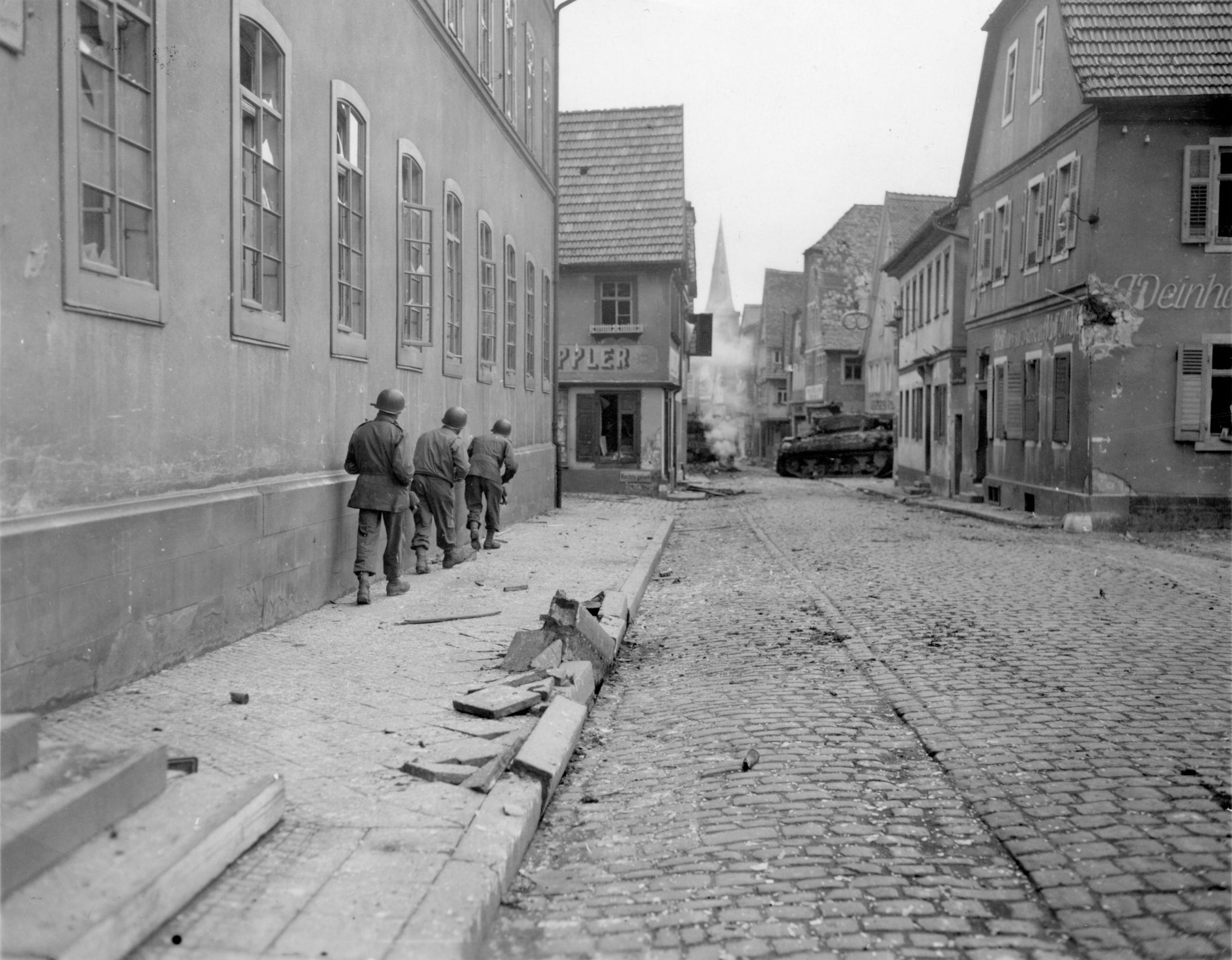
An infantry section was then sent into the city’s southern districts. After only a few blocks, the GIs suddenly ran into heavy resistance: intense small-arms and machine-gun fire struck them from several positions at once. In the narrow streets of the city centre, they took what cover they could: doorways, low walls, etc. Panic set in when two men fell wounded. Leaving the two unfortunate soldiers exposed in the roadway, the rest of the section fell back in disorder. Two Germans - civilians - and an American medic tried to go to their aid, but they too were taken under fire; one of the Germans was killed. The situation worsened. Meanwhile, four trucks towing anti-tank guns, accompanied by a jeep, burst into the square where the armoured vehicles were still parked. In panic, drivers and gun crews reported that their column had been engaged by enemy fire from buildings at the end of the street. They had taken losses: two trucks and one gun destroyed, another vehicle damaged.
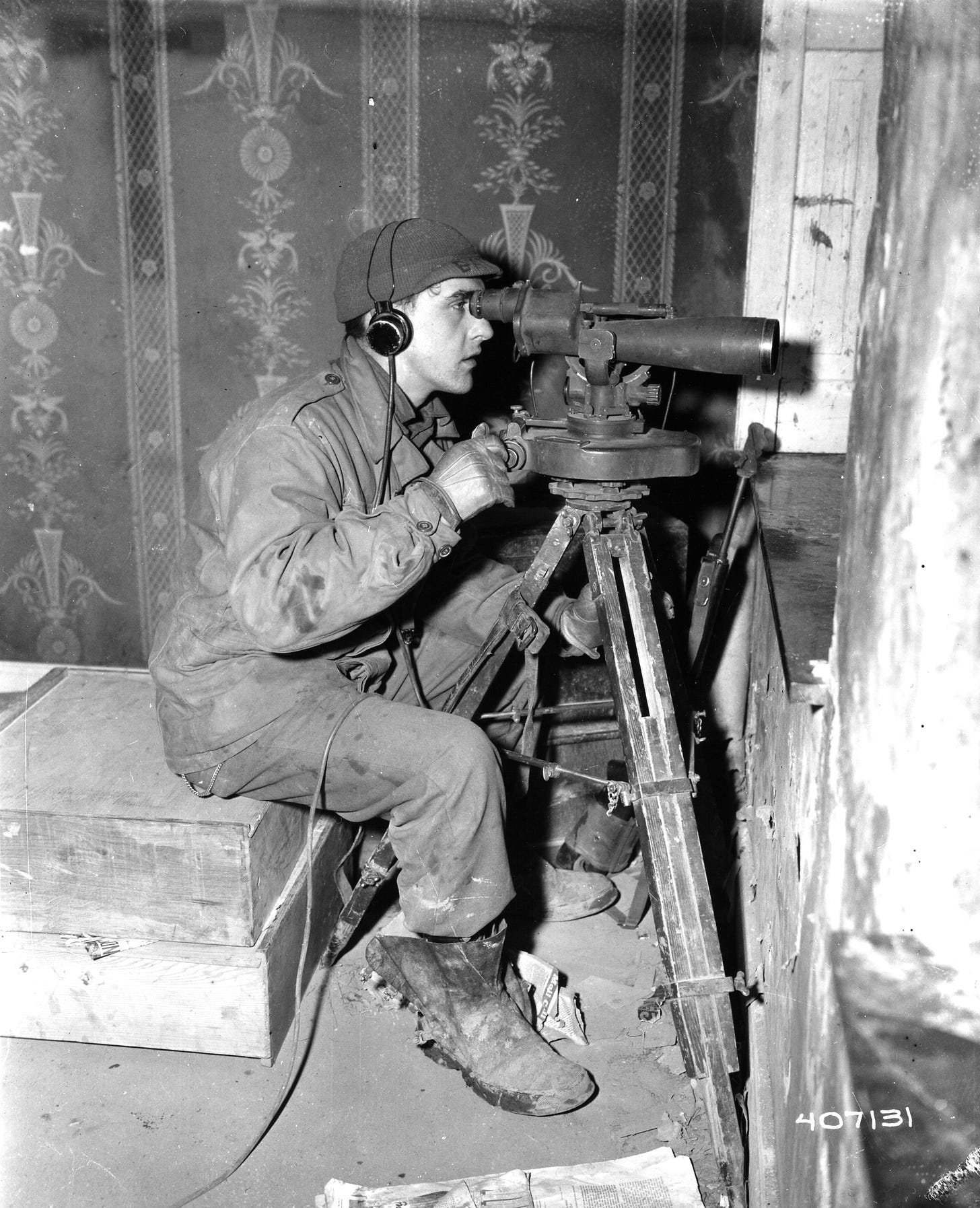
The Tank Destroyer platoon leader ordered two of his four M36s to accompany him to the scene. They advanced by bounds, and the lead vehicle quickly reached the ambush site. Covered by the two tank destroyers, the reconnaissance platoon commander was able to establish an observation post (OP) in nearby buildings, along with three sniper positions on the street’s south side. Upper floors were empty, and the Americans quickly set up: binoculars, radios, and scoped Springfield M1903A4 rifles were discreetly positioned to cover the whole neighbourhood. The source of the fire was soon located and the coordinates transmitted to the first tank destroyer. It fired about fifteen rounds into the suspected building, while snipers provided precise cover fire, prioritising Panzerfaust teams. Indeed, the Panzerfaust was a true scourge for the thinly armoured M36: a well-placed hit would turn the vehicle into a giant lighter. Within minutes, GIs firepower neutralised the resistance; the Germans abandoned several buildings, allowing the column to evacuate men and equipment to a safer area.
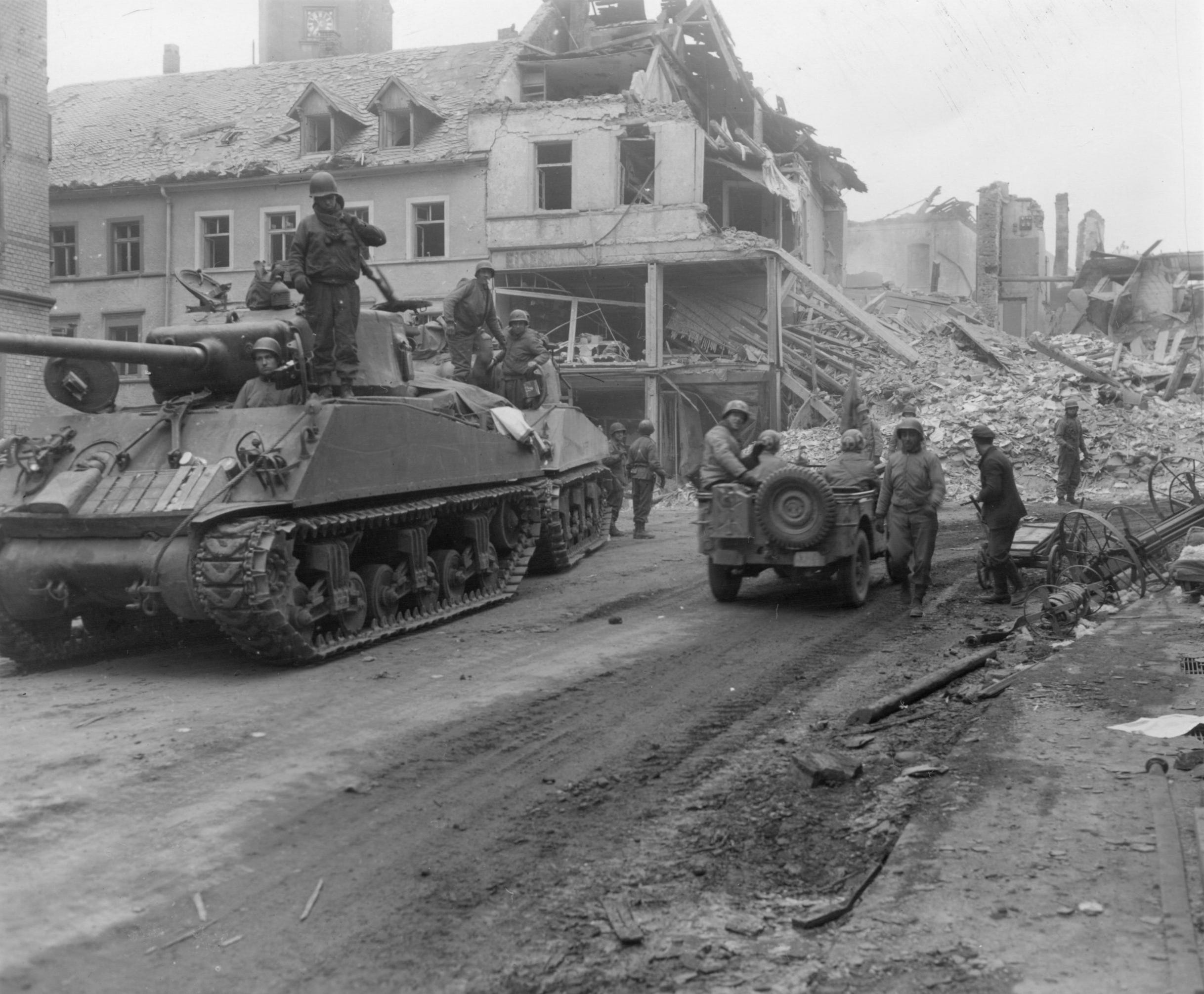
Meanwhile, the two wounded soldiers were still lying in the street one block away. Their company commander asked the TD platoon and medium tanks for help recovering his men. A small, heavily armed column was quickly organised: two tank destroyers led the way, flanked on both sides by an infantry platoon; two Shermans, remaining back at the assembly area, were to cover the advance. To reach the wounded, five houses had to be cleared first.
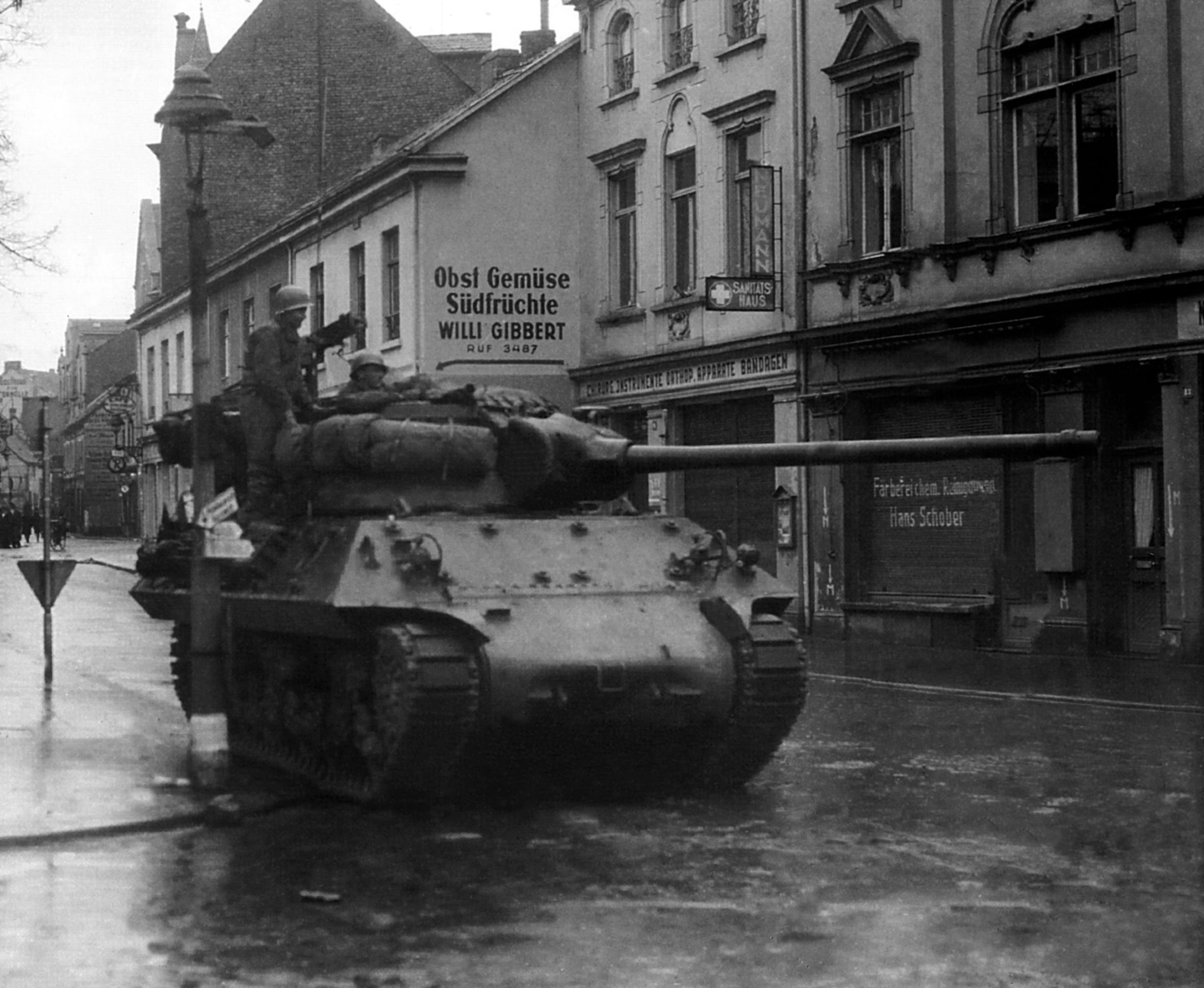
The M36s bounded forward to the scene, halted, and opened fire, both with their 90 mm (3.5 in) gun and their 12.7 mm (.50 in) machine gun, to cover the infantry as effectively as possible. The GIs advanced cautiously. On the left, they stopped about 25 metres (80 ft) from the tank destroyers; on the right, they were quickly pinned down by automatic weapons fire. Bullets snapped and ricocheted off façades; the streets amplified the detonations; dust and smoke reduced visibility. In this tangle of alleys, danger could come from anywhere. When they were not flat on their stomachs with their noses in the cobblestones, the GIs raked windows and scanned upper floors, moving in measured steps to avoid being isolated. Both prey and hunters, the American soldiers had little information on who they were facing.
This was where the observation post proved invaluable. It had no difficulty spotting the machine-gun nest and passed its coordinates to the M36s. The tank destroyers saturated the position with 90 mm rounds, then engaged other targets located in the same sector. All were quickly neutralised, and the column prepared to resume its movement when, at that very moment, the company commander received an imperative order: “Do not go any farther; negotiations are under way for the city’s surrender.” The infantry took cover.
Interpreting this pullback as a sign of weakness, the German fighters opened up with everything they had. Their fire was accurate enough that the Americans suspected it was being directed by an observer ideally placed… Once again the OP was used: after a brief search, it spotted a well-hidden pair of binocular lenses protruding from a small opening cut into the clock face of a public building. A single 90 mm round smashed the delicate mechanism head-on, eliminating the “watcher.”
Gunfire continued to rage. Noise and smoke prevented precise localisation of the enemy, which was particularly worrying for the two M36s, prime targets for any reasonably experienced anti-tank team. The infantry was already stretched and was not numerous enough to protect the vehicles’ flanks. The operations officer of the Tank Destroyer Company had no choice but to urgently call in part of his headquarters personnel.
As the exchange of fire dragged on without clear result, the observation post soon spotted a Panzer IV approaching. The German tank advanced to a street corner and halted. It remained invisible to troops at street level, but it was there, 150 metres (165 yd) from the lead tank destroyer. Leaving the forward M36 stationary and ready, the Americans decided to use the second TD to flank the enemy armored vehicle. The tank destroyer moved to an intersection farther south-east so it could later dash forward and engage the Panzer by surprise. The vehicle advanced, making a wide detour through deserted, battered streets. It was only halfway to its position when it came under sniper and machine-gun fire. An instant later, the crew saw six grenadiers with rocket launchers, ready to strike. That was too much. The M36 had neither escort nor adequate protection: its open-topped turret made it highly vulnerable to grenades and plunging fire, not to mention anti-tank rockets. It had to withdraw at once.
The driver manoeuvred as best he could in the tight space and failed to notice a shell crater in the middle of the roadway. He hit it squarely, “planting” the vehicle and forcing it to stop. The moment was critical. Reinforcements were needed before the Germans understood what had happened. Two crewmen ran for help. Out of breath, they reached their main body and raised the alarm. The platoon leader and a few men immediately ran to assess the damage, ignoring German fire. Arriving winded at the scene, they witnessed an extraordinary sight: the gunner had saved the situation. Firing both the 12.7 mm machine gun and the 90 mm gun, he had broken the grenadiers’ assault, killing all six at point-blank range. All that remained was to extract the TD from its trap and reach the assigned intersection. Meanwhile, the Germans had apparently located the observation post and the American snipers in the buildings opposite. From its corner, the Panzer IV began engaging them; shells exploded against the façade, shaking the whole structure. Upstairs, falling rubble and plaster dust made observation impossible; in the street, smoke turned the air suffocating; fragments of stone, cement, and concrete rained down on the Americans.
The Panzer soon shifted targets, hammering with its 75 mm (2.95 in) gun the house that separated it from the most advanced M36, the platoon leader’s vehicle. For the moment, the small building held, but repeated blows threatened to change that. Neither side wanted to move: changing position would mean exposing oneself and giving the enemy, for a brief instant, the chance to fire first. At 150 metres (165 yd), there would be no forgiveness. The situation was therefore locked. A small group of German soldiers armed with Panzerfausts tried to infiltrate behind the TD through adjacent alleys, but the GIs had set up a machine gun in a window to cover the vehicle’s rear, and the Germans quickly withdrew. The M36 fired intermittently, without tangible effect. Something had to break the stalemate.
The platoon leader’s M36 was ordered to roar forward, stop short of the corner, rev its engine, and then return to its original position. The aim was to lure the German tank into exposing itself. The diversion worked perfectly: hearing the sound of an armoured vehicle charging at full power in its direction, the Panzer IV left cover to confront it. That was exactly what the second tank destroyer, positioned on the far side of the block, was waiting for. It advanced and fired.
The gunner did not aim directly at his opponent but just above it, at a building façade that shattered, showering the Panzer with debris and blinding its crew’s episcopes. A clever shot but the German tank was positioned so that no direct hit could be achieved, and the dust cloud from the explosion made a second precise shot highly uncertain. Yet there was no time to lose. The TD gunner now proved the value of his artillery training: he fired four APC rounds3 at a particular angle. Two ricocheted off a wall and struck the Panzer IV. The tank immediately caught fire, and the M36s used the moment to withdraw. The fight was won: without armoured support, the Germans gradually pulled back, skirmishing with far less conviction than they had shown earlier in the morning.
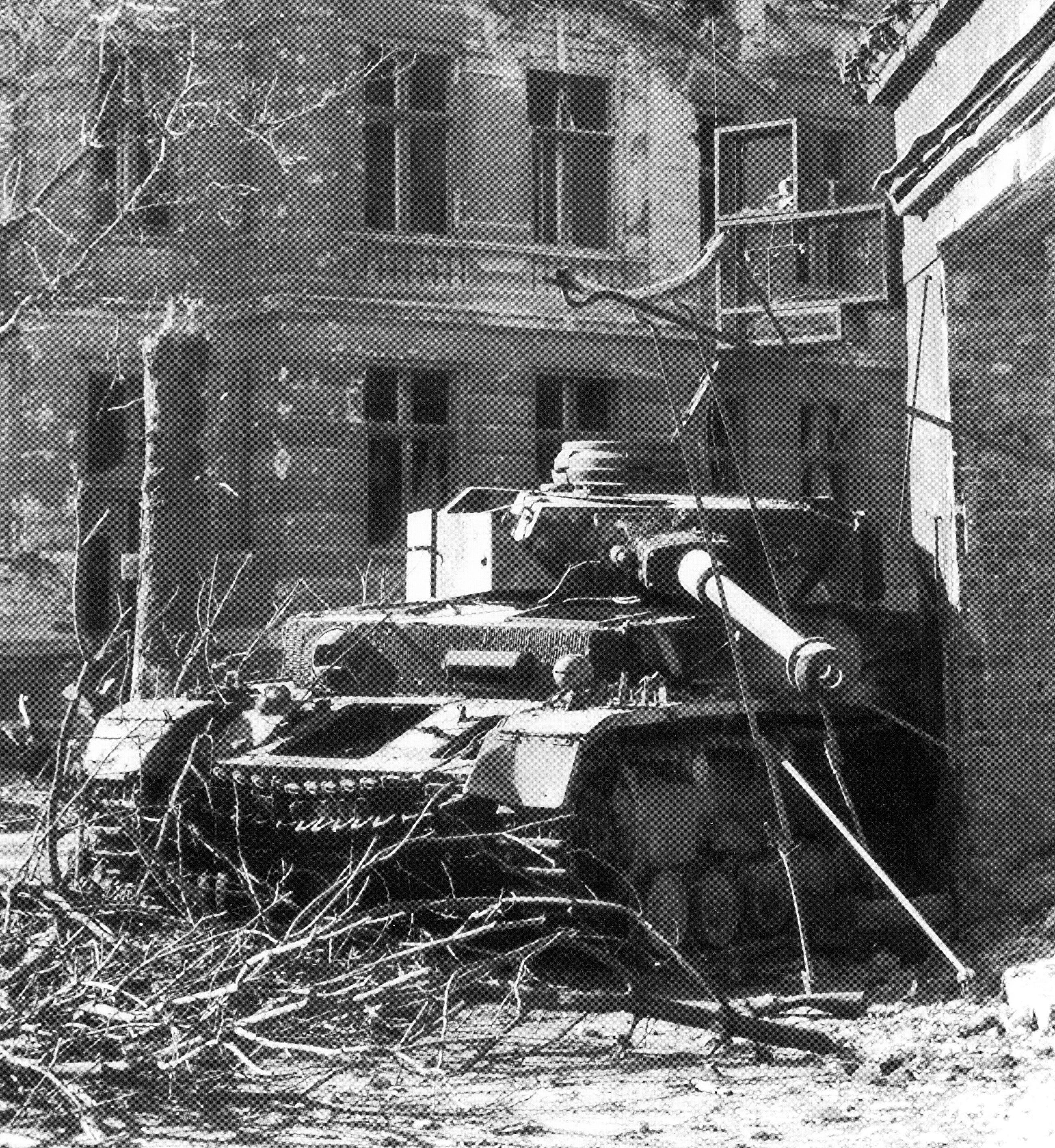
The fighting lasted nearly five hours, during which the Task Force employed its full firepower. Snipers and machine gunners killed or wounded 30 enemy soldiers. The following day, Passau finally fell and 500 Germans surrendered. In another district, the GIs found a second Panzer IV abandoned and scuttled by its crew.
Generally uncomfortable in close combat within a three-dimensional urban environment, because of its thin armour and open turret, the M36 nevertheless proved at Passau that it could be used in urban warfare… but only under certain conditions: the 808th Tank Destroyer Battalion’s vehicles performed credibly, yet they required strong infantry escort (machine gunners, snipers, and observers) to clear upper floors and repel German grenadiers armed with Panzerfausts.
Armor in Battle, U.S. Army Armor School, Fort Knox, Kentucky, March 1986.
Rosmus, A., Out of Passau: Leaving a City Hitler Called Home, University of South Carolina Press, 2004.
Where the three rivers meet, you can still distinguish the Danube’s brown water from the Inn’s green water and the Ilz’s black water.
The Hitler family then lived at No. 23 Theresienstrasse, then No. 5 Kapuzinerstrasse, in Passau itself.
“Armour-Piercing, Capped” projectile.
Comments
Nothing yet. Say the first thing.
Sign in to join the conversation.