

At this pace, Argentina is on track to eliminate inflation within one to two years.
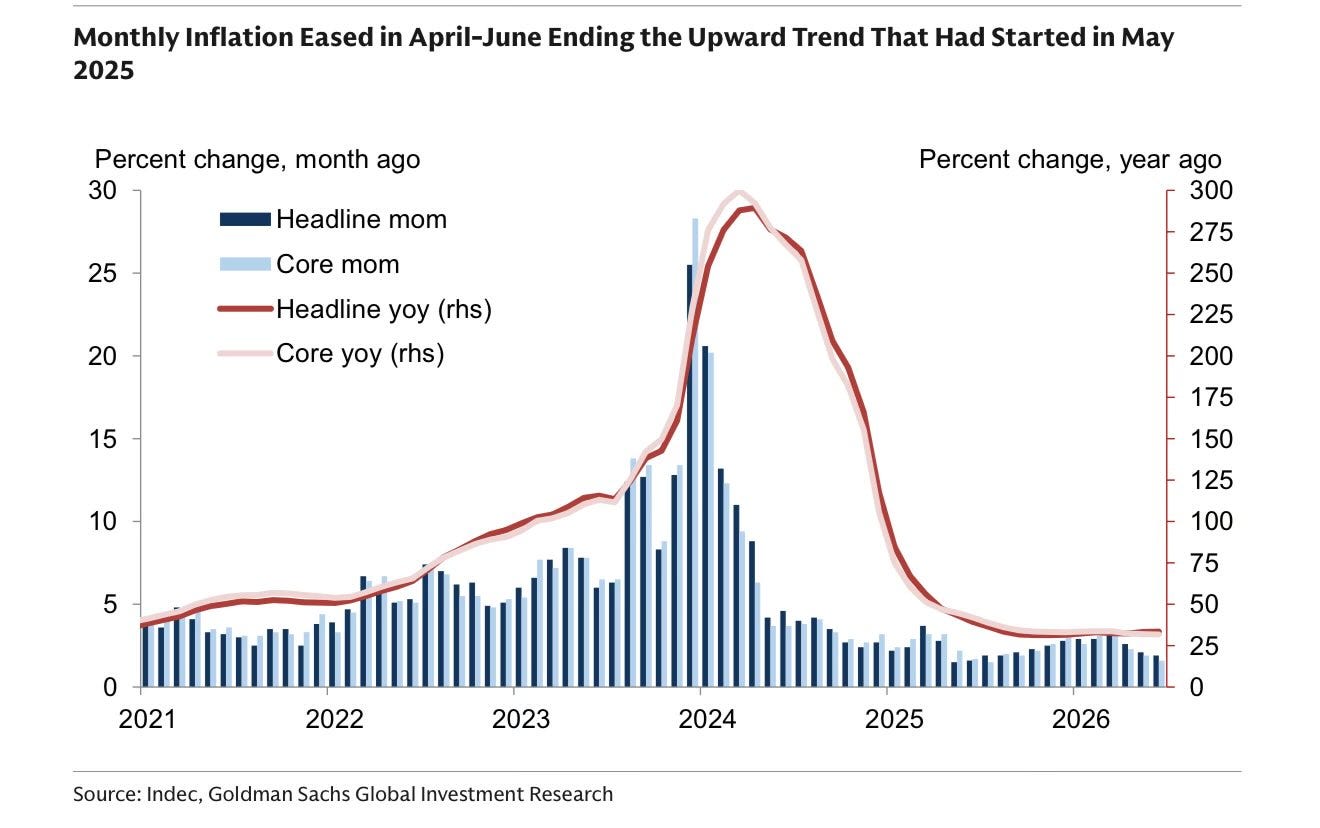
Yes, there has been pain in Argentina, but I would suggest that overall the situation for the majority of people has improved. The goal now is to move from economic triage to real and lasting economic growth.
One of my views is that the continued growth of the Vaca Muerta shale basin in Argentina is acting as a big tailwind to Argentina’s economic recovery and growth.
-Argentina posted record oil production in May 2026 as Vaca Muerta continues to drive rapid growth.
-Billions of dollars in investment from YPF and private producers are accelerating shale development and new infrastructure.
-Analysts expect Argentina’s oil output to reach 1–1.5 million barrels per day by 2030, strengthening its role in global energy markets.
Argentina’s massive shale oil and gas boom is going from strength to strength. The economically crisis-prone South American country yet again reported record monthly oil and natural gas production for May 2026. This couldn’t come at a better time for Argentina and South America. Rising global geopolitical risks, notably due to war in the Middle East, and domestic economic hazards hold the potential to derail the significant economic gains Argentina has made over the last two years.
Ministry of Economy data shows May 2026 oil production hit an all-time high of 887,227 barrels per day. This represents a 0.6% increase month over month and is an impressive 19% greater than the same period a year earlier. Natural gas output also rose to 5.5 billion cubic feet per day, which was just shy of the record 5.7 billion cubic feet daily reported for July 2025. Indeed, May 2026 natural gas production was 5.4% greater than a month prior and a stunning 11% higher year over year.
It is the massive shale boom underway in the 8.6-million-acre Vaca Muerta formation that is responsible for this solid production growth. For May 2026, shale oil comprised 70.6% of Argentina’s total oil production, while shale gas made up 69.8% of total output. Those ratios are at record highs for shale oil and gas as a proportion of Argentina’s total hydrocarbon output. This is a game changer for Argentina, which recently overtook Colombia to cement its place as South America’s fourth largest oil producer.
The opening of the North Sea oil and gas fields was a tremendous boon for the Thatcher government, which is often ignored when discussing the UK’s recovery during her tenure as Prime Minister.
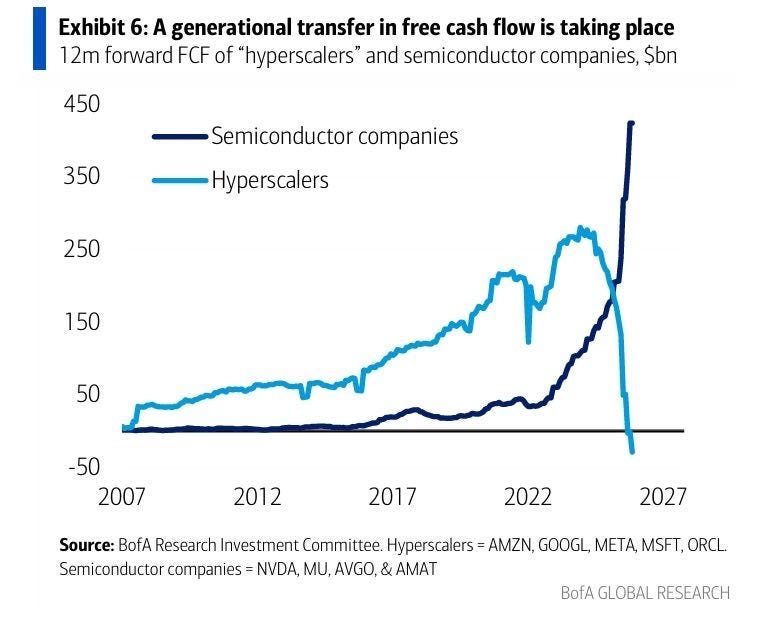
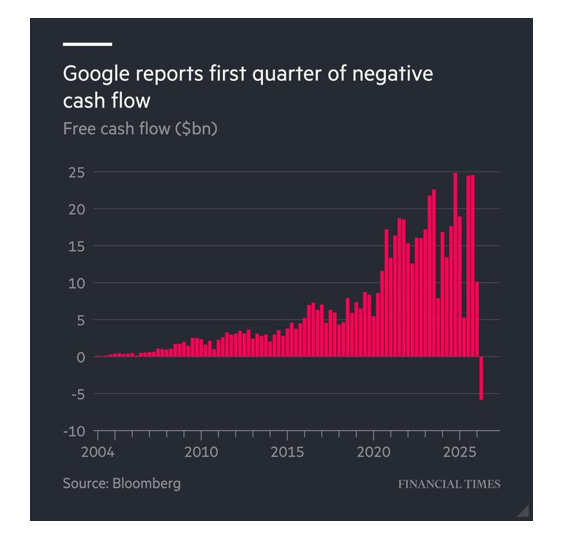
Google reports its first quarter of negative cash flow. Is this still a company that deserves a premium valuation?
The companies are shifting to debt to continue their buildouts.
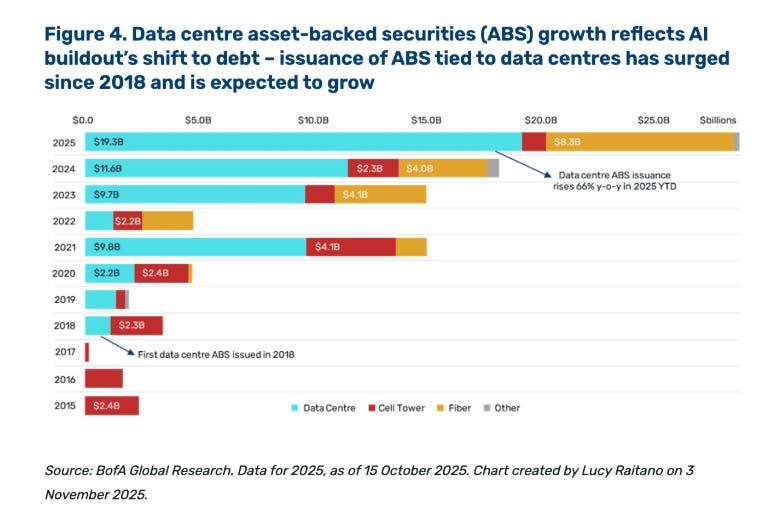
When has piling on debt to invest in a commodity-type investment worked out long term? I guess they will continue to borrow and build until the money runs out. We have seen this movie before: fiber, shale, housing.
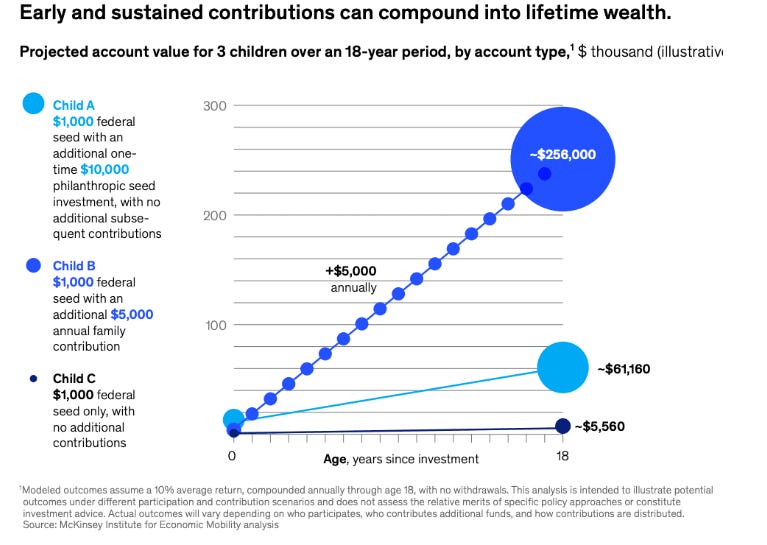
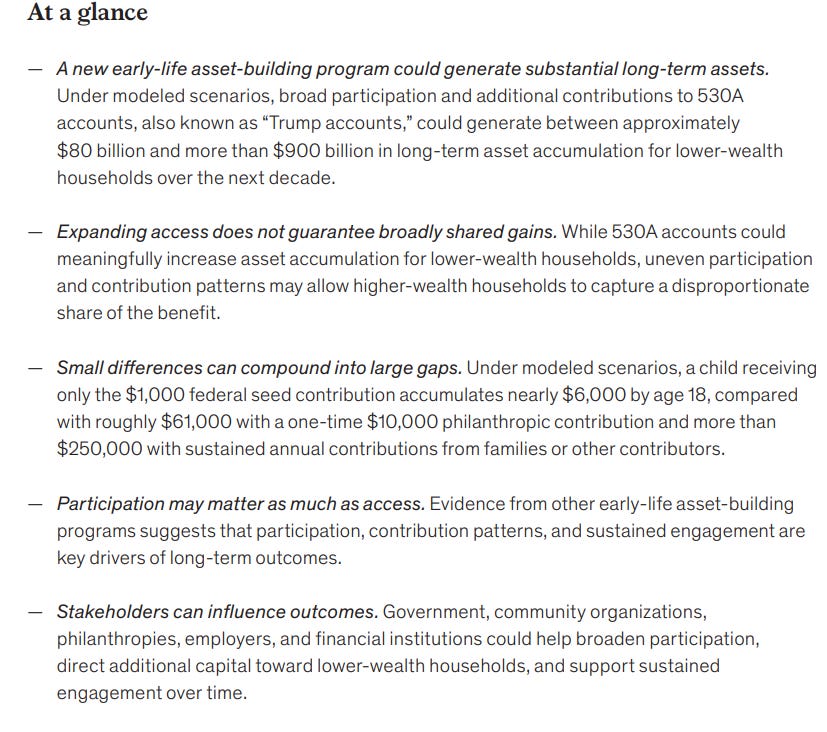
This is the way forward. To get young people to stay invested in society, make them owners so they are vested in a good outcome. This is a great first step, and I hope people will take advantage. Time is the greatest asset a person has, and as Einstein said, compound interest is the eighth wonder of the world. The McKinsey paper discusses it in depth.
-Emerging markets stocks may be entering a longer-term rebound, supported by stronger fundamentals and attractive valuations.
-EM tech leaders are becoming key players in the global AI value chain.
-Korea and China offer opportunities, though selectivity remains important.
-Resource-driven markets may benefit from AI-related infrastructure demand and stronger commodity cycles.
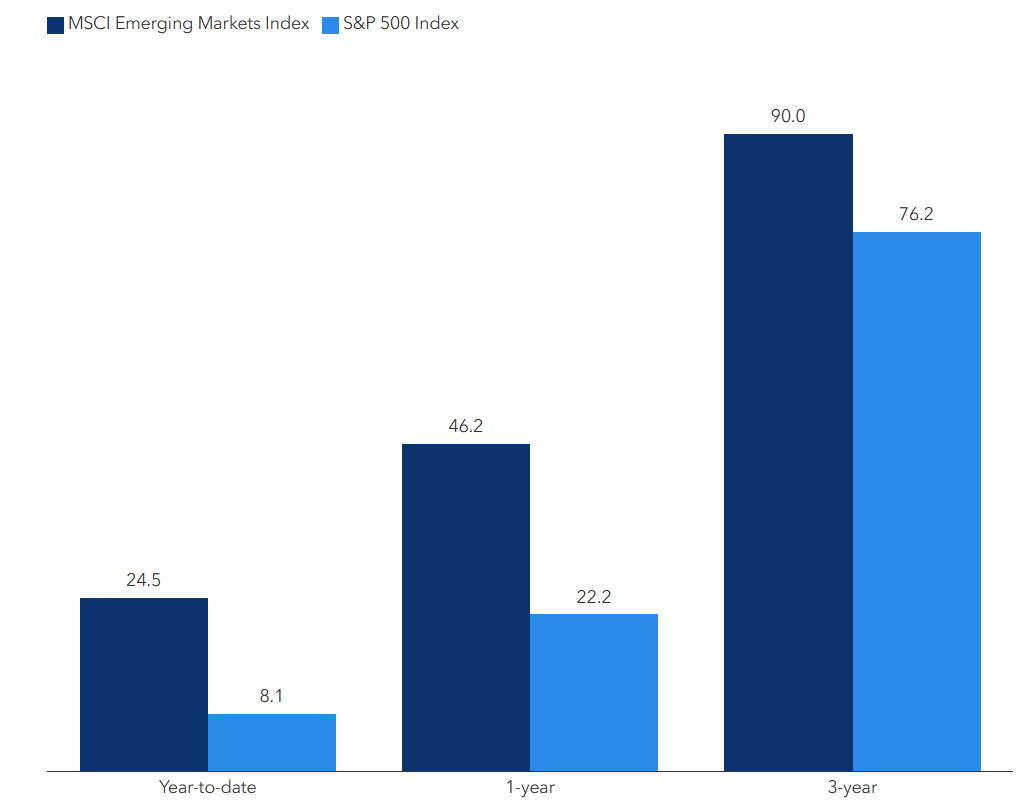
If you have been following AIA for a while, you know we have been on this trend for a while now. These shifts in relative outperformance of emerging markets over developed markets usually have a long wave of 8-10 years. Still lots of meat on the bone in my view.
That’s it for this week.
Regards,
John Polomny
Comments
Nothing yet. Say the first thing.
Sign in to join the conversation.