

As the days pass without a full opening of the Strait of Hormuz, we get closer to an inflection in the oil price.
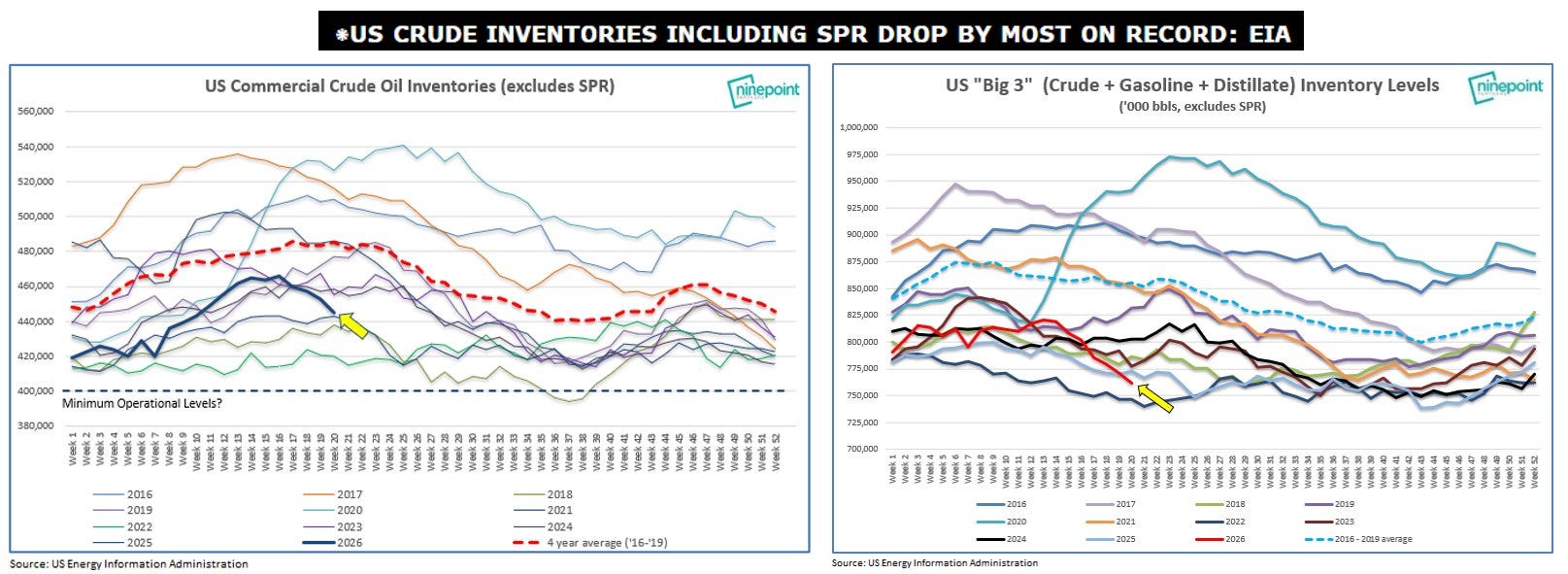
The oil markets continue to show huge draws of both oil and products.
Yet oil prices are not rising to anticipate the actual shortages that may occur. Many in the market continue to assume that running inventories down to levels where availability becomes an issue is inconceivable.
I think the thought of shortages actually happening is beyond most market participants’ ability to contemplate, so it's easier to just think “no worries, somebody will fix the problem.”
As I have said already, we are now likely to the point that if the Strait were opened tight now, we will still likely have shortages at some point. This is due to the time necessary to restore production and transportation, which would be measured in weeks and months.
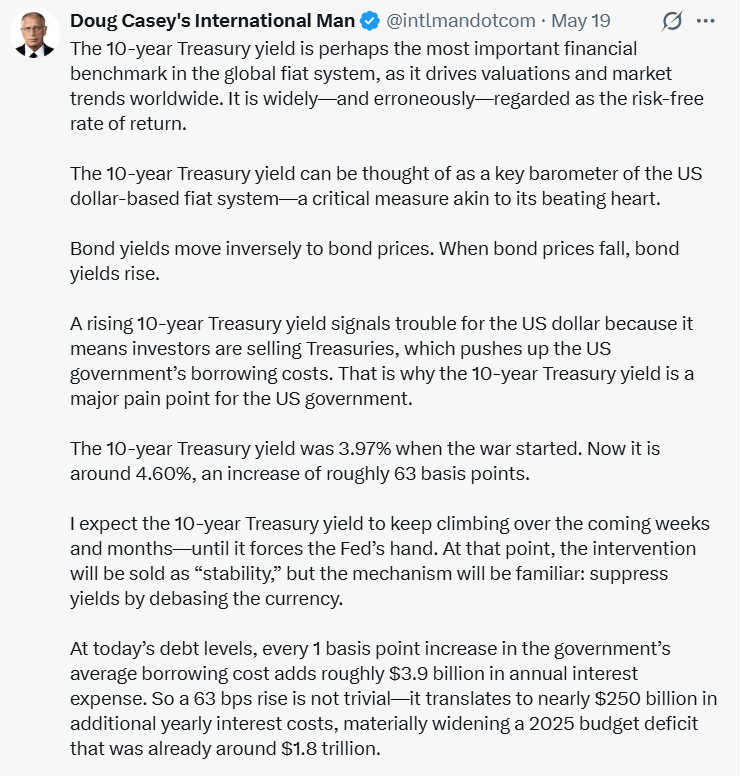
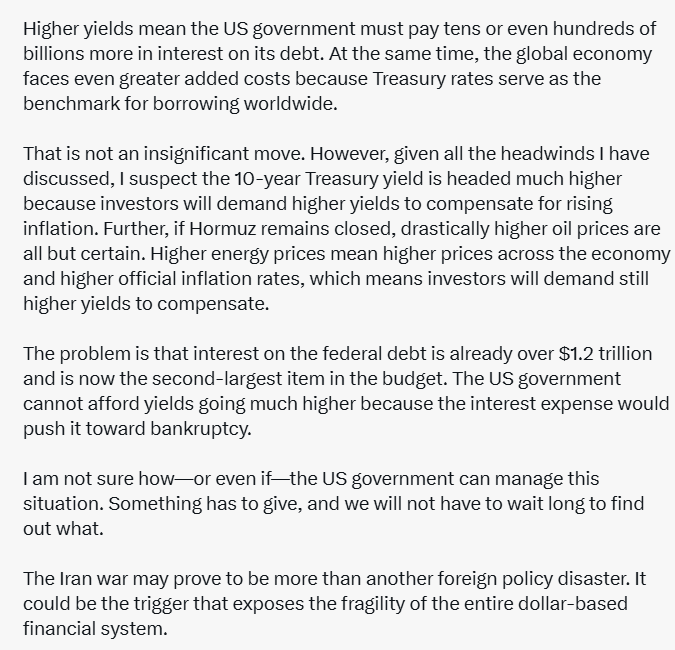
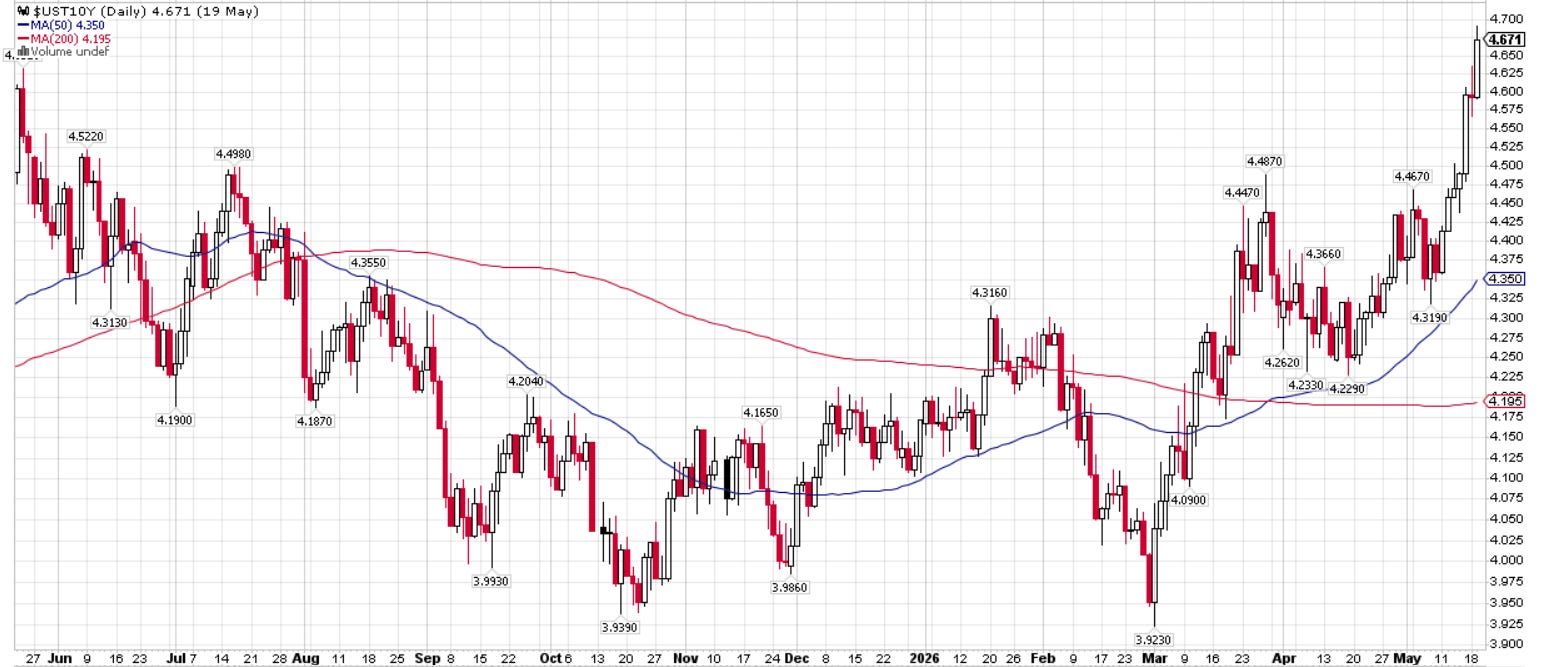
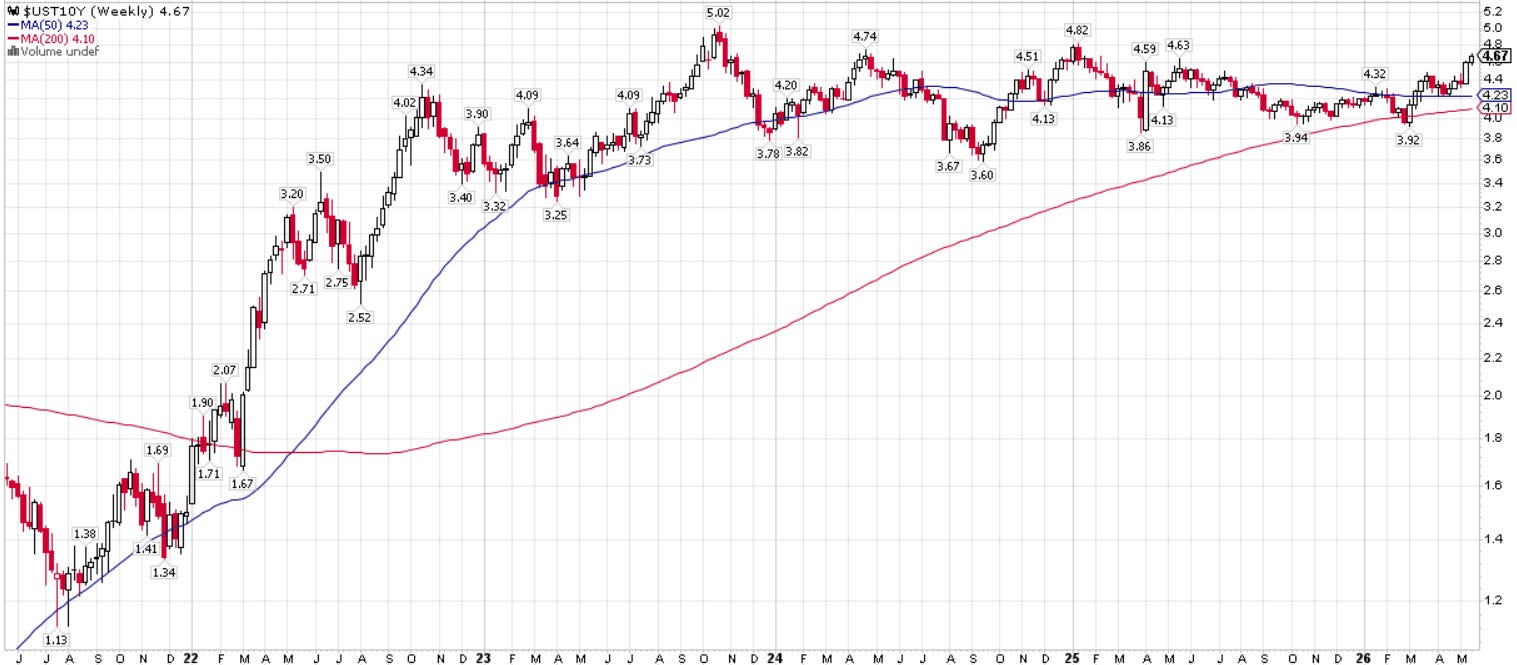
This is a serious issue because everything debt-related is priced relative to the 10-year Treasury.
I expect energy and food prices to rise, which will push inflation expectations higher. In that environment, expect higher interest rates. Higher rates will negatively affect the economy. What happens to the stock market as rates continue to rise, and what happens if the Fed is forced to raise rates?
Notwithstanding the fact that the US is running huge deficits and needs to roll trillions in debt this year. I wouldn't want to be the Treasury Secretary for all the money in the world.
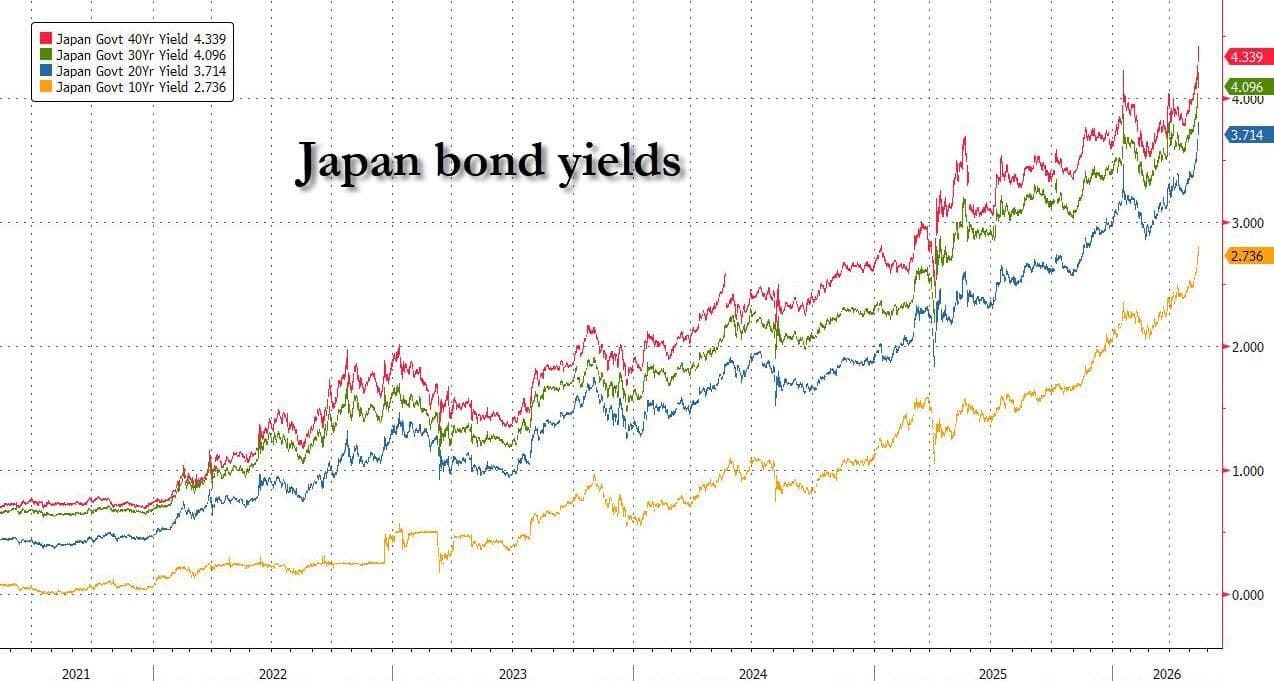
While it may seem like every government these days - not just emerging but certainly all developing countries too - has become a banana republic in light of the increasingly more idiotic fiscal and monetary policies adopted to kick the can at least until the next election, nobody is quite as cartoonish as Japan, the place where all modern-day central bank experiments started in the late 1980s.
While on one hand the Japanese finance ministry and Bank of Japan have, in recent days and over the years, engaged in aggressive currency day trading, where they try to avoid a collapse in the yen by purchasing the currency in exchange for reserves such as US dollars, on the other hand, the same authorities have been, for the past 3 decades, been engaging in unlimited yen printing through perpetual QE (which despite the country’s soaring inflation and collapsing currency, goes on to this day even though Japan’s Yield Curve Control is taking a short break). End result: between the selling and buying of yen, the only thing Japanese officials have achieved is becoming the laughing stock of the world. Meanwhile, Japanese bond yields have exploded to multi-decade, if not record highs, as we showed last night.
One reason, besides all the other “usual suspects” such as soaring energy import costs, a grotesque inability to hike rates and contain inflation, not to mention relentless capital flight, is that as Reuters reported overnight, Japan’s government is likely to issue even more debt as part of funding for a planned extra budget to cushion the economic blow from the Middle East war.
Of course, any additional debt issuance would further strain Japan’s already worsening finances and may accelerate rises in long-term interest rates. Actually, better make that “will” accelerate: the report pushed the yield on the benchmark 10-year Japanese government bond (JGB) to 2.8% on Monday, its highest since October 1996, and the 30-year yield to a record top.
This is one of the reasons I sold all my Japanese stocks. Everyone is going to throw the currency overboard and try to save their bond markets. Hard assets are what I am interested in for my own protection. I want things these psychos can’t print.
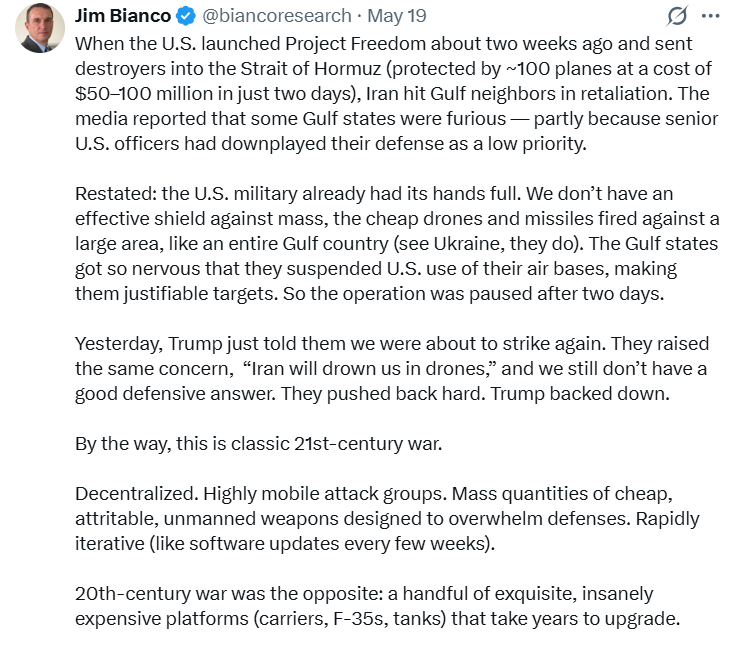
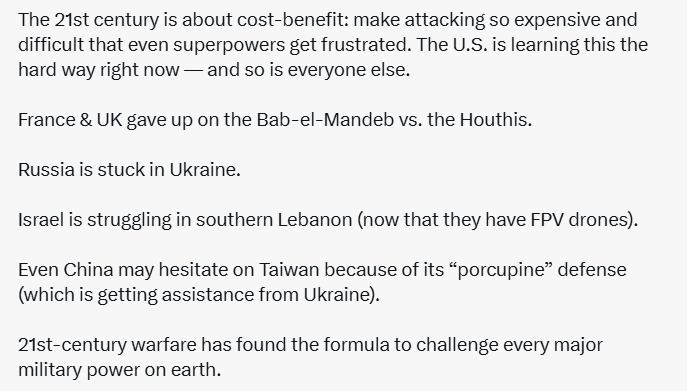
Why can't America make its own chips, medicines, or missiles without China? Financial Sense Newshour host Jim Puplava sits down with systems thinker Craig Tindale for a wide-ranging conversation on the cracks running through the global supply chain—and what they mean for the future of U.S. power. Together they dig into rare earths, semiconductors, petrochemicals, and the slow erosion of American industry, weighing state capitalism against free markets and asking whether reindustrialization is still possible. It's a sharp, sobering look at energy, food, defense, and economic sovereignty in a world that's shifting fast.
That’s it for this week. Thanks for subscribing.
John Polomny
Comments
Nothing yet. Say the first thing.
Sign in to join the conversation.