
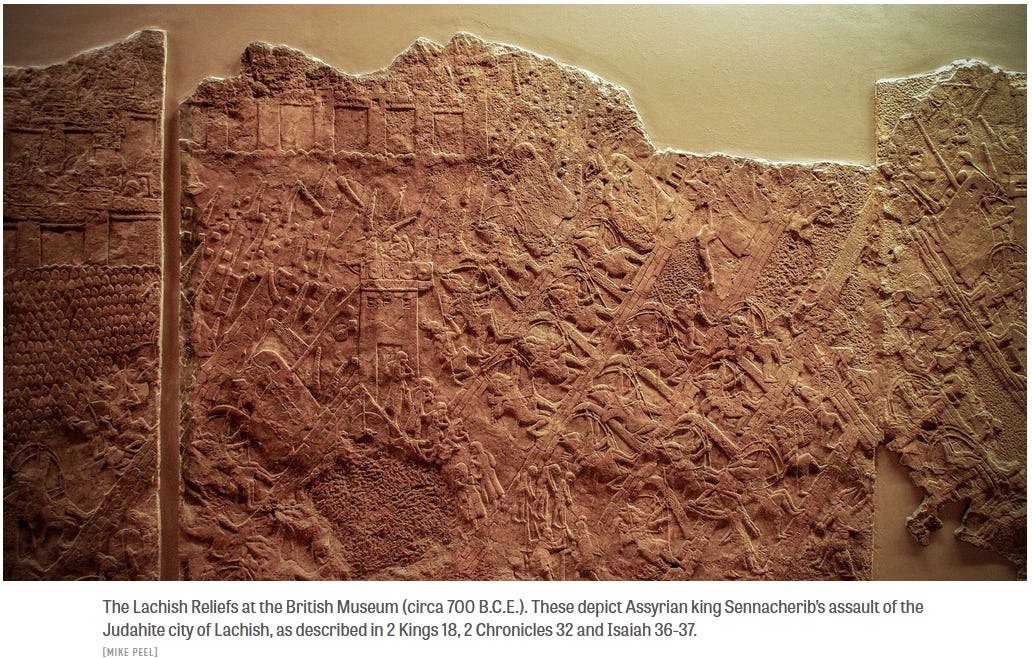
Scott, over at Let the Stones Speak, has done something that deserves more attention than it usually gets in Christian circles. He has gone to the anthropological and linguistic record and asked an honest question: if religion evolved upward from primitive animism toward sophisticated monotheism, why does so much of the evidence run the other way?
Wilhelm Schmidt spent his career, twelve volumes spanning decades, documenting the religious beliefs of the world’s most culturally isolated peoples. His conclusion was radical, and I want to be honest about its status before I lean on it: the academic establishment resisted the strong form of Schmidt’s thesis, and by mid-century had set it aside, in part because it was bound up with a diffusionist method that has since fallen out of favor. Schmidt was also a Catholic priest arguing something his faith predicted, and his critics never let anyone forget it. So this is not settled science. It is a contested claim.
But here is the thing that keeps it from going away. The data pattern Schmidt was pointing at is real, and it is not the pattern the evolutionary model predicts. Across continents, among peoples with no contact with each other, the more isolated the culture, the cleaner the concept of a singular high God tends to be. Not a pantheon. Not competing nature spirits. One creator, morally serious, often increasingly remote, remembered more than institutionally worshipped. The Selknam at the bottom of South America. The Mbuti of the Congo rainforest. The Karen of Burma, with their tradition of a creator called Y’wa who had given humanity a book that was lost, with a promise that a lighter-skinned brother would one day return it. The San people of southern Africa. The same basic shape underneath whatever local elaboration existed. Schmidt’s interpretation of that pattern is disputed. The existence of the pattern is not.
Schmidt called it Urmonotheismus. Original monotheism.
The strict evolutionary model predicts the opposite. The most ancient and isolated cultures should show the least developed God concept. Again and again the picture came back the other way, and as Scott notes, the linguists found something similar in the bones of the Indo-European language family itself. Before Greece and Rome and India existed as civilizations, their common linguistic ancestor carried the name Dyeus Pater, the skyfather. The same being encoded later in Zeus, Jupiter, Tyr, and the Sanskrit Dyaus Pita. The name traveled with the scatter of peoples before the theology behind it had been buried under centuries of polytheistic elaboration.
This is where I want to add something from the work I have been doing in my own books, because Scott’s anthropological argument connects to a theological claim that the God Question series has been building toward from a different direction.
*
The God Who Was Never Fully Forgotten
The opening chapters of my book The God They Rejected Isn’t Real make an argument that runs parallel to Scott’s from a different starting point. The question I am asking is not primarily historical but personal: why do people who claim to have rejected God spend so much energy rejecting him? If God does not exist, the appropriate response to the claim that he does is a shrug, not a campaign. You do not organize sustained opposition against a thing you are genuinely indifferent to.
The Bible offers a psychological diagnosis of this. Romans 1 does not say people are ignorant of God. It says they suppress the knowledge of God. The Greek participle is katechontōn, from katechō, to hold something down by force. This is not the description of someone who examined the evidence and reached a different conclusion. It is the description of someone who encountered the evidence and chose to push it down. Active. Effortful. Sustained.
What the anthropological record gestures at, Paul described in theological terms. The knowledge is there. Strip away the institutional elaboration, the urban bureaucratic religious machinery that cities built around the original relationship, and the older signal tends to show through more clearly, not less. The Selknam did not arrive at Temaukel through philosophical reasoning. They carried him. The Karen did not develop Y’wa through a slow religious evolution. They remembered him, imperfectly, waited for the book that would restore the clear memory, and recognized it when it arrived.
That is not the shape of primitive groping upward toward a God not yet found. It looks more like shared memory of a God once known, worn down by time and distance and the specific distortions that urbanization and institutional religion introduce, but never fully erased.
*
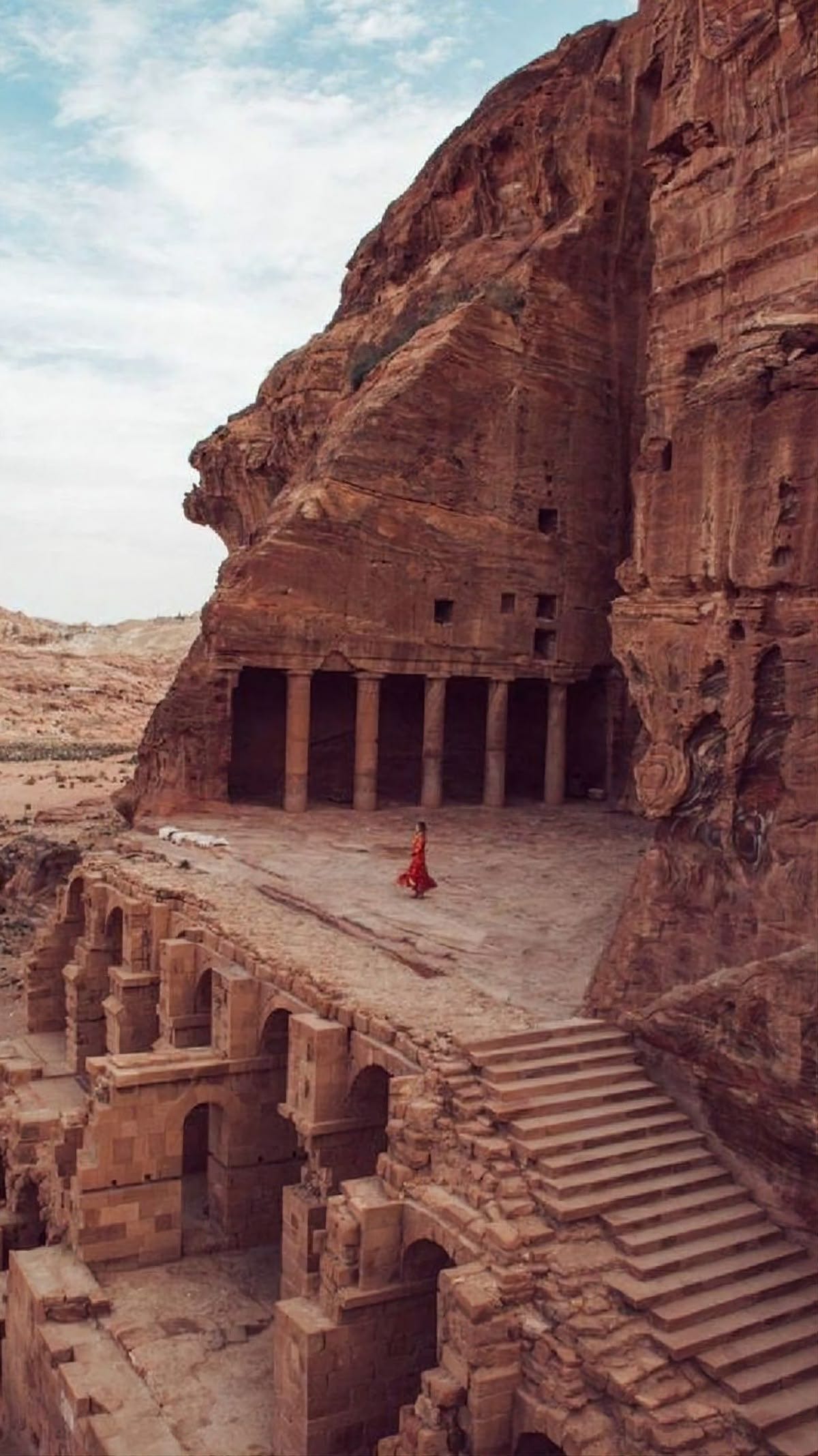
What Islam Did With the Embers
Here is where my work in The Two Muhammads adds a complicating layer to Scott’s argument that I think is worth sitting with.
Muhammad arrived in seventh-century Arabia into exactly the kind of context Scott describes. A world full of buried embers. The Arabian peninsula had Jews and Christians and Hanifs, monotheists who had arrived at the conviction of one God through various routes. The Kaaba itself, before Muhammad cleared it of its idols, was already understood as a sacred site connected to Abraham. The monotheistic impulse was not foreign to Arabia. It was present, fragmented, partially buried under layers of tribal polytheism, but present.
Muhammad’s call to return to the God of Abraham was, in the terms Scott describes, exactly the kind of recovery movement the biblical narrative anticipates. Strip away the idols. Return to the one Creator. Refuse the pantheon.
The problem is what came with it.
The God Muhammad described does not match the God the embers were pointing toward. The high God of the isolated cultures, the one Scott identifies as the structural memory of original monotheism, is consistently characterized by a specific set of qualities. Morally serious. Compassionate toward the vulnerable. The author of a moral law that applies to everyone. Approachable, even if increasingly remote. Not a god who loves selectively, but a god whose regard for his creatures is not fundamentally contingent on their performance.
The Quran’s Allah loves those who fight in his cause. He loves those who purify themselves. He explicitly does not love the disbelievers. Divine love in the Quran is approval extended to those who have achieved alignment. It is not, at any point in the text, described as a God pursuing people who have not yet qualified.
The Bible has a sentence the Quran does not have: while we were still sinners, Christ died for us. And another: God is love. Not God loves, under certain conditions. God is love. Love is not an attribute switched on by human performance. It is what he is.
The Selknam Temaukel, good-natured and approached through prayer with no sacrificial system required, is closer to the God of the Bible than to the Allah of the Quran. The Karen Y’wa, who gave humanity knowledge of himself and then waited for the returning book, looks more like the God who scattered his knowledge into every tribe and tongue and sent his Son to recover what was lost than like the God who demands submission on pain of death for those who leave.
*
What the Embers Were Always Pointing Toward
Scott closes his video with Paul in Athens. The altar to the Unknown God. Whom therefore ye ignorantly worship, him declare I unto you. Paul does not tell the Athenians they have been worshipping nothing. He tells them they have been worshipping someone whose name they did not yet know. Every shadow and echo, every skyfather carried to the ends of the earth, every ember burning in an isolated culture at the bottom of South America or the heart of Africa or the islands of the Bay of Bengal, all of it was pointing somewhere. Not to a concept. To a person.
This is where the anthropological argument and the theological argument converge into something that should stop the careful reader cold.
Suppose the religious instinct is universal not because it is instinct, but because it is memory. The residue of a relationship that was disrupted but never fully severed. That would explain why it persists across ten thousand years of nomadic wandering, polytheistic elaboration, urban distortion, and institutional burial: because the one who made it persists. The shadows would look like shadows of something real because they are shadows of something real.
The high God the isolated cultures remembered, however imperfectly, however worn down by time and distance, is not on this reading a theological proposition that later hardened into a person. The claim of the New Testament is that he was always a person. That he entered history in the most unexpected way possible. That the embers found at the bottom of South America and in the Congo rainforest and on the islands of the Indian Ocean were not the remnants of a failed religious evolution. They were the scattered light of a single source that had not gone out.
Job had no covenant, no Torah, no priesthood, no Israel. He had an orientation toward the one true God that was enough for God to brag about him to the divine council. The widow of Zarephath had no institutional backing. She had an ember still burning in Phoenicia. Melchizedek appeared without genealogy, without a covenant community, as a priest of El Elyon, God Most High, in a Canaanite city before Israel existed.
The embers were always there. The question the record puts to every reader is not whether the embers exist. They show up nearly everywhere, under everything. The question is what they are the embers of.
The answer the Bible has been giving since Genesis is the same answer the evidence keeps pointing toward.
Not a concept. Not a system. Not a religious institution.
A person.
And the person has a name.
*
Watch Scott’s full video at Let the Stones Speak on YouTube.
Let the stones speak - Armstrong Institute
https://armstronginstitute.org/1485-the-attack-on-the-british-museum-and-biblical-archaeology
If you value unflinching, historically grounded analysis that mainstream outlets soften or ignore, consider upgrading. Paid subscribers get:
Several new, full-length articles every week.
Carefully researched pieces you won’t find elsewhere.
Full access to the complete premium archive
Archive of in-depth writing, research, and commentary — all in one place.
Entry into the subscriber chat
A private space for serious readers and thoughtful discussion.
Thanks for reading. This post is public, so feel free to share it. A. C. Rosenthal writes on comparative religion, Islamic theology, and the relationship between Christianity and modern Western culture. This work is entirely reader-supported. By choosing a paid subscription, you allow me to continue this long-form research to bring these vital stories to light. Thank you for helping this Lion roar for truth. A.C. Rosenthal is the author of The Two Muhammads: What History and Manuscripts Reveal About the Islamic Dilemma, The God They Rejected Isn’t Real: Exposing the False Gods of Modern Doubt, and The Carpenter’s Son and the Imam’s Son. Further analysis at:
acrosenthal.com/
https://thetwomuhammadscurriculum.thinkific.com/
Comments
Nothing yet. Say the first thing.
Sign in to join the conversation.