

There is a difference between having been wounded and being organized around the wound. The first happens to everyone. The second happens quietly, and it decides what you are able to believe.
I knew a man once whose whole understanding of the world could be traced back to a single year.
He would not have described it that way. He thought he had simply looked at life clearly and drawn the honest conclusions, the way a reasonable person does. He believed that people were fundamentally out for themselves, that trust was a setup for betrayal, that anyone offering love was running an angle you had not spotted yet, and that God, if there was one, was either absent or cruel, because those were the only two options a serious adult could hold. He was not stupid. He could defend every one of these positions with force, and he had evidence for all of them, because once you are looking for evidence of a thing, the world is generous with it.
But if you knew him long enough, you learned about the year. The betrayal that started it. The people who were supposed to protect him and did the opposite. The prayer that went up in the worst of it and came back as silence. And once you knew about the year, you could see that every single one of his clear-eyed adult conclusions was that year, generalized. He had not reasoned his way to a philosophy. He had been wounded, and then he had built the wound into a lens, and then he had spent the rest of his life looking through the lens and calling what he saw reality.
I am not writing about him to diagnose him. I am writing about him because I have been him, in smaller ways, and because if you have been badly hurt, you may be him right now without knowing it, and it is one of the quietest and most important things that can happen to a soul.
There is a difference between having a wound and having your wound become your theology.
Let me say clearly what I am not saying, because on a subject this tender the misunderstanding is worse than silence.
I am not saying your pain was not real. I am not saying you are weak for feeling it, or that a stronger person would have shrugged it off, or that the things done to you were not as bad as they were. They may have been worse than anyone around you ever understood. I am not handing you the cruelest sentence in the language, the one that says this is all in your head. It is not in your head. It happened. The blood was real.
And I am not saying that if you just adjusted your attitude the pain would resolve, as though suffering were a thinking error to be corrected. That is the theology of people who have never suffered, and it deserves the contempt it usually receives.
What I am saying is narrower, and I think if you sit with it honestly you will feel it land somewhere true. It is that pain does not like to stay a fact. It wants to become a framework. An event that happened to you wants to grow into an explanation of everything, a quiet operating system running underneath all your other thoughts, deciding in advance what is possible and what is not, who can be trusted and who cannot, and above all what God must be like. And it does this so gradually, and disguises itself so completely as ordinary clear-sightedness, that you can live inside it for decades and never once suspect that the thing you call your realism is actually your injury, still bleeding, still deciding your life from a room you stopped visiting years ago.
Here is how you can tell the difference, because there is a tell, and it is not subtle once you know to look.
A wound, left as a wound, produces grief. You mourn what happened, you carry a scar, the scar aches in cold weather, and life goes on around it and sometimes through it. That is the normal, honorable shape of having been hurt. It does not require you to rearrange the universe.
But a wound that has become a theology produces something else. It produces a strange, defensive investment in the darkness of things. You will notice, if you watch yourself closely, that you do not merely believe people are untrustworthy and God is absent. You need them to be. A part of you rises up to defend the bleakness when someone threatens it with hope. When a person shows you unexpected kindness, you do not feel relief; you feel suspicion, and you go looking for the catch, because the kindness is a threat to the framework, and the framework has become the thing you are actually protecting. You have started guarding your pain the way you would guard a treasure, because somewhere along the way it stopped being the thing that hurt you and became the thing that explains you, and a person will fight to keep the thing that explains them even when it is killing them.

That is the moment pain has become theology. When you would rather be right about the darkness than be surprised by the light. When hope has become the enemy because hope, if it turned out to be justified, would mean the years you spent in the dark were not the whole truth, and that is somehow more than you can bear.
I want to be gentle here, because I know how this sounds and I know who is reading. If any of that landed, you are not being accused. You are being recognized. The framework felt like survival, and for a while it was. It got you through the year. The problem is only that the year ended and the framework did not, and now it is deciding things it has no right to decide, chief among them the character of God.
Consider the most famous man in the Bible who had every reason to make his pain his theology, and watch what God does with him, because it is not what you would expect.
Job loses everything in the space of days. His children, his wealth, his health, all of it, for reasons he is never told. And he does exactly what a wounded man does. He builds a theology out of the pain. His conclusion, stated with tremendous force across many chapters, is that God has become his enemy, that the universe is unjust, that there is no point in righteousness because the innocent suffer and the wicked prosper and the whole arrangement is rigged. He is not entirely wrong, either. His friends, who defend God with tidy lies, come off far worse than Job does. God says so directly.
But here is the part that matters for us. When God finally answers Job out of the whirlwind, he does not validate the theology of pain, and he does not condemn Job for his grief. He does something stranger. He expands the frame. He takes Job on a tour of a creation so vast and wild and intricate that Job’s whole picture, the picture built entirely out of his own suffering, is revealed to be too small. Not false, exactly. Too small. There were dimensions to reality that pain had edited out of Job’s view, whole galaxies of meaning that his wound had no room for, and God’s answer is essentially to enlarge the room.
And Job’s response is the thing I would want for anyone reading this. He does not say I was wrong to hurt. He says: I had heard of you with the hearing of the ear, but now my eye sees you. The suffering did not vanish. The children were not un-died. But the lens through which he saw everything was pried open, and through the wider opening he saw a God his pain had made him unable to see. The theology of pain had shrunk God to the size of the wound. The encounter restored him to actual size.
I want to give you a man closer to us, because Job can feel like a character and this one left an autobiography.
John Newton spent his young manhood as one of the most profane, rage-filled, bitter human beings anyone around him had ever met. This is not exaggeration for effect. On ships where hardened sailors cursed as a matter of course, Newton was repeatedly rebuked for inventing obscenities that shocked even them. He mocked everything. He hated authority, hated God, hated the men he sailed with, and by his own later account came within an inch of murdering his captain and within another inch of throwing himself into the sea. His bitterness was not an emotion he had. It was the whole architecture of the man. It was his theology, and his pain had built it.
And his pain was real. He was press-ganged, flogged, and then, in the cruelest turn, enslaved himself on the coast of Sierra Leone, starved and beaten nearly to death by the household of a slave trader, reduced to begging scraps, a servant to slaves. If anyone ever earned the right to conclude that the world was pitiless and God a fiction, it was the young John Newton. His framework was not irrational. It was the wound, generalized, exactly like the man I described at the start, exactly perhaps like you.
Notice what his deliverance was and what it was not. When the change came, on a storm-battered ship limping home, his circumstances did not improve. He was still bound for the slave trade. He would, to his lasting shame, remain in that monstrous business for years afterward, his eyes only opening slowly, because a lens that has hardened over a lifetime does not shatter in a night and the old blindness had corners the light took years to reach. What changed first was not his situation. It was the lens. The same facts, the same brutal sea, the same wretched history, seen suddenly through an opening that his bitterness had kept sealed his whole life. He began to suspect that the darkness he had been so certain of, so invested in, so ready to defend, was not the whole of the story. And through that crack came, eventually, a hymn that half the world can still sing. I once was lost, but now am found, was blind, but now I see.
Read that last line as what it literally describes. It is not mainly about morality. It is about sight. Blindness, and then seeing. A lens sealed shut by pain, and then pried open. The man who wrote it had been the very thing this essay is about, a soul so organized around its wound that the wound had become its god, and the mercy that found him did not begin by fixing his life. It began by changing what he could see.
He went on to mentor the man who ended the British slave trade. The bitterness that had been his entire theology became, once the lens opened, a life that helped free hundreds of thousands. But it started with sight. It always starts with sight.
So I will ask you the question this essay is named for, and I will ask it the way you ask a friend, not the way you level a charge.
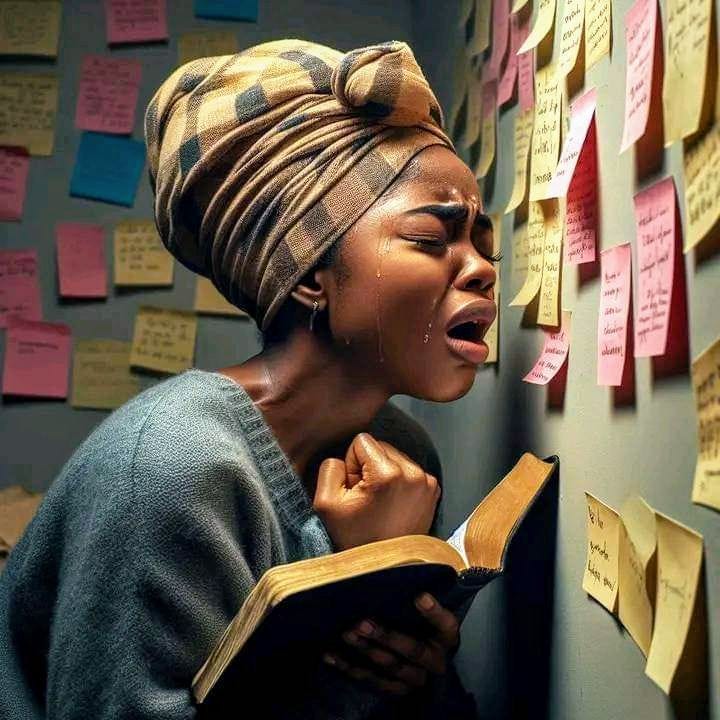
Has your pain become your theology?
Not: was your pain real. It was. Not: are you weak. You are not. Only this: is it possible that the thing you have been calling your realism, your clear sight, your hard-won adult understanding of how the world and God really are, is actually your wound, still deciding things from a room you stopped visiting long ago? Is it possible that you have been guarding the darkness because it came to feel safer than the risk of hope? That somewhere you concluded it is better to be right about the bleakness than to be surprised by a light that might not last?
If even a corner of that is true, I have the best news I know how to give. It means the God you rejected may not be the real one. It means the cruel and absent deity you were so sure of was assembled, in part, out of your own suffering, a portrait your pain painted and then insisted was a photograph. And a portrait can be set down. The lens can open. Not all at once. Newton’s took years. But it can open, and the opening does not require your pain to have been fake, or small, or your fault. It requires only a willingness to consider that the wound, real as it was, was never large enough to be the whole truth about God.
You do not have to defend the darkness anymore. It was never your job, and it was never keeping you safe, whatever it promised.
You are allowed to be surprised by the light.
If this series has been worth your time, consider subscribing. It is reader-supported, and that is what keeps it going.
acrosenthal.com/
No posts
Comments
Nothing yet. Say the first thing.
Sign in to join the conversation.