
There are three kinds of relationship you can have with God. Two of them feel real and are not. This essay is about telling the difference, and about the one that actually is.
Imagine a person who is deeply in love with someone who does not know they exist.
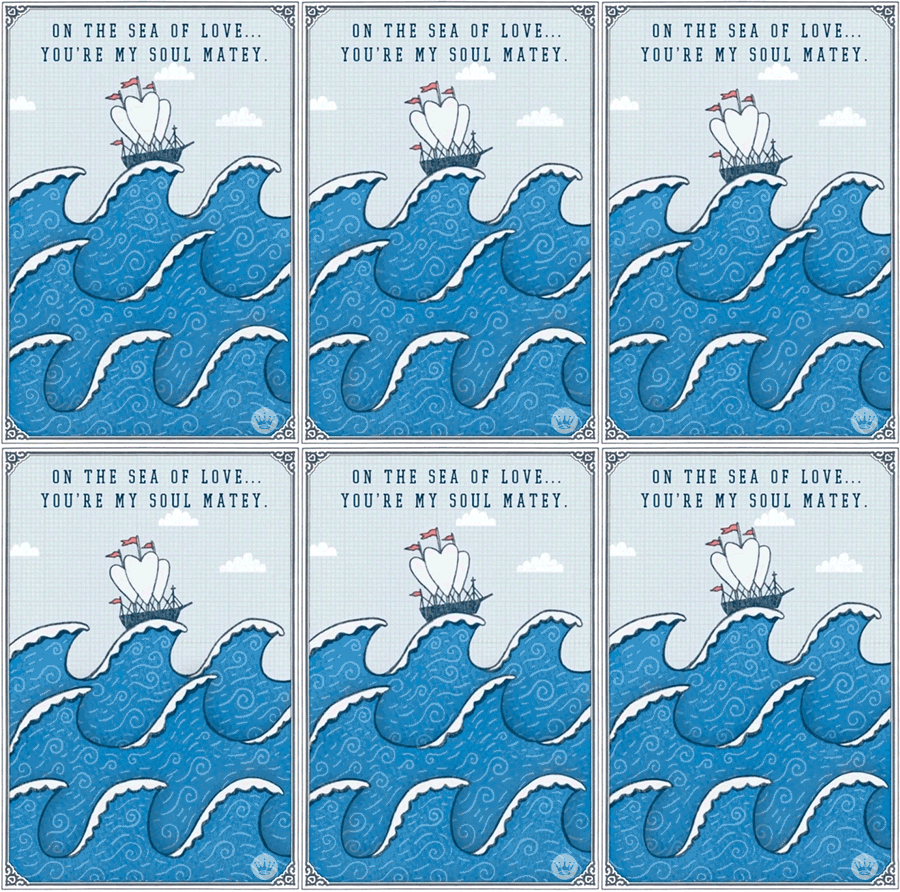
They think about the beloved constantly. They write long letters, full of real feeling, and send them off. They celebrate the person’s birthday, defend them to strangers, arrange their whole inner life around a devotion that is, on their side, completely sincere. The love they feel is not fake. It is genuinely felt, sometimes overwhelming.
But the letters are never read. The beloved does not answer, does not know the lover’s name, has no idea the relationship exists at all. And no matter how real the love feels from the inside, we all understand that this is not, in any full sense, a relationship. It is one person loving in a vacuum. The sincerity of the feeling cannot make up for the fact that nobody is on the other end receiving it. It is love aimed at a wall, and the wall does not love back because the wall does not know.
That is the first kind of relationship a person can have with God, and a great many devout people have exactly this one and never suspect it. The feeling is real. The devotion is real. But somewhere they have quietly assumed that God is the wall, that the letters go nowhere, that the whole thing runs in one direction and always will. They love a God who, in their functional experience, does not answer and does not know them. And they have made their peace with that, and called it faith, when it is actually the saddest possible arrangement: all the cost of love, with none of the being-known that makes love worth its cost.
Now imagine a second relationship, and this one is better, but there is still something wrong with it.
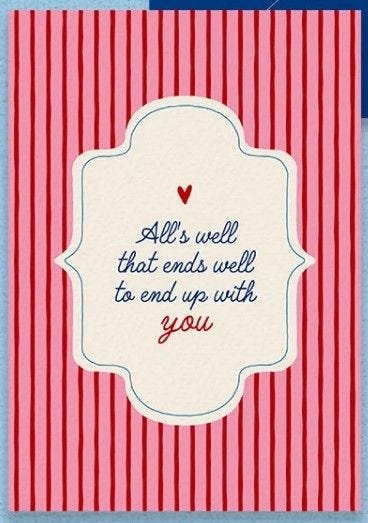
Here the beloved does write back. There is a genuine correspondence, letters going both directions, a real pen-pal relationship with a real person on each end. This is a categorical improvement over loving a wall. Someone is receiving, and someone is replying.
But the lover, in this second scenario, never once writes their own words. Every letter they send is a pre-printed Hallmark card, selected from a rack. They put real effort into the selection. They study the cards, choose the loveliest images, pick the verse that seems closest to what they mean. Some of the cards are quite beautiful and the sentiments printed inside are lovely sentiments, well written, sincere in their way. But they were written by a stranger, for anyone, mass-produced for ten thousand relationships at once. The lover signs their name at the bottom and sends the card, and does this for years, and never once sets down a single sentence from their own heart. Never tells the beloved what actually happened this week. Never says the true, unpolished, particular thing that only this one person, in this one relationship, could say.
That correspondence is more real than loving a wall. But it is still, in a strange way, artificial. The beloved never actually meets the lover, because the lover never shows up in their own words. The cards are a screen. Lovely, well-chosen, sincere in intention, and still a screen, because the one thing a relationship most needs, your actual heart in your actual words, is the one thing the cards are being used to avoid.
And that is the second kind of relationship a person can have with God. All the prayers are prewritten. The Hail Mary. The Glory Be. The Our Father, recited. Beautiful words, many of them, some of them given by God himself. And the person praying them means to be sincere, works to be sincere, and yet across a whole lifetime never once simply talks to God in their own voice, never pours out the true and particular contents of this heart on this day. They send the card. They sign their name. And God, who wanted to meet them, receives another lovely card from the rack.
I want to be careful here, because I am about to be misunderstood if I am not, and the misunderstanding is worth heading off.
I am not saying written prayers are wrong. I am not saying the Our Father is a Hallmark card. It is the opposite of one. It is the prayer the Son of God gave when his friends asked him to teach them to pray, and there is not a wasted syllable in it. So hear the distinction precisely, because everything hangs on it.
The problem was never the words. The problem is the words used as a substitute for the heart instead of a vehicle for it.
The very same Our Father can be two completely different acts. In one, a man mutters it from memory while his mind is on his commute, forty seconds, done, box checked, and rises having said everything and meant nothing. In the other, a man prays it slowly, meaning each phrase, letting hallowed be thy name actually rise as worship and thy will be done actually cost him something and forgive us our debts actually name the thing he did on Tuesday. Same words. One is a Hallmark card. The other is a son talking to his Father in language his Father gave him. The difference is not the script. The difference is whether anyone is home behind the words.
Here is the proof that this is what Jesus meant. When he gave the prayer, he did not say recite this. He said pray like this, after this manner. He was handing them a pattern, a shape, a set of principles: come to God as Father, honor him, want his kingdom, ask for your bread, deal honestly with forgiveness, ask to be kept from evil. And we know he meant it as a pattern and not a magic formula because we can watch him pray, and he never once repeats it word for word. In the garden, in his worst hour, Jesus does not recite the Our Father. He prays its principles in his own agonized, particular words: Father, if it is possible, let this cup pass from me, yet not my will but yours. That is the Our Father, prayed the way it was meant to be prayed, poured through a real heart in a real crisis and coming out in that heart’s own words. The pattern is a trellis for your own life to grow on. It was never meant to be a wall you hide behind.
Let me tell you about a woman who cuts her turkey in half.
Every year she takes the turkey, cuts it clean through the middle, and puts the two halves in the roasting pan. She learned it from her mother, who did it every year, and so she does it, faithfully, certain that this is how it is done and that to do otherwise would somehow be wrong. One year she finally asks her mother why. Why do we cut the turkey in half?
And her mother, now in her eighties, laughs. I cut it in half, she says, because our roasting pan was too small. A whole turkey wouldn’t fit. That’s all. It was never about the turkey. It was about the pan I had in 1954.
The daughter had inherited the action and lost the reason. She was performing a ritual whose entire purpose had died two generations back, and she had come to believe the ritual itself was the point, that the form was sacred, when the form had only ever been a solution to a problem she no longer had. She was not wrong to honor her mother. She was wrong to think the cutting was the thing, when the cutting was only ever serving a purpose everyone had forgotten to ask about.
That is what a prayer becomes when you keep the form and lose the reason. The words were always meant to carry a heart to God. When you keep saying them but stop meaning them, you are cutting the turkey in half for a roasting pan that has not existed for years. Faithfully. Reverently. For no reason that survives the asking.
There is a woman in the Bible who prayed the exact opposite of a Hallmark card, and God recorded it forever as what he was looking for.
Hannah was childless, and in that time and place it was a grief that went to the root of a woman’s whole standing and worth. She went up to the temple and she prayed, and the way she prayed is one of the most human scenes in all of Scripture. She did not recite anything. She was in such anguish, pouring out such raw and wordless grief, that her lips moved but no sound came out, and the priest Eli, watching her, assumed she was drunk. He actually rebuked her for it. How long will you go on being drunk? Put away your wine.
And her answer is the whole of what this essay is trying to say.
No, my lord. I have drunk neither wine nor strong drink. I am a woman of a sorrowful spirit, and I have poured out my soul before the LORD.
Poured out my soul. Not selected a card. Not recited the approved words in the approved order. She brought the actual, particular, humiliating, specific contents of her actual heart, so unfiltered that a priest mistook her sincerity for drunkenness, and she emptied it out in front of God like a woman turning a jar upside down until nothing is left in it. There was nothing beautiful about the performance. Her voice did not even work. And that prayer, that graceless overflowing mess of a prayer, is the one Scripture holds up. God gave her the son. And the son was Samuel, who anointed the line that led to David, and through David, in time, to Christ. The whole subsequent story of Israel turns on a prayer that looked, to the professional religious observer standing right there, like drunkenness.
God was not embarrassed by Hannah’s prayer. He was drawn to it. Because it was real, and it was hers, and it was every unedited thing she actually felt, handed to a Father she trusted to receive it.
So here is the question this essay leaves you with, and it is gentler than it sounds, because the God on the other end is not grading your delivery.
Which relationship do you have?
Are you loving a wall, sincerely, in one direction, having quietly decided long ago that God does not answer and does not know you? He is not the wall. The whole of this series has been trying to say that he is not the wall. The letters were always being read.
Or are you sending him beautiful cards from the rack, year after year, meaning to be sincere, working to be sincere, and somehow never once showing up in your own voice? You can put the card down. You are allowed to. He did not give you the words so that you could hide behind them. He gave them so you would know the shape of the thing, and then he leaned in close, the way a father leans toward a child who is just learning to talk, waiting to hear not the correct words in the correct order but the true thing, the real thing, the particular thing that only you, in this one life, could ever say to him.
He is not the wall, and he is not a stranger at a post office receiving your cards.
He is a Father. And while you were still far off, still a stranger to him, still not knowing his name, he was already running down the road toward you. Christ died for you before you had said a single word of your own to him, which means the whole relationship was never waiting on your eloquence. It was never waiting on the right words at all.
It was only ever waiting on your heart.
Pour it out. He has been leaning in to listen this whole time.
If this series has been worth your time, consider subscribing. It is reader-supported, and that is what keeps it going.
acrosenthal.com/
No posts
Comments
Nothing yet. Say the first thing.
Sign in to join the conversation.