
When we think about great battles that changed history, we usually imagine enormous armies clashing on open plains. We imagine kings riding at the head of vast forces, banners flying, and maps being redrawn overnight. Covadonga was not like that. It was fought in a remote mountain valley in Asturias, far from the centers of power, between a small band of Christian fighters and a Muslim force sent to put them down.
If you had lived in the year 722, you probably would not have heard about it at all. The chroniclers of the time barely noticed it. Even later Muslim historians dismissed it as little more than an insignificant skirmish. But that is exactly why it matters. It was small, but it marked the first time Christians in Iberia stood their ground and won after the Muslim conquest.
In that sense, it was the first page of the Reconquista, the centuries-long struggle to restore Christian Spain…
Spain before the Muslim invasion was ruled by the Visigoths, a Germanic people who had taken over after the collapse of Rome. They had been in Iberia for three centuries, ruling from Toledo, but their kingdom was fragile. Unlike most monarchies, their kings were not hereditary but elected by the nobility. Every succession invited civil war. Noble factions plotted against one another. Councils of bishops had great influence, and church politics often intertwined with dynastic struggles. By the early eighth century, the kingdom was already fraying under internal conflict.
Friendly reminder: The Western Spirit exists because of readers like you. Join us and help keep this project alive and independent.
If you’ve been enjoying these essays, consider becoming a paid subscriber. For a few dollars a month, you’ll get:
In-depth pieces on forgotten battles, brave men, and turning points in Western history
Reflections on faith, order, tradition, and the deeper meaning behind culture
Full access to the growing archive — essays, book breakdowns, and historical deep dives
This project exists because readers like you make it possible.
When Tariq ibn Ziyad crossed the Strait of Gibraltar in 711 with his Berber forces, he faced a divided kingdom. King Roderic, who had only recently seized the throne, hurried south to meet them. At the Battle of Guadalete he was crushed. Roderic himself disappeared, killed in the fighting, leaving no strong leader to rally the realm. The chronicler Ibn Abd al-Hakam wrote that “God destroyed them and most of their nobles were slain,” while the Christian Chronicle of 754 recorded that “the entire army of the Goths was annihilated.”
The gates of Iberia were now open. Toledo surrendered. Córdoba fell. Seville followed. Musa ibn Nusayr, the governor of North Africa, joined Tariq and pressed the conquest north. By 718, most of Iberia was under Muslim control.
Some Visigothic nobles made deals with the conquerors to keep their estates. Others fled north into the mountains. The old ruling class was shattered. Christianity, which had been the official religion of the Visigoths, seemed on the verge of disappearing in Iberia as it had in North Africa.
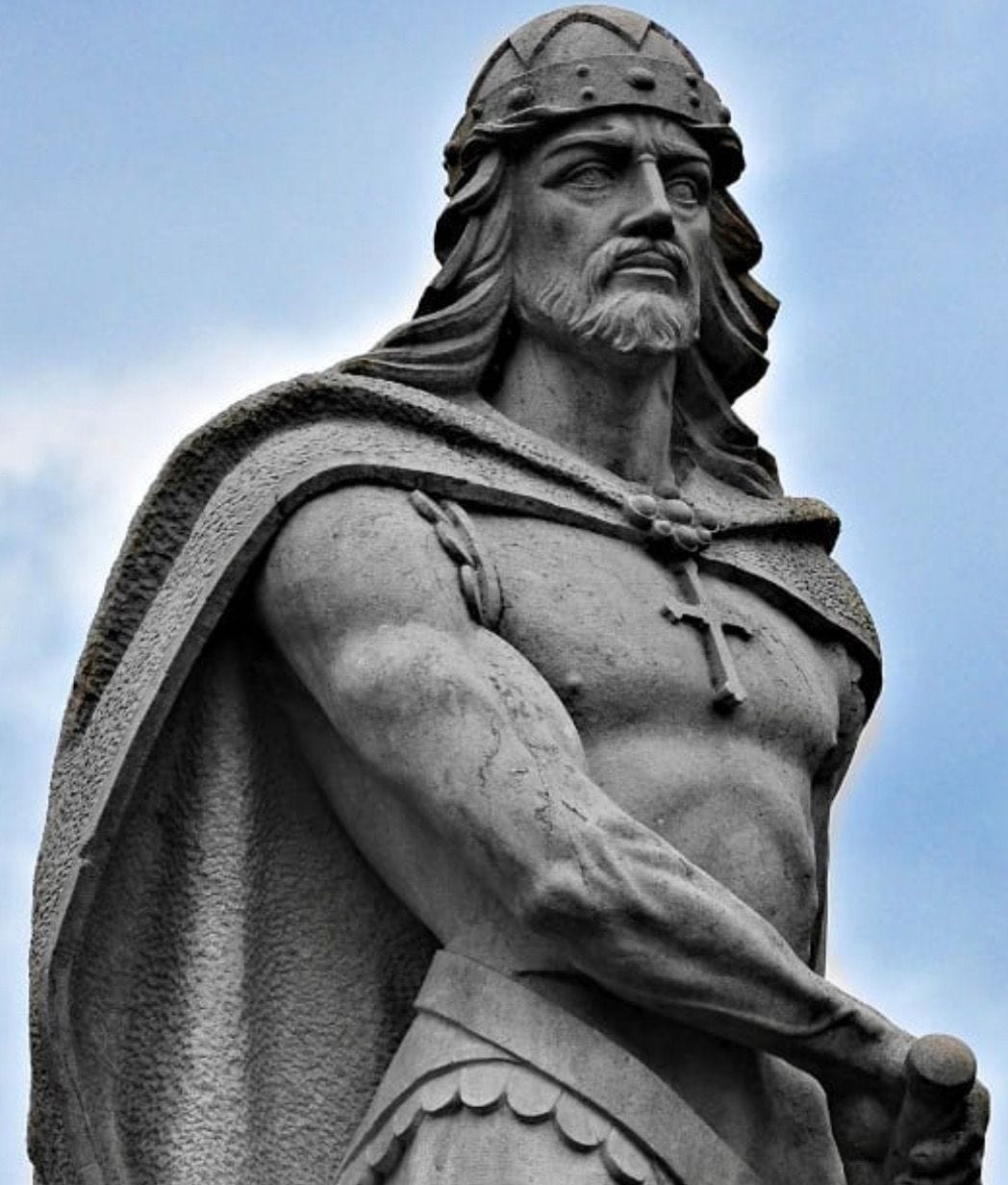
This is where Pelayo enters the story. The details of his life are shrouded in legend, but later chronicles help us sketch an outline. He was probably a member of the Visigothic nobility, perhaps connected to Roderic himself. Some traditions say he had been a royal guard in Toledo. After the conquest he may have been taken hostage by the Muslims and later escaped to the north.
Comments
Nothing yet. Say the first thing.
Sign in to join the conversation.