
Part 40 of 75
For thirty-nine essays we have been clearing away the false gods. This is the turn. And it starts with an apology for a premise I have watched too many Christians make without noticing they were making it.
There is a way of talking about unbelief that treats the unbeliever as a malfunction.
You have heard it said. “The natural man cannot receive the things of God.” “The heart is deceitful above all things.” “They suppress the truth in unrighteousness.” Each of those is a real verse and each of them is doing real work in its own context, but stack them into a strategy and you end up with an approach to human beings that assumes the person across the table is not primarily a knower. He is a resistor. His mind is not an instrument, it is an obstacle. And the job of the Christian becomes to overpower the obstacle with better argumentation, more evidence, tighter logic, until resistance collapses.
I want to say plainly that I do not believe this, and I do not think Scripture teaches it as an anthropology.
I am a tradesman who spends his days diagnosing issues with other people’s homes and other tradesmen’s work. I have done it so many times that I now walk people through diagnosing and repairing their own houses over the phone. A man I have never met, in his own basement, finding it himself.
That is the natural state. Not denial. Not suppression. Investigation. People look, weigh, test, and conclude. They do it constantly, all day, about everything from a strange noise in the engine to whether their spouse is unhappy. The faculty is standard equipment and it runs on its own.
Now, people do resist. I know that better than most, because convincing someone he is wrong is a thankless job and I do not like doing it. I would much rather be wrong myself, because then I do not have to convince anyone of anything and I can get right to work solving the problem.
But watch what they are actually resisting. It is not the truth. It is their own pride, and the discomfort that comes with a paradigm shift. This is why I believe pride is deceitful. It blinds a man to a thing he is entirely capable of seeing. `He is not fighting the truth. He is fighting the cost of admitting it.
Which means that if God wanted to be known by creatures like that, the method would be obvious.
You would not argue them into the room. You would put something in front of them and trust their eyes.
That is what He does. That is what He has always done. And once you see it, you will find it on nearly every page, and it will overturn the thing you were most afraid was true about yourself.
Before the theology, the anthropology, because the Bible has one and it is not the one you were handed.
The first job ever given to a human being is a research project. Adam is placed in the garden and God brings the animals to him to see what he would call them. Not to test his obedience. To see what he would name. The opening assignment of the human race is taxonomy, which is to say: look closely at things, notice what distinguishes them, and say what they are. God builds a creature and the first thing He does with it is hand it a classification problem.

Proverbs makes it a maxim. It is the glory of God to conceal a matter, and the glory of kings to search it out. Read that again, because it is astonishing. Concealment is not God being coy or withholding. It is God building a world with depth in it, on purpose, so that there is something for a mind to go into. The searching is not a penalty for the concealment. The searching is the glory. It is the dignity of the creature, matched to the dignity of the Maker.
Then the New Testament, where you would most expect blind submission to be commended, does the opposite.
Luke opens his Gospel by explaining his method. Others have drawn up accounts, he says, and he has investigated everything carefully from the beginning, so that his reader may have certainty about what he has been taught. That is a source-critical statement. A man announces at the top of a Gospel that he did the legwork so the reader could check the result.
The Bereans are the model. Paul preaches, and instead of receiving it flat, they go home and examine the Scriptures daily to see whether the things he said were so. Luke’s verdict on that behavior is not that they were stubborn. He calls them more noble than the crowd that simply accepted it. Fact-checking the apostle is written into the text as the higher behavior.
And John, closing his Gospel, states his purpose in evidentiary terms. These signs are written down so that you may believe. The signs come first. The believing is the conclusion drawn from them.
The first letter of John opens harder still, piling up the vocabulary of physical verification: what was from the beginning, what we have heard, what we have seen with our eyes, what we have looked upon and our hands have touched. Four sensory verbs in one sentence. Peter, writing near the end of his life, says flatly that they did not follow cleverly devised myths, but were eyewitnesses. Paul lists the resurrection appearances and notes that more than five hundred saw Him at once and most of them are still alive, which is only worth saying to a reader who might go and ask one.
None of that is the literature of a religion that thinks you are broken. It is the literature of a religion that thinks you can be shown.
Which brings us to the objection I owe you before I go any further, because it is the one that nearly sank this essay.
If God does not argue, what about Job?
Job is thirty-seven chapters of the most serious accusation in Scripture. A righteous man is destroyed, and he does not curse God and he does not repent of sins he did not commit. He does something far more dangerous. He demands a hearing. He wants the charge sheet. He wants to know what he is being punished for. And his friends spend the entire middle of the book arguing at him, with real theology, in good order, and every word of it lands wrong.
Then God shows up in the storm.
And here is the thing that should stop you. God never answers the question. He never mentions the wager. He never explains the suffering. He offers no theodicy at all, then or ever, and the book that has been the church’s central text on suffering for three thousand years contains no solution to suffering.
What He does instead is ask questions. Scores of them, one after another, and almost none of them are theological. Where were you when the foundations were laid. Have you entered the storehouses of snow. Who let the wild donkey go free. Do you know when the mountain goats give birth. Look at the ostrich, who leaves her eggs in the dirt and forgets that a foot may crush them, because God did not give her wisdom, and yet when she lifts herself to run she laughs at the horse and its rider. Look at the war horse, who paws the valley and will not turn back from the sword. Look at Behemoth. Look at Leviathan.
That is not a rebuttal. It is a tour.
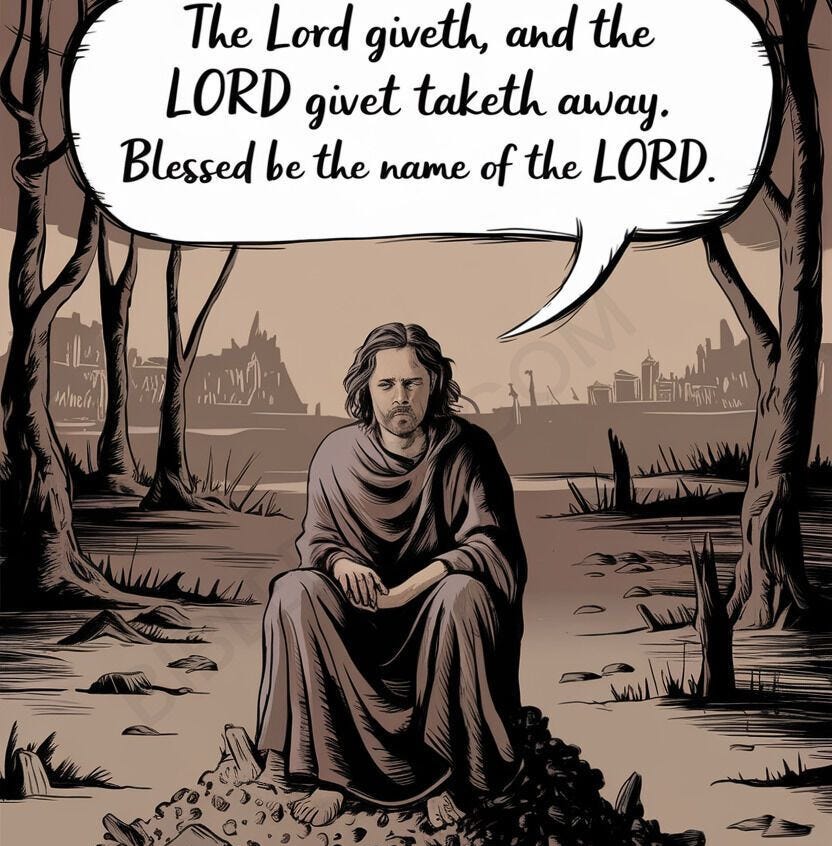
God takes the most wounded man in the Bible on a guided walk through the evidence, creature by creature, weather system by weather system, and He does not tell him a single thing about his own case. He shows him the world.
And Job’s answer is the sentence this whole essay is built on. He says he had heard of God by the hearing of the ear, but now his eye sees Him.
Report, replaced by observation. That is not a man losing an argument. That is a man who got shown something and drew the right conclusion. The friends argued for thirty chapters and moved him nowhere. God walked him through the exhibit and he was undone.
Job is not the exception to the pattern. Job is the pattern with the volume up.
Now let me concede something that a careless version of this essay would have hidden from you.
It is not true that God never argues. It is not close to true, and if you have heard a preacher say it, he was overreaching.
Isaiah opens with God summoning a rebellious nation and saying come now, let us reason together. The Hebrew verb there is yakach, and it is a courtroom word. It carries the sense of arguing a case out, laying the dispute on the table and settling it. God does not open with a decree. He opens with a legal invitation.
Later in the same book He turns to the idols and tells them to present their case and bring forward their strong arguments, and the specific test He proposes is predictive: tell us what is going to happen, so we can examine it afterward and know. He is proposing falsification. He offers His own track record on the same terms.
Jesus argues constantly. When the Sadducees come with their trick question about the woman with seven husbands, He does not tell them to have faith. He takes them to Exodus, to God speaking from the bush, saying I am the God of Abraham and of Isaac and of Jacob. Present tense. And He builds the resurrection out of a verb. He is not God of the dead but of the living. That is an argument from grammar, and it is a good one.
On the Emmaus road, He does not merely appear. Beginning with Moses and all the prophets, He interprets to them everything in the Scriptures concerning Himself. That is exposition, sustained for seven miles.
And Paul is described doing this professionally. In Thessalonica he reasoned with them from the Scriptures, explaining and proving. In Athens he reasoned in the synagogue and then in the marketplace every day with whoever was there. In Corinth he reasoned every Sabbath and tried to persuade. In Ephesus he reasoned and persuaded for three months in the synagogue, and when that closed he moved into a lecture hall and kept going daily for two years. The Greek words behind those verbs are the ordinary vocabulary of debate and demonstration. Paul was, professionally, an arguer.
So the claim is not that God avoids argument. He does not.
The claim is about the order of operations.
God does not require you to lose an argument before you are allowed to look. He never makes the reasoning the price of admission to the evidence. He puts the evidence first and argues alongside it, as a companion to the looking, never as a substitute for it. Isaiah’s courtroom invitation is followed immediately by a demonstration. Paul’s reasoning in the lecture hall runs alongside a public ministry people could observe. Even Jesus, in the middle of an argument with hostile authorities, breaks off and says: if you will not believe me, then believe the works. Look at what is actually happening and reason back from that.
That is not a God who thinks your mind is an obstacle. That is a God who thinks your mind works, and who is willing to put material in front of it.
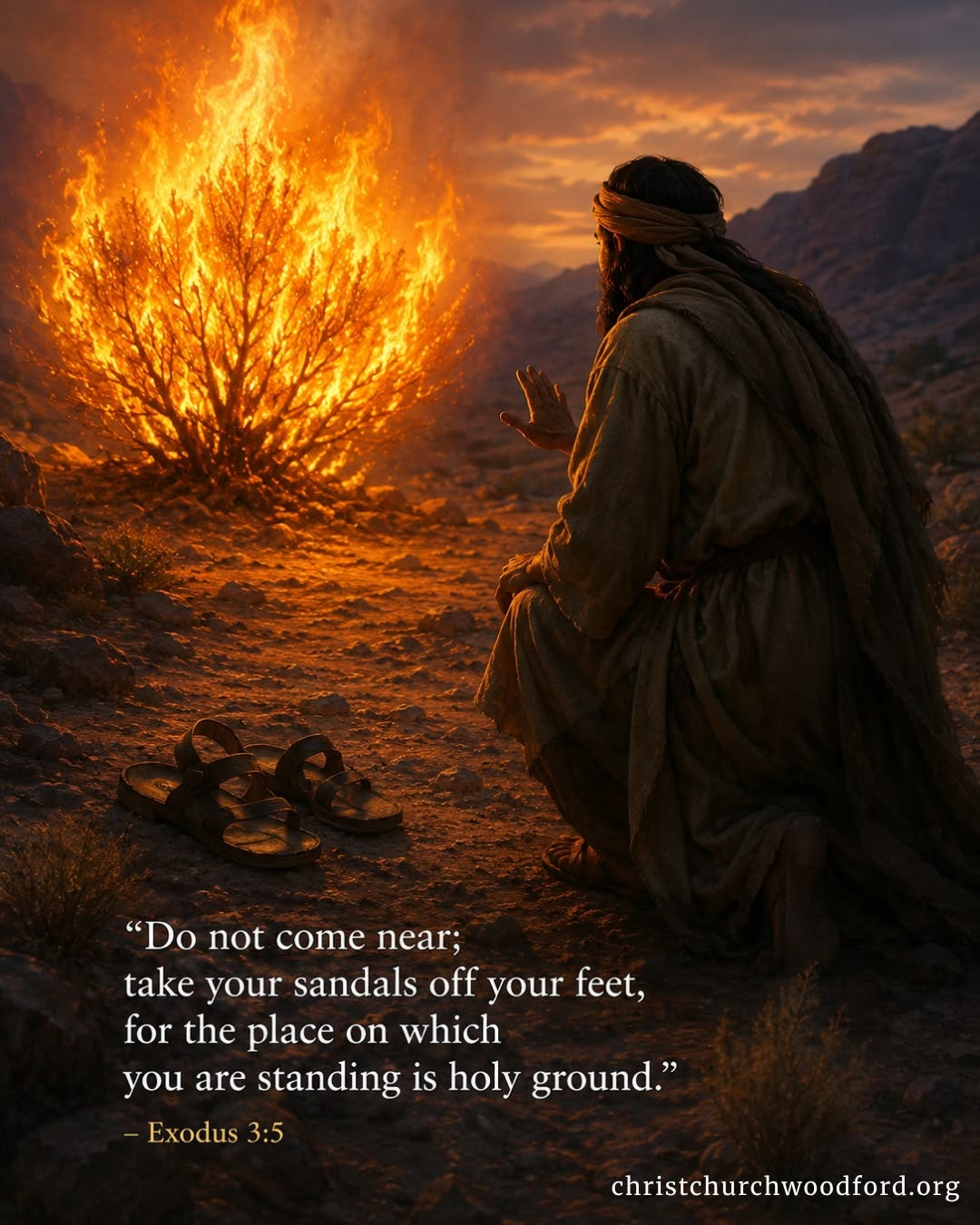
Watch Him do it with Moses.
A fugitive with a criminal record is standing in front of a bush that will not stop burning, and he asks the most reasonable question a man in his position could ask. If I go to these people and say God sent me, and they ask His name, what do I say?
It is a request for credentials. Something producible. And God does not hand him a syllogism. He hands him a name, and the name is barely a noun. I AM WHO I AM. Tell them I AM has sent you.
The old version of this essay treated that as God declining to argue. I no longer think that is right. A name is not a smaller answer than a proof. It is a larger one, and it is the answer you give to a creature capable of knowing a person. You do not introduce yourself to a machine. You state parameters. You introduce yourself to someone with the capacity to recognize you later, to compare what you said with what you do, to build a picture over time and correct it as evidence comes in. The name is not a substitute for evidence. It is the beginning of a relationship in which evidence will accumulate.
And notice what He immediately attaches the name to. Not to attributes. To people. I am the God of Abraham, the God of Isaac, and the God of Jacob. Not the unmoved mover, the first cause, the ground of being, though He is all of those and could have said so. He introduces Himself by track record, by three specific men He had specific history with, men who limped and lied and wrestled Him in the dark and were loved anyway.
That is a citation list. He is saying: here is where you can go and check what I am like.
Later, on the mountain, He does something more intimate still. He passes by and announces His own character out loud, and it is worth noticing what He leads with. The LORD, the LORD, compassionate and gracious, slow to anger, abounding in steadfast love and faithfulness. That is God describing God. Given the opportunity to say the truest thing about Himself, the first word He reaches for is compassionate. Not almighty, though He is. Not holy, though He is that too and it comes in the same passage. First, compassionate.
That is the exhibit He wants examined before any other.
Here is the thread most readers miss, and it runs under the whole Old Testament like a cable beneath the floor.
God does not only reveal Himself to Israel. He reveals Himself to the watching world, through how He treats Israel. Israel is the lit stage. The nations are the gallery. And the stated purpose of the entire production, repeated until it becomes a refrain, is that observers would draw a conclusion.
Listen to how often He says it. The Egyptians shall know that I am the LORD. The Egyptians will know when I gain glory over Pharaoh. This was never a private arrangement between a deity and one tribe. It was a public demonstration, staged in front of the most powerful empire on earth, so that a finding would go out. There is a God, and here is what He is like: He hears slaves, He keeps promises, He does not abandon the people He claimed.
Then comes the passage that tells you what God will spend to protect the record.
In Ezekiel He explains why He keeps rescuing a people who have done nothing to deserve it, and the reason is not the one you would guess. It is not for your sake, house of Israel, that I am about to act, but for the sake of My holy name, which you profaned among the nations. He keeps covenant with a covenant-breaking people, He stays faithful to the faithless, specifically so the watching nations will not conclude that He is the kind of God who quits. God protects his reputation because He wants relationship with mankind.
Sit with the logic of that, because it is stranger and better than it first appears. God’s steadfastness toward people who keep betraying Him is not sentimentality and it is not blindness. It is evidentiary integrity. He is protecting the exhibit. He will not permit a false reading of His character to enter the record, and so He out-loves Israel’s unfaithfulness in full view of the world, at enormous cost, so that anyone watching will get the answer right.
He never argued the nations into monotheism. He never sent Israel out to win a debate tour. He acted, in public, in history, in front of witnesses, and let the acts speak. Then the nations will know that I am the LORD. Not concede. Not be talked around. Know. As in met.
And the demonstration worked on precisely the person you would least expect, which is why she deserves more than a passing mention.
A generation after the sea, two Hebrew spies are hiding in a house on the wall of Jericho, and the woman hiding them tells them why the whole city is in terror. We have heard how the LORD dried up the water of the Red Sea before you. Our hearts melted. She then states a full theological conclusion: the LORD your God, He is God in heaven above and on earth below.
Look at what she had to work with.
Rahab was a Canaanite. She had no Torah. No priesthood, no covenant, no synagogue, no teacher, no tradition, and no one discipling her. She was a prostitute in a city under sentence, in a profession that guaranteed nobody respectable was instructing her in anything. Every advantage of formation that a person could have, she lacked.
What she had was a report of an event, and a mind.
And she used it correctly. She heard testimony about something that happened at a sea forty years earlier and hundreds of miles away, she weighed it, she reasoned from the act to the character of the actor, she reached the right conclusion about the God of Israel, and then she staked her life and her family on the finding. She was not argued with. She was not evangelized. She was not deceived and then corrected. She was a competent human being who received evidence and processed it accurately, alone, from inside a condemned city.
For that she was woven into the ancestry of the Messiah.
If you want a single portrait of the anthropology I am arguing for, she is standing in the doorway. The faculty God gave human beings works. It worked in a Canaanite brothel with no theological support whatsoever. That is not the exception that flatters the rule. That is God demonstrating what He thinks people are capable of when you put something real in front of them.

By now you may have noticed something odd about the instruments God keeps choosing, and it is not an accident. It is stated policy.
Paul says it flatly. God chose the foolish things of the world to shame the wise, and the weak things to shame the strong, and the lowly and the despised, and the things that are not, to nullify the things that are, so that no one may boast before Him.
That last clause is the key, and I want to put it in the language of the rest of this essay. God is controlling for a variable.
If the message arrives through impressive people, the impressiveness of the messenger contaminates the finding. You cannot tell whether you are looking at God or at a compelling man. So God systematically removes the variable. He works through what the world has discarded, so that when the thing stands up anyway, the cause is not in question.
Consider the raw material. To confront the greatest empire on earth, a stuttering fugitive with a killing on his record. To be king, the youngest son, out with the sheep when the prophet came, so overlooked that his own father did not think to call him in from the field. To be His covenant people, not the largest nation but the smallest, and He says so in Deuteronomy without softening it: the LORD did not set His love on you because you were more in number, for you were the fewest of all peoples.
He chose the least. On purpose. As method.
And the psalm gives it a permanent image. The stone the builders rejected has become the cornerstone. Picture the scene exactly. The builders are the professionals. Knowing which stones matter is their whole job. They look at one stone, judge it worthless, and throw it on the pile. And God takes that stone and makes it load-bearing for the entire structure.
Which means the method is not merely how the message travels. The method is part of the message. A God who consistently works through the rejected is producing evidence about what He is like. How He reveals Himself is a datum about what is being revealed.
Hold that up against the god this series has been dismantling. The scorekeeper works through the impressive, rewards the qualified, and discards the failures. The God who is actually there does the reverse, announces it as policy, and builds everything on the discarded.

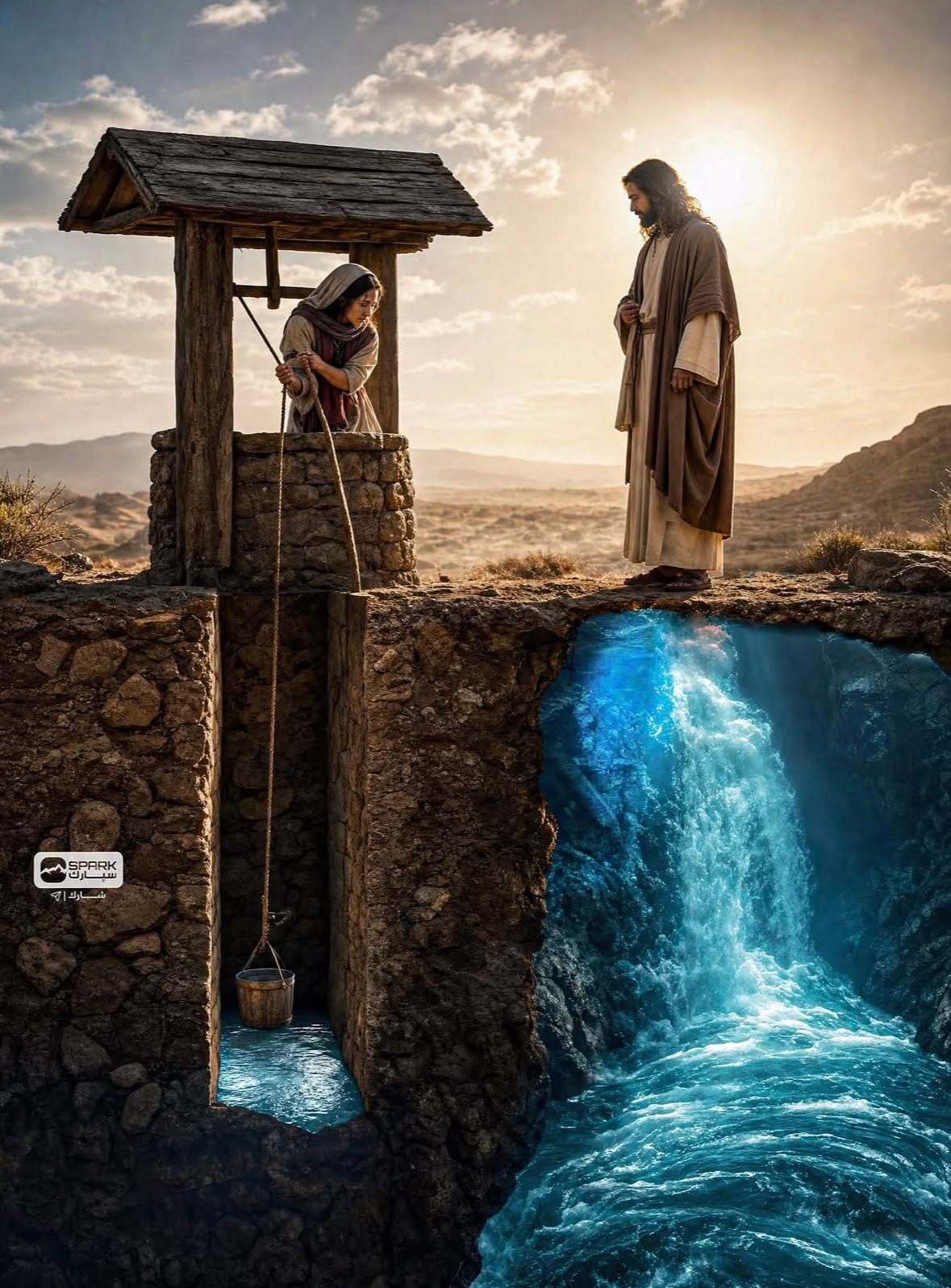
Everything converges on one afternoon at a well in Samaria.
A woman comes to draw water at noon, which is the wrong time, and the detail is not incidental. Women drew water together in the cool of the morning. It was the social hour. This one comes alone in the worst heat of the day, precisely so she will not have to stand among the others. She has had five husbands and the man she is with now is not one of them. She is an outcast among outcasts. Anyone who has ever timed their own arrival to avoid a room full of people knows exactly who she is.
And she is the person to whom Jesus gives the first open declaration of His identity in all of John’s Gospel.
Watch how it unfolds, because it is this essay in miniature.
She is the one who reaches for the argument. She raises the old dispute between her people and His: our fathers worshiped on this mountain, but you Jews say Jerusalem is the place. Which is it? It is the oldest move in the world, and every one of us has made it. Let us keep this theological. Let us argue about the correct mountain, in the abstract, about which team is right, so that it never has to become about me.
And Jesus will not take the bait. He steps past it. The hour is coming and is now here when true worshipers will worship the Father in spirit and truth. The mountain was never the point.
Then He does the thing that undoes her. He tells her about her own life. He names the husbands. He knows.
And notice what she carries back into the town she had been hiding from. Not a doctrine. Not a syllogism. An evidentiary sentence, and an invitation: come, see a man who told me everything I ever did.
Come and see. That is the whole apologetic. She does not argue with a single person. She reports a verifiable encounter and invites them to go and check it, and the text says they went out to Him. Then, after they had heard for themselves, they told her they no longer believed because of what she said, but because they had heard Him themselves.
That is the pattern completing. Testimony gets you to the well. Then you look for yourself.
Look at who she is, on every axis at once. A Samaritan, from a people the Jews regarded as unclean: the rejected nation. A woman, in a culture where a rabbi would not address one publicly: the discounted witness. A ruined reputation hiding at noon: the discarded individual. Foolish, weak, lowly, despised, the thing that is not. And God, incarnate and tired, sitting by a well, picks her out of everyone to hear the words I who speak to you am He.
She is the woman at the well and she is also Israel. The corporate pattern made personal. God took the fewest of all peoples and made them the channel through which every family on earth would be blessed, and at that well He did the identical thing at human scale.
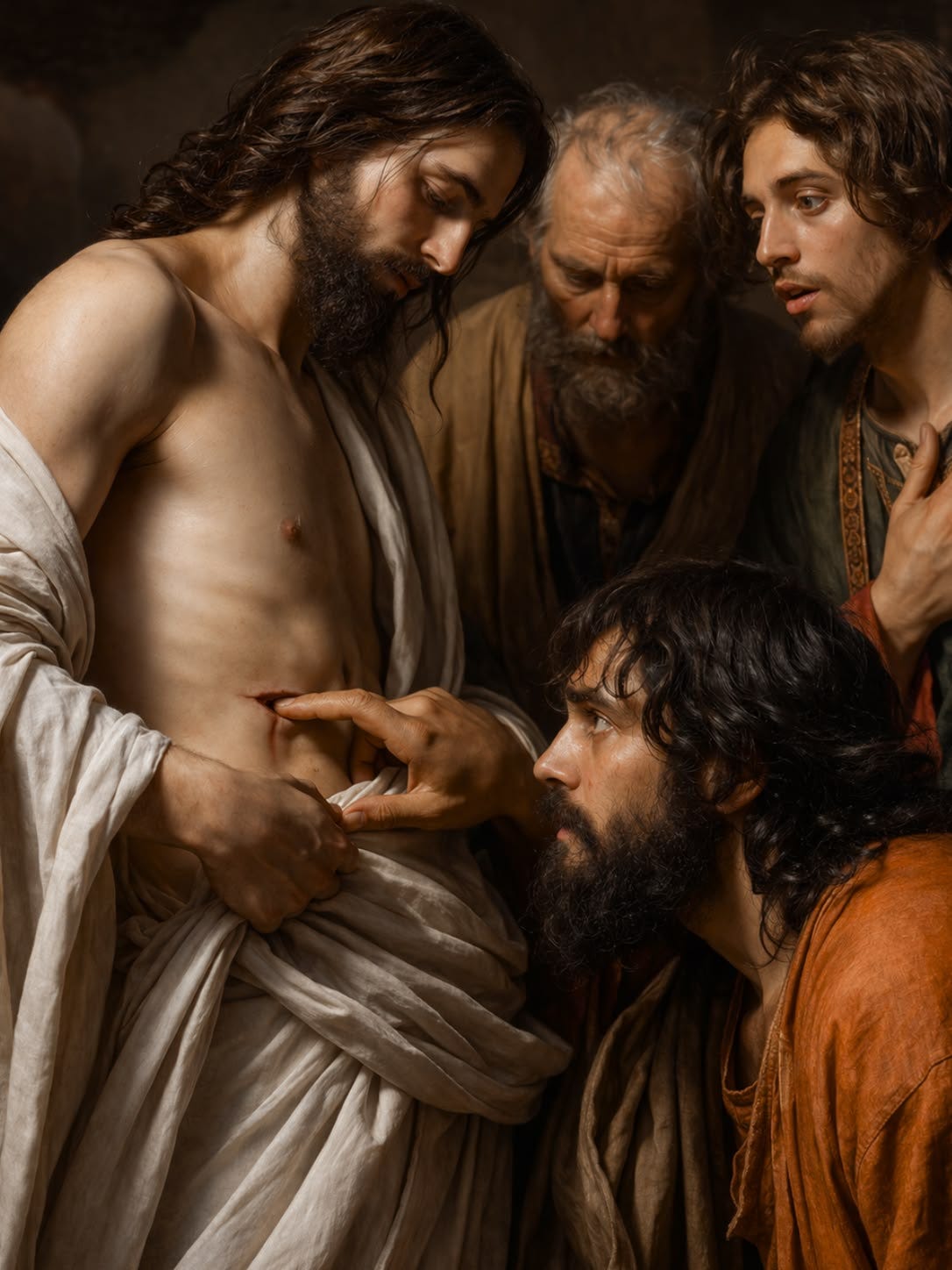
If God thought your reasoning was the enemy, there is one scene He would have handled very differently.
Thomas was not there when the others saw Him. And when they told him, he did not accept it on the strength of testimony from ten men he had lived with for three years. He stated a condition, and he stated it in specifics: unless I see the mark of the nails in His hands, and put my finger where the nails were, and put my hand into His side, I will not believe.
That is a falsification condition. Thomas named, in advance and in detail, what would have to be true for the claim to hold, and committed himself to the result.
Eight days later Jesus comes and stands among them, and He does not rebuke the demand. He meets it, item by item, in the order Thomas set. Put your finger here, and see My hands. Put out your hand and place it in My side.
Stop and look at what that is. The risen Lord of the universe submits to a test designed by a doubting man, and passes it on the doubter’s own terms. He does not require Thomas to repent of wanting to check. He supplies the check.
The line that follows is often used against people like Thomas, and I think it is usually read wrong. Blessed are those who have not seen and yet have believed. That is not a scolding of the man in front of Him, who has just been given exactly what he asked for. It is a blessing pronounced forward, over everyone in the centuries after, who will not have the option of the physical body in the room. And the very next sentence in John explains how those people are supposed to manage: these things are written so that you may believe. He hands the future readers a written record precisely because they cannot put a hand in the wound.
The evidence changes form. It does not get withdrawn.
The same thing happens when John the Baptist, sitting in Herod’s prison and watching his own execution approach, sends men to ask whether Jesus is really the one, or whether they should be looking for somebody else. This is the man who baptized Him. Who saw the dove. Who said behold the Lamb of God. And now, in a cell, he is not sure.
Jesus does not say: John, you of all people should know better. He says: go and tell John what you hear and see. The blind receive their sight, the lame walk, lepers are cleansed, the deaf hear, the dead are raised, and the poor have good news preached to them.
Go and check. That is the answer given to the doubt of a dying man. Not a reprimand. A list of observable facts and an instruction to look at them.
The pattern holds through the most important morning in history, and this is where it costs the most.
When Jesus rose, He could have appeared first to anyone. To Pilate, to vindicate Himself against Roman power. To the high priest, to confound the court that condemned Him. To the eleven, the leadership, the men who would run the church. He appeared first to a woman. Mary Magdalene, out of whom He had once cast seven demons, standing in a garden crying, is the first human being to see the risen Lord. Then the other women, before any of the men. He puts the first proclamation of the resurrection, the announcement on which the whole of Christianity stands, into their mouths and sends them to tell the apostles.
In the first century this was very close to self-sabotage. A woman’s testimony was of limited value in a legal proceeding and was widely regarded as unreliable. If you were fabricating a resurrection to sell to a skeptical ancient world, women are the last witnesses you would invent, because the testimony arrives pre-discounted.
Which is exactly why the detail rings true, and exactly why it belongs in this essay. God did not have to do it this way, and every worldly instinct said do not. He did it anyway.
And it answers a charge someone reading is carrying, so let me name it. The claim that Christianity is a machine built to demean women. Look at what actually happened at the two most important moments of self-disclosure in the New Testament. The first person on earth told I am the Messiah: a woman with a ruined reputation. The first people on earth to see the risen Lord and be commissioned to announce Him: women. A faith engineered to silence women does not hand them the two most important microphones in its own story.
He reached for the discounted witnesses on purpose, in a world that made it costly, because the God being revealed is the God who lifts exactly the ones the world writes off. The method was the message again.

Here is where it all lands.
When Philip, who had walked beside Him for years, finally said just show us the Father and we will be satisfied, Jesus answered with something close to heartbreak. Have I been with you so long, and you still do not know Me, Philip? Whoever has seen Me has seen the Father.
There it is. You want to know what God is like? Stop refining the sketch. Look at Me. The compassionate and gracious God of the mountain, the God who staged the Exodus so that slaves would know He heard them, the God who guarded His reputation for steadfast love at the cost of carrying a faithless people for centuries, the God who chose the fewest and lifted the rejected stone and sat down tired at a well. That God has a face now. He is standing in the room and He is the exhibit.
And then Peter, who denied Him three times and was certain he had disqualified himself permanently. The risen Christ comes to a beach, and does not argue, and does not lecture, and does not accept the resignation Peter was so sure he owed. He builds a fire, makes breakfast, and asks three times, once for each denial: do you love Me.
Not do you have the theology correct. Not have you earned your way back. Not can you defend the resurrection to a hostile crowd. Do you love Me.
Because that was always the thing being pursued. Samuel told a king that to obey is better than sacrifice, and the king had just performed an impressive act of religious devotion instead of the thing he had actually been asked to do. Hosea builds a whole book on the image of God as a wronged husband, not an unpaid creditor. The line is consistent from Genesis forward: man looks at the outside, God looks at the heart.
And Jesus completes it in one sentence: if you love Me, keep My commandments. Obedience is not the invoice. It is the shape love takes when it is real.
Which is why the evidence matters so much, and why He keeps supplying it. You cannot love a proposition. You can affirm one. You can defend one. But a person can only be loved after he has been met, and meeting requires something to be put in front of you and looked at. The whole evidentiary structure of Scripture, the acts in front of the nations, the wounds offered to Thomas, the list sent back to a man in prison, the fact told to a woman at a well, exists because God is after your heart, and the road to a heart runs through the eyes.
He is not building a case to defeat you. He is making Himself available to be known.
So let me say the thing this series has been forty essays getting to.
If you walked away from a cruel, petty, score-keeping god, a god who tallied your failures and loved you conditionally and stood over your worst year with His arms folded, then hear me carefully.
You were not malfunctioning. You were working correctly.
You looked at what you had been shown. You weighed it. You concluded that this being was not worthy of worship, and that conclusion was accurate. The faculty God installed in you performed exactly as designed. It examined an exhibit and returned a true verdict.
The problem was never the instrument. It was the exhibit.
Somebody handed you a false one. Maybe a church did it, maybe a father did it, maybe your own pain drew it in the dark because pain is a very persuasive draftsman. But whatever it was, you were reasoning about a forgery, and you reasoned about it well.
Which is what these thirty-nine essays have actually been. Not an attempt to repair you. An attempt to clear a fraudulent exhibit out of the way so that the faculty you already have can be pointed at the real thing.
You do not need to be argued into anything. You never did. You need what Job got, which was not an answer but a tour. What Rahab got, which was a report she was trusted to reason from. What Thomas got, which was a wound offered to a hand. What the woman at the well got, which was a fact about her own life and an invitation.
Come and see.
You have spent a long time arguing about the mountain. You are allowed to stop.
Not because the questions were wrong. The questions were good, and He has never once treated an honest question as an insult. Job asked harder ones than you have and got a personal tour of the cosmos. John the Baptist doubted from a prison cell and got a list of facts. Thomas set conditions and got them met. The record on this is remarkably consistent: God does not punish people for wanting to check.
You are allowed to stop because the arguing was never the entrance fee. It was never the performance or the résumé or the correct answer to the mountain question. It was always the heart, and He has been standing there the whole time, tired and kind and unhurried, waiting to be looked at.
He does not need you to lose.
He wants you to see.
If this series has been worth your time, consider subscribing. It is reader-supported, and that is what keeps it going.
Thanks for reading. This post is public, so feel free to share it. A. C. Rosenthal writes on comparative religion, Islamic theology, and the relationship between Christianity and modern Western culture. This work is entirely reader-supported. By choosing a paid subscription, you allow me to continue this long-form research to bring these vital stories to light. Thank you for helping this Lion roar for truth. A.C. Rosenthal is the author of The Two Muhammads: What History and Manuscripts Reveal About the Islamic Dilemma, The God They Rejected Isn’t Real: Exposing the False Gods of Modern Doubt, and The Carpenter’s Son and the Imam’s Son. Further analysis at:
acrosenthal.com/
https://thetwomuhammadscurriculum.thinkific.com/
No posts
Comments
Nothing yet. Say the first thing.
Sign in to join the conversation.