
In the autumn of 1924, a field worker from the Eugenics Record Office at Cold Spring Harbor travelled to Charlottesville, Virginia, to examine a baby.
Her name was Vivian. She was about seven months old. The man examining her was Arthur Estabrook, one of the most accomplished investigators the Record Office ever trained, and he had come to determine whether she was feebleminded.
The examination appears to have consisted of holding a coin in front of her eyes.
She did not focus on it. Estabrook testified that she had failed the test given to a baby of about six months, and recorded that she showed backwardness. On that basis he declared her feebleminded, like her mother.
Her mother was Carrie Buck. Three years later, on the strength of that record, Justice Oliver Wendell Holmes wrote for the Supreme Court of the United States that “three generations of imbeciles are enough,” and Carrie Buck was sterilized by order of the state.
Vivian went to school. Venable Public Elementary, Charlottesville, four terms from September 1930 to May 1932. In her second term she earned an A in deportment, a C in mathematics, and Bs in everything else. In April 1931 her name was entered on the honor roll.
She died the next year, at eight years old.
The record book is still there. The grades are still in it. Anyone could have looked.
Nobody did, because by then the question had already been answered.
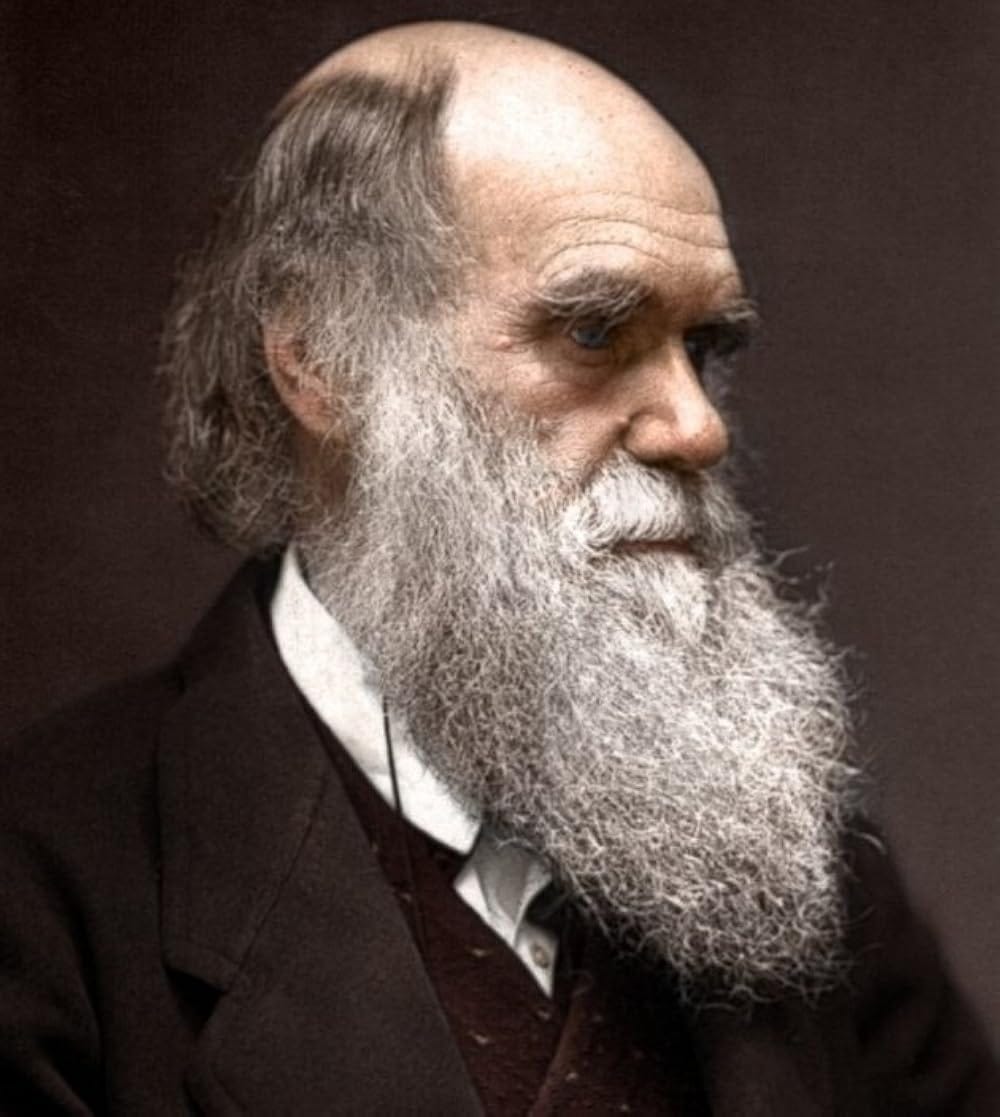
Before going further I want to say something about Charles Darwin, and I want to say it plainly, because what follows would be dishonest without it.
On the Origin of Species is a better book than most of the people who invoke it have read. It is patient, careful, and unusually honest about its own weaknesses. Darwin devoted an entire chapter to the difficulties with his theory, and he stated them in their strongest form rather than their weakest. He worried in print about the eye. He worried about the gaps in the fossil record. He worried about instinct. He named the objections that his critics would raise and then wrote them down more forcefully than his critics managed to.
That is not the behaviour of a propagandist. That is the behaviour of a man trying to find out whether he is right.
He also delayed publication for twenty years, partly out of dread of what the argument would cost, and he was, by every account of those who knew him, a gentle and painfully scrupulous person who took no pleasure in the fight his book started.
And there is a passage in his later work that I think is the most human thing he ever wrote.
In The Descent of Man, published in 1871, Darwin turned to the question of what natural selection meant for civilised societies. Most of his remarks, he says, are taken from Wallace, Greg, and his own cousin Francis Galton. Among savages, he writes, the weak in body or mind are soon eliminated. Civilised men do the opposite. They build asylums for the imbecile, the maimed and the sick. They institute poor laws. Their doctors save every life to the last moment. Vaccination has preserved thousands who would formerly have died of smallpox. And so, he concludes, the weak members of civilised societies propagate their kind, which anyone acquainted with the breeding of domestic animals would recognise as highly injurious.
That is the eugenic argument, in Darwin’s own hand, twelve years after Origin, citing the man who would coin the word.
He walked to the edge of it. And then he stopped.
Because in the very next paragraph he says that we could not check our sympathy, even at the urging of hard reason, without deterioration in the noblest part of our nature. That we must therefore bear the undoubtedly bad effects of the weak surviving and propagating their kind.
Read that again. His logic told him one thing. Something in him refused it. And he did not resolve the contradiction. He simply set his own argument down and walked away from it, and called the thing that stopped him the noblest part of our nature.
I have a great deal of respect for that paragraph. Darwin followed his reasoning until it arrived somewhere monstrous, and then he declined to go the last step, and he was honest enough to say so on the page rather than quietly deleting the problem.
His successors had no such difficulty.
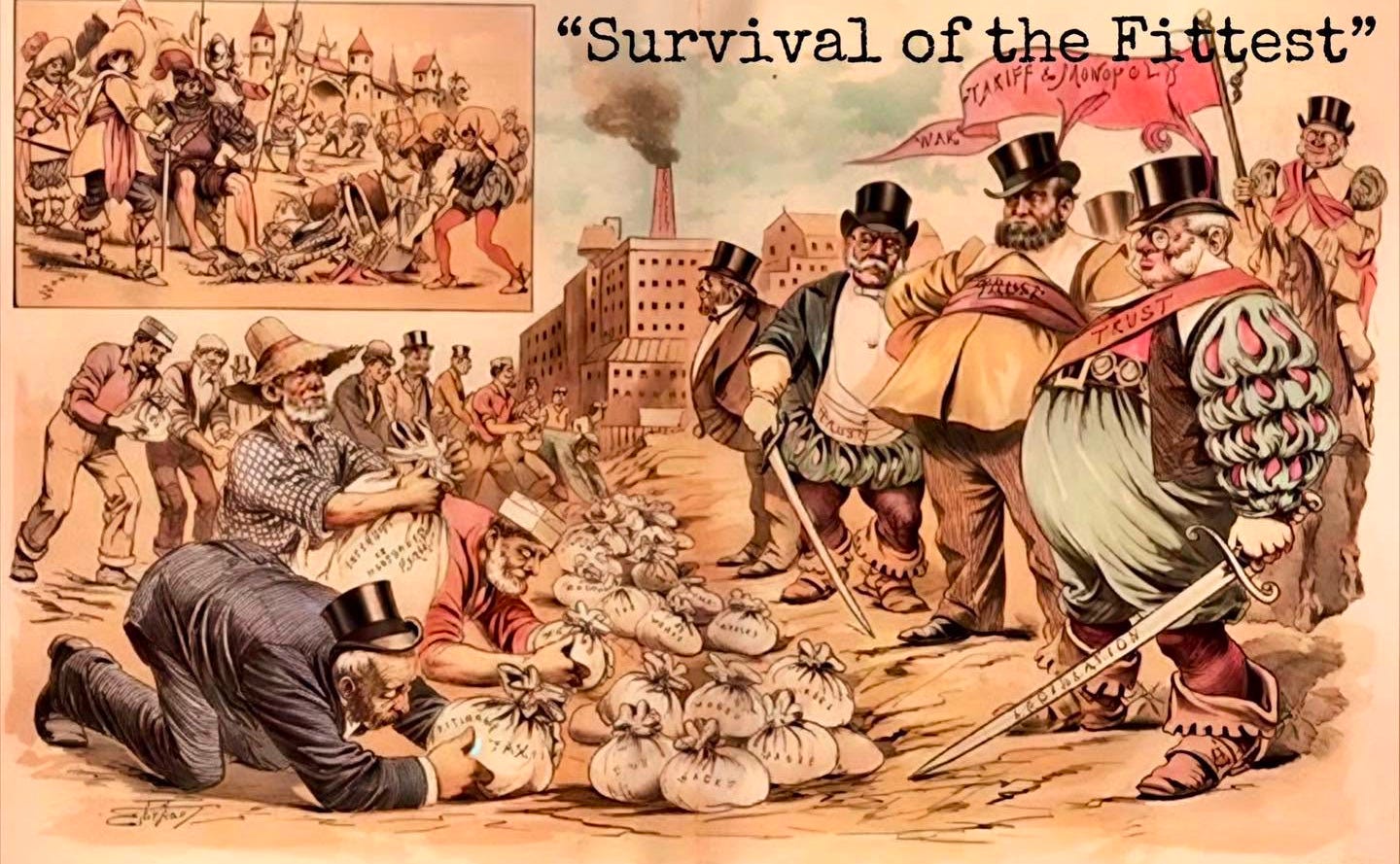
This is not an argument that evolution is false. That is a different essay, and it would be a longer one.
This is an argument about a habit of mind.
The habit is this. A question is asked. A test is available that would settle it. The test is not run, or it is run and the result is set aside, because the answer was already required before the question was posed.
That is not science. It is the ceremony of science performed over a conclusion that was never at risk.
What follows is a list. Some entries are old and some are recent. Some are frauds and some are honest errors that were protected long after they stopped being honest. What they have in common is that in nearly every case, the correction came from inside the discipline, and in nearly every case it came late.
I am not making these accusations. I am reading the file aloud.
If this essay was worth your time, consider subscribing. It is reader supported, and that is what keeps it going.
Comments
Nothing yet. Say the first thing.
Sign in to join the conversation.