
We tend to assume that if people just understood the facts about climate change, they’d demand action. But after decades of increasingly alarming scientific reports, climate remains one of the lowest-priority issues for many voters.
Why?
This week on A Climate Change, Matt sits down with legendary communications strategist David Fenton to explore a surprisingly simple answer:
Facts don’t move people. Stories do.
Fenton has spent more than 50 years helping shape progressive movements. His message is both encouraging and uncomfortable: climate advocates have largely failed to communicate in language ordinary people connect with.
Instead of talking about “net zero,” “carbon emissions,” or “existential threats,” he argues we should explain climate change the way we’d explain it to a child:
We’ve wrapped the Earth in a blanket of pollution. Blankets trap heat. That’s exactly what this one is doing.
Suddenly, the problem becomes intuitive.
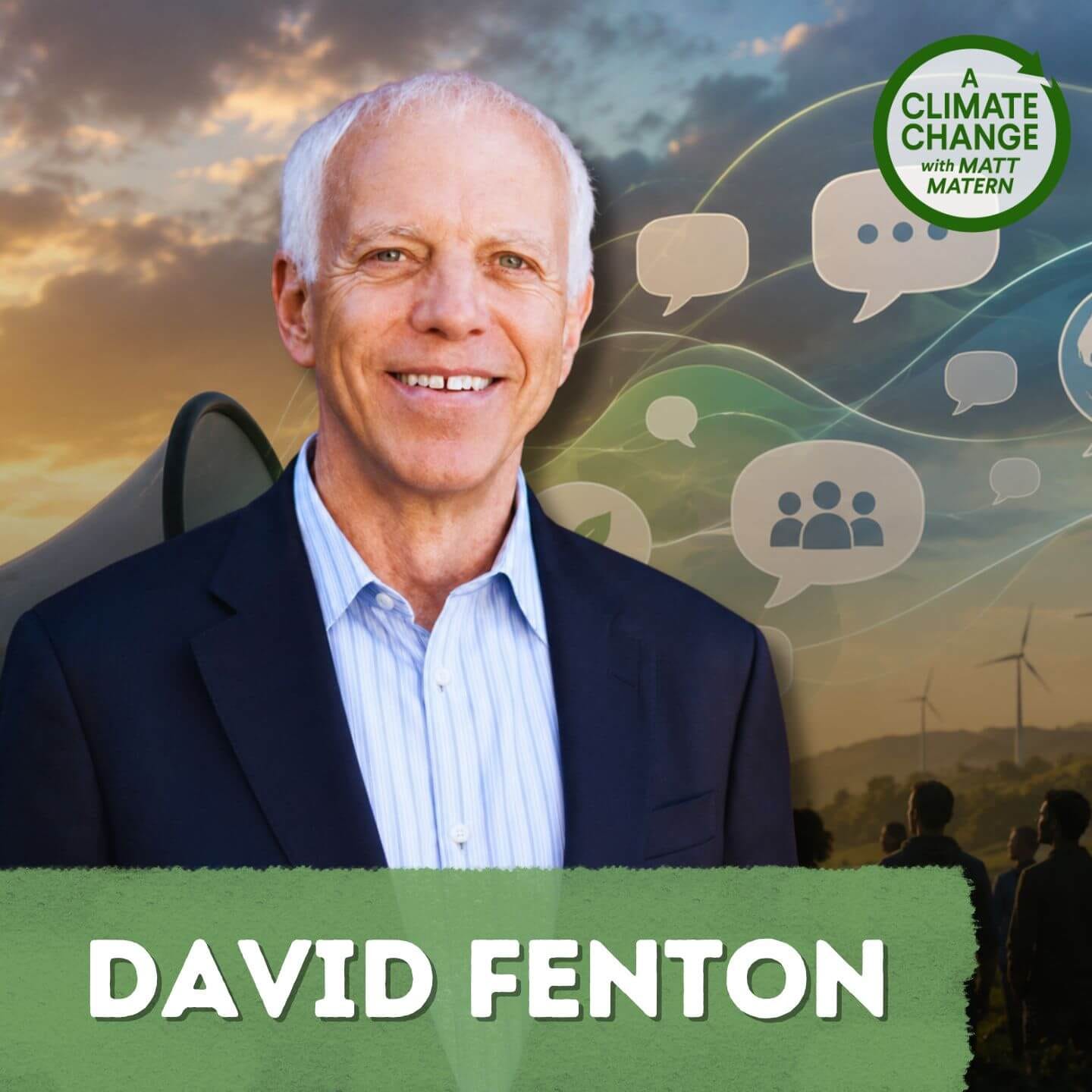
One of the most thought-provoking parts of the conversation is Fenton’s warning about what he calls climate hushing.
Unlike climate denial, climate hushing doesn’t reject the science—it simply avoids talking about it.
Political campaigns sidestep it.
Media outlets bury it.
Even organizations dedicated to fighting climate change often spend surprisingly little educating the public.
The result?
Millions of people care about climate change... but don’t see it as urgent enough to influence how they vote.
Fenton argues that the strongest climate messages aren’t about polar bears or distant futures.
They’re about what’s happening now.
Home insurance premiums soaring.
Families unable to insure homes in wildfire or hurricane zones.
Energy costs rising because cheaper clean energy projects are being blocked.
Communities paying the price for increasingly destructive weather.
Climate isn’t just an environmental issue.
It’s an economic issue.
A public health issue.
A national security issue.
And ultimately, a moral issue.
Perhaps the most eye-opening moment comes near the end of the episode.
Fenton discusses ongoing lawsuits against fossil fuel companies and explains why some in the industry are pushing Congress for legal immunity.
According to Fenton, internal documents show many companies understood the risks of climate change decades ago but chose to publicly cast doubt on the science instead. As more lawsuits move forward, he argues the industry fears what juries may conclude after seeing that evidence.
Whether or not those efforts succeed could shape climate accountability for decades.

For all the discussion about technology, policy, and litigation, Fenton keeps returning to one surprisingly simple action:
Talk with your friends.
Talk with your family.
Share what you’ve learned.
Because conversations create awareness—and awareness creates action.
As climate scientist Dr. Katharine Hayhoe often says:
“The first climate solution is to talk about climate change.”
This episode is ultimately about much more than messaging.
It’s about recognizing that changing minds isn’t just about having better data.
It’s about telling better stories.
And that’s something every one of us can help do.
🎧 Listen to the full conversation with David Fenton on A Climate Change with Matt Matern, where they discuss climate communication, public opinion, media responsibility, and why the future may depend as much on storytelling as science.
No posts
Comments
Nothing yet. Say the first thing.
Sign in to join the conversation.