
There’s a version of the climate conversation that leaves people feeling powerless.
And then there’s the version Brett Jenks is building.
Jenks — CEO of the global conservation nonprofit Rare — has spent decades helping communities across the Global South restore fisheries, regenerate farmland, and prepare for the climate shocks that are no longer theoretical. His work spans more than 60 countries and thousands of coastal communities, all centered around one deceptively simple idea:
People protect what they depend on.
In a recent conversation on A Climate Change with Matt Matern, Jenks laid out a compelling case for why climate resilience, behavioral change, and local leadership may determine whether hundreds of millions of people can continue thriving where they were born — or be forced to migrate as climate disasters intensify.
And unlike many climate discussions dominated by doom, this one offered something else:
Hope backed by action.
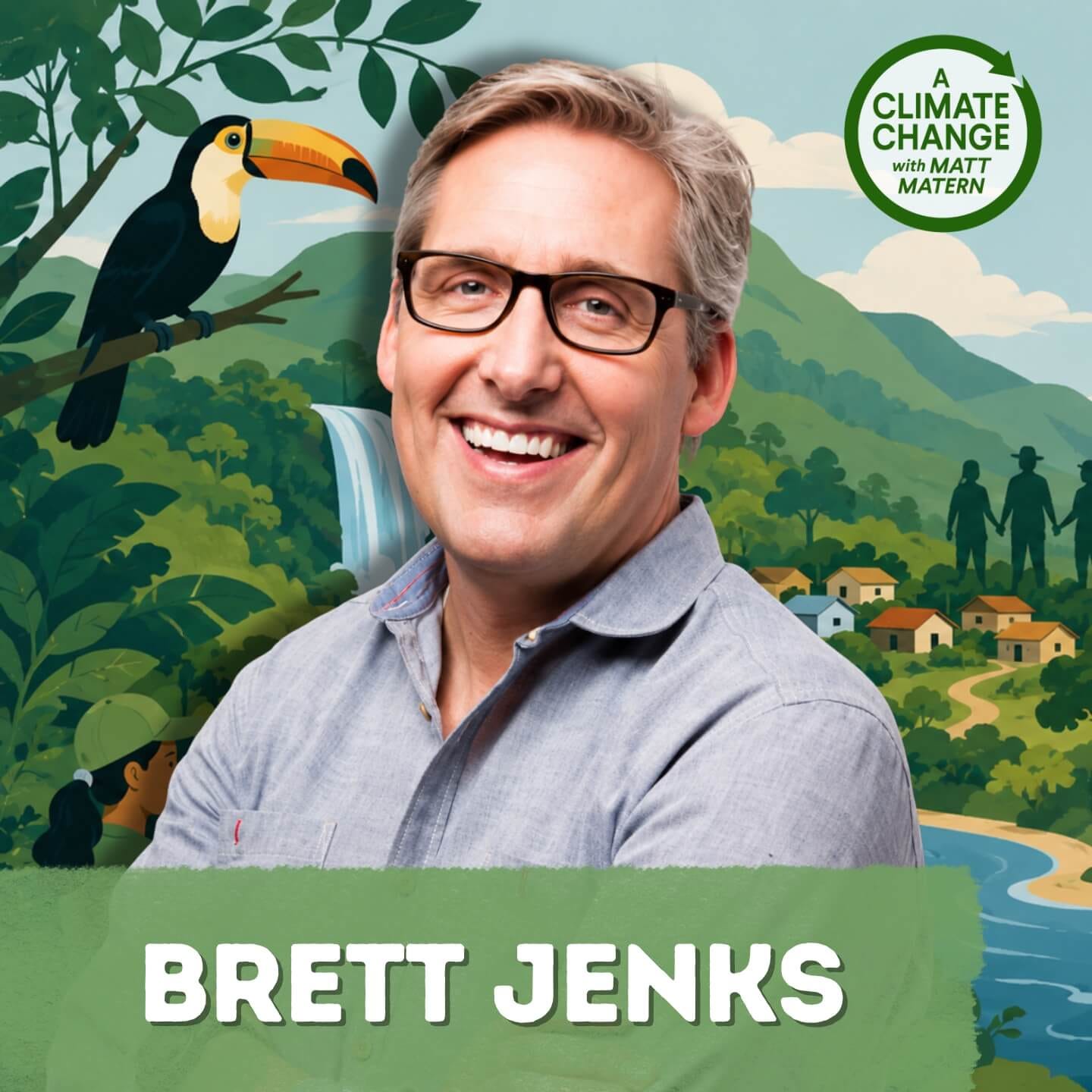
Jenks didn’t begin his career as a conservationist.
He became one after living in Costa Rica and meeting George Powell, one of the founders of the Monteverde Cloud Forest Reserve. That moment changed the trajectory of his life.
At the time, Jenks was running a small nonprofit focused on rural education. But he quickly realized that conservation and economic opportunity were deeply connected.
As ecotourism began expanding across Central America in the late 1980s and early 1990s, many tourism jobs were going to foreigners who spoke English.
So Jenks and his team created training programs to help local Costa Ricans become guides themselves.
The result?
Hundreds of local guides were trained across Central America and South Africa, helping redefine ecotourism as something led by local communities rather than outsiders.
That philosophy would later become the foundation of Rare.
Today, Rare operates one of the world’s largest coastal fishery recovery programs.
Its flagship initiative — Fish Forever — works with more than 2,000 coastal communities across countries including Indonesia, Brazil, Mozambique, Guatemala, and the Philippines.
The model flips traditional conservation on its head.
Instead of treating local fishers as the problem, Rare treats them as the solution.
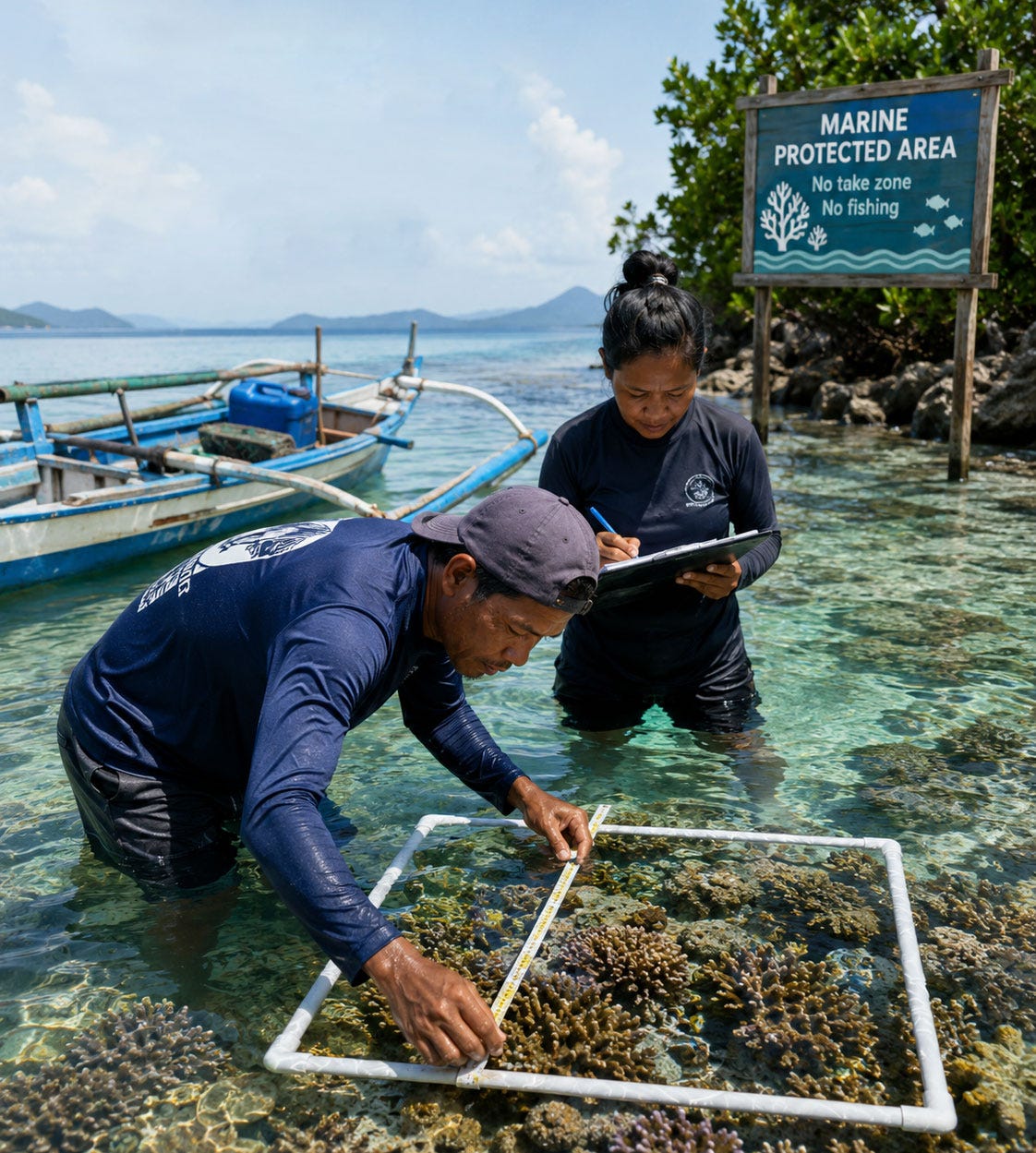
Communities receive exclusive access rights to their coastal waters, establish their own marine protected areas, monitor fish populations, and enforce sustainable fishing practices themselves.
The outcome has been extraordinary.
In some regions, fish biomass has increased several hundred percent within five years.
The approach works because it combines:
Local ownership
Behavioral science
Financial incentives
Ecological restoration
Community resilience
Jenks describes the work as “behavior change at scale.”
And the deeper insight is powerful:
When people see their neighbors changing behaviors — and benefiting from it — transformation accelerates.
One of the most urgent parts of the conversation centered on climate migration.
Jenks believes the world is vastly underestimating what’s coming.
As droughts, floods, cyclones, and sea-level rise intensify, hundreds of millions of people may be displaced over the coming decades.
And according to Jenks, the most effective response isn’t reactive disaster relief.
It’s prevention.
“Every human should be able to thrive where they were born.” fileciteturn0file0
Rare’s strategy focuses on helping vulnerable communities build resilience before catastrophe strikes.
That includes:
Savings accounts
Micro-insurance
Regenerative agriculture
Fishery restoration
Stronger local economies
Community-led resource management
To many people in developed countries, those things sound basic.
But for more than a billion people worldwide who lack access to formal banking systems or insurance, these tools can determine whether a family survives a climate disaster or loses everything.
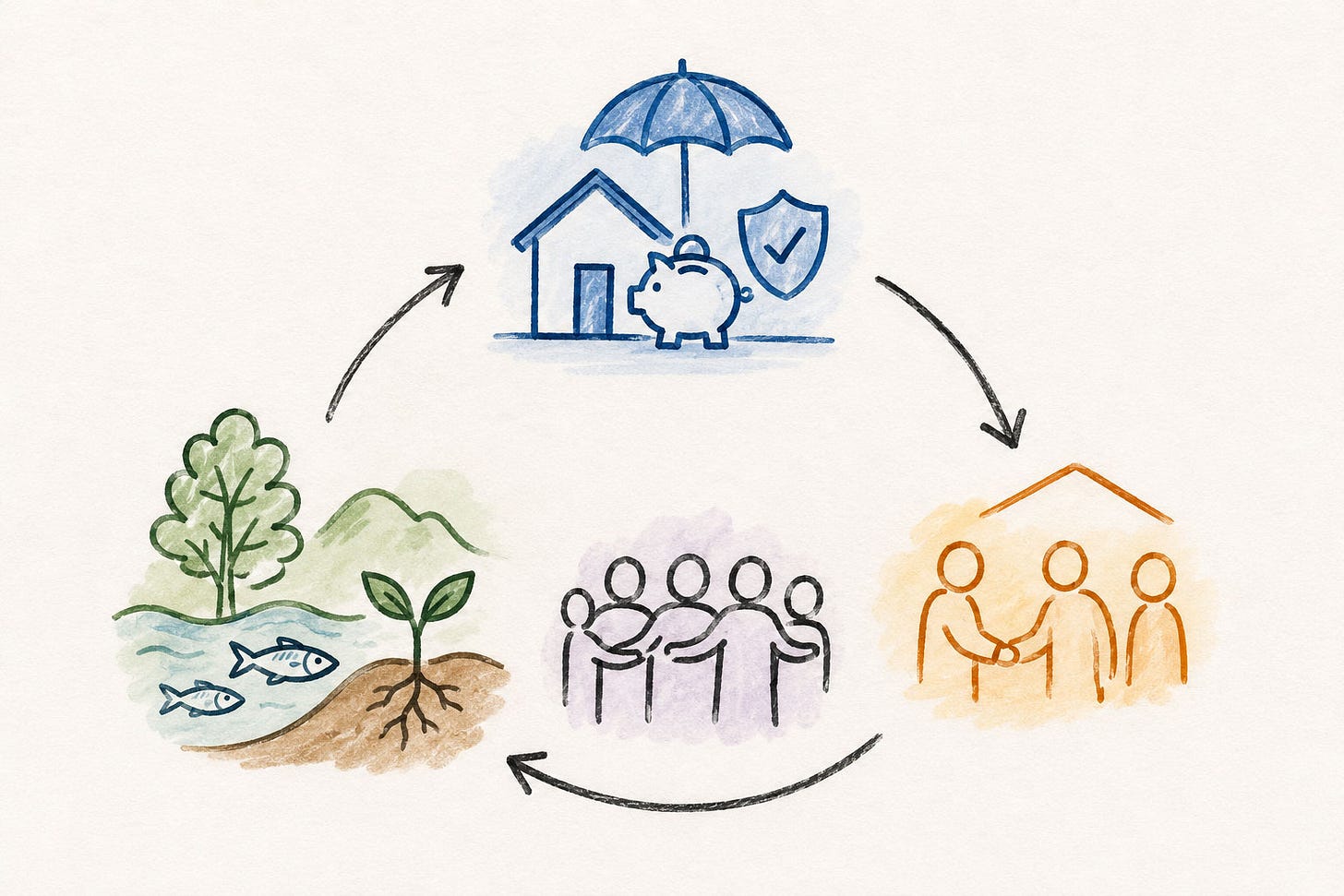
Jenks framed resilience as a combination of:
Financial resilience — access to savings and insurance
Ecological resilience — healthy fisheries and healthy soil
Social resilience — strong community support systems
Without those three pillars, climate shocks become existential.
The conversation also explored Costa Rica’s transformation into a sustainability leader.
Jenks pointed out that decades ago, much of Costa Rica had been heavily deforested for cattle ranching.
Its current environmental success wasn’t accidental.
It was the result of long-term vision.
Costa Rican leaders invested in:
Ecotourism
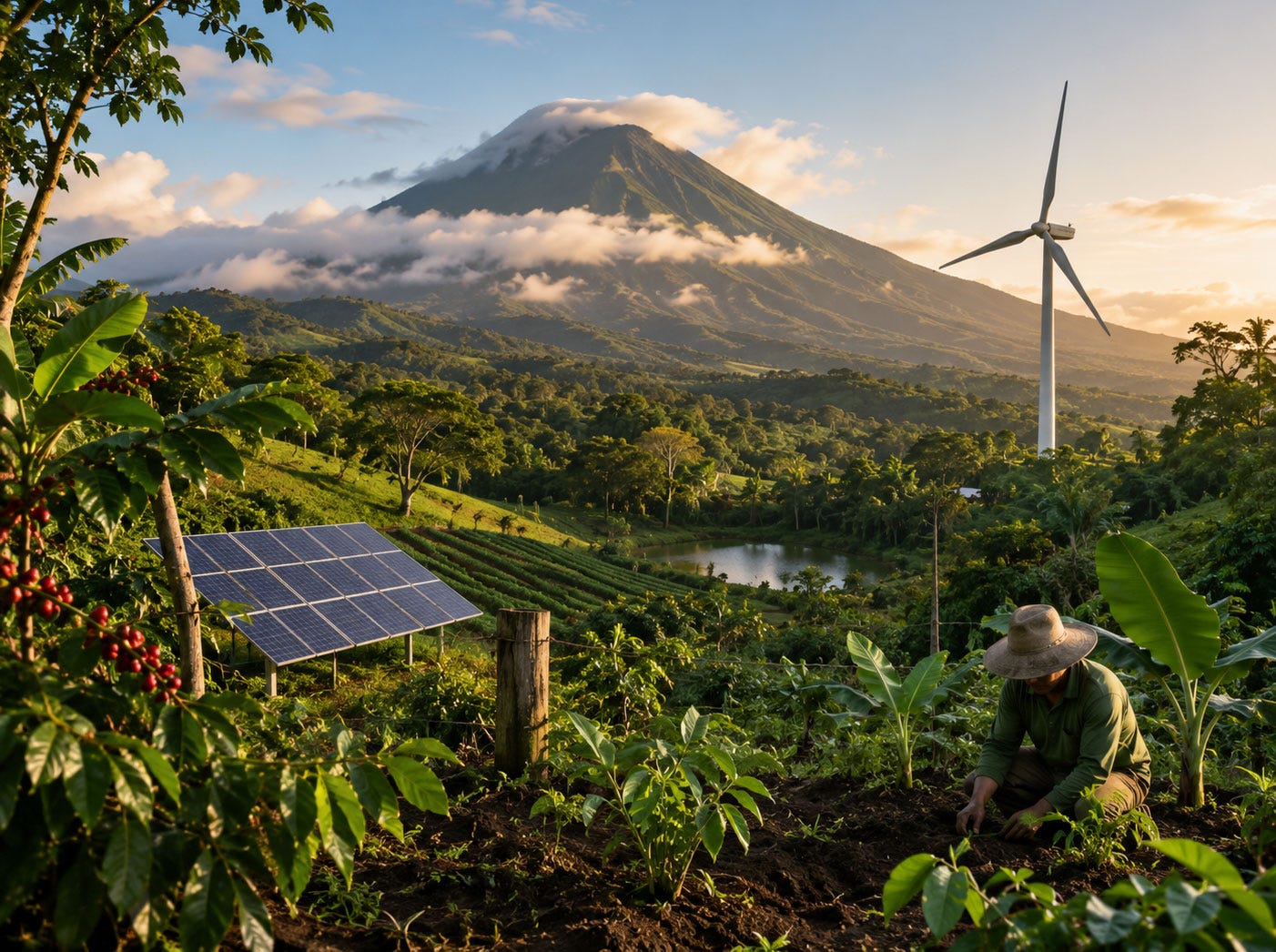
Renewable energy
Education
Conservation
Sustainable economic development
And critically, they thought decades ahead.
Today, Costa Rica stands as proof that environmental stewardship and economic success are not opposing forces.
They reinforce one another.
Jenks believes the United States has all the resources necessary to lead the renewable energy transition as well — except one.
Political will.
“The United States has every single asset other than political will necessary to be the global leader in renewable energy.”
Jenks also challenged a growing narrative in climate philanthropy.
Some influential voices — including Bill Gates — have recently argued that adaptation should receive more attention than mitigation.
Jenks agrees adaptation is essential.
But he says framing it as an either/or choice is dangerously shortsighted.
The world now needs both:
Rapid emissions reductions
Massive investments in climate resilience
He argues there is already a trillion-dollar annual shortfall in funding for adaptation across the Global South.
And if wealthy nations fail to invest now, the future costs — economic, geopolitical, humanitarian, and military — could be vastly higher.
The consequences won’t stay contained.
Climate instability anywhere eventually becomes instability everywhere.
What makes Brett Jenks’ work so compelling is that it avoids two common traps in climate discourse:
Blind optimism
Paralyzing despair
Instead, it focuses on practical systems that help real people adapt, survive, and thrive.
There’s no illusion that climate disruption can be fully avoided at this point.
But there is still enormous opportunity to reduce suffering.
And perhaps most importantly, Jenks reminds us that local communities are not passive victims.
They are often the most capable stewards of the ecosystems the entire planet depends on.
That may be one of the most important climate lessons of all.
The future of climate action may depend less on grand speeches and more on whether communities can build resilience where they already live.
Healthy reefs. Healthy soil. Savings accounts. Insurance. Renewable energy. Local leadership.
These aren’t abstract ideas.
They are the infrastructure of survival in a warming world.
And according to Brett Jenks, the clock is ticking.
You can hear the full interview with Brett Jenks on A Climate Change with Matt Matern at: aclimatechange.com.
No posts
Comments
Nothing yet. Say the first thing.
Sign in to join the conversation.