
Hello readers, and welcome back to another week in the realm of mental health made simpler.
Today’s topic is an oldie but a goodie — and one of the most common themes I work with in therapy: compassion.
Thanks for reading Acertivo - make mental health simple again! Subscribe for free to receive new posts and support my work.
More specifically, self-compassion — when it helps and how to use it.
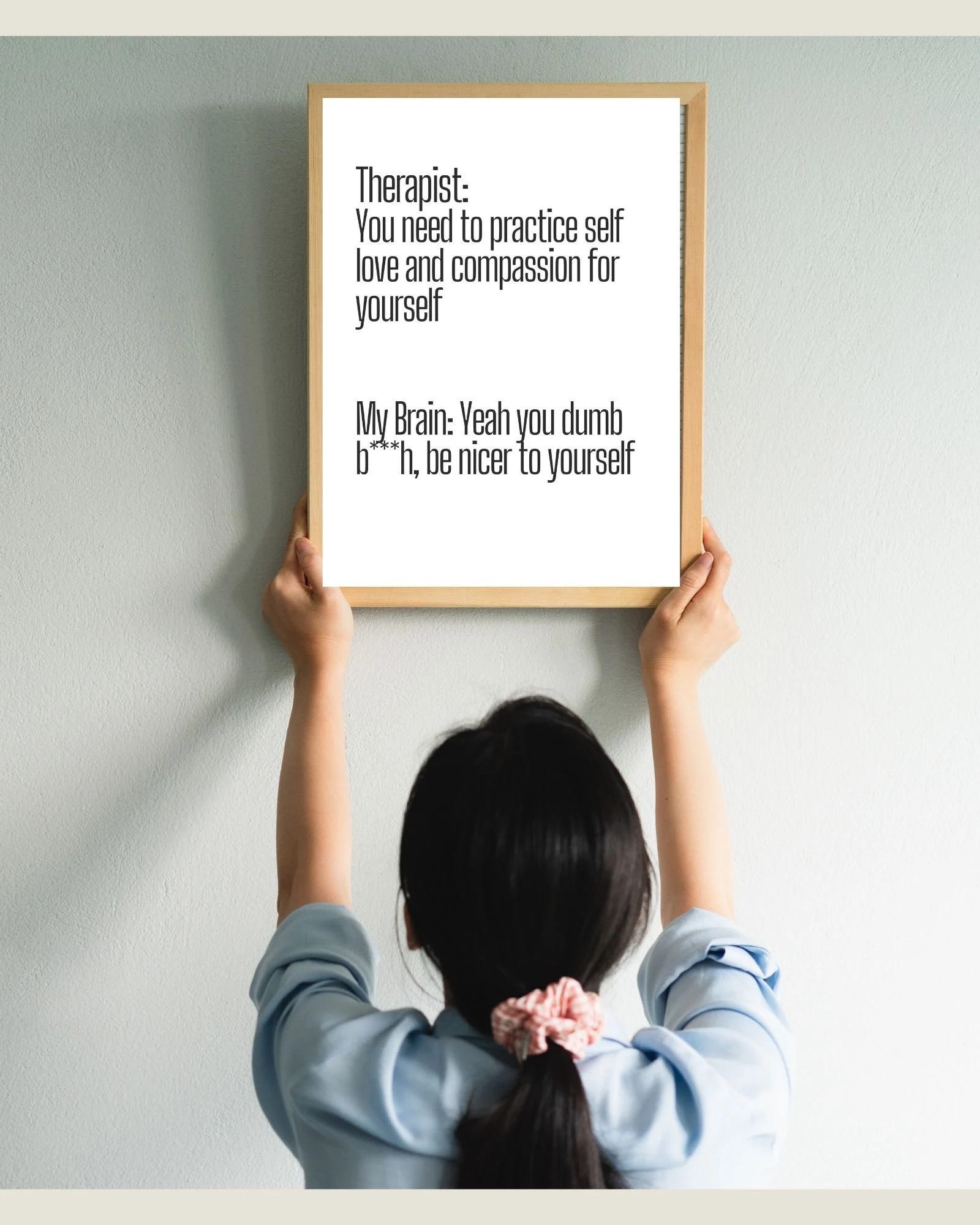
If you’re rolling your eyes when you hear the word compassion, I get it. There has been a lot of talk about it — posts, podcasts, quotes, Instagram stories — to the point where it can start to sound like the holy grail.
Or worse, like we’ve all gone a bit too far in coddling ourselves and never pushing to be better.
And if that’s how it feels to you, it might be because no one really showed you how compassion actually works.
At its core, compassion means noticing suffering — in yourself or in others — and choosing to respond with care instead of punishment.
It is not letting yourself go.
It is not finding excuses.
It is not indulgence.
Sometimes, it’s simply the ability to not be an asshole to yourself.
In sessions, I often hear people say they’re afraid to use compassion because:
“I’ll never achieve what I want if I’m compassionate.”
“People won’t understand how upset I am if I’m kind.”
“What I did is wrong — I don’t deserve compassion.”
“If I don’t push myself, nothing will change.”
“It makes me weak.”
And honestly, I understand all of this. Compassion has a bad PR problem.
So let’s play a quick game of Never Have I Ever.
Have you ever bumped your head on a cupboard and then, instead of putting some ice on it, bumped your leg too?
Have you ever spilled some milk and thought, “Great idea, let me also spill the flour”?
Have you ever scratched your car and then decided to drive it into a lamppost?
No? Never? I thought so.
And yet, when we fail, this is exactly how many of us treat ourselves. We kick ourselves when we’re already down.
Emotional self-abuse is not very different from hurting yourself again after an accident.
It’s as if the mind says:
“You must do this right. And if you don’t, you’re not good enough.”
And so we start doing things just to avoid punishment or criticism.
But that’s rarely why we actually care.
Most of us do things because they matter.
We eat well because we want to be healthy.
We exercise because we want to feel strong.
We learn because we’re curious or because we want something different from life.
What matters to you doesn’t disappear just because you fail sometimes.
You fail because it’s hard. Because you’re human. Because life happens.
Sure, criticism and pressure can work — for a while. But they only take you so far. After that, it’s like pushing a tired horse. Exhausting, frustrating, and not very effective.
Compassion is not what lets you off the hook.
It’s what helps you stay in the game.
So the next time you’re afraid to use self-compassion, remember this: it’s not the enemy of progress.
Next time you mess something up — big or small — pause for a moment and ask yourself:
What hurts right now?
(Name it simply: disappointment, shame, frustration.)
If someone I cared about were in this situation, how would I respond?
Not with motivational speeches. Just basic decency.
What’s one small step I can take that helps instead of punishes?
Not “fix everything.” Just one next move.
That’s it.
Self-compassion doesn’t mean you stop caring.
It means you stop beating yourself up as a strategy.
It’s often the thing with the best chance of actually helping you move forward.
Thanks for reading Acertivo - make mental health simple again! This post is public so feel free to share it.
Comments
Nothing yet. Say the first thing.
Sign in to join the conversation.