
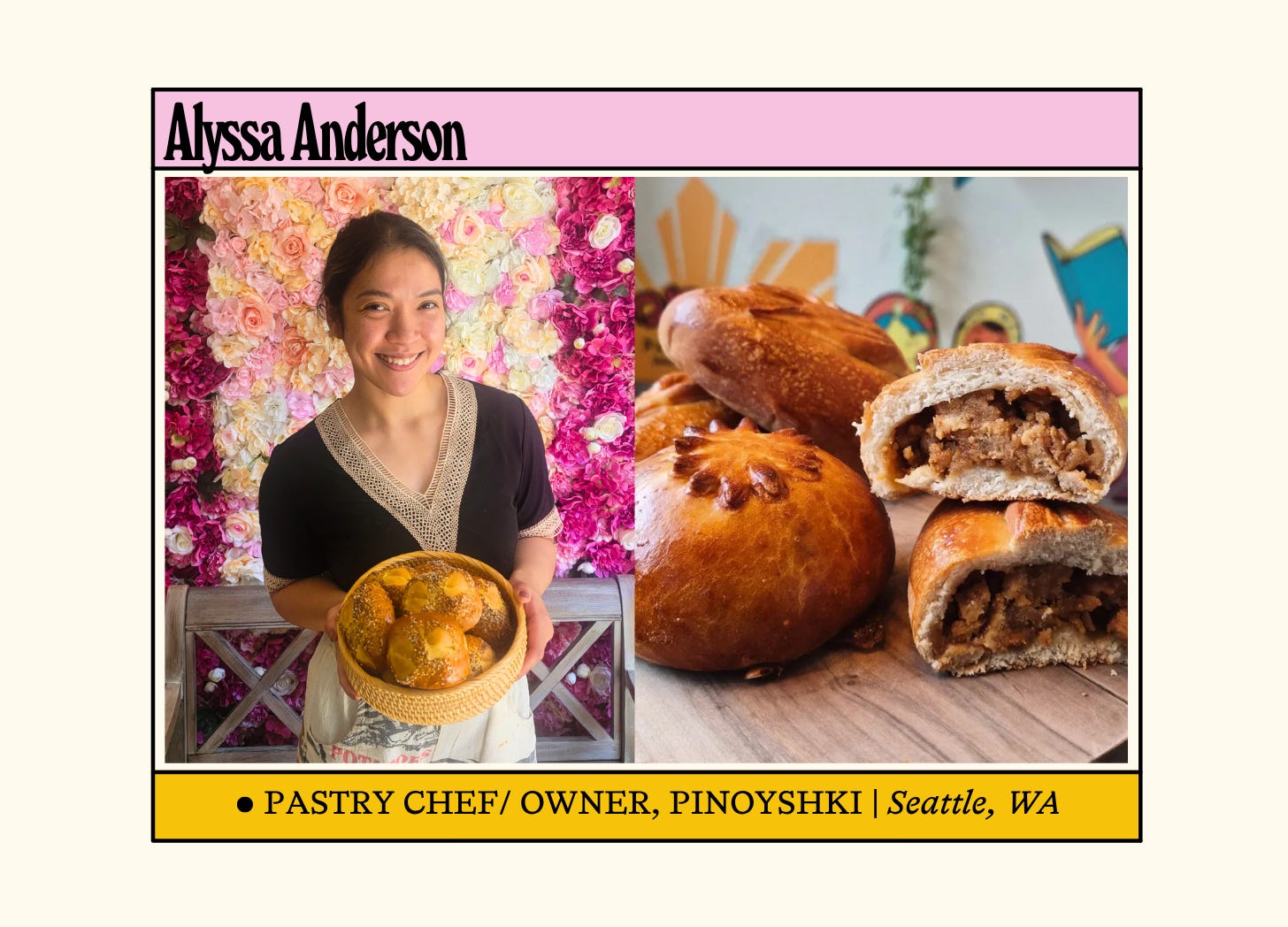
The first time Alyssa Anderson tasted piroshkis, she immediately tasted a connection. “They have a hint of sweetness to them that is also very appealing to Filipino taste buds,” she says. “I felt like it would complement the Filipino flavors very well.”
Piroshkis are a humble, Eastern European comfort food—leavened buns traditionally stuffed with meat, braised cabbage, onions, and potatoes. In Seattle, their popularity is credited to Pike Place market mainstay Piroshky Piroshky, which gives them a Pacific Northwestern twist with their signature smoked salmon pâté-stuffed filling.
In 2016, new to Seattle and in between jobs, Anderson, a pastry chef, didn’t know what a piroshki was—but saw an ad for a different 22-year-old piroshki bakery, Piroshki on 3rd, on sale. After tasting their baked buns, she got the idea to make a unique piroshki creation of her own, marrying Eastern European baking tradition with Filipino flavors. “Seattle is also a melting pot for different cultures,” she says. “And I do think that our story about sharing culture is a pretty good representative of what Seattle is.”
She took the plunge and bought the joint, renaming it Pinoyshki (a portmanteau combining “Pinoy,” the slang term for Filipino, and “piroshki”) and filling their pastry cases with buns stuffed with Filipino classics such as garlicky-sweet beef asado, zesty pork sisig, and special monthly flavors like kabocha squash with vegan bacon cooked in a coconut ginger cream sauce (a take on ginataang kalabasa, a vegetable stew).
Pinoyshki has since carved out its own niche in the Seattle piroshki-scape, with a roster of Seattle regulars, a growing following online and through pop-ups, and a feature on Food Network’s Diners, Drive-Ins, and Dives.
I caught up with Anderson to learn more about how she ended up owning an Eastern European bakery, the importance of collaboration, and what’s next for Pinoyshki.
Jasmine Ting: Can you walk me through Pinoyshki’s origin story? How did the idea for the bakery come to be?
Aly Anderson: When I first moved to Seattle with my husband, we saw this little ad about this piroshki bakery, Piroshki on 3rd, on sale. We were like, “What’s a piroshki?” We decided to visit the bakery before they closed down. And after I tried the piroshki, it kind of just reminded me of the siopaos or the empanadas in the Philippines.
We took the plunge. After I got my bearings together and got used to running the bakery, I worked with the East European ladies working there to see what I could do to infuse my culture there. When I first tried, like, adding Filipino fillings, I got their feedback and tried to tweak the recipes with them. And so the “pinoyshki” was born!
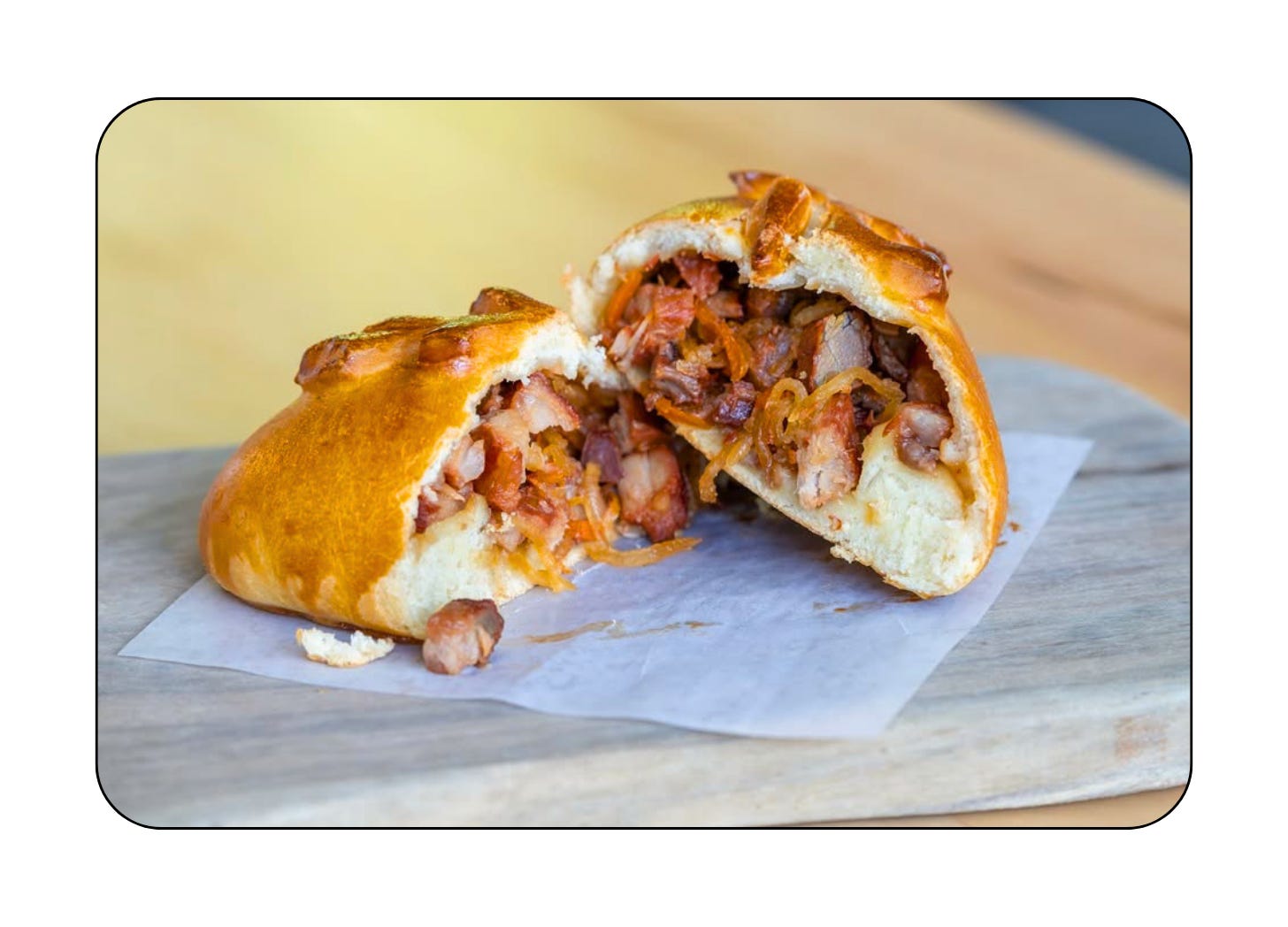
I know you have formal training in pastry, but was there any part of learning how to make piroshkis particularly challenging for you?
I really like working with dough. As a pastry chef, I feel like it’s such a familiar vessel. I spoke about how familiar the piroshki tasted to me, but the employees themselves, too, felt familiar. Eastern European culture, the way they cook and bake is similar. It’s familiar to me because it’s the same thing with my lolas (grandmas) and my titas (aunts). They don’t really use a lot of precise measurements. It’s all about “guesstimating” things. So the challenge for me was developing that same kind of instinct, and then thinking, “How can we standardize this, actually?”
So the former employees stayed on to help you out?
The bakery was run by Eastern European ladies, babushkas. All of them grew up making piroshkis, so they taught me how to make the piroshkis. A lot of them have since moved on to retire or work in different fields. But one of the babushkas, Stella, stayed on and we still work together.
We love working together, and with the other babushka, as well. There were two of them that were the head bakers. Though Karina moved on, I still wish her a happy birthday. They’re kind of like my adopted grandmas.
That’s so sweet! What was it like trying to get them on board with the idea of Filipino piroshkis? Was there any pushback from them or the Eastern European community?
When we started making the Filipino-inspired piroshkis, we did get some hesitation. I wouldn’t say pushback. It was just like, “Wait, what is this? Is this fusion?” After that initial hesitation, once they actually got to try it, it was accepted pretty quickly. I did, after all, work with the babushkas to made sure that it was something that would call to their taste buds as well. So it’s something that we all kind of built together, and I think that’s why it worked really well.
So you have the babushkas’ blessing, in a way.
They are also very frank people. So they would let me know if they think, “No, absolutely not.” [laughs] So, yes.
Merging two cultures in a way that I don’t think has been done before—that’s not an easy thing to do. What kind of care do you think chefs and bakers like yourself need to take when doing so?
I think it’s making sure that you pay respect to the culture that it’s originally from, and making sure that it doesn’t get lost in the conversation. When I first started, I wanted to make sure that I wasn’t crossing boundaries where it feels disrespectful to Eastern European culture. I wanted to make sure that it’s more of an appreciation.
Which of your pinoyshki creations has been your favorite thus far?
Oh, that’s a hard question. You’re making me choose between my children.
I would say it would be the laing. Laing, in the Philippines, are like taro leaves cooked in this coconut cream sauce that’s really creamy, and a little bit spicy. Filipinos are not known for liking their vegetables—I am one of those people. But laing was one of the dishes that made me like vegetables. I decided to put it in piroshkis and that worked really well. We use collard greens instead. The collard greens worked well with the coconut milk and the coconut cream, and were really good at absorbing those flavors.

Aside from the different pinoyshki flavors you’ve already concocted, how else would you want to experiment with Pinoy and Eastern European cuisines?
I’m still testing different things out. I can’t really say that I’ve had another experiment quite as successful as pinoyshkis. But there are some things that I’m playing with, like a lumpia-inspired stuffed cabbage or like a turon baklava. Those are still under kitchen testing.
Aside from what you’re cooking up in the kitchen, what else is next for Pinoyshki?
I feel like our next step is to kind of start giving back to our community. The Filipino community and the Asian community have also been so supportive during the years, giving us space to do pop ups, and highlighting us and boosting us. I want to start doing more collaborations with different other businesses as well.
I also want to keep continuing being a space for like now our current employees to be able to share their own stories, and trying out creating with their own cultures, and using our space to create a product. I would say it’s always more of a collaboration with each other than just me dictating what we’re putting out, really.
This interview has been condensed and edited.
No posts
Comments
Nothing yet. Say the first thing.
Sign in to join the conversation.