
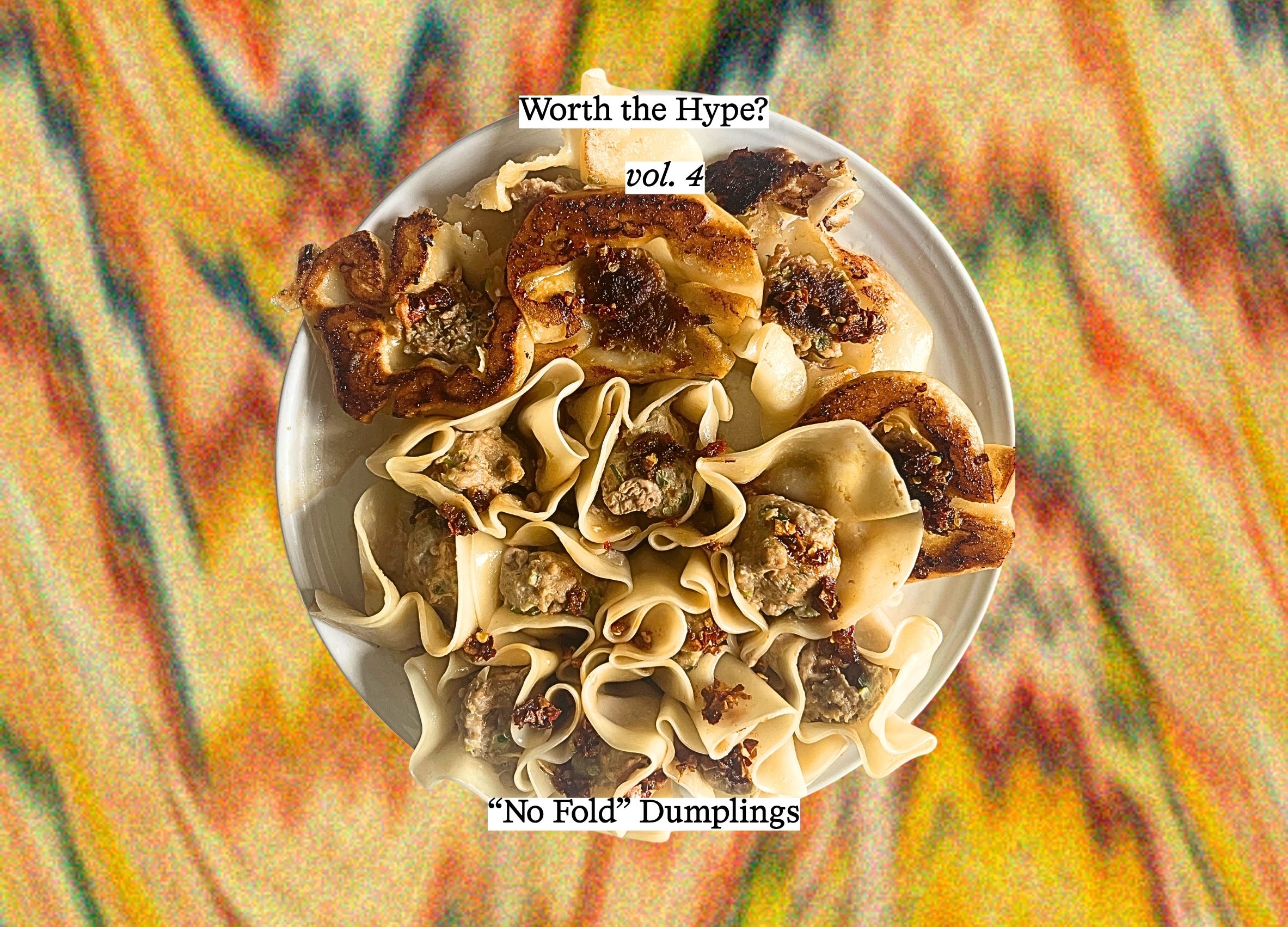
Welcome to Dumpling Hacks, where Mei Li takes on the dumpling variants making their way around the internet—and reports on which ones are actually worth trying at home. (Part 1: Smash Dumplings; Part 2: Soup Dumpling Casserole; Part 3: Dumpling Noodles.)
For round 4 of Dumpling Hacks, we’re taking a look at the concept of “no-fold dumplings,” which ostensibly takes all the ingredients and flavors of dumplings but bypasses all that pesky folding. These “lazy dumplings” come in two primary forms: First, the meat-side-down option where you form the meat filling into meatballs and drape a wrapper over the top, as shown in this post by @cookingwithaila, so that they look like they’re wearing tiny bonnets.
The second method inverts the concept, so that the wrapper is on the bottom, as seen in this post by @chefbaobae and this post by @okonomikitchen.
Like most of the recipes I’ve been exploring for this series, the primary goal of this no-fold style is to avoid folding. In this case, you’re simply scrunching a dumpling wrapper around a ball of meat instead of sealing it.
On the one hand, I get it. The classic pleated dumpling wrapper looks intimidating if you’ve never tried making one, and might seem like the most skilled aspect of a long cooking process, especially when making dough from scratch. On the other hand, if you’ve already made a dumpling filling, and were already planning to buy wrappers from the store instead of making them yourself—which these hacks all do—then a basic fold like a half-moon or a taquito shape is just as much work as these viral no-fold versions.
As Leah and I have discussed in our DMs, the whole idea of “no-fold” is fetishized in this viral trend, and so many others. But neither of us think it’s even the most laborious part (hello, chopping all of your ingredients, and scooping and rolling meatballs)! But I’m always up for dumpling deliciousness with less effort (even if just theoretically) so let’s see whether this no-fold idea actually works.
I decided to pit the two versions against each other head-to-head by making them both at the same time. I made a simple pork filling with ginger, garlic, and scallions, and bought wrappers from the Asian market. I used a tablespoon-sized disher/cookie scoop to make it easy to portion out the little balls.
For the meat-side-down versions, I scooped meatballs directly into the pan, then tucked the wrapper around the meatball. (Side note: I’m not sure why the chef in the video makes the filling in the cast iron pan and then shapes the meatballs with a spoon. Perhaps it’s a deep commitment to the “one-pan” idea, but it seems messy and unnecessarily difficult. I combined the meat ingredients in a big bowl and scooped it into the pan.) It’s pretty easy to get the wrappers on and ends up looking like a bunch of meat balls in shower caps.
For the meat-side-up versions, I scooped the filling into the center of the wrapper, then brought my hand up around the edges to scrunch them tight. They look a bit like shumai, as you can see in this video where they’re packed tightly into the pan. At first I was worried you would need to make an entire pan’s worth of dumplings for them to hold their shape, but for the most part, the wrappers actually adhered to the side of the meatballs.
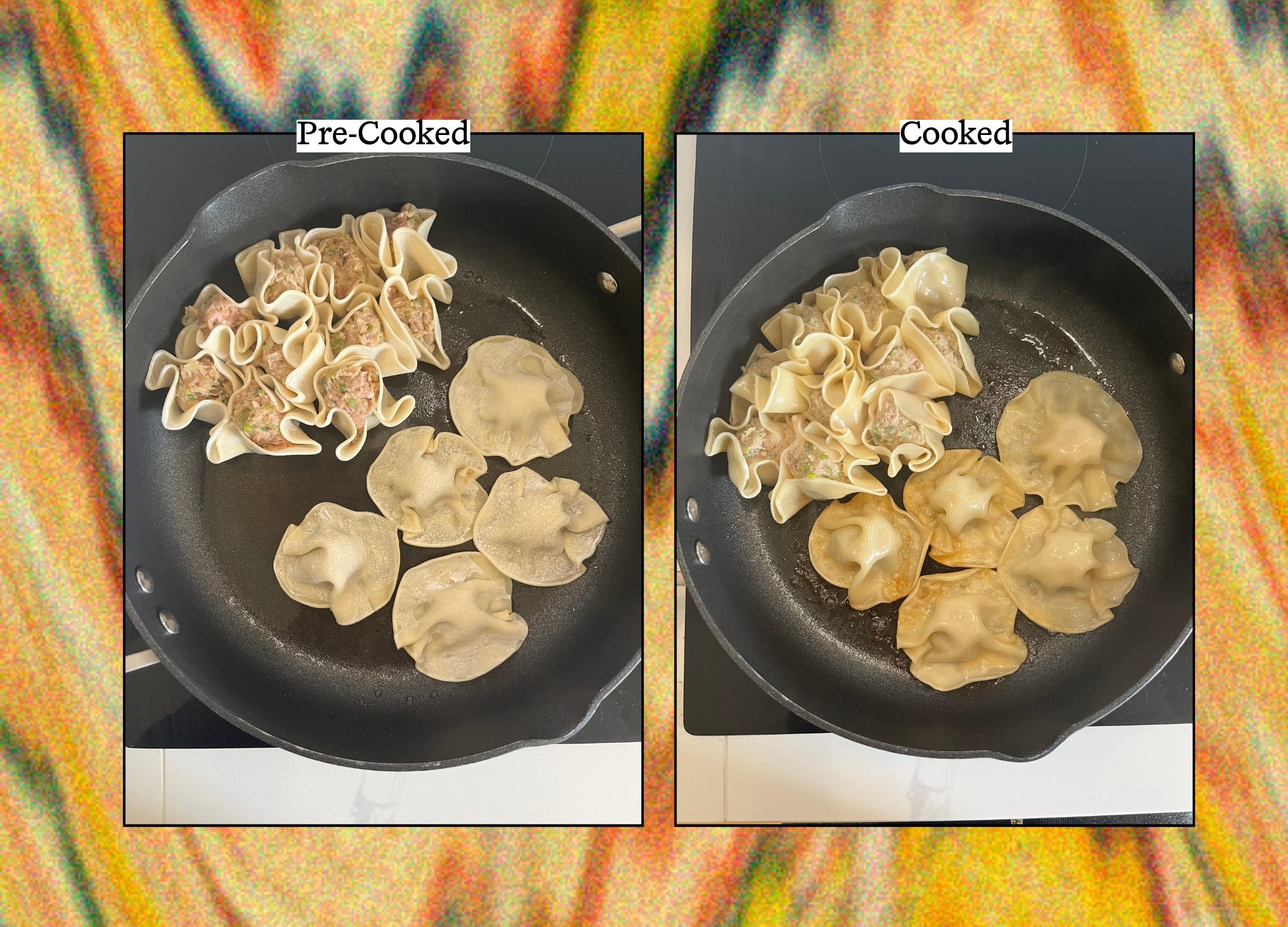
I cooked both options simultaneously using my standard pan-searing + steaming method. I heated some neutral oil in a pan, added each kind of no-fold dumplings and cooked for a few minutes to brown the bottoms of the wrappers and the meat. I then added about half a cup of water and covered the pan to steam the dumplings until fully cooked.
There was an immediate and obvious winner of the head-to-head no-fold battle: meat-side-up dumplings! And looking at the timeline of no-fold viral videos, I’m not particularly surprised. The meat-side-up dumpling videos seemed to come out in a second wave as a response to the meat-side-down dumplings, and from some very experienced dumpling makers. But how exactly did the meat-side-up dumplings win their crown? I’ll break down how they beat the competition in nearly every way:
First of all, even though I pressed the wrapper around the meat evenly on both kinds, half of the meat-side-down wrappers slid off the filling. I’m assuming the hot boiling water lifted the wrappers off the dumplings as they bubbled in the pan. The end result for the meat-side-down dumplings felt like I’d seared meatballs and draped doughy blankets on top. In contrast, the meat-side-up dumplings held together perfectly, even where they weren’t placed side-by-side to prop each other up. If anything, I’d separate them more next time so they don’t stick together.
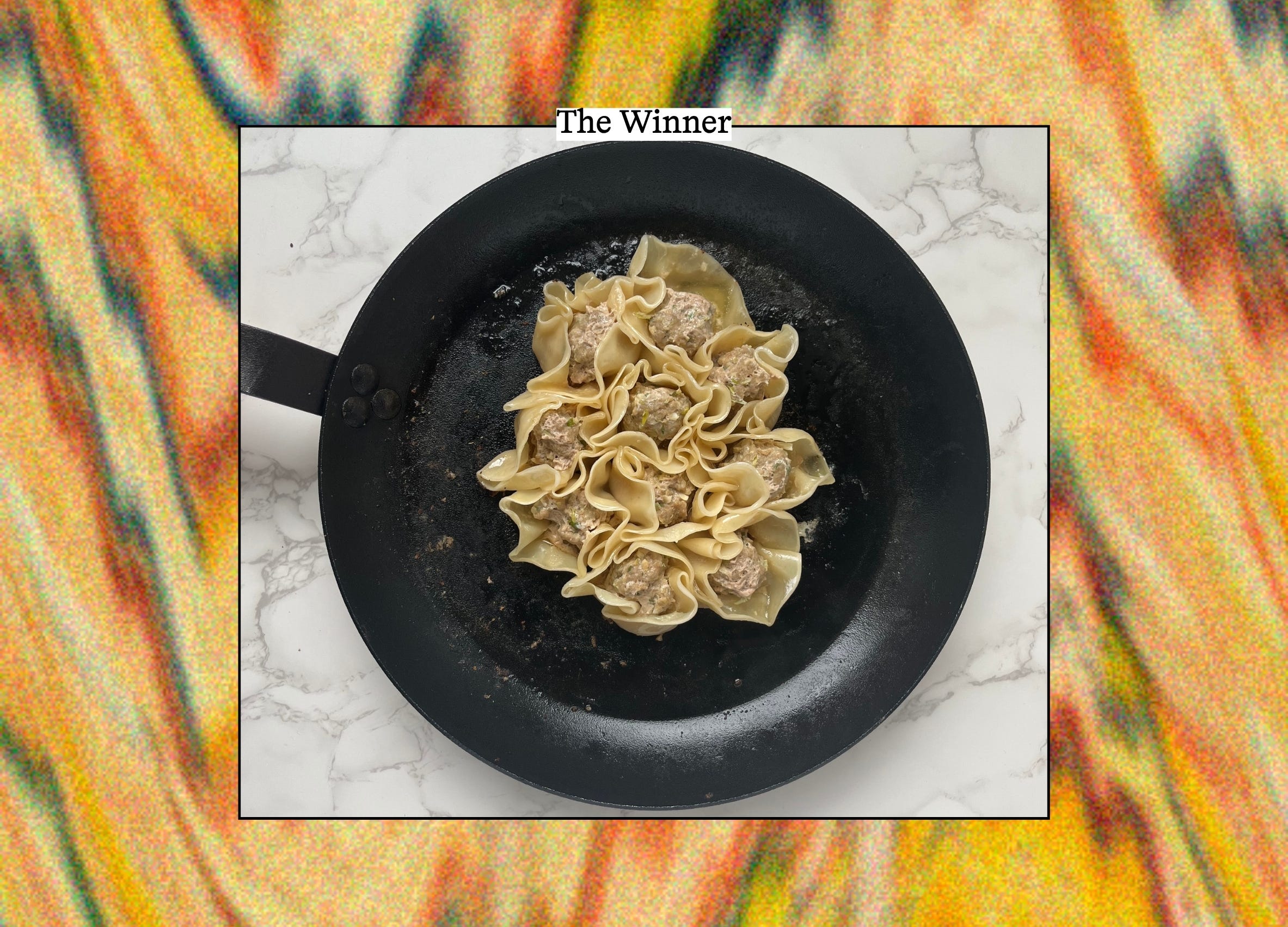
Secondly, the meat-side-down dumplings were more likely to stick to the pan. I liked the seared meat and got a little bit of crunchy browned wrapper around the edges of some, but preferred the crispy crunchy bottoms of the meat-side-up. As @chefbaobae says in her video, that’s one of the most delicious parts of a dumpling!
Thirdly, the meat stayed juicier with the wrapper on the bottom acting as a vessel to hold in all the flavor. As an unexpected bonus, when I placed the dumplings in a bowl and drizzled sauce on top, the wrapper ‘cups’ collected the soy sauce and chili oil so they stayed with the dumpling instead of sliding off. (Some people are taking this concept to the next level by making dumpling wrappers into shot glasses! Not for me, thanks :) ) Both options took some chopstick-wielding skill to get from plate to mouth as the meat wasn’t encased like a folded dumpling, but overall the meat-side-down versions were much more difficult to pick up.
Our goal here in the Dumpling Hacks column is to explore whether any of these viral dumpling trends are worth it in terms of flavor and ease. Of the no-fold options, clearly the wrapper-side-down, meat-side-up version wins it in both categories, delivering ease in cooking (held together better, less likely to stick) and flavor (juicier meat + a surprise sauce vessel!) But are they worth it compared to real folded dumplings?
As someone who has folded hundreds if not thousands of dumplings in her life, I’m not sure the no-fold dumplings deliver that much ease or flavor over a simple dumpling fold. But for people who don’t typically fold dumplings, it might be a fun gateway into dumpling-making.
I also see the dramatic visual impact of stuffing an entire pan full of no-fold dumplings (meat-side-up, obviously) and sliding the entire dumpling matrix onto a plate in one go, as @chefbaobae does in her video. You’d get many more dumplings into one pan if you embraced the sticking-together aspect, kind of like a pan of cinnamon buns. Plus, you get the bonus sauce cups in the bargain. It’s easy enough to give it a try once or twice.
My new easy pork filling is perfect for quick weeknight dinners, and works for any dumpling (or Dumpling Hacks) recipe. It comes together in just minutes if you have a food processor, but if not, chop the scallions, garlic and ginger first, then mix with the rest of the ingredients until you have a scoopable meat mixture.
3 or 4 scallions
5 garlic cloves
About 1-inch of fresh ginger
1 pound ground pork
1 egg
2 tablespoons toasted sesame oil
2 tablespoons soy sauce
1 teaspoon salt, plus more to taste
1 to 2 packages dumpling wrappers
Put the scallions, garlic, and ginger into a food processor and blitz until the aromatics are well chopped. Add the pork, egg, sesame oil, soy sauce and salt and mix on high until you have a thick meaty paste. Cook off a tablespoon in a skillet or in the microwave to check for seasoning, then adjust as needed.
Take a wrapper in one hand and scoop a bit of filling into the center using a tablespoon measure, cookie scoop, or small spoon. Use your hand to fold the wrapper up around the sides of the meatball until you have a shu mai-type shape, then repeat until all the meat or wrappers are gone.
To fry, heat a bit of neutral oil in a skillet (ideally nonstick, for which you have a lid) over medium heat. Once the oil heats up, place the dumplings into the pan, wrapper side down. Fry until the bottoms are a nice golden-brown, 2 to 3 minutes, then add ½ a cup of water.
Quickly and carefully cover the skillet, then steam until the meat is cooked through and piping hot, 6 to 8 minutes. Remove the lid and let any remaining water cook off, then slide the dumplings onto a plate. Drizzle with soy sauce, black vinegar, and chili oil, or your dumpling sauce of choice.
No posts
Comments
Nothing yet. Say the first thing.
Sign in to join the conversation.