
Last week, Able Zine was invited to review ‘Disabled Legacies: Beyond Access and Inclusion’, part of the ‘What is Research Now?’ series at the Paul Mellon Centre. The Paul Mellon Centre for Studies in British Art is a London-based charity and research centre affiliated with Yale University. It promotes the history of British art and architecture through academic research, publishing, grant-making, and public events.
Over three days, we attended a programme of workshops, talks, and performances that illuminated disability art history and traced the impact and legacy of the disability arts movement. It spotlighted artists who contextualised disability justice as a guiding framework for collective survival and potential within and beyond the arts.
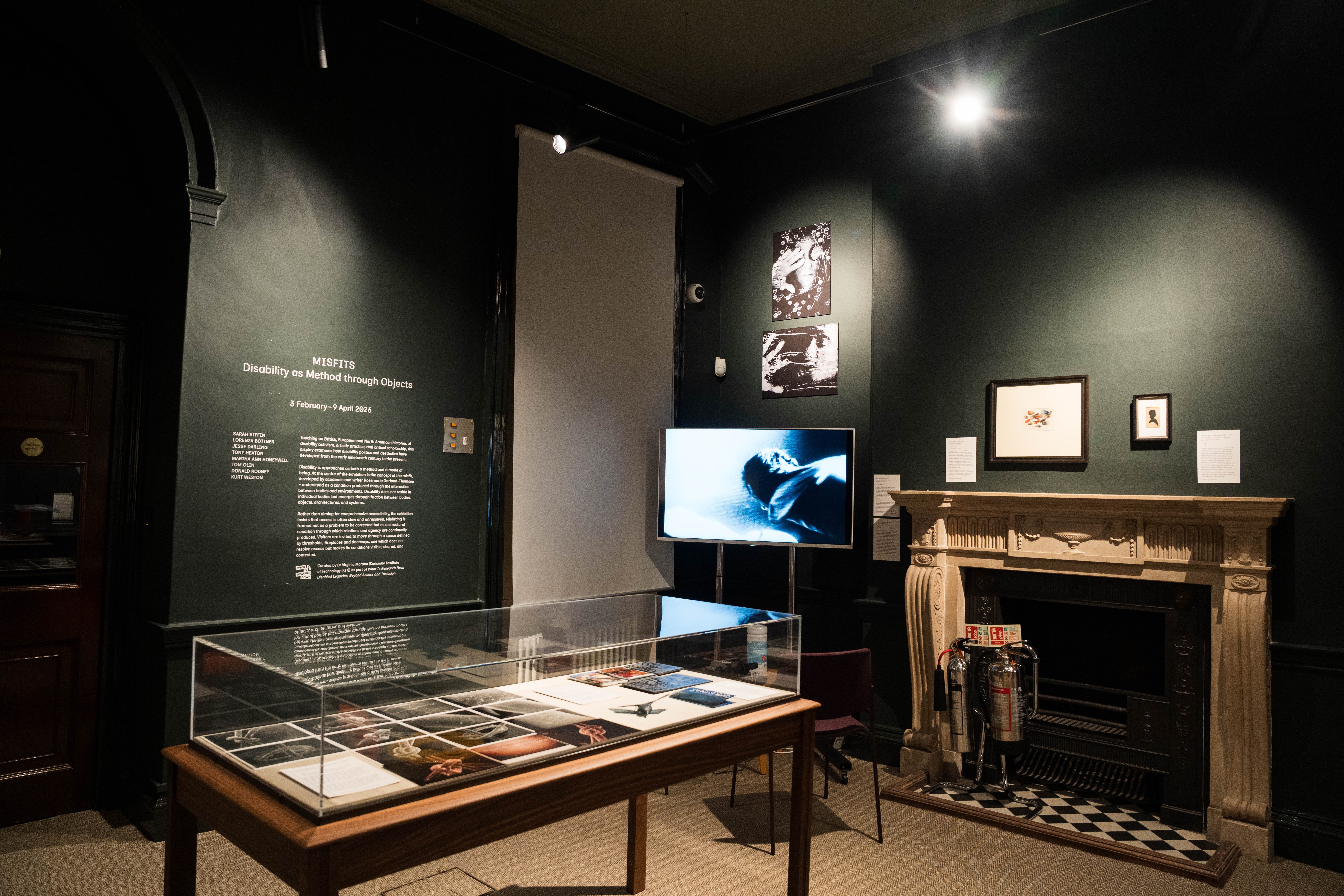
The Thursday evening kicked off with a private view of the Misfits: Disability as Method Through Objects exhibition currently on display in the Paul Mellon Centre until April 9th. The exhibition’s concept derives from Rosemarie Garland-Thomson’s academic paper, which develops the concept of “misfits” as a feminist materialist disability concept. It emerges through the interaction between human bodies and material environments that our indifferent to our individual needs.
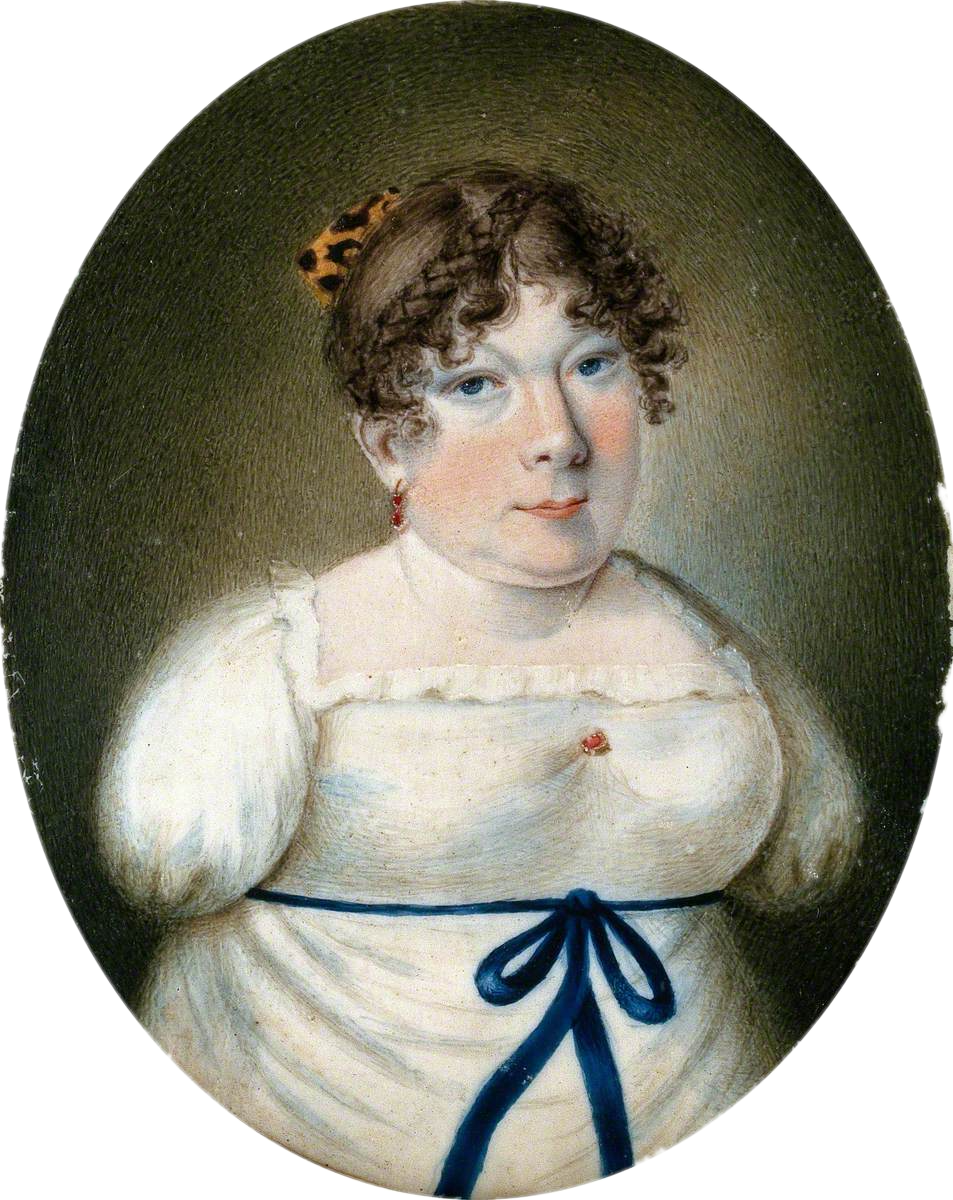
Curated by art historian Virginia Marano, the display spans disability activism and art from the early nineteenth century to today. Marano detailed the artists’ biographies, starting with Sarah Biffin. Born in 1784 without arms or legs due to the condition Phocomelia, Biffin was, like many visibly disabled people at the time, exhibited as a “curiosity” at circuses and fairs. Later, she became an artist and businesswoman, renowned for her miniature portraits, even receiving commissions from the British Royal Family. Biffin befriended Martha Ann Honeywell, another featured artist. Honeywell, also born with a limb difference, worked in New York in the 1830s creating silhouettes and embroidery using only her mouth and her toes, often in public performances. Their biographies prompted reflection on independence and interdependence in the 1800s, identifying them as disabled artists and feminists before either movement existed.
Marano then discussed the two films in the exhibition, which focus on visual artist Lorenza Böttner and blind photographer Kurt Weston. Böttner’s film explored how her work challenged the lack of agency for disabled and transgender bodies. It was released a few years before her death in 1994. The short film on Weston follows his experience with vision loss. It highlights his effort through a physically demanding photographic process.
Also featured is Black British artist Donald Rodney, whose pieces are unique, in that they are not regularly exhibited pieces, but rather Christmas cards made for friends using x-ray paper, and a fragile bird considered to be a trial part of a never-finished piece - a wheelchair covered in x-ray paper birds. These demonstrate how medical ephemera can become an intrinsic part of an artist’s toolkit, present in everyday experiments as well as longer-form projects.
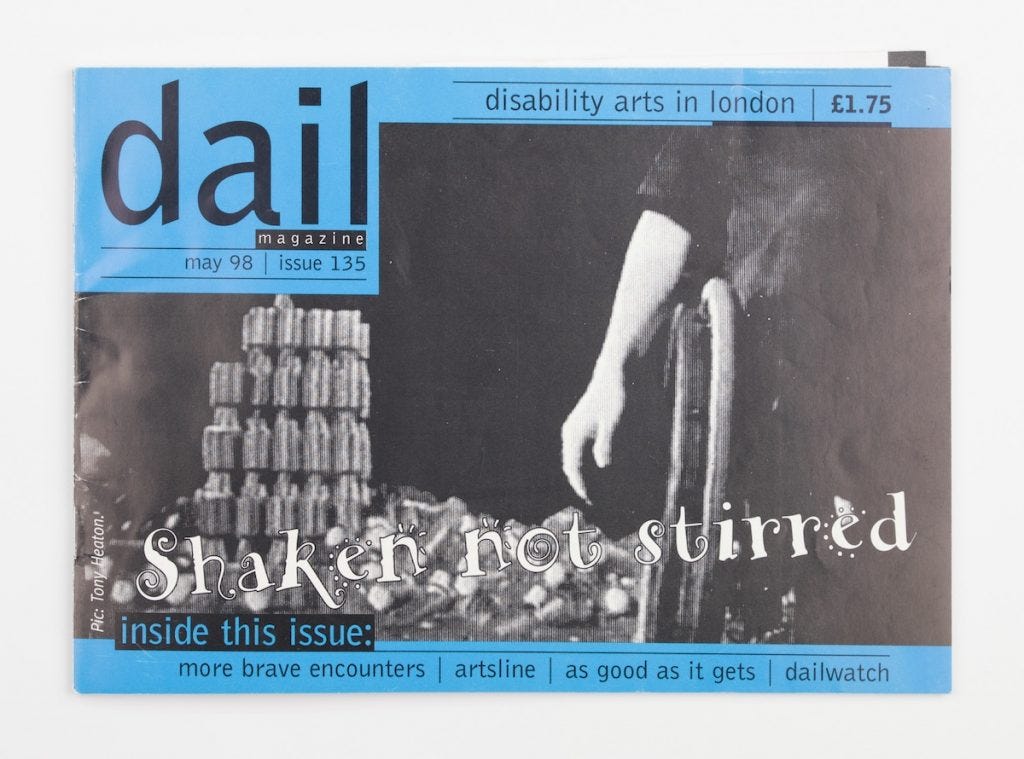
Artist Tony Heaton also spoke during the night. He has many pieces on display, including copies of Disability Arts in London (DAIL) Magazine from the 1990s, which featured his Springback piece. Another piece is one of the 1760 charity cans used in his Shaken not Stirred protest performance. Heaton described his limited negotiating skills when he tried to rent the cans for free, but the Arts Council ultimately foot the bill at £5 per can.
Heaton questioned the interplay between access and labelling disabled people as misfits. He said misfits to him is a “contentious term” that feels person-centred and linked to the medical model of disability. “We’re forced into being misfits due to the way society is constructed, and it still happens today with the failure of legislation.” Referring to disabled artists who have left us, such as Donald Rodney, and to Ben Cove, whose painting, ‘Freeloader’, was selected for the John Moores Painting Prize 2016, shortly after he passed away during the selection process. Heaton asked the room, rather sarcastically, “Is death the only reasonable adjustment?”, calling out the ways in which disabled artists (and the unknowing public) lose archives of artists material around the world every day due to neglect, lack of access and inequities. Why are the artists who are elevated to a fine art status often done so posthumously?
Day One of Disabled Legacies: Beyond Access and Inclusion started with Tony Heaton’s personal history of the UK Disability Arts Movement, chaired by Ashokkumar Mistry. Heaton set the tone for a day honouring those who paved the way for the opportunities we have today. He highlighted the legacies of arts organisations such as Graeae Theatre Company, Shape Arts, and Disability Arts Online. He gave a special mention for the former CEO, Colin Hambrook, who was also an editor at Disability Arts in London. It heralded a time less encumbered by red tape and endless grant application forms, and more encumbered by the real impact of the medical and charity models of disability.
I was pleased to be able to attend all the talks online via Zoom because my chronic fatigue was flaring and I couldn’t get out of bed. The digitisation of the programme was full of glitches, reduced audio and reverb, mirroring the tone of the talks and the embodiment of disability. In the Zoom comments, I saw the names of artists and friends I recognised, who were also able to share in the learnings and enjoy the curation from the comfort of home, which warmed my heart despite its palpitations.
The next talk I attended was Infinite Crip Times Exist (∃ (∞tCRIP)) ⇌ All Ableist Spaces Shapeshift (a2 + s2) by Saleem Hue Penny. Penny’s talk was an offering. His delivery was empathetic, generous, and deeply considered as he navigated through topics like the transatlantic slave trade, erasure of Black disability history, and police brutality. He addressed the many ableist spaces and systems we face, past and present. He quoted Leroy Moore from Krip Hop, who expanded “nothing about us without us” to “nothing without those who came before us”. Penny’s work honours ancestors and documents his process as a collective space for recognition and grieving. His poetry and sound scanning transcends us through physical space to a world of thought and sensation.
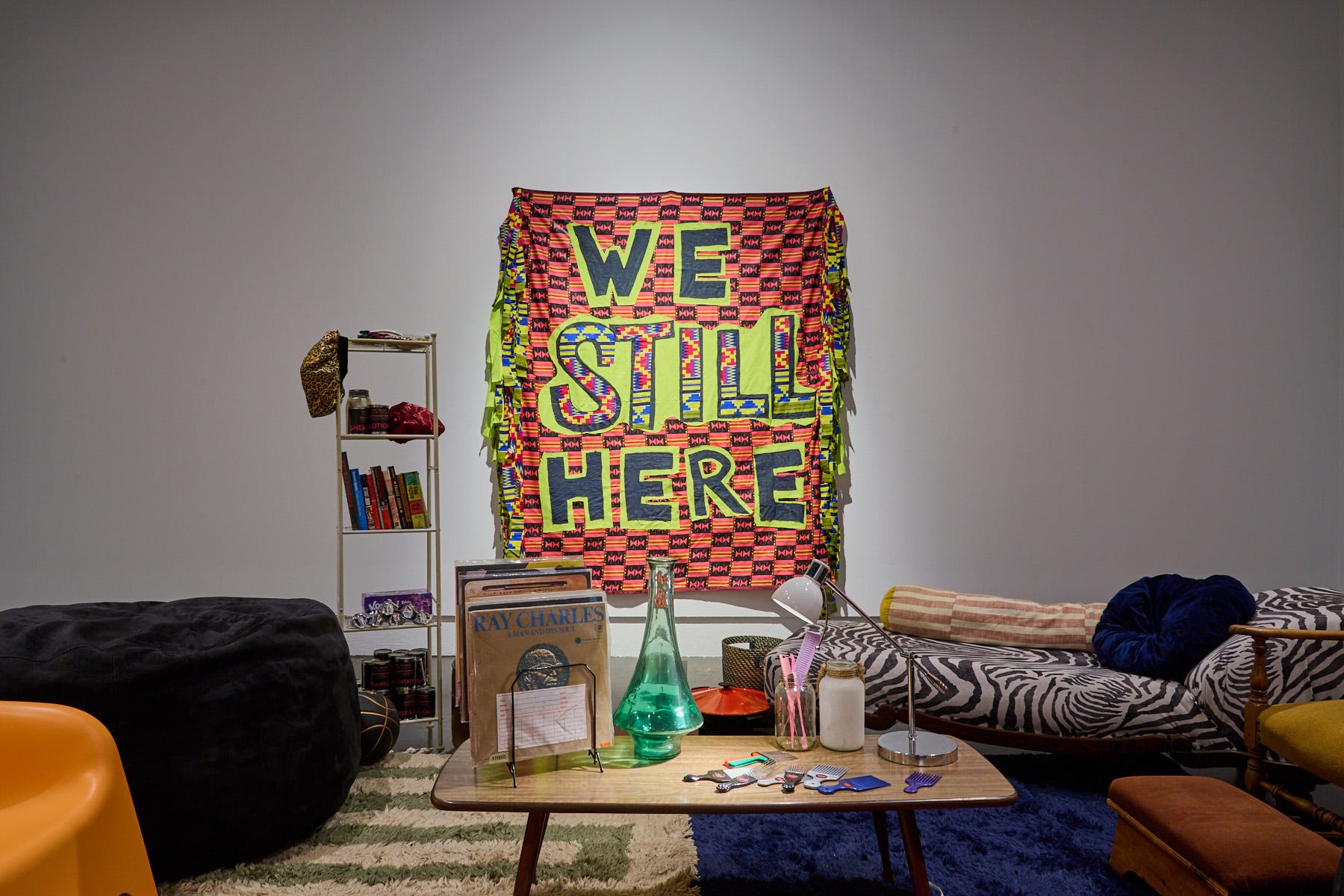
Next, we were joined by artist, activist and scholar, Dr Syrus Marcus Ware, whose presence instantly brightens any room, even when joining remotely. His talk on Black Trans Mad Worldbuilding and creative praxis showcased projects such as Activist Wallpaper, a series featuring Black and Trans political heroes, as well as performances such as Black Bunker. Black Bunker is a fictional bunker construct in a near-apocalyptic future where its residents keep a compendium of Black life, history, and cultural ephemera. Ware described his current focus on world-building through speculative fiction, as well as re-crafting narratives that derail dominant culture and give agency to those who are or have been marginalised. His radical Black queer imaginings of the future underpin the belief that “if we can save the most marginalised, we can save everyone”.
The day culminated in a stunning reading and discussion with poets Cat Chong and Naomi Ortiz. Their featured poems from 712 stanza homes for the sun and Rituals for Climate Change: a Crip Struggle for Ecojustice blended artistic flair with examinations of ongoing harms to society and the environment. Ortiz described her desire to redefine nature through well-inhabited environments, where nature may be masked rather than absent, and highlighted the tension between the necessity of single-use plastics for medical purposes and climate care responsibilities from a crip perspective. The duo emphasised that climate disaster and ableism are interconnected, with Ortiz stating: “ableism is a fear of vulnerability. If one is afraid of being vulnerable, how does one adapt?”
Day Two began with the presentation ‘Beauty and the Blind’ by David Johnson. Like many of the previous day’s talks, it elaborated on the process behind the art, and, in Johnson’s case, on the nature of his blindness as a generative force in art-making. Referencing the work of John Berger, author of the highly footnoted ‘Ways of Seeing’, Johnson reinforced how “The relationship between what we see and what we know never settles”. His artmaking is an extension of the idea that “vision is as much in the mind as it is in the body”.
Next came a series of film screenings and Q&As with Theo Jean Cuthand, who joined virtually, and Jameisha Prescod. Cuthand’s cinematic works contain powerful depictions of transness and madness. Coined as creator of the term “Indigiqueer”, his work traverses through a myriad of intersecting identities. Anhedonia (2001) really stuck out for its relatability to the impacts of illness and depression on an individual, while aesthetically, it captures the nostalgic essence of the early 2000s. On Black Pain by Jameisha Prescod explores three intimate stories from Black people living with chronic pain, reflecting on the impact medical colonialism and misogynoir has had on Black people’s right to be seen and believed. During the Q&A, Prescod reflected that “I wouldn’t be an artist if I weren’t disabled”, and the room ruminated on how disability impacts a person’s likelihood of becoming an artist. In Prescod’s case, it was not only because disability interrupted her capacity to work as a cinematographer in highly demanding environments, but also because themes emerged that she felt the need to explore and document on her own terms.
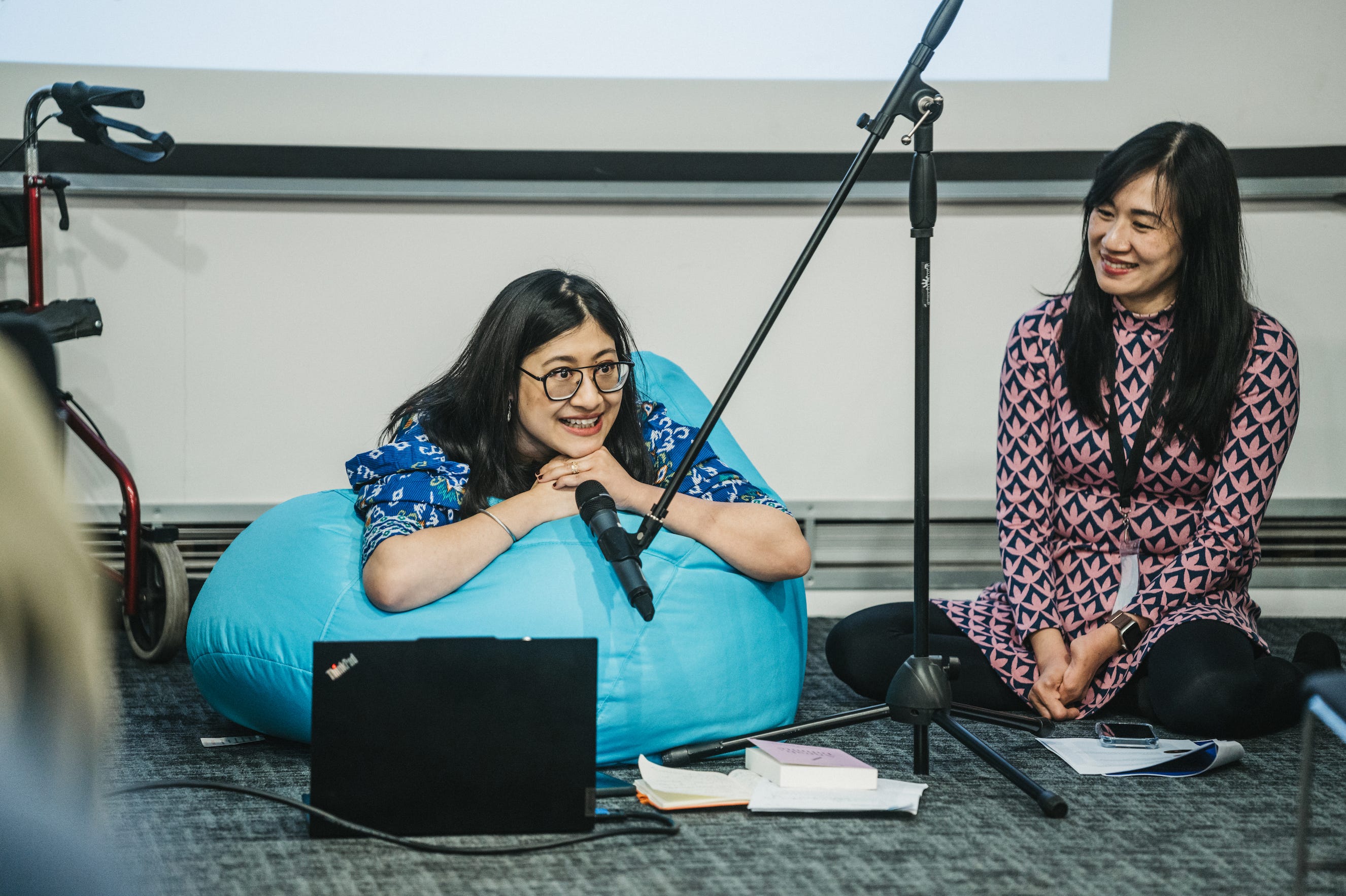
Talks from Khairani Barokka and Pelenakeke Brown came next, with Kenny Fries concluding the day. Barokka and Brown’s talks connected through themes of crip ancestry, mother tongue linguistics, language and delving into the in-between, where nuance, context and possibilities can be extracted. Kenny Fries - memoirist, poet, icon and legend - shared an excerpt from his book The History of My Shoes and the Evolution of Darwin’s Theory. During the Q&A, Fries regaled us with details of his full life, including being the first person to write about being gay, disabled and Jewish. Kenny also wrote ‘Beyond access and inclusion’ in the series pamphlet, which states: “I urge us not to use the word 'inclusion’. Inclusion connotes there are people who hold the power to include… The very idea of ‘inclusion’ seems to exclude.”
I left the series of events feeling satiated by the depth and breadth of the speakers and the wisdom shared. It felt like no stone was left unturned regarding representation and the topics covered (or as much as could be across two short days). Collectively, we took up space, expressing autonomy over our histories. From researchers to poets, it was a demonstration of disabled excellence. Talks such as Syrus Marcus Ware’s left us with a sense of hope that, despite our differences, if we listen to those who have already endured, been treated as disposable, as other, then we can find a way forward together.
To be different, outcast, misfit-ised or denied is, in many cases, the birthright of disability. But that doesn’t mean we need to claim it. It doesn’t mean we cannot form new realities or protest and pull apart the very systems and society that created the mould to begin with. Through the sharing of process and practice, we continue to shape the world in our image.
For those interested in seeing the talks and performances first hand, The Paul Mellon Centre will be uploading them to this link here in due course. I highly recommend it.
Private view written by Ben Lee, Days One & Two, written by Claudia Rose Walder
Thanks for reading Able’s Substack! This post is public so feel free to share it .
No posts
Comments
Nothing yet. Say the first thing.
Sign in to join the conversation.