
I was spoiled rotten growing up in Utah. The Wasatch mountains were basically my backyard, a playground I escaped to regularly as a teenager and young adult. I loved to get lost in the trees, to watch the valley grow smaller while climbing every switchback, to stare out at the Great Salt Lake, mirage-like in the desert heat. My friends and I jumped in clear lakes, floated down rivers made of mountain runoff, drank water from natural springs. It was a magic I took for granted.
I think most children simply don’t have the context to understand how completely bewildering the natural world is. I remember scaling mountains in Bryce Canyon National Park, or standing underneath a waterfall at the end of a hike, and it was amazing, yes, but also somewhat of a backdrop to me. I didn’t know the world without it, and so I didn’t really see it. A friend recently took her kid to Panama, and she said while on a hike, she begged her child to take in the view. “It’s just a bunch of rocks,” her child said.
My family and I camped all the time when I was young, and I remember feeling somewhat similarly. We, too, were surrounded by a bunch of rocks. It wasn’t until later in my life that I decided I wanted to know more about those rocks, or those trees, or the birds and critters living inside of them.
Now, I’m always searching for this nature high. But I’m kind of stunted in that department. When I moved to Washington, DC, I expected a whole different landscape, but I didn’t expect how it would affect me. I was floored at the fact that we lived by the Potomac, but that we were advised to avoid swimming in it. The Potomac is huge, gorgeous, and full of rocky islands and white water rapids in some parts farther north of the city. And it is so, so polluted. Not to mention, to get to any mountain, we have to drive for at least an hour. This distinct lack of accessible, clean nature always lives in the back of my mind as I attempt to build a life across the country from my roots.
Still, there was so much to discover in this new place, and I worked to discover it. During the Covid-19 lockdown, especially, my husband and I drove all over the Mid-Atlantic region seeking out hikes and waterfalls and other natural wonders to fill the hole inside of us. I stood at the tops of mountains and marveled at the deep valleys dotted with little farms here and there, swam in pools created by Shenandoah waterfalls, and hiked along the Potomac, watching kayakers brave the rapids.
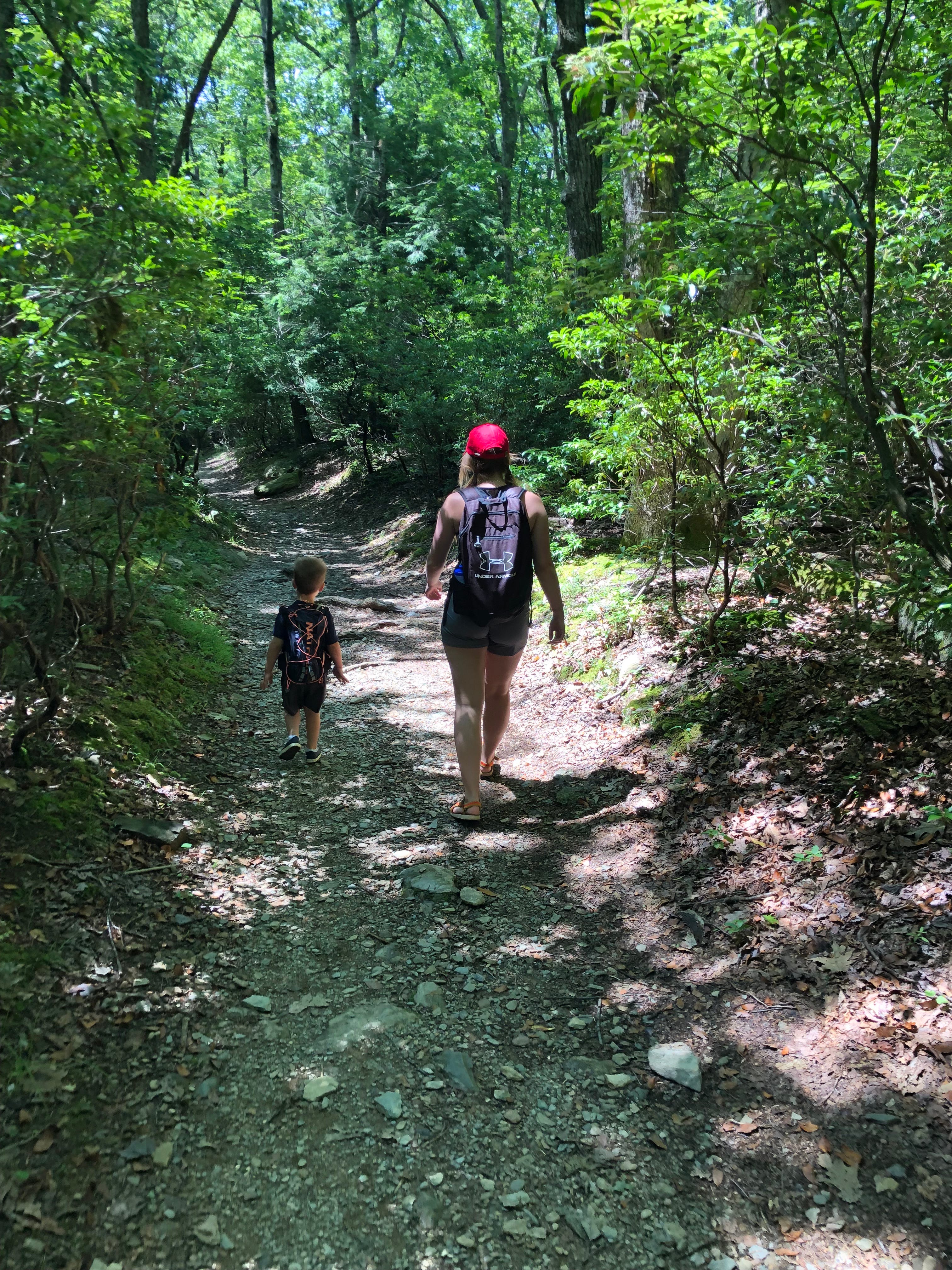
I went on some of these adventures with family before and after lockdown. While on trails, I remember pointing out nature I found fascinating, always asking my nieces and nephews to look at what I was showing them.
“Look at this butterfly!” I’d cry out along our routes. “Did you see the lizard? Can you hear the water? Look at the way that tree’s vines hang like a giant swing!” I was always grabbing their attention, guiding their sweet little eyes towards something I believed they should also find fascinating.
Sometimes they’d get excited with me, but most of the time, they would barely react. No matter. My fascination could not be contained. Eventually, I assumed, they would feel the same sense of wonder, in part because I’d planted the seeds.
And then, we’d go home. We’d sit and chat and the kids would surround me, carrying toys and books, asking me to look, look, look. “Watch me play this game,” they’d insist. “Look at this trick.” I could play along for a little while, but eventually I was exhausted by the way my attention was monopolized.
It wasn’t long before I made the connection that perhaps my asking them to notice something I care about taught them to ask me to notice something they care about. We were both relentless in our own ways. I was so excited for them to experience life, to see the world, to learn and learn and learn, that I overwhelmed them with a false sense of urgency. “Did you see the train?!” I remember demanding of my nephew while we stood on the Woodley Park Metro platform. Of course he did. The train was huge and loud and fast. There was nothing else to look at when it came speeding through.
What I really wanted was connection, of course. I knew my nephew loved trains and cars, and he had never experienced a train first-hand before. I wanted to see his face light up, to witness a dream coming true. And so, I tried to facilitate it instead of waiting for his natural reaction. And though in the grand scheme of things, it’s not that important—I do wonder how he would have reacted if I had said nothing at all.
Taking Utah’s nature for granted has instilled a deep regret inside of me, even though that’s just what kids do, and I’ve witnessed a similar complacency from children who live there now. It’s just a bunch of rocks. And so I feel this pressure to help them understand that they are so, so lucky to live amongst a million natural wonders. But demanding their attention isn’t the solution I once thought it was—that seems to only teach, perhaps obviously, that attention should be demanded.
I’ve thought about this a lot as I’ve gotten to know my own daughter. We’re lucky to live by Rock Creek Park—a whole National Park in my own backyard—and I’ve been excited to take her on the trails when she would be awake and alert for longer periods of time. I’d given myself pep talks in my head, reminding myself to not talk too much, to not point out every single fascination. Finally, a couple weekends ago, we strapped her into the baby carrier and headed to the forest.
It had been so long since I’d walked that particular trail, the same one I tread multiple times a week in a previous life. A few years ago, I kind of stumbled across it while on a walk, as many paved trails lead to dirt paths in Rock Creek Park, and you get to choose your own adventure every time. The trail led along the creek and eventually opened up to a bank by a hillside, where people could hammock, picnic, and bring their dogs to play in the water. Once, I lay on a large rock there in the middle of the rushing water, eyes closed, for at least an hour. But due to an encumbering pregnancy and a busy work schedule, I hadn’t been on that trail for almost a year. Things had changed; the creek was low due to a drought, the graffiti under the bridge had morphed, places I used to expect a breeze now felt strangely still. But I loved being able to notice these things, to notice this place at all.
My daughter has always been fascinated by trees. When we go on short walks under the canopy viewed from our fifth-floor apartment, she looks up at the sun shining through the leaves in absolute wonder. The pediatrician noted this attentiveness at my daughter’s last appointment (no one fell), and said that some babies live in awe, and some babies seem not to care at all. Of course, it all evens out in the end. But it’s been really fun to have a baby who lives in awe.
For that reason, I suspected she would love the creek. When we took her out from the carrier to really allow for a full view of what was around her, she stared at the water with the same expression she wore during her first bath: wide eyes and an open mouth, unabashedly witnessing the unfamiliar.
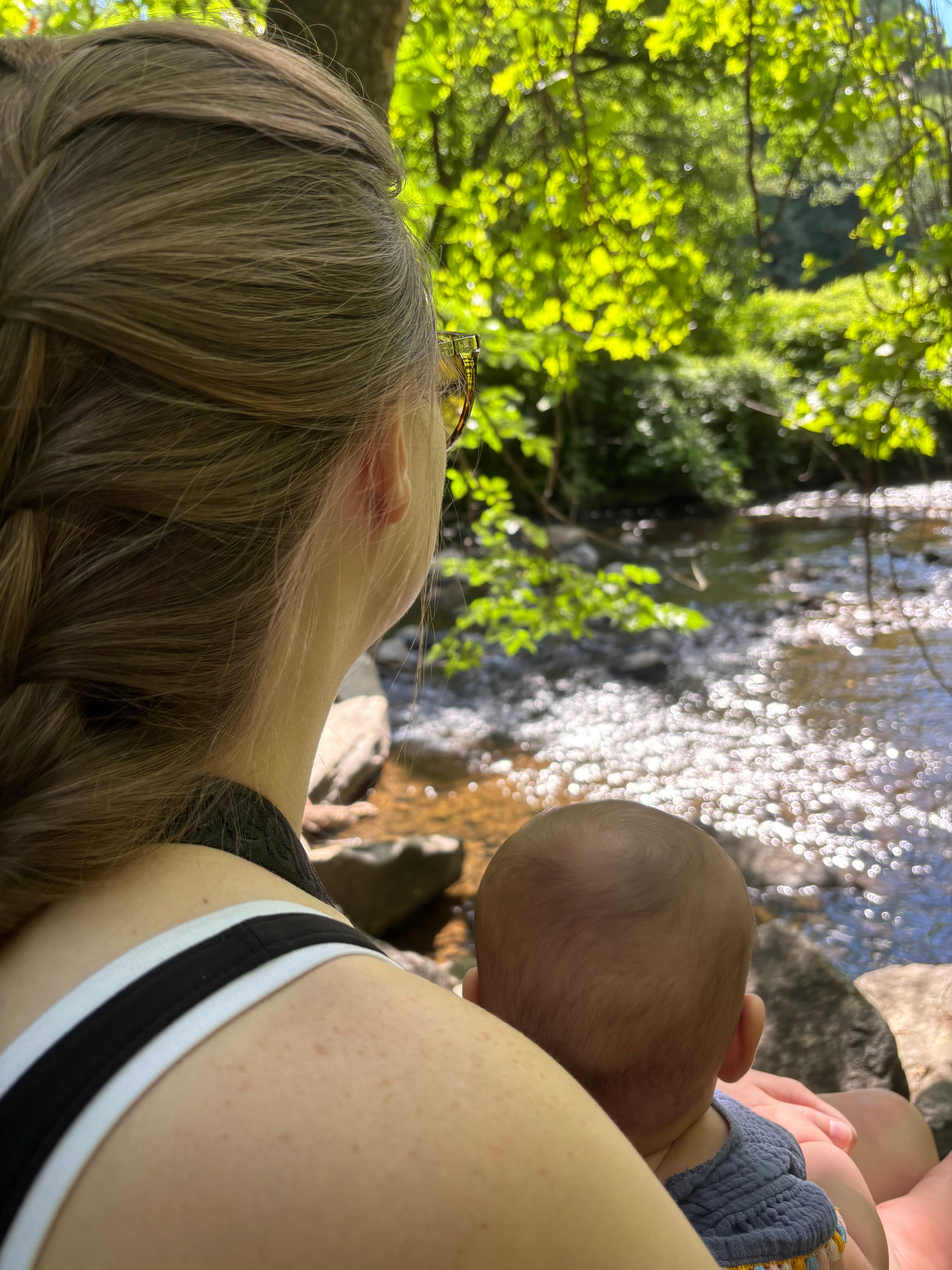
With my nieces and nephews, I’ve experienced the cliche that kids help adults see the world through new eyes thousands of times, and now I get to experience it with my own daughter. But I successfully resisted the urge to point out everything to her. I don’t need to say, “Look how the sun creates shadows on the leaves!” She’s already looking. And maybe she doesn’t see the shadows; maybe she’s noticing something completely different, and my attempt at guiding her would get in the way.
I did ask her once, “What do your baby eyes see?” and even that felt like too much. I don’t need to direct her experience; all that’s needed of me is to sit with her and take in the view for myself. And in that moment, it was the sun reflecting on the ripples, giant ants crawling across the rocks, a tree’s vine dipping into the water, a dog splashing in the eddy, my daughter’s tiny hand resting on my shoulder, my husband’s knee touching mine.
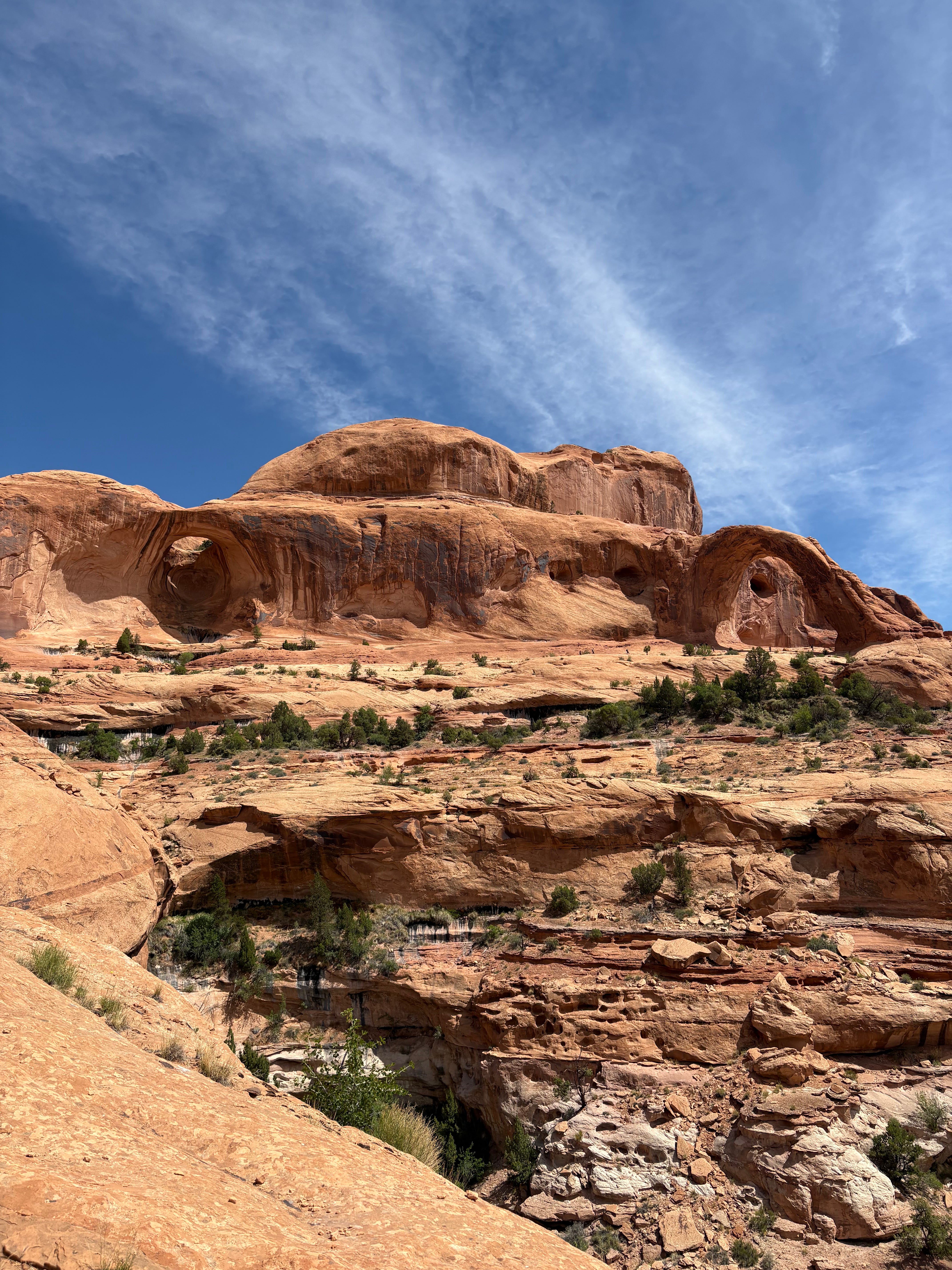
I thought back to April 2025, when I went to Arches National Park and hiked alone to the Bowtie Arch. I had sat on the edge of a cliffside looking out over the red rock and sagebrush, listening to the sounds of families hiking in the distance. I lay on the rock and closed my eyes, wondering if there was a little life growing inside of me, and wondering if I could raise that little life with the same sort of nature I experienced as the backdrop to her world. And now, just about a year later, I was with that little life I dreamed up, walking back home from Rock Creek Park. She had fallen asleep, but it didn’t matter. It was just a bunch of rocks.
No posts
Comments
Nothing yet. Say the first thing.
Sign in to join the conversation.