
In the dark, I laid on a bed with the covers kicked off, sweat shining on my chest. I was at my in-law’s house, a storybook cabin on a river, staring at the ceiling dotted with stick-on stars. There’s the Big Dipper, there’s Cassiopeia. My husband stirred next to me; my daughter sighed in her crib near the closet. A breeze made the blinds clunk against the window frame. The house is large and open due to an atrium connecting all three levels, and so the air conditioning tends to get lost in all that space. And on the last two days of our trip, the air conditioning stopped working altogether.
My body has started waking me up a few minutes before my daughter wakes up, and each time I wonder if the sensation was proactive or reactive. Had I heard her stir without knowing it, and woken up? Or was I so attuned to her tiny body that I just knew when she would need me? I hoped for the latter, for some magic and wonder to be infused in this new little life, for my body to be this amazing thing that knows and acts and understands. The baby monitor said our room was 84 degrees Fahrenheit. My daughter woke up several times in this heat, her own little body telling her something wasn’t quite right.
As I nursed her, I tried to position her so that the fan would cool off her tiny, sweaty head. In years past, the desert heat of Idaho and Utah had been sweltering, of course, but still manageable. Our nieces and nephews used to play outside during the day, making up games, chasing chickens, slip-and-sliding in the sun. This year, they rarely left the house. The 20+ bodies of my husband’s side of the family all fit into the same space, all the sounds meshing together in the openness—Frozen on in the basement, chatter and silverware clanking plates and laughter on the main floor. A flush here, a faucet there, a sizzle on the stove. It was hot. Always. Everywhere.
I keep seeing the same meme saying, This is the coldest summer of the rest of your life.
As I laid awake in the dark, I thought back to the time I visited Smith Island, a town residing in the Chesapeake Bay that’s actively sinking. I interviewed the people who lived there for a podcast I was working on, asked them how they felt about living on an eroding island, and they all said, I don’t think about it much. It won’t happen while I’m alive. I thought about the fires in Canada, and how the smoke traveled all the way to Washington, DC. I thought about the perpetual drought in Utah, and hearing ads for conserving water throughout my childhood: Slow the flow, it’s H20!
I find it difficult to write about climate change without sounding extremely doom and gloom. These are just facts. Sad facts, but still: facts. When the facts are inherently negative, how else can I present them?
I almost chose not to have children based on these facts. How could I knowingly bring a baby into this hot bedroom, let alone this doomed world? But friends in the climate space assured me that there’s still hope, because as flawed and masochistic as humans can be, we’re also ingenious and adaptable. Remember how the world looked when you were young? They ask me. Yes—cool summer evenings playing soccer in the front yard, my mother’s garden full of tomatoes and squash, an open basement filled with toys and ideas, a the buzz from the internet when I tried to make a call. A television that took a minute to warm up. Phone numbers without the area code. Riding bikes and scooters up and down our spoon-shaped cul de sac. Back then, you couldn’t even imagine how our world would look in twenty years.
Still, I wondered if I’d done the right thing as I took off my daughter’s pajamas and set her back in her crib, hoping she’d stay cool. The rest of her summers would get hotter and hotter, the rest of her winters colder and colder, the rest of everything more extreme.
It’s not like heat is new. At this level, and in the places its occurring—that’s kind of new. But people have survived and even thrived in extreme heat throughout the world for millennia. I tried to put my experience in perspective: 84 degrees? That’s nothing. That’s a pleasant afternoon. Still, those summer days from when I was a kid feel far gone, a relic of some other time.
Even though I know the world is changing, I still picture my daughter’s childhood like mine. It’s all I have to reference. I want her out all day with friends and neighbors, making up silly games and spraying each other with the hose and riding bikes up and down the road. But along with climate change, simply living doesn’t feel that safe anymore.
Here we go again. The doom and gloom. But the facts are: we built the U.S. around cars, which made us dependent on oil, which is killing the planet in myriad ways. It’s just true. And the fallout reaches even further: we built the U.S. around cars, which has made our neighborhoods and cities increasingly dangerous as we keep building and building, which has made it so parents must watch their children closer than ever before. I don’t know if my daughter can play outside all day with friends and neighbors when she’s surrounded by this type of danger. Parents in my generation have been labeled “helicopters” because we must surveil, but in this environment, how else can we respond?
Back when I was pregnant, a friend asked me if I’d move to the suburbs. I laughed, rolled my eyes. Of course, I said, because all parents move to suburbs, don’t they? I was sure we’d remain a city family. I’ll never say never—who knows where we’ll end up—but as of now we’re staying in DC. Yet, I have started to reframe my old, naïve point of view. Parents move out of cities for school districts and space, yes, all of that is true, but now I wonder if they also—maybe without even thinking about it—move to quiet streets to try to access a type of freedom that feels long gone.
I tend to spiral in a scrupulous, OCD-type of way when it comes to climate change. I see all the problems but have a harder time seeing the solutions. I know what I personally can do—compost, buy an electric car, conserve water, use shampoo bars, etc.—but it’s not really up to me, or any other individual, to fight this existential Goliath. The Goliath was created by a bunch of money-hungry, selfish people who have retained power and influence since oil was first discovered and used. It was BP who coined the term “carbon footprint” to make us wary of our own choices in a system that doesn’t allow for anything but destruction. So, it’s BP, and other oil giants, who should pay the price. When I talk to friends who work in climate, I feel hope for a second. They seem to see a way out, whatever that looks like, and so I choose to trust them. But I think, for me, the only way out is to actually do something about it on a larger level.
I feel stuck in a million ways right now. On the job hunt, in need of more space for my growing family, in a city that’s feeling less and less like home. In the dark Idaho bedroom, even though it was 84 degrees and climbing, I didn’t want to return to such a fraught life. What was out there for me? The spiral began again. I see all the problems but have a harder time seeing the solutions. I see all the problems I see all the problems I see all the problems. My daughter sighed again, and I pictured her smiling earlier that day, when we’d played in an inner tube that cousins would soon take out on the river. Choose hope choose hope choose hope.
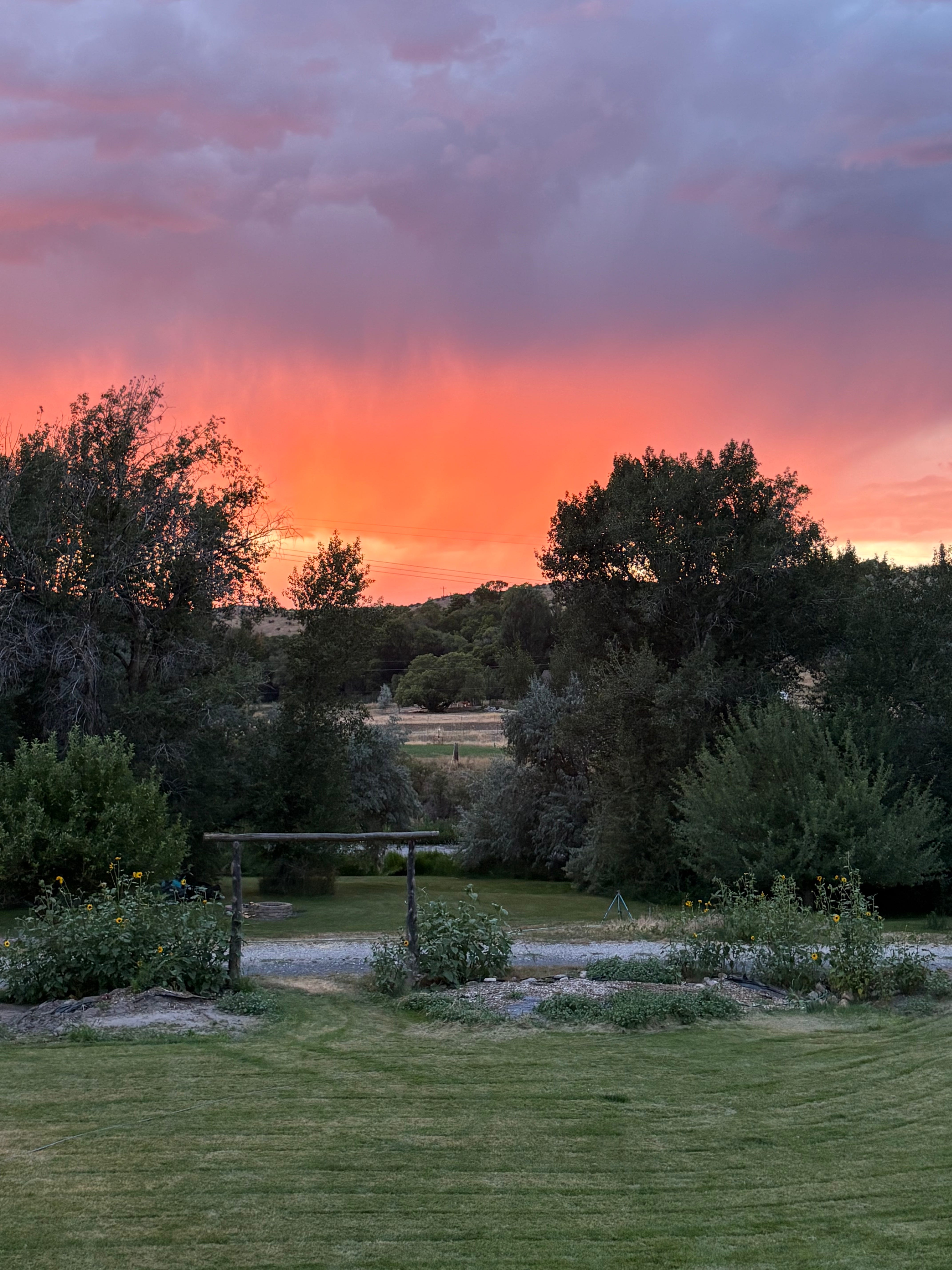
I stared at the plastic stars speckling the ceiling and tried to imagine the future 20 years from now. I pictured that river flowing, moving down the canyon high and fast this year. I pictured the otter I saw the other day, its tiny head surfacing for only a few moments. I pictured the two herons I saw side by side, and how they flew in opposite directions as my kayak approached them. In 20 years, these things could be gone—a dry river, a lack of animal diversity. No. Start again. In 20 years, there could be more water, more otters, more herons. In 20 years, there could be me and my baby, floating together. I felt a real thirst, picturing that water, that future. I think I can’t accept anything else.
No posts
Comments
Nothing yet. Say the first thing.
Sign in to join the conversation.