
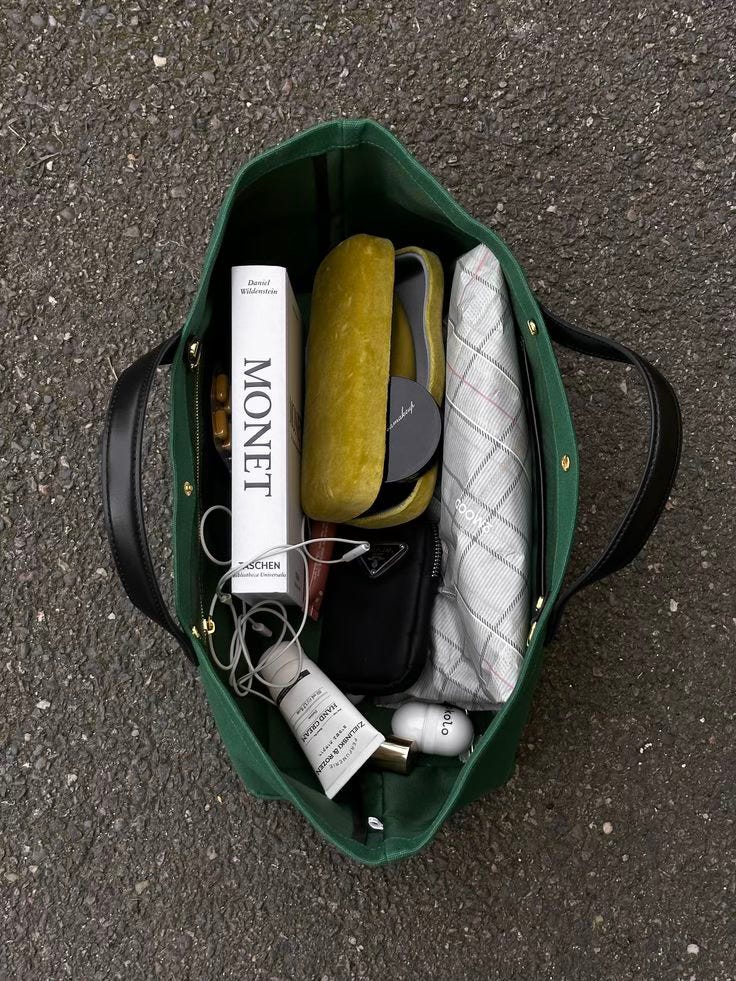
Let me set the scene. it is 10pm. I am in bed. I have Alix Earle open in one tab, Madelynn Cline in another, and I am telling myself I am just “doing research.” twenty minutes later I have added three things to my cart and I am genuinely convinced that a butter yellow linen co ord is a personality trait I need to have by Thursday.
this is not a hypothetical. this is a Tuesday.
I have watched enough Tinx, enough Matilda Djerf, enough Get Ready With Me videos to have developed what I can only describe as a parasocial relationship with my own wishlist. I don’t just want things. I want them because someone with great lighting and a really good ring light made them look like the answer to a question I didn’t know I was asking.
The Rhode phone case was not a phone case. It was a lifestyle. It was the kind of girl I was going to become once I had it. I have it now. I am the same girl.
And look, I am not going to pretend I don't know what's happening when I'm doing it. I know. I have media literacy. I have read about manufactured desire. I know that when Alix posts about her Stanley it has already been seeded two months in advance and I am a node in a marketing funnel. I know all of this. I bought the Stanley anyway. and then when the Owala girlies started talking I bought that too because apparently I needed two water bottles with different personalities.
here is what nobody says out loud in the fashion content space: the micro-trend cycle is designed to make your existing wardrobe feel wrong. not worn out. not broken. just aesthetically incorrect. last season’s beige linen is not good beige linen anymore, it’s the wrong shade of beige. butter yellow is in. sage is out. coastal grandmother had a moment. now we’re doing something called “quiet luxury” which apparently means expensive clothes that look like they’re trying very hard not to look expensive.
the Miu Miu sunglasses are a great example of this. I want them because I genuinely loved them, I want to be clear about that. but I also want them because I had absorbed approximately 400 hours of content in which women with those exact frames looked like they had figured something out about life that I had not. that is not a purchase. that is a vibe transfer I paid for.
THE ACTUAL NUMBERS, SINCE WE’RE HERE
The fashion industry produces around 100 billion garments a year. The average person buys 60% more clothing than they did 15 years ago and keeps each piece for half as long. A typical fast fashion item is worn 7 times before being discarded. I have a butter yellow top I have worn twice and I am afraid of it.
I want to be honest here because I think a lot of “I quit fast fashion” content is written by people who have already arrived at a place of enlightened minimalism and are now gently guiding you from above. I have not arrived anywhere. I am in transit. I still want things constantly. the difference is I am now making myself wait.
the thing that actually shifted something for me was not a documentary (though The True Cost will rearrange your organs, watch it). it was looking at my wardrobe and genuinely not being able to tell you where half of it came from. not the brand. not the reason I bought it. not a single memory attached to it. it was just stuff. a lot of beige and butter-adjacent stuff that I had convinced myself was a considered aesthetic and was actually just whatever was trending the month I had money.
clothes are supposed to last longer than a season. shoes are supposed to last longer than a trend. this is not a radical statement but it genuinely felt like one when I first let myself sit with it, because I had been operating as if the opposite were true. as if something being “of the moment” was itself the point.
“I’m not trying to become a capsule wardrobe person overnight. I’m just trying to stop buying things because someone pretty had them in good lighting.”
I still watch the content. I want to be upfront about that. I am not going to pretend I am now only consuming slow fashion content by women who make their own linen in Portugal. Alix is still on my feed. Matilda’s lookbooks still make me feel a feeling. Tinx said one thing about a pair of loafers and I immediately looked them up.
but I think there’s something worth saying about how these creators are also just people doing a job inside a system that profits from you buying things. they didn’t invent trend culture. they didn’t invent the dopamine hit of an unboxing. they are operating inside the same machinery we are, just from a different position in it. the anger, when it comes, is better directed at the system than the girl who made you want the phone case. she wanted the phone case too, probably.
what I’m working on is watching the content and feeling the want and then just... sitting with it for a while. not buying immediately. not adding to cart the second the serotonin hits. letting the craving be a craving and not an instruction.
okay I know this has been mostly me being self-deprecating, but I want to end on something real for a second. because overconsumption isn’t just a personal aesthetic problem. it has an actual body count, and a lot of that body count is in countries like ours.
India is both one of the largest producers of textiles in the world and one of the largest recipients of fast fashion waste. the fashion industry produces around 100 billion garments a year, generates 92 million tonnes of textile waste, and the average fast fashion item is worn maybe seven times before it’s thrown out. the clothes you donate to that bin outside the mall, the ones that feel virtuous to discard? a significant portion ends up in landfills in the Global South. we are downstream of a system that extracts labour from us and then dumps its excess back on us, and somehow we’re the ones being sold the trend cycle like it’s aspirational.
the awareness piece isn’t about guilt. I cannot stress this enough. guilt is useless, guilt makes you freeze, guilt makes you buy something to feel better which is deeply ironic. the awareness piece is about understanding that every purchase is a small vote for a system, and right now most of us are voting on autopilot because a pretty girl with good lighting told us to.
and yes, there are options closer to home that aren’t Zara with a pashmina thrown on top. I just genuinely think they deserve more noise than they get. No Nasties out of Goa is 100% organic cotton and Fair Trade certified, and has been doing this long before sustainability became a trend in itself. Doodlage, based in Delhi, works entirely with fabric waste from export houses and makes genuinely cool stuff out of what would have been thrown away. Okhai, which is a Tata initiative, works with tribal and rural women artisans and does the kind of block print and handwork you can actually trace back to a real person. The Summer House makes sustainable basics in handloom and works directly with weavers, the kind of pieces that look right every season rather than just this one. and if you haven’t looked into secondhand yet, Vintage Wallah is a great place to start because the most sustainable thing you can buy is something that already exists.
I am still figuring this out. I don’t have a capsule wardrobe. I have a wardrobe with a capsule wardrobe living inside it and a lot of butter yellow surrounding it on all sides. but I’m paying attention now. to what I buy, to where it comes from, to whether I actually want it or just want to want it. that’s the whole thing. just pay attention. the trend cycle will keep going with or without you. you are allowed to step to the side of it for a minute and ask if any of this is actually yours.
No posts
Comments
Nothing yet. Say the first thing.
Sign in to join the conversation.