
Daniel was only a teenager when Nebuchadnezzar marched him out of Jerusalem in 605 BC. It was the first wave of a conqueror’s campaign that would eventually leave Solomon’s temple in ashes by 586 BC. For five months, Daniel trudged north past Damascus and down into the Tigris-Euphrates valley toward an unfamiliar city and a ruler he never chose. He never saw home again. Near the end of his life, the book bearing his name records him studying Jeremiah’s prophecies and landing on a striking figure: seventy years. Jeremiah had promised that the exile would last seven decades. This is a period many scholars connect to the Sabbath rest cycle in Leviticus 26, the land reclaiming the sacred rest Israel had neglected for centuries. Daniel realized the seventy years were almost up, yet he prayed and fasted. A fulfilled prophecy didn’t explain how a captive people would be freed, who would let them go, or if they would even remain faithful enough to be worth saving.
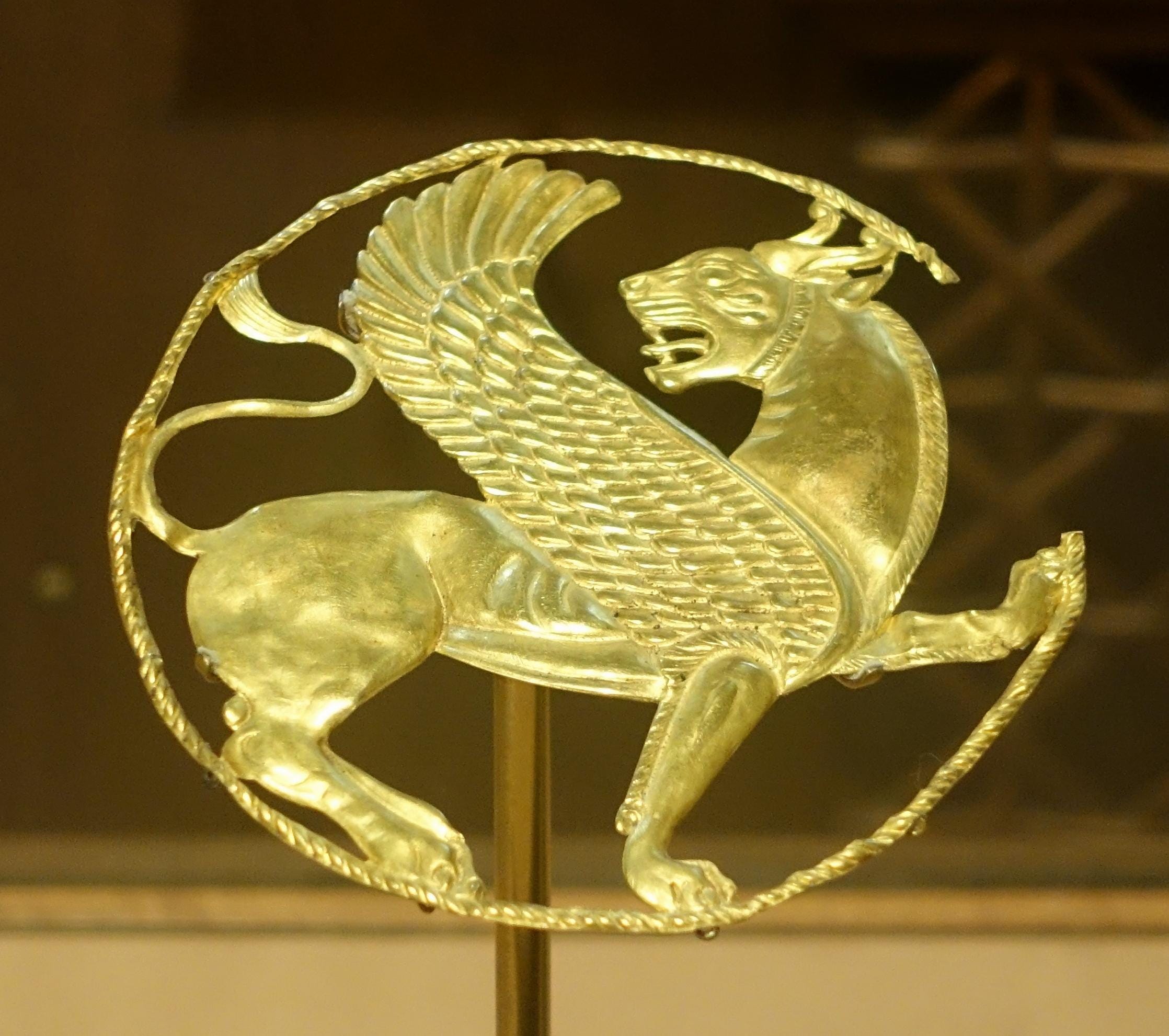
Before that answer arrives, the text pulls back the curtain on something stranger than politics. In Daniel 10, an angelic messenger tells the aging prophet he was delayed three weeks because the prince of the kingdom of Persia withstood him, and that only the archangel Michael’s intervention freed him to continue. Michael is named as Israel’s prince, set directly against a Persian counterpart.
Dr. Michael Heiser built a substantial argument on this passage in his work on the divine council, reading it against Deuteronomy 32:8-9 in its Dead Sea Scrolls and Septuagint form, where the Most High divides the nations according to the number of the sons of God rather than the number of Israel’s tribes, a wording later Masoretic scribes appear to have smoothed over. On that reading, the nations disinherited at Babel were handed to lesser members of the divine council, territorial elohim governing the pagan world while Yahweh kept Israel as His own portion. Daniel’s prince of Persia becomes, on this framework, one of those cosmic governors, a real spiritual power contesting Michael over which direction Persia’s still-unformed empire would take, with a war no human eye could see determining whether an old man’s prayer would be answered. Derek Gilbert has extended the same reading in his own work on biblical cosmic geography, treating the eventual Persian decree as the visible edge of that invisible conflict.
While Daniel prayed in Babylon, a boy was growing up in a small kingdom in what is today southern Iran. Cyrus expanded that kingdom with startling speed, west as far as modern Turkey, out into Central Asia, and into Mesopotamia, where in 539 BC he took Babylon itself, then the most important city on earth. He did it without the prolonged siege earlier conquerors had needed, and he followed the conquest with a foreign policy that broke sharply from Assyrian and Babylonian precedent. Where his predecessors had scattered the peoples they conquered, Cyrus let them go home, restoring the cult images Babylon’s kings had confiscated to their original temples.
Isaiah had written around 700 BC, a century and a half before Cyrus’s rise, and he named the future king directly: God’s anointed, God’s messiah, a term applied everywhere else in the Hebrew Bible to a ritually consecrated king of Israel. No oil ever touched Cyrus’s head. Isaiah also called him shepherd, a royal title with deep roots across the ancient Near East, and had him decreeing Jerusalem’s rebuilding and the temple’s foundation laid, generations before either king or decree existed. Isaiah 45:1 addresses him as the Lord’s anointed, whose right hand God has grasped to subdue nations before him.
The decree came in 538 BC, the year after Babylon fell. Ezra 1 and 2 Chronicles 36 record it as an act the Lord stirred in Cyrus’s spirit, commissioning him to rebuild the Jerusalem temple and release the exiles home. Cyrus told a different version of the same story to his Babylonian subjects, and that version survives on a nine-inch clay cylinder that the Assyro-British archaeologist Hormuzd Rassam pulled out of the ground at Babylon in March 1879, buried as a foundation deposit under the ruins of the city’s chief temple. The Cyrus Cylinder praises Marduk for handpicking Cyrus as Babylon’s rightful king and denounces the deposed Nabonidus as a low-born oppressor who had let the temple’s daily offerings lapse. It is conventional royal propaganda written in a Babylonian idiom for a Babylonian audience, following a genre of reform proclamations Mesopotamian kings had issued at the start of their reigns for two thousand years before Cyrus, not a human-rights charter in the modern sense whatever popular readings claim. The R. W. Rogers translation of 1912 has Marduk searching every land for a righteous prince after his own heart and calling Cyrus, king of Anshan, by name, appointing him to lordship over the whole world. A replica of the cylinder sits today at the United Nations headquarters in New York; the original remains in the British Museum.
Daniel had already glimpsed some of this at Susa. Daniel 8 places him there in a vision years before Cyrus’s conquest, at the winter capital that would later serve as the setting for nearly the entire book of Esther. French excavators would not reach the site until 1901, when a team under Jacques de Morgan uncovered a black diorite stele seven feet five inches tall a short distance from where the palace once stood, carved with the laws of the Babylonian king Hammurabi some twelve centuries before Daniel’s own lifetime. Some scholars have proposed identifying that king with the Amraphel of Genesis 14, one of four eastern kings who marched against Sodom and Gomorrah in Abraham’s day, though the identification runs into a real chronology problem: Hammurabi’s reign is generally dated to roughly 1792 to 1750 BC, a generation or two later than most reconstructions place Abraham. A century after the theory was first floated, it remains a proposal resting on name resemblance more than settled ground.
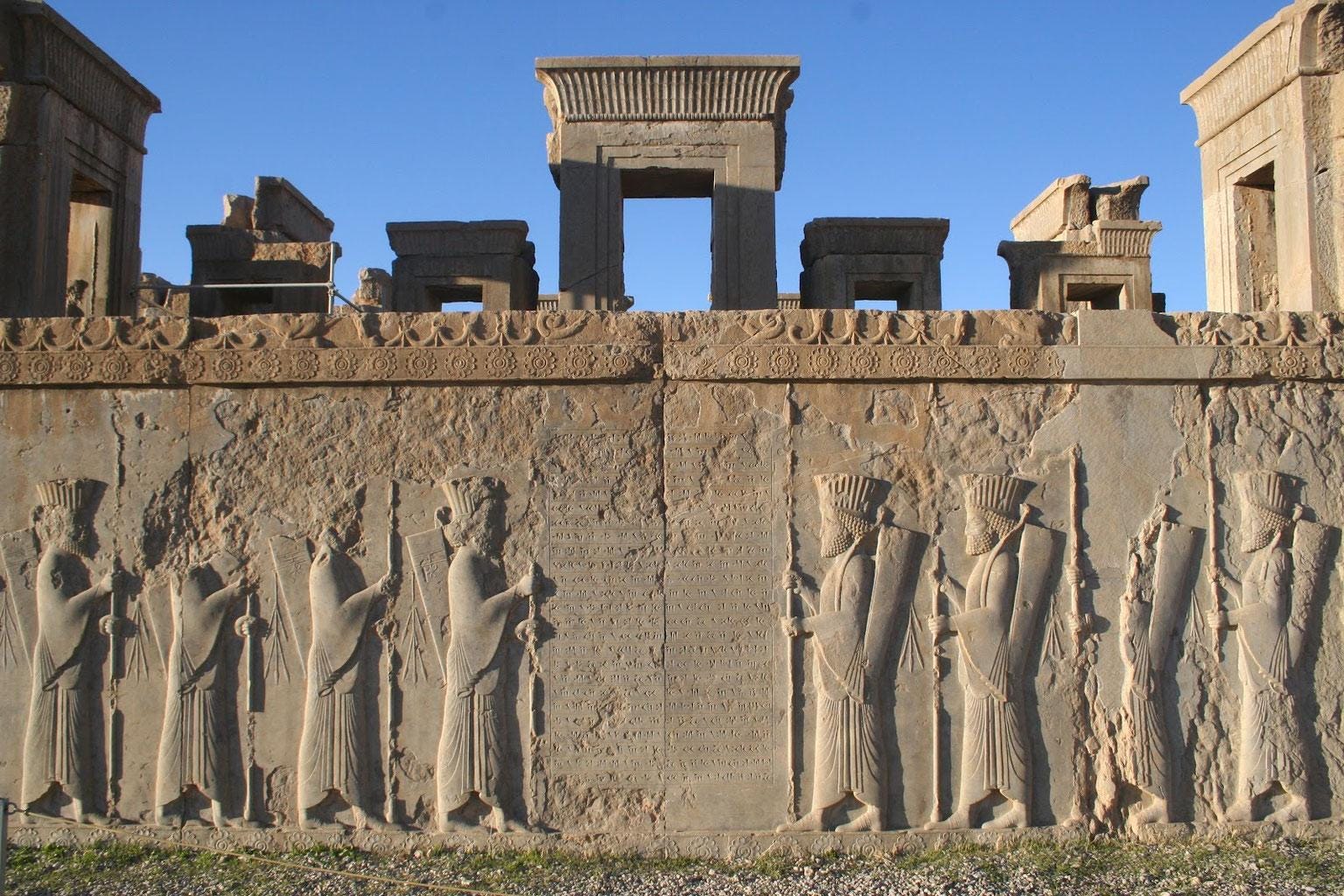
Marcel and Jane Dieulafoy excavated the palace itself in the mid-1880s, uncovering a throne room some two and a half acres in size, ringed by thirty-six columns topped with capitals carved as kneeling bulls, spanned by cedar beams shipped down from Lebanon, the very hall where a later Persian king would hold the banquet that opens the book of Esther. None of this stood yet when Daniel saw his vision there. He was watching a city that had not become an empire’s capital, in a kingdom that had not yet conquered Babylon, and naming, in the text, the ram and the goat that would decide its fate before either animal existed as anything but a picture in his mind.
We can check details like these against Babylonian and Persian records directly, because of a third piece of evidence that has nothing to do with Daniel’s story and everything to do with why anyone can read the others. Three hundred feet up the face of Mount Behistun in western Iran, Darius I had a trilingual inscription carved after crushing a revolt in 522 BC. Henry Rawlinson, a British officer later called the father of Assyriology, spent a decade and two dangerous expeditions copying and deciphering it, cracking Old Persian by 1838 and the harder Elamite and Babylonian columns by 1845. His work opened cuneiform to modern scholarship the way the Rosetta Stone had opened hieroglyphics, and it is the reason historians today can read the Cyrus Cylinder, the Hammurabi stele, and the Babylonian chronicles against Daniel’s account at all, rather than taking the biblical text on faith alone.
Daniel did not live to see everything the promise touched. Isaiah’s Cyrus material sits beside a second, stranger prophecy in the same book, a coming ruler who is more than a man, a son to be born of a virgin and called Immanuel, God with us, carrying titles no earlier Judean king had claimed without irony, Mighty God among them. Heiser read the pairing of these two messianic figures as deliberate: a lesser anointed deliverer in Isaiah 44-45 prefiguring a greater one in Isaiah 7-9, both serving the same covenant promise made to Abraham thirteen centuries before Daniel’s own captivity, that through his offspring all nations of the earth would be blessed.
Centuries after Daniel’s death, Acts 2:9 lists the crowd gathered in Jerusalem at Pentecost, and the first three peoples named, Parthians, Medes, and Elamites, are Iranian groups, descendants either of Jews who had stayed in the Persian world since the exile or of God-fearing Gentiles drawn to the faith through generations of contact with Jewish communities inside the empire. Not everyone had gone home under Cyrus’s decree. The community that stayed produced, generations later, the Babylonian Talmud, and it may have been Persian and Mesopotamian believers at that Pentecost gathering who carried the message east in the first place, along trade routes that would eventually reach a Tang-dynasty court in Xi’an, where in 781 AD a Christian community raised a stone recording the arrival of a missionary named Alopen a century and a half earlier, sent by a church whose patriarchal seat sat inside old Persian territory. Chinese sources of the period called the new faith the Persian religion.
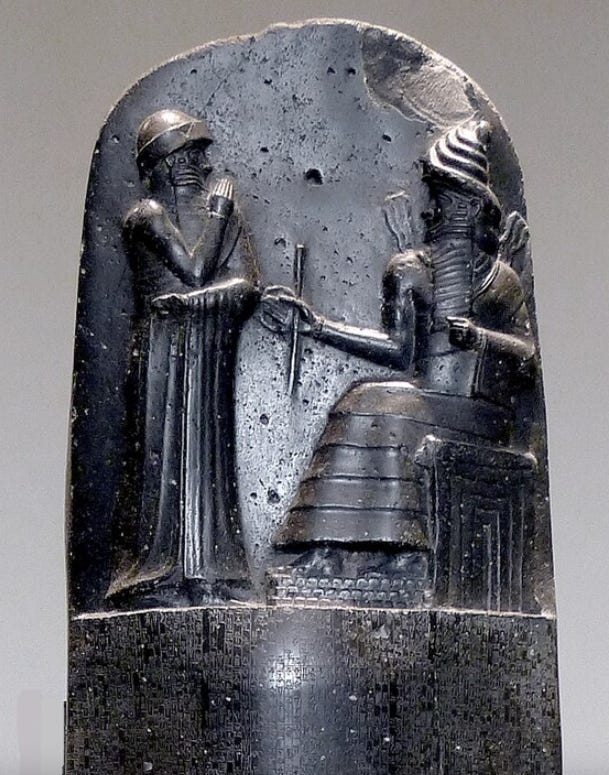
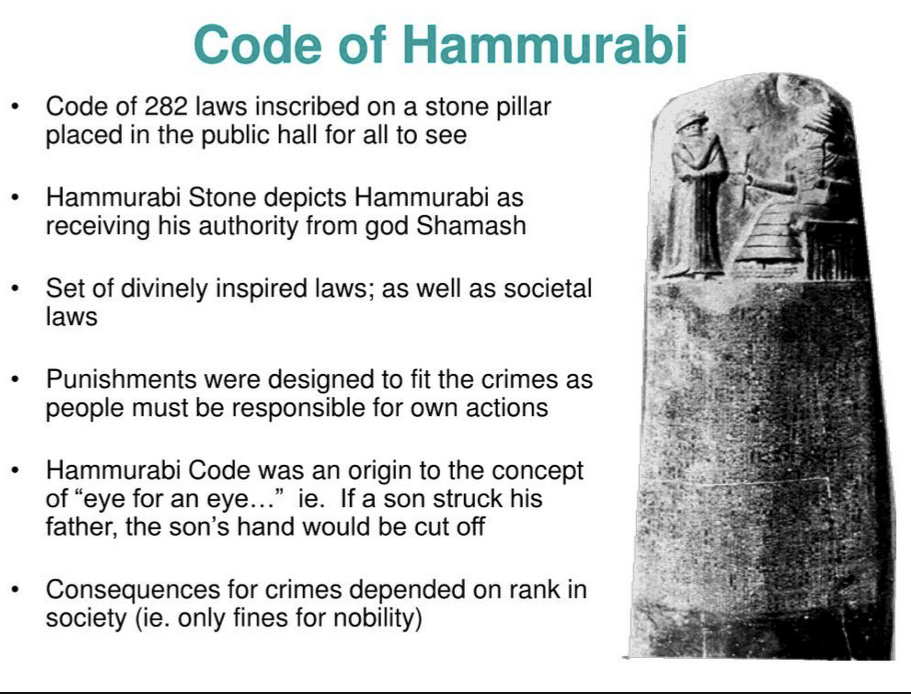
Biblical archaeology has confirmed the great military civilizations of ancient Mesopotamia and their ultimate impact on law and culture throughout the region. One significant find is the Law Code of Hammurabi, a seven-foot-tall black diorite carving (shaped like a human finger) containing laws of Babylon’s King Hammurabi (Hammurapi).
Dated to about 1750 B.C., the Law Code contains civil laws that share structural parallels with early biblical legal texts. Hammurabi was the king of Babylon who conquered the Sumerian dynasty of Isin, bringing an end to centuries of Sumerian domination in Mesopotamia. While early 20th-century scholars tentatively identified Hammurabi as “Amraphel, King of Shinar” in Genesis 14, modern scholarship considers this identification speculative and disputed [1].
“And it came to pass in the days of Amraphel king of Shinar, Arioch king of Ellasar, Chedorlaomer king of Elam, and Tidal king of nations; That these made war with Bera king of Sodom, and with Birsha king of Gomorrah, Shinab king of Admah, and Shemeber king of Zeboiim, and the king of Bela, which is Zoar. All these were joined together in the vale of Siddim, which is the salt sea.” — Genesis 14:1–3
This shining black pillar was discovered in 1901 at the acropolis of ancient Susa (Iran) where it had been taken as war booty from Babylon by the Elamites—by a French archaeological expedition under M. J. de Morgan. The stele is decorated with a bas-relief of King Hammurabi being commissioned by the sun god Shamash (the Babylonian god of justice) to inscribe the laws. The code contains nearly 4,000 lines of cuneiform text containing 282 laws, a historical prologue, and a literary and religious epilogue.
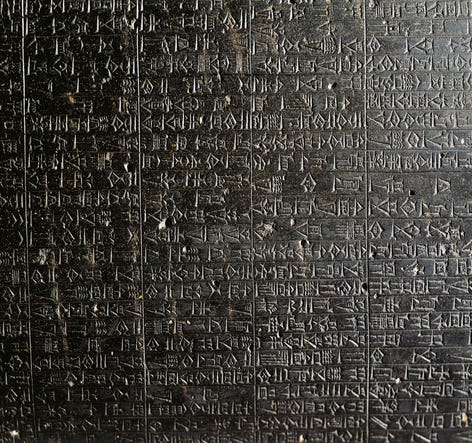
It is significant because it is one of the oldest sets of laws ever discovered by modern archaeologists and shares similarities with the Mosaic Law, such as the “eye for an eye” principle [2]. Early theories that Moses borrowed directly from Hammurabi have been completely discredited. The similarities are limited and superficial: while Mosaic Law applies universal moral principles, Hammurabi’s law applied penalties strictly differentiated by social status (e.g., lower class, middle class, nobility).
Law 1: If anyone ensnares another, putting a ban upon him, but he cannot prove it, then he that ensnared him shall be put to death.
Law 2: If anyone brings an accusation against a man, and the accused goes to the river and leaps into the river, if he sinks in the river his accuser shall take possession of his house. But if the river proves that the accused is not guilty, and he escapes unhurt, then he who had brought the accusation shall be put to death, while he who leaped into the river shall take possession of the house that had belonged to his accuser.
Law 3: If anyone brings an accusation of any crime before the elders, and does not prove what he has charged, he shall, if a capital offense is charged, be put to death.
Law 4: If a builder builds a house for someone, and does not construct it properly, and the house which he built falls in and kills its owner, then the builder shall be put to death. (Another variant: If the owner’s son dies, then the builder’s son shall be put to death).
Law 5: If a son strike his father, his hands shall be hewn off.
Law 6: If a man give his child to a nurse and the child dies in her hands, but the nurse unbeknown to the father and mother nurses another child, then they shall convict her of having nursed another child without the knowledge of the father and mother and her breasts shall be cut off.
Law 7: If anyone steals the minor son of another, he shall be put to death.
Law 8: If a man takes a woman to wife, but has no intercourse with her, this woman is no wife to him.
Law 9: If a man strikes a pregnant woman, thereby causing her to miscarry and die, the assailant’s daughter shall be put to death.
Law 10: If a man puts out the eye of an equal, his eye shall be put out.
Law 11: If a man knocks the teeth out of another man, his own teeth will be knocked out.
Law 12: If anyone strikes the body of a man higher in rank than he, he shall receive sixty blows with an ox-whip in public.
Law 13: If a freeborn man strikes the body of another freeborn man of equal rank, he shall pay one gold mina.
Law 14: If the slave of a freed man strikes the body of a freed man, his ear shall be cut off.
Law 15: If anyone commits a robbery and is caught, he shall be put to death.
Law 16: If anyone opens his ditches to water his crop, but is careless, and the water floods his neighbor’s field, he shall pay his neighbor corn for his loss.
Law 17: If a judge tries a case, reaches a decision, and presents his judgment in writing; and later it is discovered that his decision was in error, and it was his own fault, he shall pay twelve times the fine set by him in the case and be removed from the judge’s bench.
Law 18: If during an unsuccessful operation a patient dies, the arm of the surgeon must be cut off.
The Law Code of Hammurabi provides incredible insight into the civil laws and customs of the ancient world. The discovery of the Hammurabi Stele was one of the most important discoveries in Biblical Archaeology. It is an original document from the time of Abraham, bearing testimony of a highly advanced system of law and a remarkably advanced time period. It currently resides in the Louvre Museum in Paris.
Meaning “the god’s place or land,” the Behistun Inscription is a multilingual inscription located on Mount Behistun in Iran. It includes three versions of the same text written in three cuneiform scripts: Old Persian, Elamite, and Babylonian. This monument served as the key to deciphering cuneiform—acting for cuneiform as the Rosetta Stone did for Egyptian hieroglyphs.
Carved 300 feet above the Karmanshah plain along the old caravan route from Babylon to Ecbatana, it contains about 1,200 lines of text (Old Persian: 414 lines; Elamite: 593 lines; Babylonian: 112 lines).
In 1835, Henry C. Rawlinson (often called the “Father of Assyriology”) climbed the cliff to make plaster impressions [3]. Using his knowledge of modern Persian and earlier work by Georg Friedrich Grotefend, Rawlinson deciphered the Old Persian text by matching royal names (such as Dâryavuš for Darius) [4]. By 1847, he had published his full translation.
The inscription features a life-sized bas-relief of Darius I the Great (522–486 BC) holding a bow as a symbol of kingship, placing his left foot on the chest of the prostrate Gaumata, a pretender to the throne. Darius raises his right hand toward a winged disc symbolizing Ahura Mazda. Behind the rebel stands a procession of captured rebel leaders roped together by their necks.
In Near Eastern wall reliefs, a king places his foot upon the neck of his enemy to symbolize complete submission. This custom long prevailed in the East and directly confirms biblical imagery:
“So it was, when they brought out those kings to Joshua, that Joshua called for all the men of Israel, and said to the captains of the men of war who went with him, ‘Come near, put your feet on the necks of these kings.’ And there drew near and put their feet on their necks.” — Joshua 10:24 [5]
In the sixth century BC, Cyrus the Great founded and ruled the vast Persian Empire until his death in 530 BC. His rise to power began when he defeated the Median king Astyages and captured the capital city of Ecbatana, uniting the Medes and Persians under his rule. Cyrus then launched a series of aggressive campaigns to expand his realm, defeating Croesus, the wealthy king of Lydia, in 546 BC. The culmination of his expansion occurred in 539 BC, when the Persian army invaded and annexed the Neo-Babylonian Empire, overthrowing Nabonidus—the last king of Babylon. With these decisive victories, the Persian Empire was firmly established.
Cyrus distinguished himself through a generous, benevolent leadership style that earned praise from figures like the Greek historian Xenophon, the defeated Nabonidus, and many others across the ancient world. Nowhere is this legacy clearer than on a famous 6th-century BC artifact: the Cyrus Cylinder. Discovered in the ruins of Babylon in 1879, this barrel-shaped clay cylinder is inscribed in Babylonian cuneiform script—a writing system originating in ancient Sumer (Biblical Shinar), where early post-Flood civilization established itself before scattering across the world.
The Cyrus Cylinder serves as Cyrus’s own official royal account of conquering Babylon in 539 BC and deposing Nabonidus. In the text, Cyrus praises his honorable kingly lineage while denouncing the deposed Nabonidus as an impious oppressor of low-born origin. Cyrus claims to have conquered Babylon peacefully with the aid of Marduk, the patron deity of Babylon, who selected Cyrus to restore justice. To relieve the city’s inhabitants, Cyrus took measures to rebuild ruined sanctuaries and returned confiscated god statues back to their original temples throughout Mesopotamia and western Iran. Additionally, Cyrus organized the return of various deported captives back to their native homelands. While modern observers have sometimes labeled the text the “first charter of human rights,” it actually reflects a millennia-old Mesopotamian royal tradition dating back to the third millennium BC, where new kings inaugurated their reigns with sweeping declarations of reform.
For scholars and historians, the Cyrus Cylinder stands as a pivotal discovery in Biblical Archaeology because it directly confirms the “decree of Cyrus” recorded in Scripture (2 Chronicles 36:22–23, Ezra 1:7–11, and Isaiah 44:28). Although the Jews are not explicitly named in the cuneiform text, their return to Palestine following their deportation by Nebuchadnezzar II was a direct consequence of this general repatriation policy. The decree permitted Hebrew captives to go back to Jerusalem to rebuild their Temple. Cyrus also restored the sacred vessels of the House of the Lord that Nebuchadnezzar had looted, provided financial funds to bring cedar trees from Lebanon, and allowed Judea to flourish as a Persian province for the next two hundred years.
“[. . .] his troops [. . .four] quarters of the world [. . .] a weakling was established as ruler over his land and [. . .] a similar one he appointed over them, like Esagila he made [. . .] to Ur and the rest of the cities, a command dishonoring them [. . .] he planned daily and in enmity, he caused the daily offering to cease; he appointed [. . .] he established within the city. The worship of Marduk, king of the gods [. . .] he showed hostility toward his city daily [. . .] his people; he brought all of them to ruin through servitude without rest.
On account of their complaints, the lords of the gods became furiously angry and left their land; the gods, who dwelt among them, left their homes, in anger over his bringing into Babylon. Marduk [. . .] to all the dwelling places, which had become ruins, and the people of Sumer and Akkad, who were like corpses [. . . .] he turned and granted mercy. In all lands everywhere he searched; he looked through them and sought a righteous prince after his own heart, whom he took by the hand. He called Cyrus, king of Anshan, by name; he appointed him to lordship over the whole world.
The land of Qutu, all the Umman-manda, he cast down at his feet. The black-headed people, whom he gave his hands to conquer, he took them in justice and righteousness. Marduk, the great lord, looked joyously on the caring for his people, on his pious works and his righteous heart.
To his city, Babylon, he caused him to go; he made him take the road to Babylon, going as a friend and companion at his side. His numerous troops, in unknown numbers, like the waters of a river, marched armed at his side. Without battle and conflict, he permitted him to enter Babylon. He spared his city, Babylon, a calamity.
Nabonidus, the king, who did not fear him, he delivered into his hand. All the people of Babylon, Sumer, and Akkad, princes and governors, fell down before him and kissed his feet. They rejoiced in his sovereignty; their faces shone.
The lord, who by his power brings the dead to life, who amid destruction and injury had protected them, they joyously blessed him, honoring his name.
I am Cyrus, king of the world, the great king, the powerful king, king of Babylon, king of Sumer and Akkad, king of the four quarters of the world, son of Cambyses, the great king, king of the city of Anshan, grandson of Cyrus, the great king, king of the city of Anshan; great-grandson of Teispes, the great king, king of the city of Anshan; eternal seed of royalty whose rule Bel and Nabu love, in whose administration they rejoice in their heart. When I made my triumphal entrance into Babylon, I took up my lordly residence in the royal palace with joy and rejoicing; Marduk, the great lord, moved the noble heart of the residents of Babylon to me, while I gave daily attention to his worship.
My numerous troops marched peacefully into Babylon. In all Sumer and Akkad I permitted no enemy to enter. The needs of Babylon and of all its cities I gladly attended to. The people of Babylon [and . . .], and the shameful yoke was removed from them. Their dwellings, which had fallen, I restored. I cleared out their ruins. Marduk, the great lord, rejoiced in my pious deeds, and graciously blessed me, Cyrus, the king who worships him, and Cambyses, my own son, and all my troops, while we, before him, joyously praised his exalted godhead. All the kings dwelling in palaces, of all the quarters of the earth, from the Upper to the Lower sea dwelling [. . .] all the kings of the Westland dwelling in tents brought me their heavy tribute, and in Babylon kissed my feet.
From [. . .] to Asshur and Susa, Agade, Eshnunak, Zamban, Meturnu, Deri, with the territory of the land of Qutu, the cities on the other side of the Tigris, whose sites were of ancient foundation - the gods, who resided in them, I brought back to their places, and caused them to dwell in a residence for all time, And the gods of Sumer and Akkad—whom Nabonidus, to the anger of the lord of the gods, had brought into Babylon—by the command of Marduk, the great lord, I caused them to take up their dwelling in residences that gladdened the heart. May all the gods, whom I brought into their cities, pray daily before Bêl and Nabû for long life for me, and may they speak a gracious word for me and say to Marduk, my lord, “May Cyrus, the king who worships you, and Cambyses, his son, their [. . .] I permitted all to dwell in peace [. . .]”
Susa (biblical Shushan) lay in the uplands of the Plain of Susiana about 150 miles north of the Persian Gulf. Once a magnificent city, it is now an immense mass of ruins covering nearly 4,900 acres.
Susa was originally the capital of Elam. Here, Daniel saw visions, Nehemiah began his public career, and the events of the Book of Esther unfolded. Inscriptions on the palace ruins record that it was founded by Darius and completed by Artaxerxes.
French excavations beginning in 1852 under W.K. Loftus and M. Dieulafoy uncovered “Shushan the Palace,” a massive 123-acre palace fortress. The complex included a throne room, “the House of the King,” “the House of the Women,” inner and outer courts, and palace gardens. The throne room itself covered nearly an acre, featuring 36 massive columns topped with capitals carved as kneeling bulls and spanned by cedar beams. This very palace was used by King Xerxes (Ahasuerus) and Queen Esther.
Archaeologists also discovered the palace gate where Mordecai sat and recovered a quadrangular die (Pur) engraved with numbers, reflecting the lots cast in Esther 9:24–26 [7]. Furthermore, it was at the acropolis of Susa in 1901 that Jacques de Morgan’s team discovered the famous stele of Hammurabi’s Code.
The Medo-Persian empire collapsed in 331 BC under pressure from:
a. Ptolemy in Egypt
b. The Parthians
c. Alexander the Great
Who is described as the “Father of Assyriology”?
a. Henry C. Rawlinson
b. Petrie
c. Albright
Which King is depicted on the Behistun Inscription placing his foot on his enemy?
a. King Jehu
b. Darius the Great
c. Cyrus
The Law Code of Hammurabi is a Babylonian Artifact found in Persia; ancient Susa.
a. True
b. False
Hammurabi is famous for his:
a. Law Code
b. Cruelty
c. Wealth
The Cyrus Cylinder decrees:
a. Israel to be taken into Babylonian captivity
b. The Jews are allowed to return to their homeland
c. King Cyrus is an illegitimate king
Which biblical prophet specifically identified King Cyrus by name nearly 150 years before his reign?
a. Jeremiah
b. Isaiah
c. Daniel
d. Ezra
Which ancient city served as the setting for the Book of Esther and contained the palace of Xerxes?
a. Persepolis
b. Babylon
c. Susa (Shushan)
d. Ecbatana
What three language scripts are inscribed on the trilingual Behistun Inscription?
a. Old Persian, Elamite, and Babylonian
b. Hebrew, Greek, and Latin
c. Aramaic, Akkadian, and Sumerian
d. Egyptian, Cuneiform, and Hieratic
The first three diaspora groups mentioned as present at Pentecost in Acts 2:9 (Parthians, Medes, and Elamites) originated from which modern-day country?
a. Egypt
b. Turkey
c. Iraq
d. Iran
c. Alexander the Great
Explanation: The Achaemenid Empire collapsed in 331 BC following Alexander the Great’s conquests.
a. Henry C. Rawlinson
Explanation: Rawlinson copied and deciphered the trilingual Behistun Inscription, earning him the title “Father of Assyriology”.
b. Darius the Great
Explanation: Darius I is sculptured on Mount Behistun with his foot placed upon the prostrate rebel Gaumata.
a. True
Explanation: Although created in Babylon by King Hammurabi, the diorite stele was carried away to Susa as war booty, where French archaeologists uncovered it in 1901.
a. Law Code
Explanation: Hammurabi is best known for his 282 legal statutes carved on the black diorite stele.
b. The Jews are allowed to return to their homeland
Explanation: The Cyrus Cylinder outlines Cyrus’s decree permitting deported captive populations in Babylon to return to their native homelands and rebuild their sanctuaries.
b. Isaiah
Explanation: Isaiah ministered around 700 BC and named Cyrus as God’s shepherd and “anointed one” long before Cyrus conquered Babylon in 539 BC.
c. Susa (Shushan)
Explanation: Excavations at Susa uncovered “Shushan the Palace,” where King Xerxes (Ahasuerus) and Queen Esther lived.
a. Old Persian, Elamite, and Babylonian
Explanation: The Behistun Inscription contains matching texts in Old Persian, Elamite, and Babylonian cuneiform scripts.
d. Iran
Explanation: Parthians, Medes, and Elamites were ancient regional groups originating from the territory of modern-day Iran.
[1]: Amraphel and Hammurabi: Genesis 14:1. The identification of Amraphel as Hammurabi was proposed by early 20th-century scholars (e.g., Hugo Winckler) but is generally rejected or considered unproven by modern Near Eastern historians.
[2]: Eye for an Eye Principle: Compare Code of Hammurabi Laws 196 & 200 with Exodus 21:23–25; Leviticus 24:19–20; Deuteronomy 19:21.
[3]: Henry C. Rawlinson: British East India Company officer; key decipherer of Old Persian cuneiform (1835–1847). Published in Journal of the Royal Asiatic Society (1847).
[4]: Herodotus Comparison: Herodotus, Histories Book III (detailing Darius’s rise and the Persian kings).
[5]: Foot on Neck Motif: Joshua 10:24; compare with Behistun Relief panel of Darius I over Gaumata.
[6]: Cyrus Cylinder Translation: Rogers, Robert William. Cuneiform Parallels to the Old Testament. Eaton & Mains, 1912.
[7]: Susa Excavations: Marcel-Auguste Dieulafoy & Jane Dieulafoy (1884–1886); Jacques de Morgan (1897–1912). Artifacts located in the Louvre Museum, Paris.
Thank you for reading Dr. Aaron Judkins Substack. As a token of our appreciation, we’re offering you a limited-time offer of 20% off a paid subscription for your first year. Thanks again for reading.
PS. If you loved this article, be sure to head over to our Ancient Pathways Patreon site and see my film “Qumran 2 Petra” where we take you onsite at the Pool of Siloam.
The Pool of Siloam
·
November 11, 2025
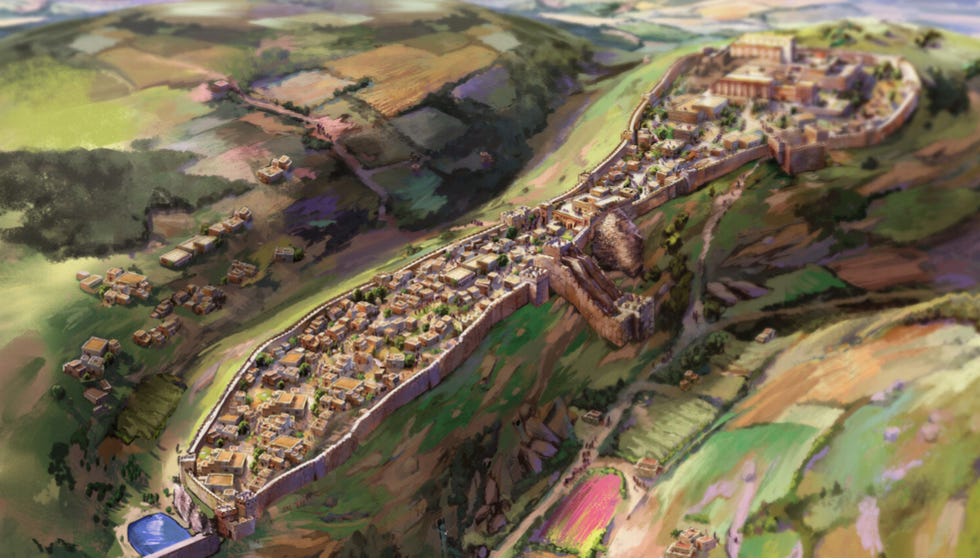
In 2004 I was proud to participate in the initial excavations alongside Ronny Reich and Eli Shukron, during which they uncovered the northern portion of the pool with finely cut ashlar-stone steps descending toward the south. Shortly thereafter Reich and Shukron published their report identifying this phase as the Pool of Siloam mentioned in the Gospel of John.¹ The conventional name “Siloam Pool” had previously been attached to a smaller pool further north, at the outlet of the water conduit known today as Hezekiah’s Tunnel.⁽²⁾ The discovery by Reich and Shukron challenged that identification.³ The sheer size of the finely cut stones and the dating of the steps to the late Second Temple period made it reasonable to accept that this newly exposed pool was the handiwork of Herodian-period Jerusalem — and thus the pool where the blind man was healed (John 9:1-11).⁽⁴⁾
Comments
Nothing yet. Say the first thing.
Sign in to join the conversation.