
August 1, 2026 was a difficult day for me, as it is for anyone who loses their mother, the one who brought them into the world. In times of profound loss, I turn to God’s Word to find peace and strength. In 2 Corinthians, the Apostle Paul tells us that our God is the “God of all comfort.” That comfort comes directly through believing His Word and resting in His promises.
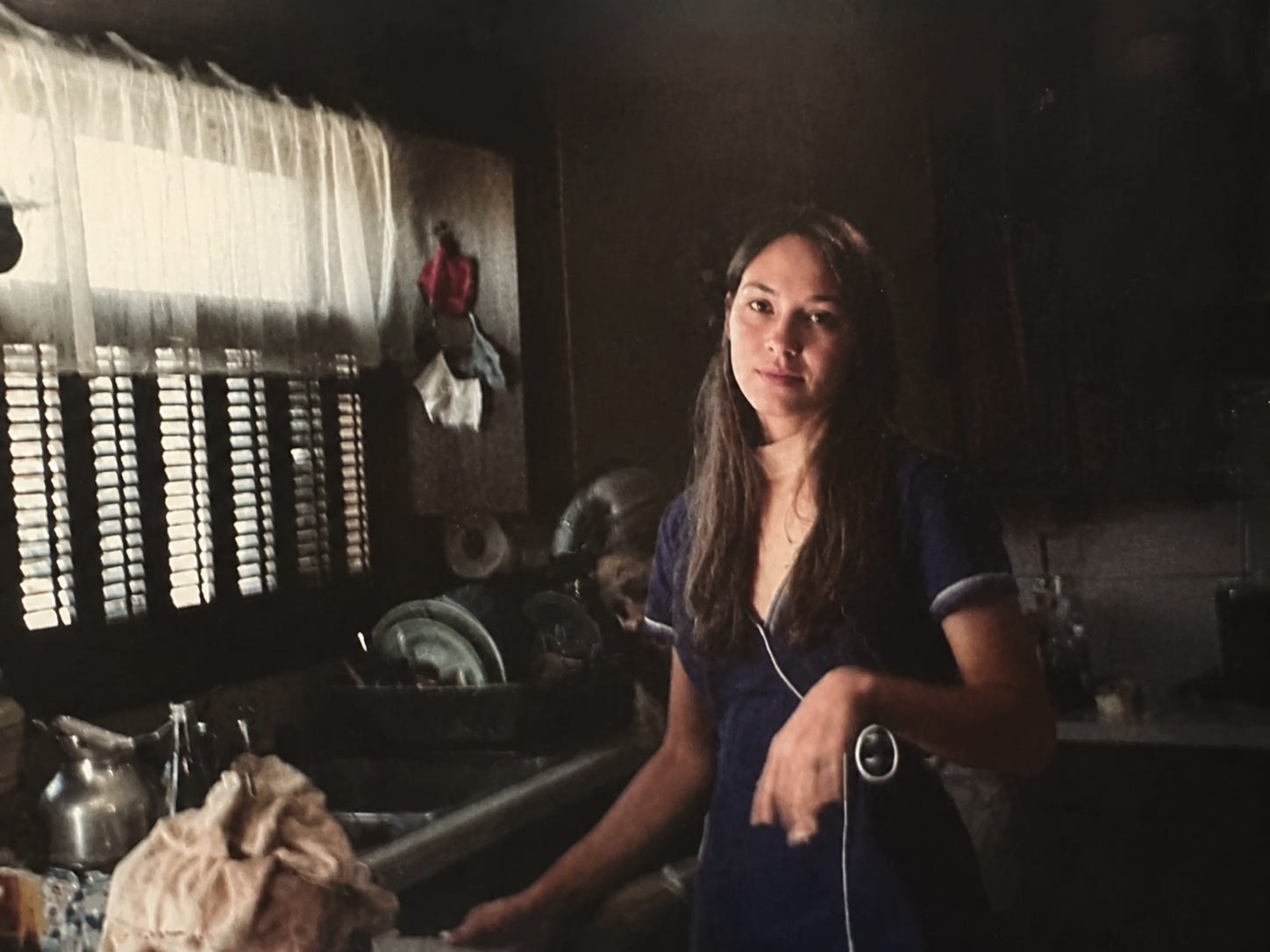
Originally from Duncan, Oklahoma, my mother dedicated the majority of her life to being a homemaker. But calling her a homemaker only scratches the surface of who she was. She made her home a sanctuary of warmth, creativity, and faith. Christine found pure joy in God’s creation; whether she was working in her garden, tending to her flowers, or combing the beach for simple treasures. She was a woman of vibrant artistic expression who expressed her heart through singing, painting, sketching, journaling, and crocheting.
Mom’s handwritten Bible notes revealed just how deeply she pondered faith. She cherished the gentle reminder, “People won’t always remember what you said, but they will always remember how you made them feel”. And that was Mom. Her character was defined by a rare blend of strength, humility, humor, grace, and generosity. What I admired most about her was her unshakable resilience. She truly lived out the words she scribbled in her journal: “Every stumbling block must become a stepping stone, and every opposition an opportunity”.
When I think of my mother’s quiet, persistent faith, I am reminded of the biblical story of Hannah in 1 Samuel. Hannah was a woman who took her deepest heartaches directly to the Lord in prayer. She poured out her soul, trusting God implicitly when circumstances felt overwhelming. Like Hannah, my mother was a woman whose constant refuge was prayer. She knew how to storm the gates of heaven for her family, leaving behind a legacy of intercession that covered us every single day.
Mom’s faith was also anchored by timeless spiritual truths passed down through generations. In her notes, she reflected on the three vital lessons that shaped the ministry of Billy Graham: Submission, Obedience, and Dependence. That was how Mom lived; submitted to God’s will, obedient to His path, and completely dependent on His grace.
The Quiet Legacy (Nicholas Winton): In 1938, on the eve of WWII, a young British man named Nicholas Winton quietly saved 669 children from Nazi-occupied territory. He didn’t write a book or boast; he simply put his notebooks in an attic for 50 years. Decades later, on a television broadcast, he sat in an audience unaware that every single person sitting around him was one of those rescued children, standing up to honor his unseen sacrifice. Mom’s life was like that; quietly planting seeds of love, prayer, and faith that will echo across generations.
Corrie ten Boom’s Unshakable Faith: Corrie was a Dutch watchmaker who, along with her family, harbored hundreds of Jewish refugees in a secret room in their home in Haarlem during WWII. Arrested in 1944, Corrie survived the horrors of Ravensbrück concentration camp and spent the rest of her life traveling the world as an ambassador of Christ’s forgiveness.
Mom held close to the portrait of Corrie ten Boom as a woman who never let circumstances overwhelm her; a woman who “wore the world like a loose garment that she could step out of at will”. Mom recorded Corrie’s simple, practical wisdom for when life gets dark:
“When the train goes through a tunnel and the world gets dark, do you jump out? Of course not. You sit still and trust the engineer to get you through.”
Mom also loved the poetic truth Corrie repeated during her time in solitary confinement:
“Look around and be distressed.
Look inside and be depressed.
Look at Jesus and be at rest.”
And Mom kept close to her heart Corrie ten Boom’s famous poem about the tapestry of life, reminding us that God sees the whole picture even when we only see the tangled threads below:
My life is but a weaving between my God and me;
I do not choose the colors, He worketh steadily.
Oftimes He weaveth sorrow, and I in foolish pride,
Forget He sees the upper, and I the underside.
Not till the loom is silent and the shuttles cease to fly,
Will God unroll the canvas and explain the reason why.
The dark threads are as needful in the skillful Weaver’s hand,
As the threads of gold and silver in the pattern He has planned.
He knows, He cares, He hesitates, He loves, He understands;
He gives His best to those who leave the choice with Him.
Not till the loom is silent and the shuttles cease to fly,
Will God unroll the pattern and explain the reason why.
The dark threads are as needful in the Weaver’s skillful hand,
As the threads of gold and silver in the pattern He has planned.
So let me wait with patience, ‘til the Weaver’s work is done,
And I shall see the pattern in the Kingdom of His Son.
Mom loved the ocean, and it is fitting that two of the most powerful hymns of our faith were birthed out of real, historical trials upon the sea:
The first is the remarkable origin of “Amazing Grace.” Written by John Newton in the 18th century, Newton was once a hardened, profane slave-ship captain who lived far from God. During a violent Atlantic storm in 1748, as his ship battered against the waves and began taking on water, Newton cried out to God for mercy. God spared his life, and that night marked the beginning of a profound spiritual transformation. Newton abandoned the slave trade, became an ordained minister, and penned the words that reflect the mercy Mom held so dear: “Amazing grace! How sweet the sound, that saved a wretch like me! I once was lost, but now am found; was blind, but now I see.”
The second is the true story behind “It Is Well With My Soul.” In 1873, Horatio Spafford suffered a crushing tragedy when a ship carrying his wife and four young daughters collided with another vessel at sea. All four of his daughters perished. As Horatio later sailed across the Atlantic to join his grieving wife, the ship’s captain called him to the deck to let him know they were passing over the exact spot where his daughters were lost. Looking out over the deep waters, Horatio did not surrender to despair. Instead, he went back to his cabin and wrote: “When peace like a river attendeth my way, when sorrows like sea billows roll... Whatever my lot, Thou hast taught me to say, It is well, it is well with my soul.”
Above all else, my mother’s faith was her true north. She lived out Corrie ten Boom’s encouragement: “Never be afraid to trust an unknown future to a known God.”
In her notes, she wrote a quiet, poignant prayer to the Lord: “Father, will You usher me into this when it is time with Your Holy Spirit and Your anointing?” Her prayer mirrors the peaceful surrender of Simeon in Luke 2:29–30: “Lord, now You are letting Your servant depart in peace, according to Your word; for my eyes have seen Your salvation...”

This is the famous Lighthouse vs. Battleship urban legend. While it’s widely circulated as a true transcript (often attributed to the US Navy and Canadian Coast Guard off the coast of Newfoundland in 1995), it is actually a classic humorous parable that has been around in various forms since the 1930s.
The Transcript
Americans: “Please divert your course 15 degrees to the North to avoid a collision.”
Canadians: “Recommend you divert YOUR course 15 degrees to the South to avoid a collision.”
Americans: “This is the Captain of a US Navy ship. I say again, divert YOUR course.”
Canadians: “No. I say again, you divert YOUR course.”
Americans: “This is the aircraft carrier USS Lincoln, the second largest ship in the United States’ Atlantic fleet. We are accompanied by three destroyers, three cruisers, and numerous support vessels. I demand that YOU change your course 15 degrees north, or defensive measures will be undertaken to ensure the safety of this ship!”
Canadians: “This is a lighthouse. Your call.”
If my mother could stand before you for just fifteen minutes right now, I know without a doubt what she would do. She would first express her deep, unconditional love for each and every one of you. But then, with all the warmth, joy, and urgency in her heart, she would look at you and say:
“Be prepared for eternity. Trust Jesus Christ as your all-sufficient Savior. Don’t put it off—it is the most important decision you will ever make.”
As we remember Christine today, we give thanks to God for the beautiful life she lived and the lasting love she leaves behind. She was a gift to her family, a blessing to her friends, and a faithful servant of the Lord. Her hands cared for us, her prayers covered us, her words guided us, and her love shaped us in ways that will remain with us for the rest of our lives.
Though our hearts are heavy, we do not grieve without hope. We believe that because of her faith in Jesus Christ, she is now at peace in the presence of the Savior she loved. Her suffering is over, her race is finished, and her faith has finally become sight.
So today, we say thank you, Mom. Thank you for your love, your sacrifice, your faith, your strength, and your beautiful example. We will miss you deeply, but we will carry your love with us always.
Until we see you again in the presence of the Lord, we honor you, we carry your memory, and I thank God for the privilege of calling you my mother.
“When peace like a river attendeth my way, when sorrows like sea billows roll... Whatever my lot, Thou hast taught me to say, It is well, it is well with my soul.”
Dr. Aaron Judkins Substack is a reader-supported publication. To receive new posts and support my work, consider becoming a free or paid subscriber.

Comments
Nothing yet. Say the first thing.
Sign in to join the conversation.