
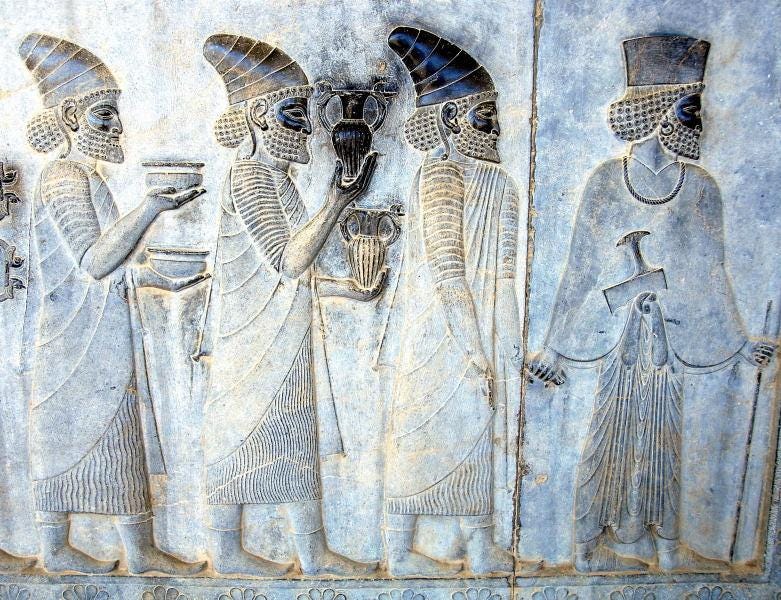
In May 2024, I had the opportunity to visit the Institute for the Study of Ancient Cultures (ISAC) Museum (formerly the Oriental Institute) at the University of Chicago with Ted Wright of EPIC Archaeology, an experience that brought the ancient Near East vividly to life. The museum houses one of the most significant collections of artifacts from Mesopotamia, Egypt, Anatolia, the Levant, and Persia in North America, much of it recovered during the University’s own archaeological expeditions over the past century. For anyone interested in biblical archaeology, standing before authentic artifacts from the lands of the patriarchs, the Assyrian kings, and the Persian Empire provides a tangible connection to the historical world of Scripture. ISAC’s Persian Gallery is especially impressive, showcasing material spanning thousands of years of Iranian history; from prehistoric painted ceramics to monumental stone sculptures from Persepolis, the ceremonial capital of the Achaemenid Empire.
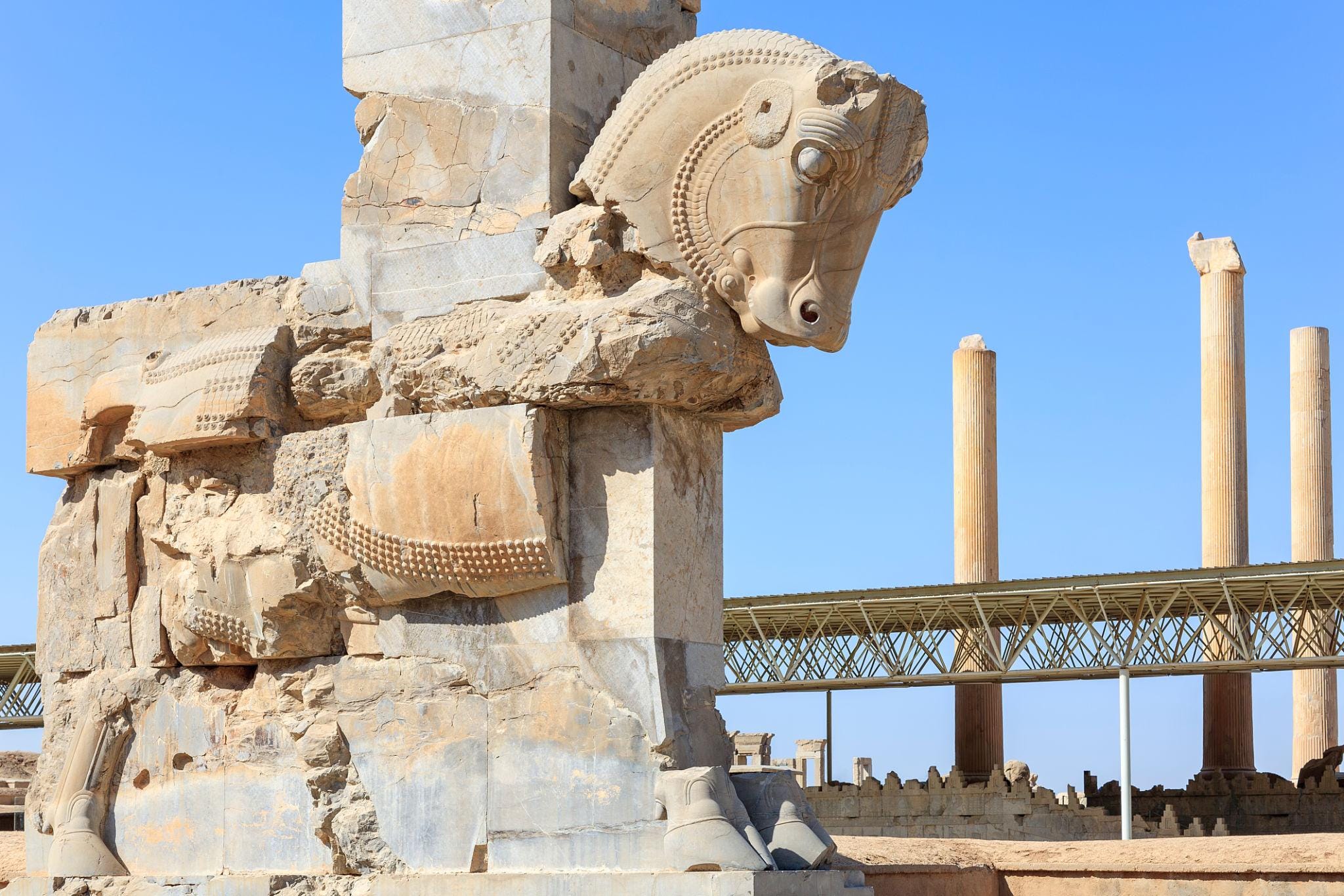
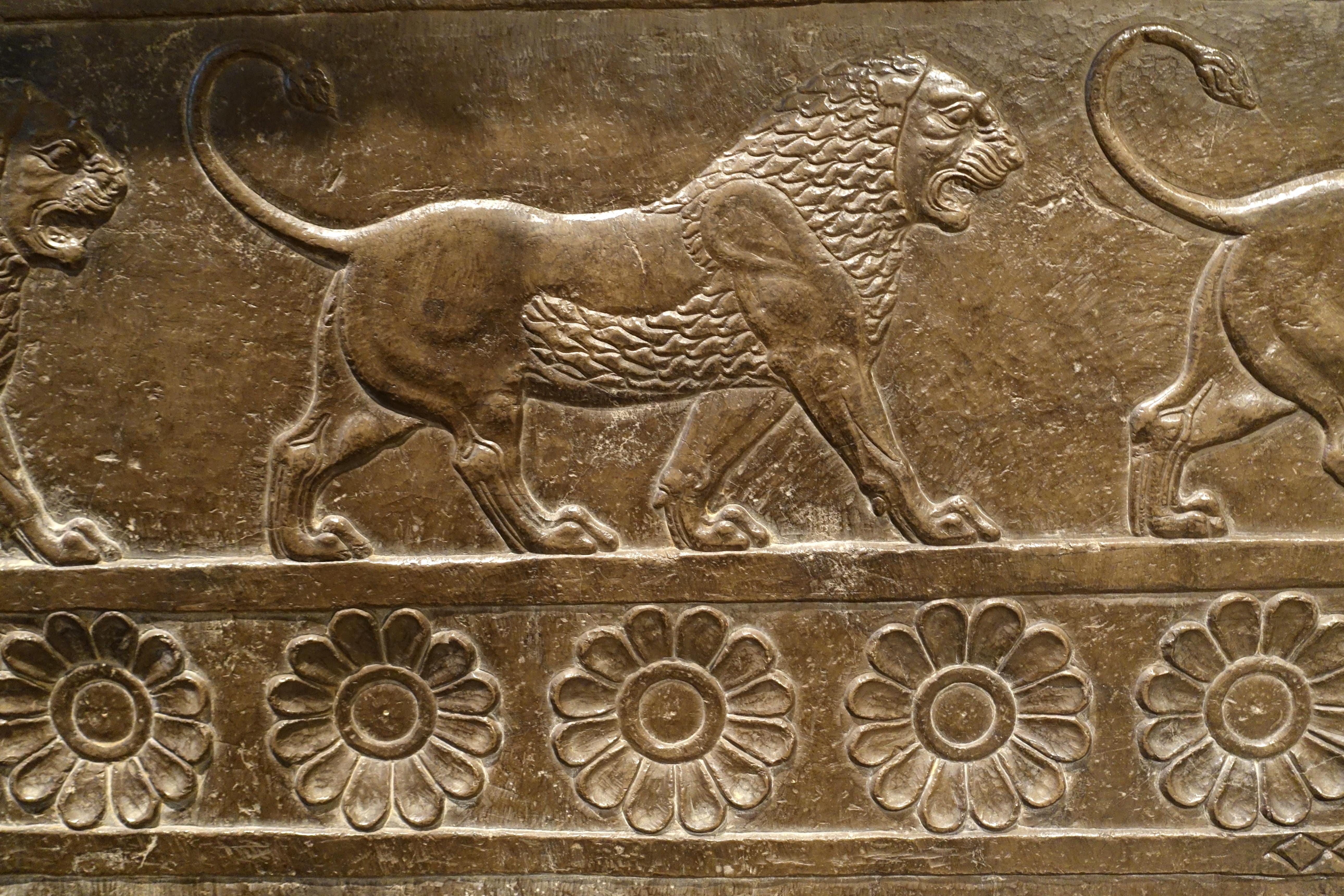
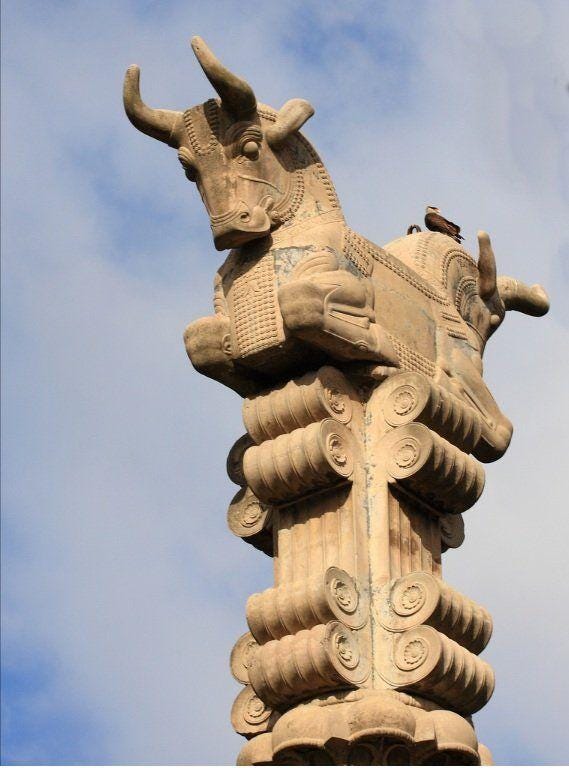
Among the highlights were the remarkable remains from Persepolis, founded by Darius I around 518 BC and expanded by Xerxes I and later Achaemenid rulers. Massive limestone reliefs portray delegates from across the empire peacefully bringing tribute to the Great King, illustrating the extraordinary reach of the Persian Empire from Egypt to the Indus Valley. Equally striking are the iconic double-bull column capitals, beautifully carved lion friezes, and finely crafted gold jewelry that demonstrate the sophistication of Persian art and engineering. ISAC’s collections, excavated primarily during its Persian expeditions between 1931 and 1939, preserve an invaluable record of one of history’s greatest civilizations and continue to provide scholars with insights into the political, artistic, and religious world of ancient Persia.
Many people confuse Persians with Arabs, but ethno-linguistically, ancient Persians are Indo-Iranian; entirely distinct from Semitic groups like Arabs and Babylonians. For centuries, Iran was known as Persia, and the biblical writers and prophets, including Daniel, Isaiah, and Ezra, write about the Persians. Perhaps most striking of all is how the Bible details the way Persian and Jewish histories intersected. According to scripture, both nations were intertwined to fulfill an astonishing promise God made to Abraham, a destiny that required their paths to cross exactly when they did.
At its peak under Darius I, the Achaemenid Persian Empire was certainly the largest empire that the world had ever seen from a global perspective. Before the time of Persia, no one else had managed to bring together lands from the Mediterranean to the Black Sea, all the way to the Indus River Valley, into a single political unit. Persia’s empire included not only the country of Iran today, but Iraq, Afghanistan, Pakistan, Turkey, Syria, Jordan, Israel, Egypt, and many more.
The city of Persepolis became the greatest city in the Persian Empire. Persepolis is an amazing site. It includes a complex of palaces, audience halls, fortifications, and other buildings all built on a huge platform four times as large as the Acropolis, carved on the lower slopes of a mountain. The Apadana, or the audience hall, is the most remarkable building, perhaps, of all. It’s been estimated that an audience of 10,000 people from all over the empire could have come there. And in the staircases there are remarkable sculptures, originally painted, no doubt, of delegations from 23 nations bringing gifts to the Persian king.
Persepolis is a place where many different histories come together. The Bible is an extremely important source for understanding the Persian Empire from the perspective of one particular people within that empire. While it’s not a historical source in the sense that we would think of histories, it certainly preserves a great deal of historical information and a very important perspective. For that reason, it’s an invaluable resource for studying the Persian Empire and its relations with the Jewish people.
The Bible contains 240 references related to Iran or Persia. The name Persia and Persians are found 33 times in six books of the Bible. Cyrus, Persia’s first king, is named 19 times. Persia’s King Darius I who supported the completion of the Second Temple [1] is listed 15 times. Persia’s King Ahasuerus, widely identified by historians as Xerxes I [2], is found 12 times. Persia’s King Artaxerxes I, who permitted Ezra and Nehemiah to rebuild Jerusalem’s walls [3], is listed 13 times. Other Persian people and places are found another 148 times. Most people, including most Iranians, are not aware of the fact that the history of Iran and the history of the Bible intersect at profound levels throughout the centuries. And it would take over 1,000 years before God’s promise to Abraham would intersect Persian history.
While living in Jerusalem, the prophet Isaiah (who ministered c. 740–680 BC) gave an unusual prophecy, a prophecy that specifically identified the name Cyrus, Persia’s first king, nearly 150 years before he came onto the scene [4]. Isaiah the prophet, remarkably, predicted that the Lord would use a future king of the Persians named Cyrus (Koorush), whom he calls “the anointed one” (mashiach) [5].
Tremper Longman III explains: [6]
“This phrase ‘anointed one’ is extremely important. It means ‘Messiah’ and is typically connected to kings. When Isaiah calls Cyrus the Messiah, there’s no ritual behind it. A flask of oil wasn’t poured over his head. But it’s a metaphorical use, meaning that this is a person whom God is going to use for a special purpose in His plan. This is the only time in the Scriptures where a non-Israelite gentile ruler is called the Messiah of God, the anointed of God.”
In Isaiah, Cyrus is called the Messiah, but also the shepherd [7]. Shepherd is actually a very frequently used image throughout the ancient Near East for kings. God calls Cyrus His shepherd for a reason: the shepherd’s responsibility is just to watch, to feed, to take care, to nurture, to lead, and that’s what Cyrus did. Cyrus did that in line with God’s planning, that God wanted to keep that promise. Isaiah considers Cyrus someone who is chosen to guide and to lead the peoples of the world, and specifically, even His own people, the Jews.
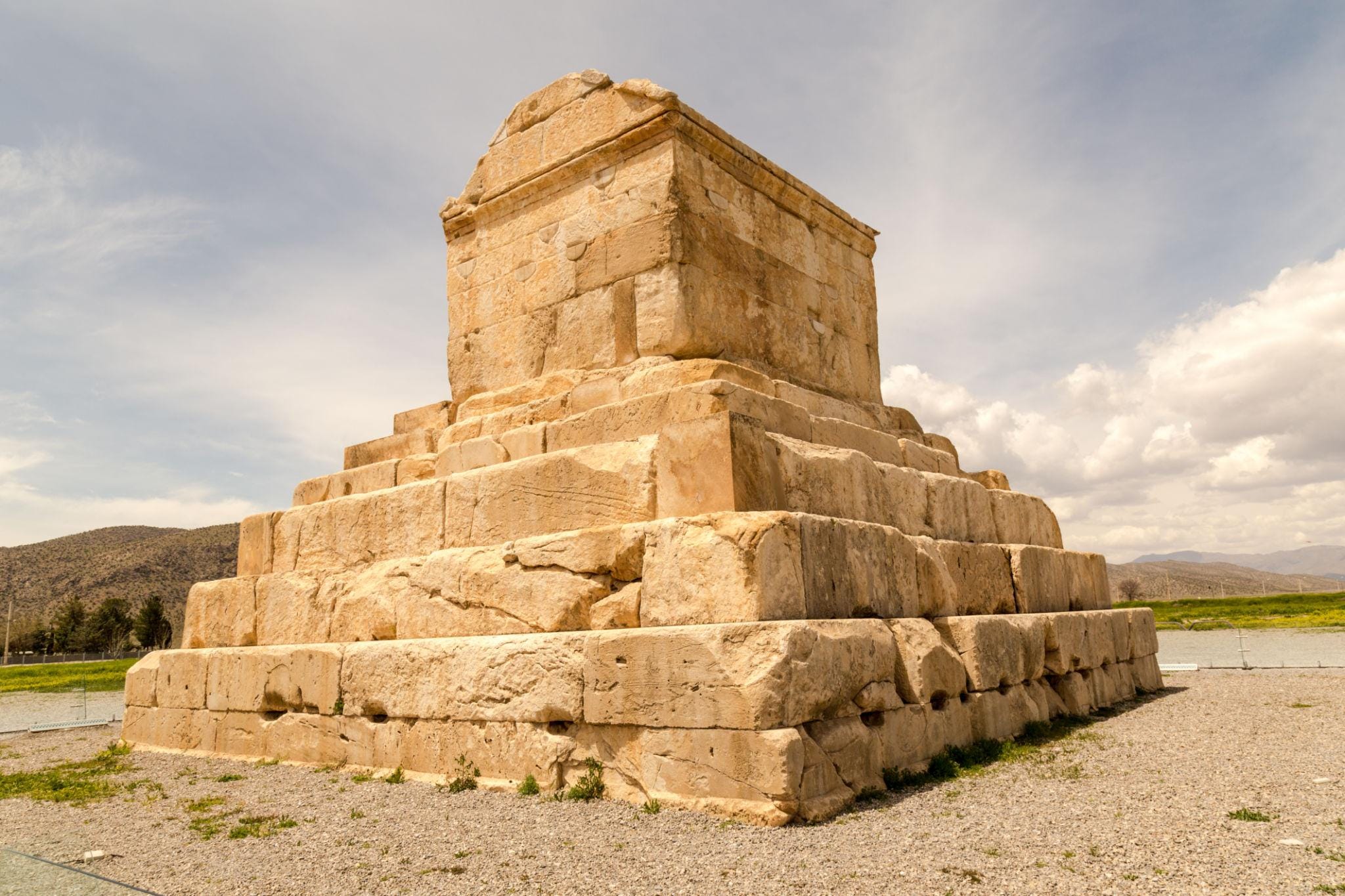
No one could have imagined how King Cyrus would help to fulfill the 1,000-year-old promise to Abraham to become a blessing to the world. Today in Iran, the tomb of Cyrus still stands as a marker in history. The outstanding monument at Pasargadae, which is still quite intact, is the tomb of Cyrus himself, made out of white limestone that extends about 35 feet in height. Ancient writers also described the monument. According to the Greek historian Arrian, who drew on the eyewitness account of Aristobulus, an inscription once identified the occupant of the tomb:
“O man, I am Cyrus, who founded the Persian Empire and was king of Asia. Do not begrudge me this monument.”
Although no such inscription survives today, the tomb itself endures as one of the most recognizable symbols of ancient Persia and is part of the UNESCO World Heritage Site of Pasargadae, preserving the legacy of the empire’s founder.
When Cyrus became the king of Persia, Babylon was the dominant world power. Babylon’s capital was located in what is, today, modern Iraq. Early in the 500s BC, the ruling dynasty of Babylon had conquered the Jewish people and deported them back to the city of Babylon. That’s where they were, in exile, when Cyrus came to Babylon in 539 BC.
There were spiritual reasons why the Jewish descendants of Abraham were deported to Babylon. Abraham’s descendants, Israel, were called to be a light to the nations. That is, they were to love God in such a way and obey Him that God would shower His blessings upon them, and then the nations of the world would see this and be attracted to this God. In the Old Testament, God’s people were meant to reach the nations this way. Unfortunately, too much of the Old Testament story is of God’s people not acting in the way that they should and becoming an obstacle to people being drawn to the true God.
Nebuchadnezzar was the greatest of the Neo-Babylonian kings. He began ruling in 605 BC. According to the first chapter of the Book of Daniel, Nebuchadnezzar attacked Jerusalem in his first year [8]. While we don’t have direct confirmation of that first attack, we do have confirmation of his second attack in 597 BC, and of his third attack in 587 or 586 BC, during which he destroyed the Temple of Solomon.
Daniel and his fellow comrades were among those who were deported by Nebuchadnezzar. The prophet Daniel was only a teenager when he was exiled to Babylon. Daniel may have wondered what would now happen to God’s promise to Abraham to bless the world through his people. Covering hundreds of miles, the deportation would have taken the Jewish people about five months. They traveled north on the international trade route, past the city of Damascus, around the top of the Fertile Crescent, and then into the Tigris and Euphrates River basin in the direction of Babylon.
After almost 70 years of exile in Babylon, Daniel read words from the prophet Jeremiah that caused him to think again about Jerusalem [9]. Jeremiah’s prophecy about Jerusalem gave Daniel hope, so Daniel began to pray. But how would a return home be possible under the mighty grip of the Babylonian Empire?
According to the Bible, King Cyrus called the anointed and the Messiah of God, would change everything. Cyrus was a remarkable military conqueror. Starting from a very small kingdom in what is today southern Iran, he rapidly expanded as far west as modern-day Turkey, out into Central Asia, and perhaps most importantly, into Mesopotamia, where he captured Babylon, maybe the most important city in the world at that time, in 539 BC.
After conquering Babylon in 539 BC, Cyrus issued a decree that completely changed the way kings rule conquered peoples. That foreign policy would begin to open the way for God’s promise of blessing to the world to be fulfilled.
One of the most important textual finds in all of ancient archaeology was the Cyrus Cylinder [10]. It is a football-sized clay object found in Babylon in 1879 that records a decree issued by Cyrus of Persia upon taking the city. Written in Akkadian (the ancient Semitic cuneiform language), this barrel-shaped clay cylinder was discovered by Hormuzd Rassam, working for the British Museum.
We know that the Persians, especially under Cyrus, allowed captives to go back. This proclaimed a completely different policy from that pursued by the Assyrians and Babylonians before them, who had transported populations from one place to another but never allowed them to return. The Cyrus Cylinder is a vital document because it shows how the Persians successfully appealed to local customs and traditions to gain support for their rule. Cyrus proclaimed respect for local deities, allowed displaced populations to return, and restored gods to their sanctuaries. While popularly dubbed the “first charter of human rights,” modern historians view it as a traditional Mesopotamian royal foundation declaration designed to legitimize Cyrus’s rule through local religious respect [11].
Today, you can visit the United Nations building in New York and see a replica of the original Cyrus Cylinder, which resides in the British Museum. In the Bible, Cyrus gives explicit permission for the Jews to return to Jerusalem and commissions them to rebuild the Temple [12].
Rev. Mansour Khajehpour [13] notes:
“The fact that God uses Iran and Persia basically to take care of the captives of Israel—not just to bless a nation, but to make that nation a blessing to all nations, all people on Earth—is a great fact to be remembered. Even today in the 21st century, it’s reported that 70 percent of the world’s population lives in countries where they do not have freedom of religion or freedom of worship. But in Cyrus, the great Persian king, we encounter a very open-minded, tolerant king who allowed the people he had conquered to worship God in the ways that they wanted. Cyrus actually installed freedom of religion and freedom of worship 2,500 years ago.”
The prophet Isaiah not only wrote about Cyrus as a Messiah of God, but also about a future Messiah who would be more than just a man, one whose kingdom will be an eternal kingdom. This son who is to come, born of a virgin according to Isaiah 7:14, will be called Immanuel (”God with us”). He is not just one prophet in a long line of prophets; He is Mighty God, establishing an eternal kingdom.
God used King Cyrus, the events around him, and future kings in the land of Persia to fulfill His absolute promise that there would be a Messiah, Christ, to come on Earth as the Savior of the world. Jesus described His purpose for living, and Isaiah spoke of a servant of God who would suffer and die for all people [14].
That message given to Abraham, preserved throughout history by the intervention of different nations, including the Persians, and fulfilled in the person of Jesus Christ in the bosom of the Israelite family, prepared the road, prepared their hearts, and melted many hearts throughout history. Now, the Persian nations, the Arabs, the Elamites, the Turks, the Chinese, and all nations are blessed today. The message is simple: the promise given to Abraham is for every tribe and every nation.
A few weeks after the death and resurrection of Jesus the Messiah, as His disciples were gathered in Jerusalem, the Bible tells us that the Spirit of God fell on them, birthing the Church in New Testament times [15]. People had come from all over the world to celebrate the Jewish feast in Jerusalem.
Many people might not realize that the first three people groups mentioned in Acts 2:9; Parthians, Medes, and Elamites, were people groups originating from Iran [16]. Iranian people were present in Jerusalem, whether they were Jews who had lived in the Persian Empire since the time of the exile or God-fearing Iranian people who had come to faith through contact with the Jewish community. Iranian people were there, and they were filled with the Spirit of God.
When these Iranians went back to their home countries, they took the message of the good news of Jesus the Messiah to their own people. Looking at church history hundreds of years later, Iranians took the Gospel to China along the Silk Road. In fact, the Chinese people called Christianity “the Persian religion” because they had heard the Gospel directly from Persian Christians and followers of Christ.
[1]: Darius I & The Second Temple: Ezra 5:1–6:12; Haggai 1:1. Darius I confirmed Cyrus’s original decree to complete the Second Temple in Jerusalem (c. 520–515 BC).
[2]: Ahasuerus as Xerxes I: Book of Esther 1:1. Historical consensus identifies Ahasuerus (Khshayarsha in Old Persian) as Xerxes I (reigned 486–465 BC).
[3]: Artaxerxes I: Ezra 7:1–28; Nehemiah 2:1–8. Artaxerxes I Longimanus granted leave to Ezra (458 BC) and Nehemiah (445 BC) to rebuild Jerusalem’s wall and religious life.
[4]: Prophecy of Cyrus: Isaiah 44:28; 45:1–4. Dated to c. 700 BC, predicting Cyrus’s conquest of Babylon (539 BC).
[5]: Cyrus as Messiah (Mashiach): Isaiah 45:1 (“Thus says the LORD to His anointed, to Cyrus...”). The sole instance of a non-Israelite ruler being called God’s anointed in Hebrew Scripture.
[6]: Tremper Longman III: Distinguished Scholar of Biblical Studies; author of numerous Old Testament commentaries including Daniel and Isaiah.
[7]: Cyrus as Shepherd: Isaiah 44:28 (“He is My shepherd, and he shall perform all My pleasure...”).
[8]: Deportation of Daniel: Daniel 1:1–6; 2 Kings 24:1–4. First Babylonian siege of Jerusalem under Nebuchadnezzar II (c. 605 BC).
[9]: 70-Year Exile Prophecy: Jeremiah 25:11–12; 29:10; Daniel 9:1–3.
[10]: The Cyrus Cylinder: British Museum Artifact BM 90920. Discovered at Babylon by Hormuzd Rassam (1879).
[11]: Charter vs. Royal Decree: Modern Assyriological consensus (e.g., Amélie Kuhrt, Josef Wiesehöfer) categorizes the Cylinder as a traditional Mesopotamian royal building inscription rather than a modern human rights charter.
[12]: Decree of Cyrus in Scripture: 2 Chronicles 36:22–23; Ezra 1:1–4.
[13]: Rev. Mansour Khajehpour: Iranian Christian leader, theologian, and ministry Director.
[14]: The Suffering Servant: Isaiah 52:13–53:12; Isaiah 7:14; Matthew 1:21–23.
[15]: Pentecost Outpouring: Acts of the Apostles 2:1–13.
[16]: Iranian Peoples at Pentecost: Acts 2:9. Listing Parthians, Medes, and Elamites—peoples historically inhabiting the Iranian plateau.
Thank you for reading Dr. Aaron Judkins Substack. As a token of our appreciation, we’re offering you a limited-time offer of 20% off a paid subscription for your first year. Thanks again for reading.
PS. If you loved this article, be sure to head over to our Ancient Pathways Patreon site and see my film “Qumran 2 Petra” where we take you onsite at the Pool of Siloam.
The Pool of Siloam
·
November 11, 2025
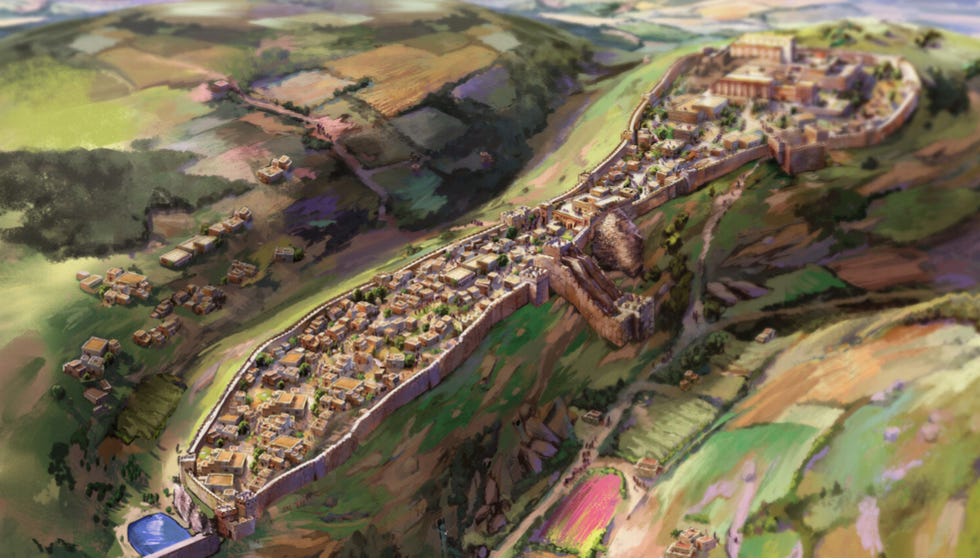
In 2004 I was proud to participate in the initial excavations alongside Ronny Reich and Eli Shukron, during which they uncovered the northern portion of the pool with finely cut ashlar-stone steps descending toward the south. Shortly thereafter Reich and Shukron published their report identifying this phase as the Pool of Siloam mentioned in the Gospel of John.¹ The conventional name “Siloam Pool” had previously been attached to a smaller pool further north, at the outlet of the water conduit known today as Hezekiah’s Tunnel.⁽²⁾ The discovery by Reich and Shukron challenged that identification.³ The sheer size of the finely cut stones and the dating of the steps to the late Second Temple period made it reasonable to accept that this newly exposed pool was the handiwork of Herodian-period Jerusalem — and thus the pool where the blind man was healed (John 9:1-11).⁽⁴⁾
Comments
Nothing yet. Say the first thing.
Sign in to join the conversation.