
Imagine standing in front of a mirror that doesn’t just reflect your body - it understands it.
It can see how your joints move, measures your fatigue, predicts your risk of injury and even suggests how to adjust your technique - all in real time.
That’s not science fiction anymore.
That’s AI coaching the human body.
From wearable sensors to motion-capture cameras, from XR headsets to biomechanical models - sport is entering a new era where data becomes DIALOGUE.
And the most exciting part?
This technology isn’t replacing the coach.
It’s enhancing the conversation between body, brain and behaviour.
The Rise of Intelligent Coaching
For decades, coaches relied on observation - the trained eye.
They saw what the camera couldn’t and felt what the athlete couldn’t articulate.
But even the sharpest eyes can miss what happens in milliseconds.
That’s where computer vision and machine learning step in - systems that can track, label and learn from thousands of movement patterns in seconds.
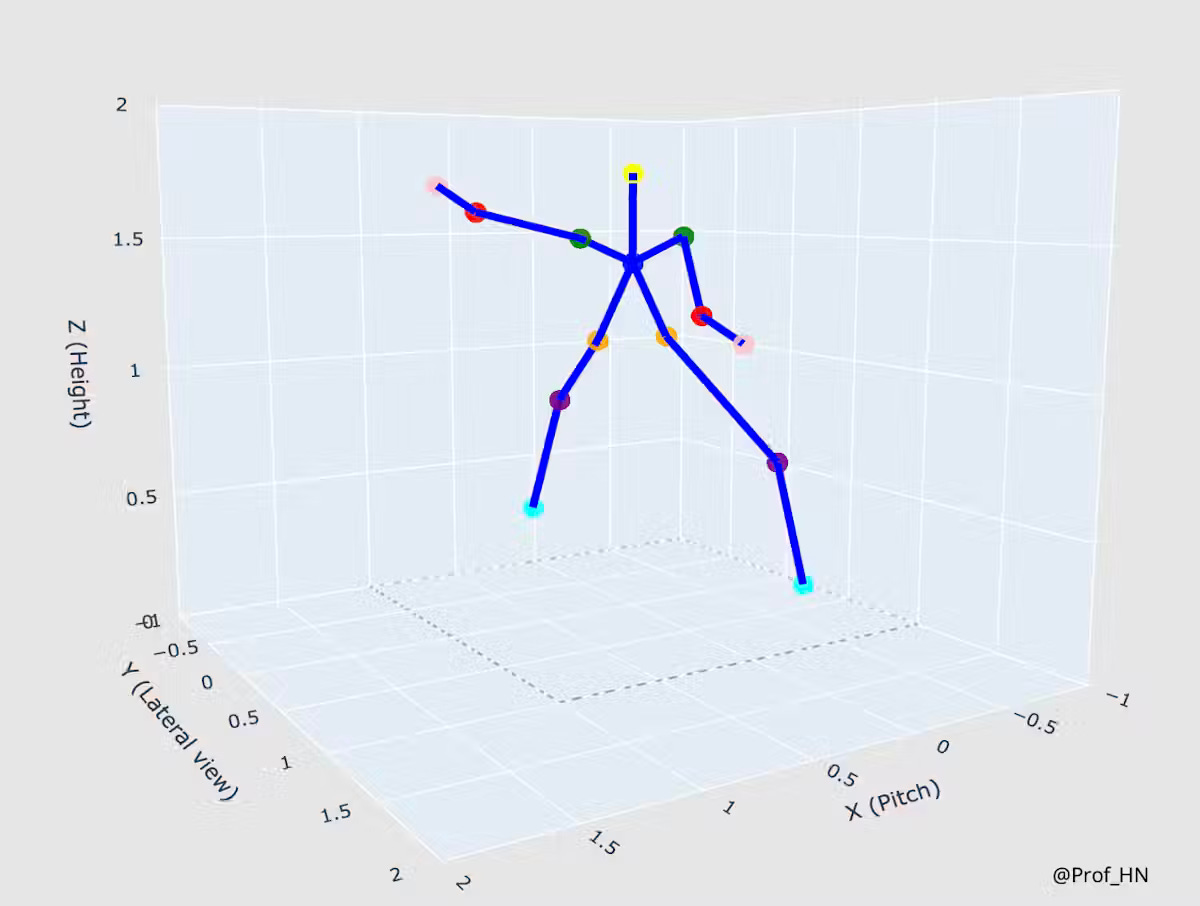
What was once intuition is now becoming quantifiable.
Cameras detect asymmetries in your stride.
Algorithms measure rotational torque in your joints.
AI models predict fatigue from micro-tremors in your hands.
And yet, the goal isn’t to digitise intuition - it’s to expand it.
Great coaching isn’t just about data - it’s about decision-making.
AI doesn’t replace that decision; it informs it.
The stopwatch once defined performance
Now, a single athlete might generate more data in an hour than a sports lab did in a month twenty years ago.
Modern wearables capture muscle oxygenation, heart-rate variability, joint angles, acceleration and even mental workload through EEG sensors.
These devices don’t just collect information - they interpret it, turning the body into a living dashboard.
And when that data integrates with extended reality – also known as XR - athletes no longer just watch their performance.
They experience it!
In a VR or AR environment, players can replay their movements from any angle, slow them down frame by frame and correct technique with tactile feedback.
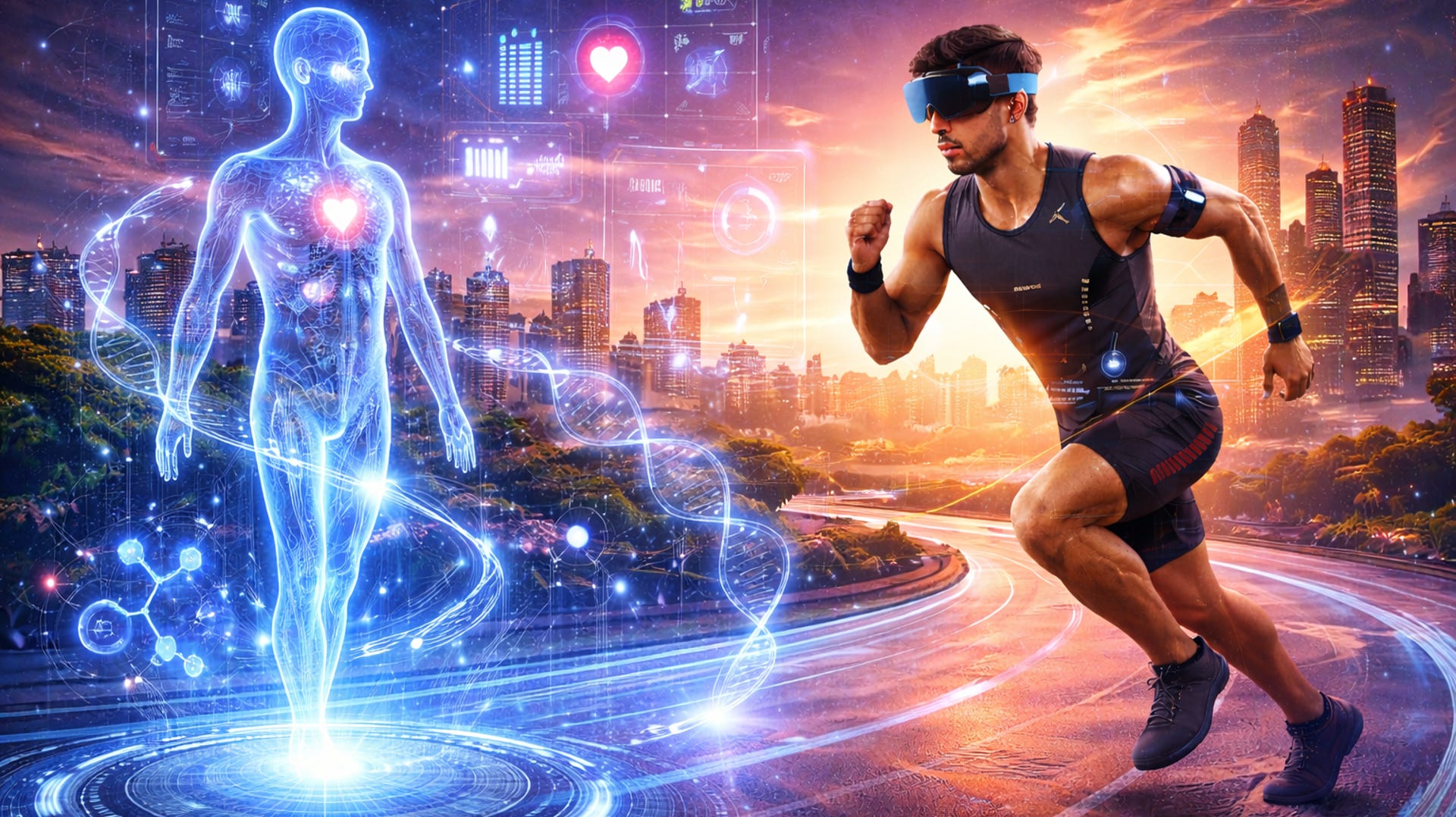
For the first time, athletes are not only the subject of training - they are participants in their own data story.
Computer Vision and the Human Eye
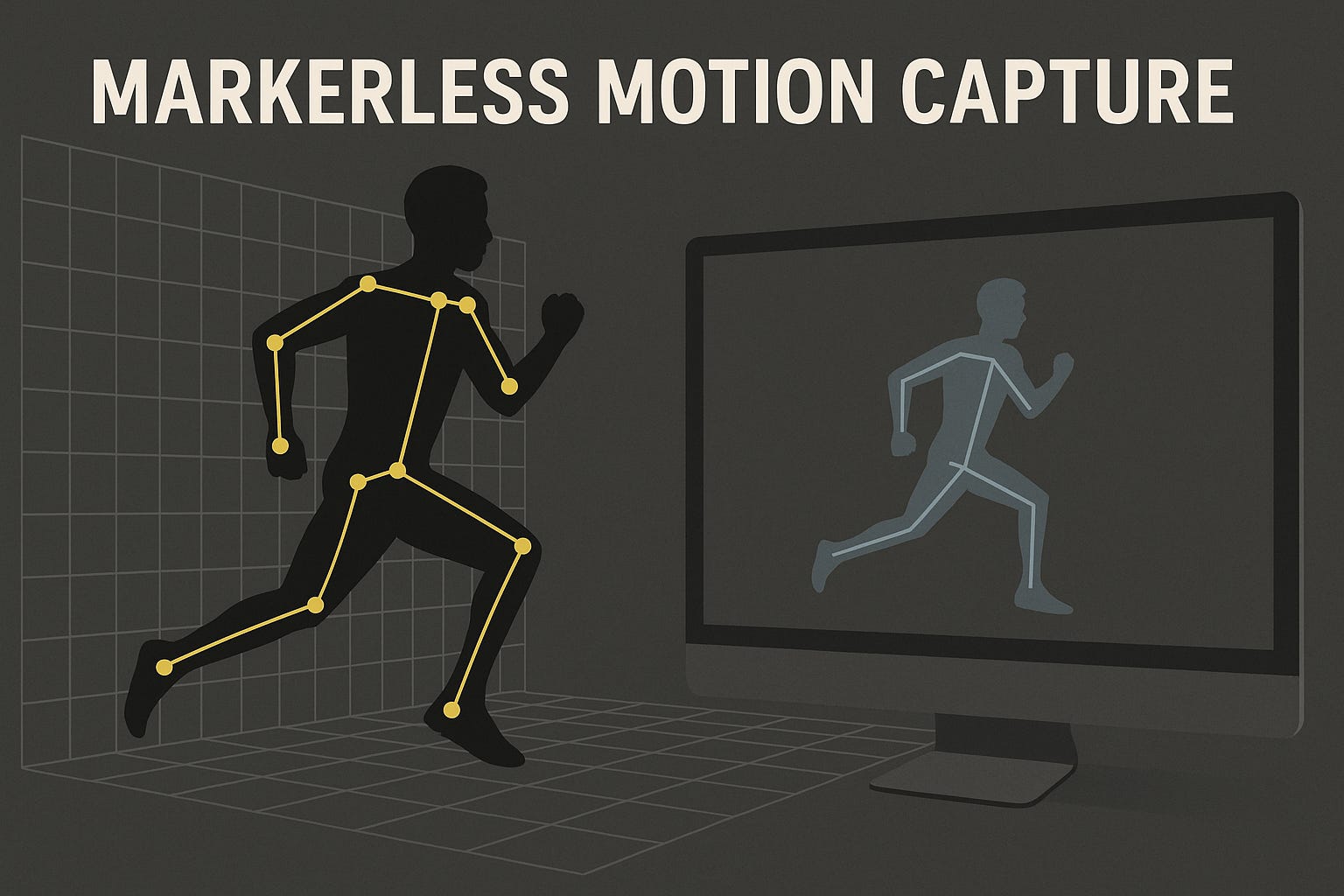
Computer vision has revolutionised how we analyse human motion.
Markerless motion capture systems now identify 3D body poses without a single sensor attached - using AI models trained on millions of frames.
Also read my OP-ED in The Conversation here.
In biomechanics, this is completely transformative.
We can now quantify coordination, reaction time and joint efficiency at scales once impossible outside a lab.
But there’s a hidden insight here:
The machine doesn’t just “see” the way we do.
It detects patterns that we overlook – subtleties invisible to intuition.
And that means AI is teaching us to see ourselves differently.
The next decade of athletic coaching won’t just be about running faster or jumping higher.
It will be about understanding movement as information.
The New Coach–Machine Partnership
There’s a fear that AI might replace human coaches.
But what’s actually emerging is something far more interesting: COLLABORATION!
Coaches bring empathy, context and creativity.
AI brings precision, pattern recognition and prediction.
When these two intelligences work together, performance becomes a conversation - not an just instruction.
The coach says, “I see fatigue.”
But the algorithm confirms, “Yes and here’s the data trend behind it.”
This results in athletes who are more self-aware; coaches who are more evidence-driven; and decisions that balance heart rate and heart sense.
The Extended Arena (or XR!)
Extended reality is redefining what “training space” even means.
With XR headsets, athletes can rehearse complex plays, batting sequences or defensive formations in a completely immersive environment - where the brain learns without physical wear and tear.
This matters!
Because the mind can simulate performance faster than the body can perform it.
So, when an athlete trains in XR, they are literally rewiring their nervous system for anticipation and timing.
It’s not “virtual” training.
It’s neurological priming.
And it’s already happening - in cricket, baseball, basketball and even military conditioning.
Data with a Pulse
Here’s the paradox:
We can now measure everything - yet risk feeling nothing.
When every heartbeat, breath and movement becomes a metric, we must ask:
Are we still connected to the body, or just its numbers?
That’s where the A4 philosophy in this channel matters most.
AI brings the analytics.
Academia brings the understanding.
Athletes bring the embodiment.
And Altruism brings the purpose.
Together, they remind us that data isn’t valuable until it becomes wisdom.
Technology should never replace touch.
It should refine it.
The Ethical Athlete
With data comes responsibility.
Who owns an athlete’s performance data?
How should it be used?
What happens when algorithms start influencing selection, contracts or sponsorships?
These are not technical questions - they’re ethical ones!
If we want AI to coach the body, we must also ensure that it protects the person.
Because performance without privacy isn’t progress - it’s surveillance.
The future of sport will depend on building transparent, ethical, athlete-first ecosystems - where data enhances autonomy, and not exploitation…
As a result, The Future is about Feeling
We often say sport is human drama measured in seconds.
Now, those seconds are being measured in data points too.
But beneath every sensor and simulation, there’s still something irreducible - the heartbeat, the breath, the belief.
AI may coach the body.
But only humans can coach the soul.
Because intelligence may teach us HOW to move…
But empathy and purpose reminds us WHY we move in the first place.
Until next time ;)
ALSO WATCH:
Subscribe/Follow:
🎬 YouTube Channel
👉 https://www.youtube.com/@A4Digest
🌐 Website
👉 https://www.habibnoorbhai.com/
👉 https://www.linkedin.com/in/habib-noorbhai-phd/
🐦 X (Twitter)
Comments
Nothing yet. Say the first thing.
Sign in to join the conversation.