
This week, we explore the promising potential of human pose estimation for sports motion capture. A study comparing the accuracy of human pose estimation to traditional marker-based motion capture systems is discussed. This research is not just a technical deep dive; it's a glimpse into the future of accessible and practical sports performance analysis.
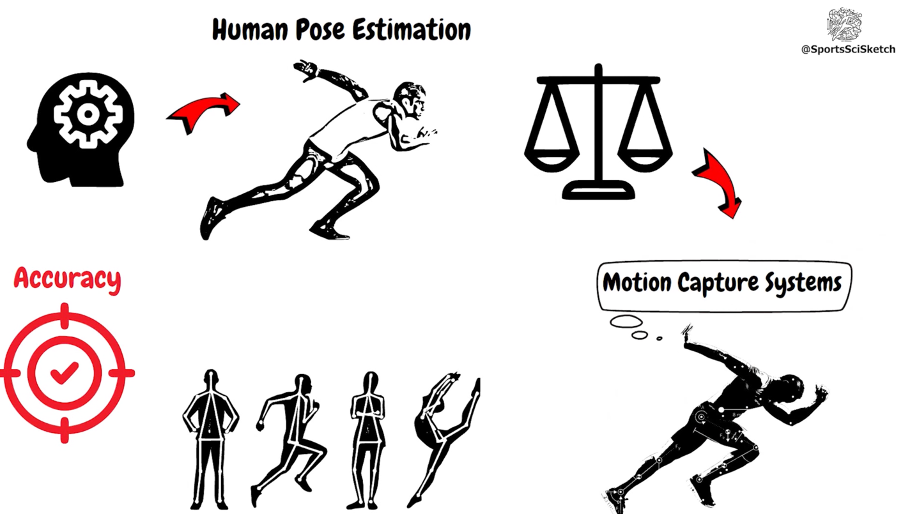
Traditional vs. Modern (Motion Capture)
Traditional kinematic analysis has long relied on marker-based systems such as VICON and OptiTrack. While these systems are highly accurate, they are also expensive, complex and confined to controlled environments. In contrast, human pose estimation offers a more accessible, affordable alternative that can be used outside of a laboratory setting. Popular models in this space include OpenPose, the A.R. Kit, and TensorFlow Pose Estimate.
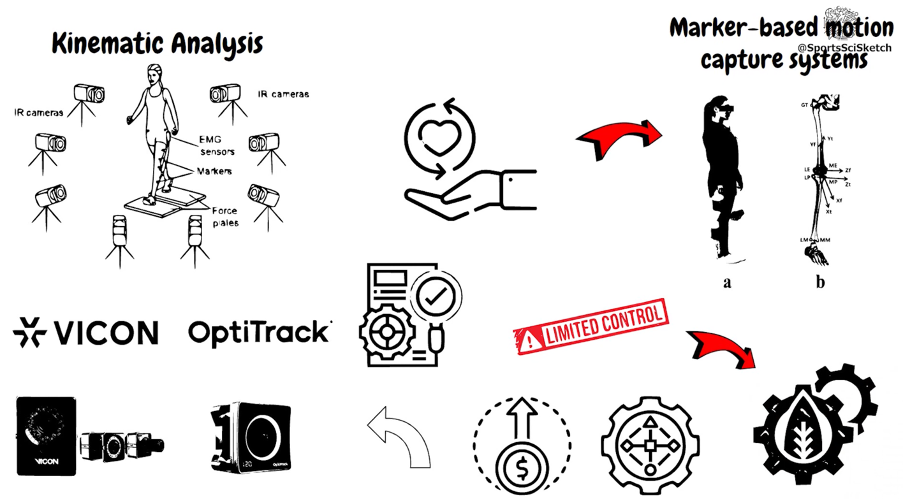
The Study
In a recent study, five participants performed a series of athletic and sports movements captured using both RGB cameras for pose estimation and infrared cameras for marker-based systems. The joint angles were then calculated and compared using Mean Absolute Error (MAE).
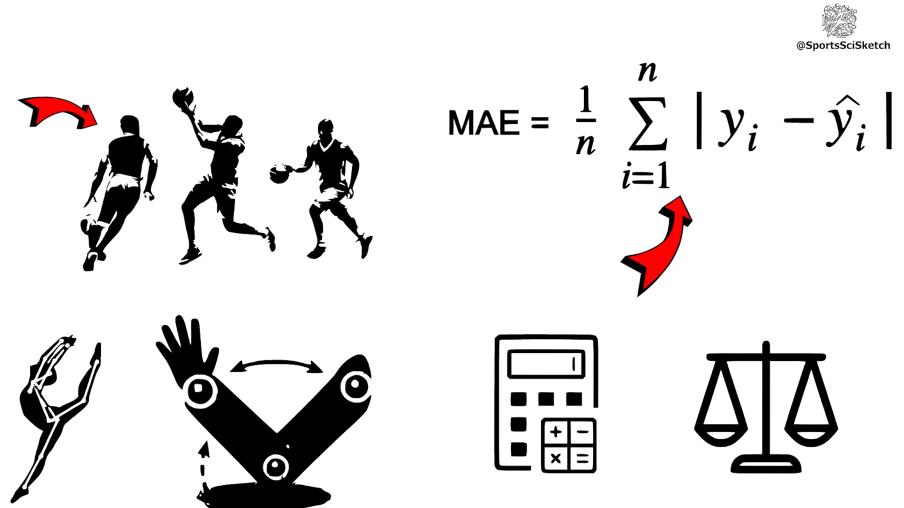
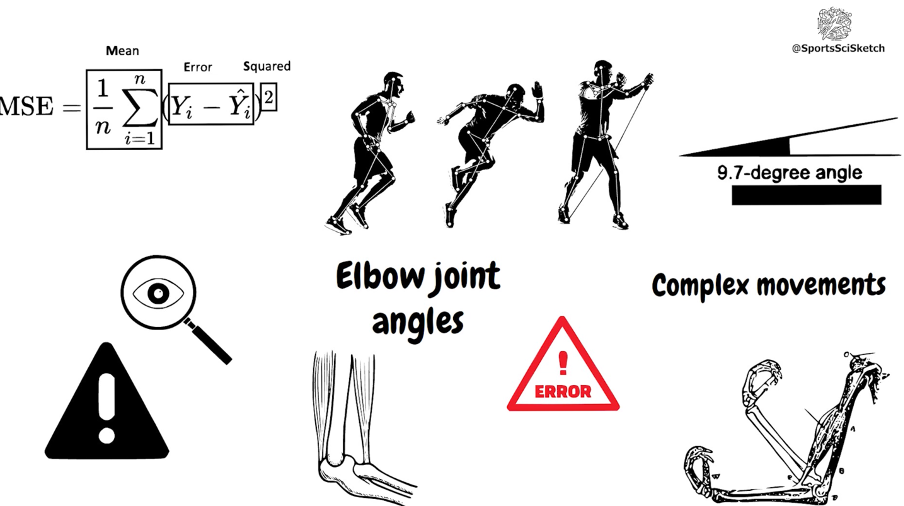
Athletic Movements: The mean error for athletic movements was 9.7o, with the highest errors observed in elbow joint angles. Complex movements, such as a 360-degree turn with arms spread, presented larger errors.
Sports Movements: The mean error for sports movements was 9.0o. The largest error was found in the left elbow joint during a tennis backhand swing, while the right hip joint in a tennis forward swing showed the smallest error.
Challenges and Solutions
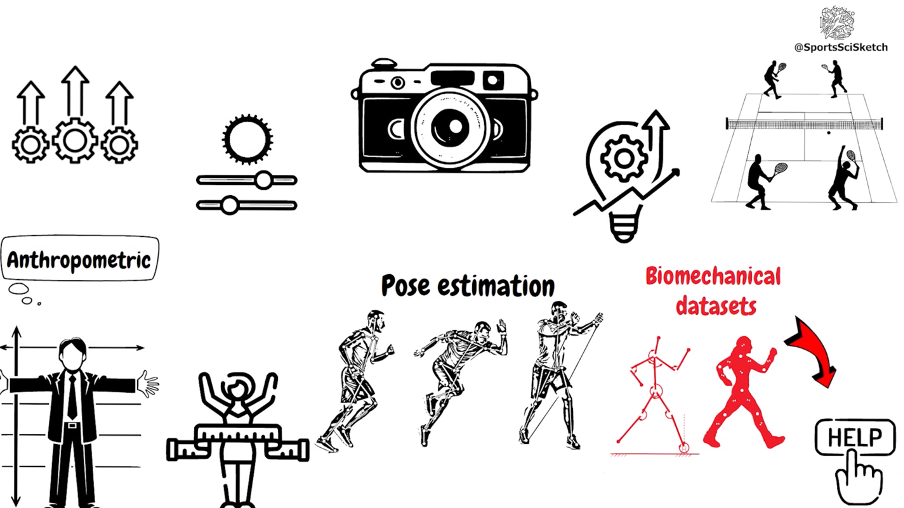
Several factors contributed to the errors, including occlusion, mis-estimation and the capturing environment. For instance, elbow and wrist joints often faced occlusion, leading to higher errors. To improve accuracy, adjustments can be made to camera positions, capturing environments and anthropometric fitting methods. Additionally, training pose estimation models with biomechanical datasets can further enhance precision.
Practical Applications and Future Directions
Despite some limitations, human pose estimation holds great potential for motion capture in sports. It offers a more accessible and practical solution for kinematic analysis, which can significantly enhance athletic performance and injury mitigation. Here are a few key takeaways:
Accessibility: Human pose estimation can democratise motion capture, making it available to athletes and coaches without access to expensive, high-end equipment.
Practicality: The ability to capture movements outside of a lab setting allows for more natural and varied data collection, closely reflecting real-world scenarios.
Future improvements: By refining camera setups and training models on specific datasets, the accuracy of human pose estimation can continue to improve, potentially rivalling traditional systems in many applications.
Conclusion
There is promising evidence that human pose estimation can be a viable alternative to traditional marker-based motion capture systems, particularly in scenarios where high precision is not critical. By continuing to refine this technology, we can look forward to a future where advanced sports motion capture is more accessible and practical than ever before.
WHITEBOARD VIDEO:
Citation: Fukushima, T., Blauberger, P., Guedes Russomanno, T., & Lames, M. (2024). The potential of human pose estimation for motion capture in sports: A validation study. Sports Engineering, 27(1), 19
Subscribe to channel: https://www.youtube.com/channel/UCW6O0m6OCfyh8hV-kX_Q_KA
No posts
Comments
Nothing yet. Say the first thing.
Sign in to join the conversation.