
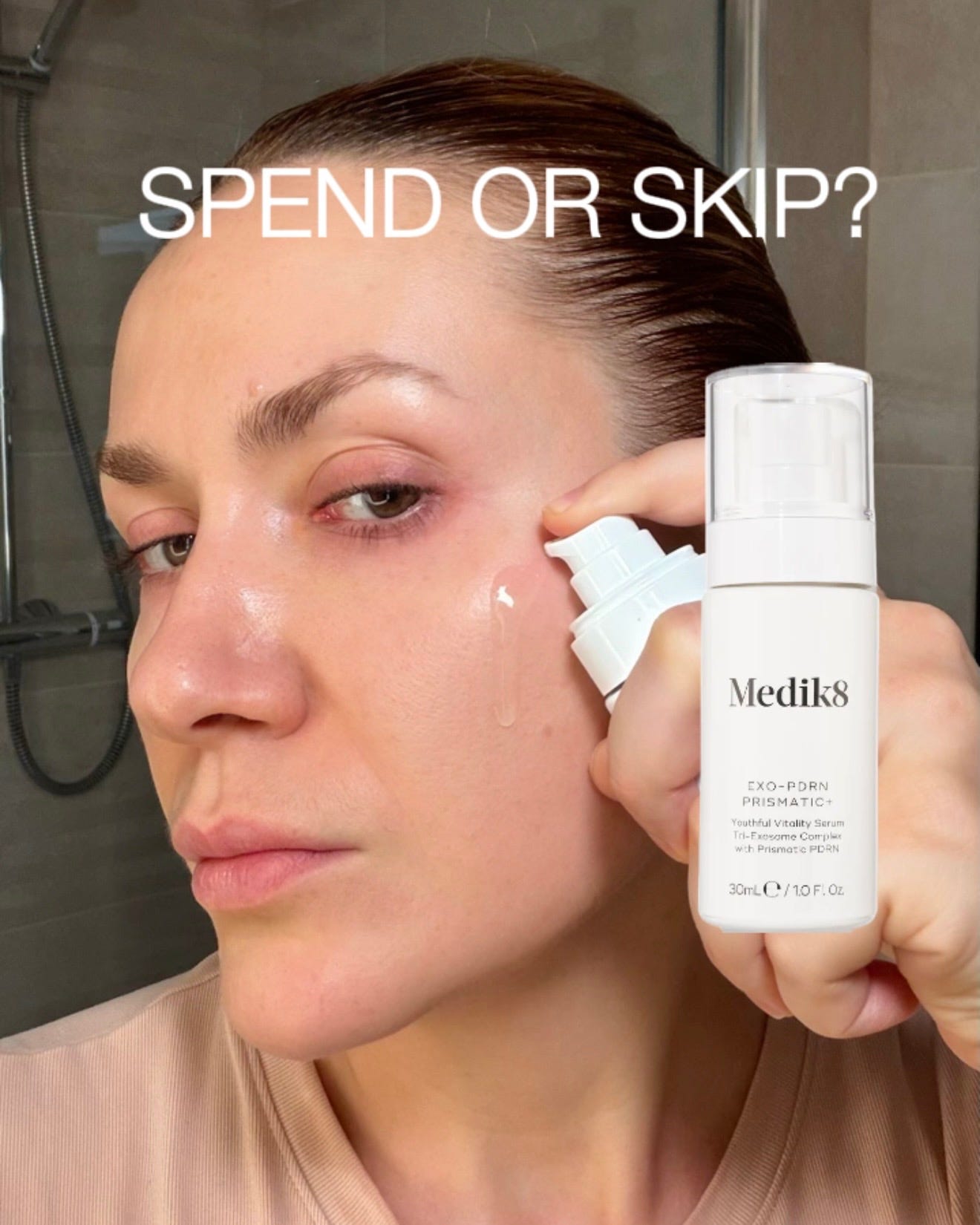
Right, Complexions, you’ve all been asking.
If you are on social media, you hear the word “PDRN” everywhere. Korean brands first, and now the West is catching up, and Medik8 is among the brands leading the charge with their newest Exo-PDRN Prismatic+ Serum, which combines the two most-hyped buzzwords in current skincare into a single launch: “Exosomes” and “PDRN.”
With the ads for this serum dominating social media, I am here to offer a completely independent, honest, professional analysis. I bought the serum with my own money. No brand contact for this piece, no PR sample influence, no affiliate links. Just me, the INCI list, the published nanoscience literature, and roughly two days of reading studies and supplier data sheets.
I will be fair, honest, and I won’t hold back.
Before you click “buy” on those ads, here’s the short of it.
The novel hero in this product sits on real peer-reviewed science published in Nature Communications. That part actually checks out. (I had to read the paper twice to be sure, but it does.) The “exosome” framing is a different story. It’s borrowing credibility from research it doesn’t strictly belong to. And the part of the formula doing nearly all the visible week-one work? Not what Medik8 is selling you on.
So: more interesting than the marketing implies, and less novel, just not in the ways you’d guess.
There are also a couple of places where the chemistry and the copy don’t quite line up the way I’d want them to, small things, but worth understanding before you spend.
So before we get into the deep analysis, let me give you the structural read on what you’re actually buying.
What's in the bottle, structurally
The full INCI is on the Medik8 site, but the shape of the formula is this.
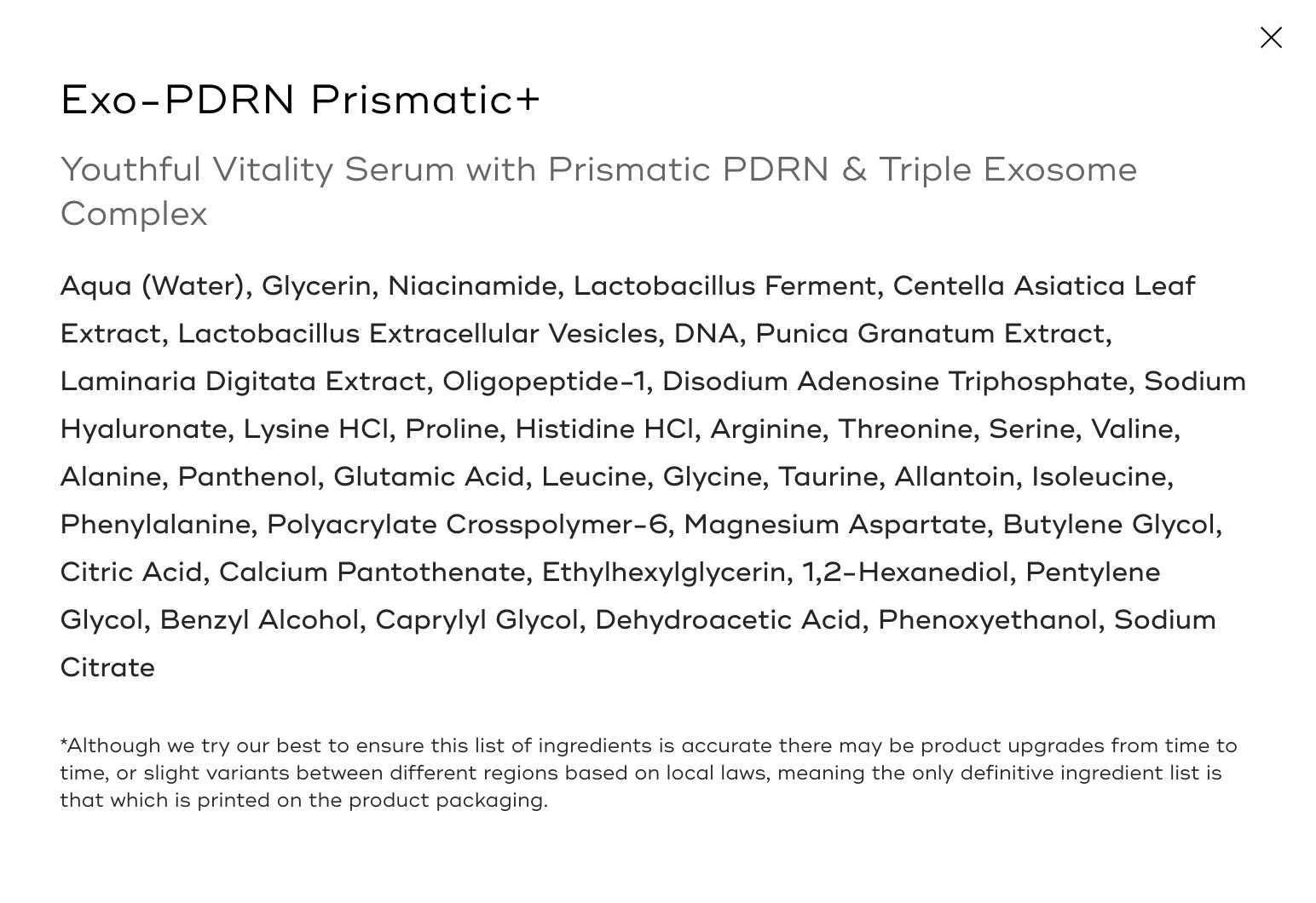
You have a well-built postbiotic-and-hydration base with three branded “hero” complexes layered on top.
K-beauty barrier-care, fingerprints all over it. The supporting cast, at meaningful percentages: glycerin, niacinamide, Lactobacillus ferment, Centella asiatica, sodium hyaluronate, panthenol, allantoin, calcium pantothenate.
This is, structurally, a quietly excellent hydration-and-barrier formula. We’ll come back to this, because it matters more than the front-of-pack is admitting.
The three heroes (the things you’re paying premium pricing for) are:
Prismatic PDRN (declared on the INCI simply as “DNA”)
The Triple Exosome Complex (declared as Lactobacillus ferment, Lactobacillus extracellular vesicles and Punica Granatum Extract, a plant-derived nanovesicle preparation)
The GF MiniProtein complex. Medik8 groups three components here as a “rejuvenation support” trio: the peptide itself (Oligopeptide-1), disodium adenosine triphosphate (marketed as “ATP Precursor”), and a full amino acid blend (lysine, proline, histidine, arginine, threonine, serine, valine, alanine, glutamic acid, leucine, glycine, taurine, isoleucine, phenylalanine, plus magnesium aspartate). In their own copy, these three are positioned together as the stack that “supports skin energy, elasticity and hydration.”
These three aren’t equally credible. The gap between what each one actually does and what the marketing says is wider in some places than others, and there’s a bit of copy on the product page where the chemistry doesn’t quite line up. Worth knowing which is which before you spend on this.
What's behind the paywall
Below this line, for paid Complexions subscribers, you’ll get the full chemist’s analysis:
The truth about Prismatic PDRN: what it actually is (it’s not really PDRN), the peer-reviewed Nature Communications paper that backs it, and why the “+50% boost in natural skin rejuvenation” headline is over-translated lab data.
The regulatory story behind the Triple Exosome Complex: what Medik8 got right (and they did get the legal piece right, which other brands have not), and where the framing borrows credibility from research it doesn’t strictly apply to.
A close read of the “ATP Precursor” and what’s actually going on with that ingredient on your skin.
The section of the formula doing all of the visible week-one results, which I think Medik8 is underselling. If you understand this part, you’ll have a much clearer sense of whether this serum is genuinely novel for you or whether you’re paying premium pricing for ingredients you already have in cheaper products.
A translation of every clinical number on the product page: “+50% rejuvenation,” “100% better absorption,” “61% deeper penetration,” “100% agree perfect post-procedure partner,” “14 days to wrinkles and firmness,” “7 days to barrier and luminosity.” Which are credible, which are overstated, which are methodologically flimsy.
My final verdict, with specific recommendations on who this serum is right for and who it isn’t.
This is the first long-form paid piece on this Substack. It’s the kind of analysis I can only do because some of you choose to fund it directly. No brand-sponsored content, no editorial influence, no shortcuts. If you’ve been getting value from my free work and you want to support the deeper analysis, this is what your paid subscription makes possible.
Right. Let’s get into it.
Comments
Nothing yet. Say the first thing.
Sign in to join the conversation.